
Hear from Our Customers
Most pool problems don’t start with a green pool or cloudy water. They start weeks earlier, when chemistry drifts just far enough off-balance that your chlorine stops doing its job and you don’t know it yet. By the time the water looks wrong, the damage is already done. Professional water testing catches that drift before it turns into an algae bloom, a stained surface, or a filter that’s working twice as hard as it should be.
In Willacoochee, the summer heat is relentless from June through August, and UV exposure can burn through unprotected chlorine faster than most people expect. If your cyanuric acid level isn’t dialed in, you could be adding chlorine every single day and still swimming in under-sanitized water by afternoon. That’s what happens in South Georgia’s direct summer sun, and it’s one of the most common issues we find when we test a pool that the owner thought was fine.
The Alapaha River corridor gets the kind of storm events that can drop serious rain in a short window. Every significant rainfall dilutes your pool’s chemicals, drops your pH, and sets the stage for an algae bloom within 24 to 48 hours. If you’re not testing after those storms, you’re guessing and in this climate, guessing usually catches up with you by the end of the week.
We’re based in Douglas, Georgia about 30 to 35 miles east of Willacoochee on US Highway 82, the same road that runs right through town. This isn’t a national chain or a franchise that dispatched someone who’s never seen a South Georgia summer. We’ve been building, renovating, and servicing gunite and shotcrete pools in this region for over 30 years. We know what Atkinson County’s heat does to chlorine, what pine pollen season does to pool chemistry, and what happens when you ignore calcium hardness in water that’s pulling minerals out of your plaster finish.
We’re licensed and insured, and the experience behind every service call runs deep not just in pool chemistry, but in how pools are actually built. That construction background matters because it means we understand how your pool’s surface interacts with your water, not just what numbers to chase on a test report. For Willacoochee homeowners who’ve made a real investment in their property, that level of understanding is exactly what you want when someone’s testing your water and making recommendations.
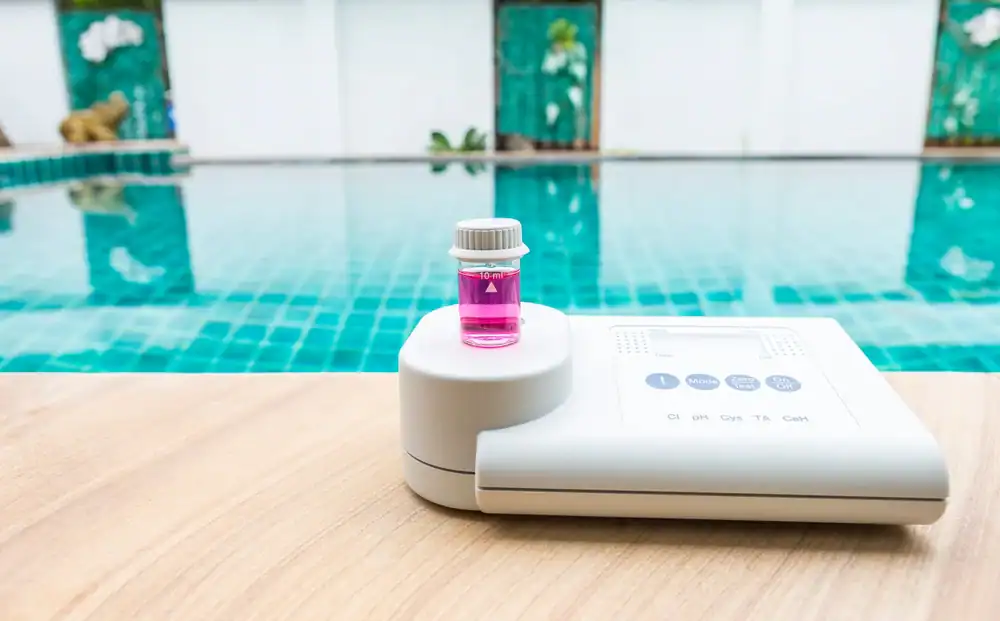
It starts with a visit to your property. One of our technicians comes to you no hauling a water sample to a store, no waiting in line, no getting a result that’s already 30 minutes old by the time someone reads it. We collect a water sample directly from your pool and run it through advanced digital testing equipment on-site. This isn’t a color-match strip that you squint at in the sun. It’s precision equipment that measures free chlorine, total chlorine, pH, total alkalinity, calcium hardness, cyanuric acid, and more with accuracy that a strip simply can’t match.
Once the results are in, you get a clear readout of every parameter and more importantly, an explanation in plain language. What’s off, why it matters, and what needs to happen to correct it. In South Georgia’s climate, that conversation almost always includes a look at your CYA stabilizer level, because without proper stabilization, the summer sun will undo your chlorine faster than you can add it. If you’ve been fighting cloudy water or recurring algae through Willacoochee’s long swim season, this is usually where the answer shows up.
From there, we walk you through a correction plan. Not just a list of chemicals to dump in, but an actual sequence what to adjust first, what to retest, and what to watch for. If you’re heading into July and want your pool ready for the Old Fashioned Festival weekend, that timing matters. Getting chemistry right isn’t a one-step fix; it’s a process, and knowing the order of operations makes the difference between a pool that holds its balance and one that’s back to square one two weeks later.
Ready to get started?
When we test your water, we’re not checking one or two numbers and calling it done. A complete pool chemistry analysis covers the full picture: free and total chlorine, pH, total alkalinity, calcium hardness, cyanuric acid, and total dissolved solids. Each one of those parameters affects the others, and missing even one can send you chasing a problem in the wrong direction.
pH level balancing is the foundation of everything else. When your pH drifts above 7.8 which happens quickly in South Georgia’s heat, especially after rain or heavy bather load your chlorine loses roughly half its sanitizing power even if the chlorine reading looks normal. Correcting pH first is what makes every other chemical you add actually work. Total alkalinity acts as the buffer that keeps pH from swinging wildly, and calcium hardness testing tells you whether your water is slowly etching your plaster finish or building up scale on your equipment. Both problems are invisible until they’ve already done damage which is exactly why testing matters before you see a symptom.
For pool owners in Atkinson County, the fill water chemistry in this area adds another layer to the conversation. The local water supply has its own mineral profile, and if your calcium hardness is chronically low, your pool water will pull calcium directly from your gunite or plaster surface over time. We account for that when we review your results not just against a generic chart, but in the context of what’s actually in the ground and water supply in this part of South Georgia.
During the peak summer months in Willacoochee roughly June through August professional water testing every two to four weeks is a reasonable baseline for most residential pools. That said, there are specific events that should trigger a test regardless of your regular schedule: a heavy rain event, a period of unusually high bather load, or any time you notice a visible change in water clarity or color.
South Georgia’s summer sun is intense, and UV exposure in this climate can degrade unprotected chlorine faster than most homeowners expect. If your cyanuric acid stabilizer level isn’t where it needs to be, your chlorine is burning off quickly and weekly top-offs won’t solve the underlying problem. Professional testing identifies that kind of structural imbalance so you’re not just throwing chemicals at a pool and hoping for the best through the long Willacoochee swim season.
Rain is one of the most disruptive events for pool chemistry, and South Georgia gets the kind of rainfall that can shift your water balance overnight. When rain hits your pool, it dilutes your sanitizer, drops your pH, and introduces organic material pollen, dust, runoff that increases the demand on your chlorine. Algae doesn’t need much of an opening. If your chemistry is already marginal when the storm hits, you can have a visible bloom within 24 to 48 hours.
The Alapaha River corridor near Willacoochee sees storm events that are fast and heavy. That same intensity hits residential pools hard. The fix isn’t just adding more chlorine after every rain it’s making sure your baseline chemistry is strong enough to absorb the disruption. That means having your alkalinity, pH, and CYA levels dialed in before storm season peaks, not after the water turns green. A professional water test after any significant rain event gives you an accurate starting point instead of a guess.
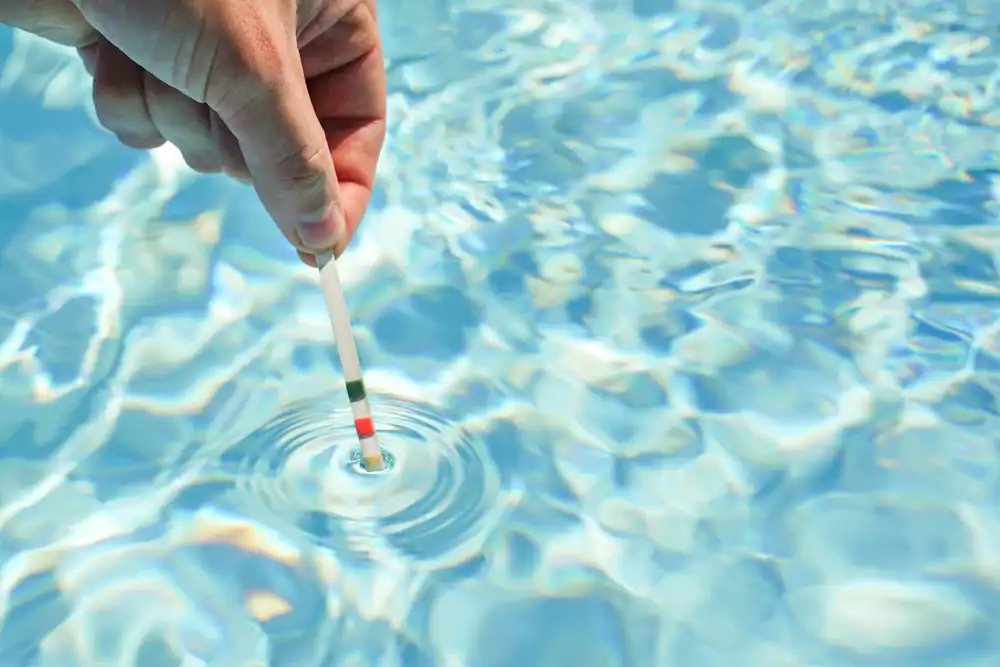
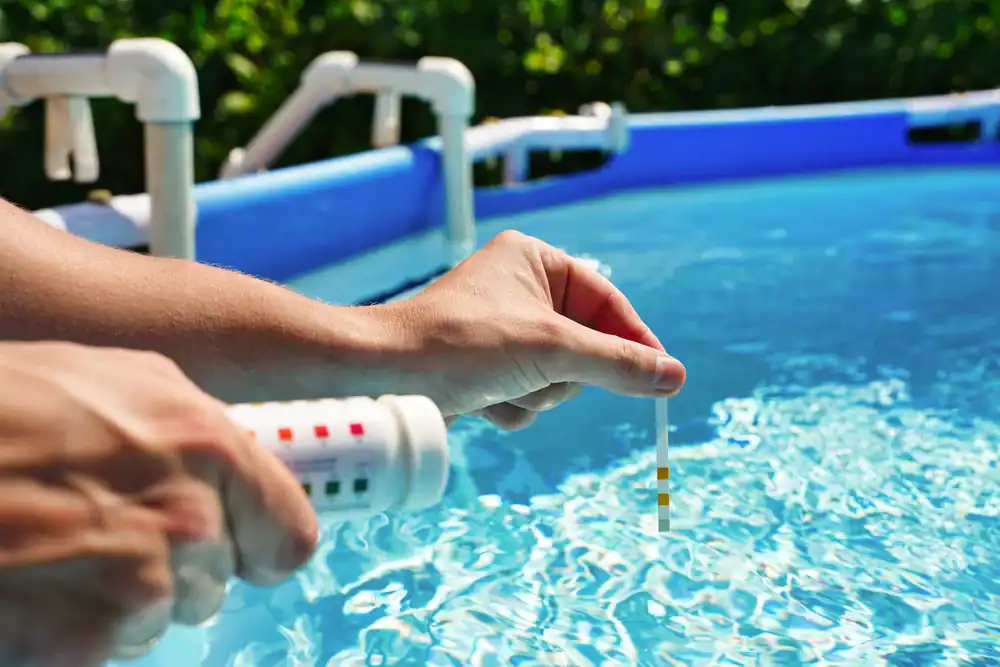
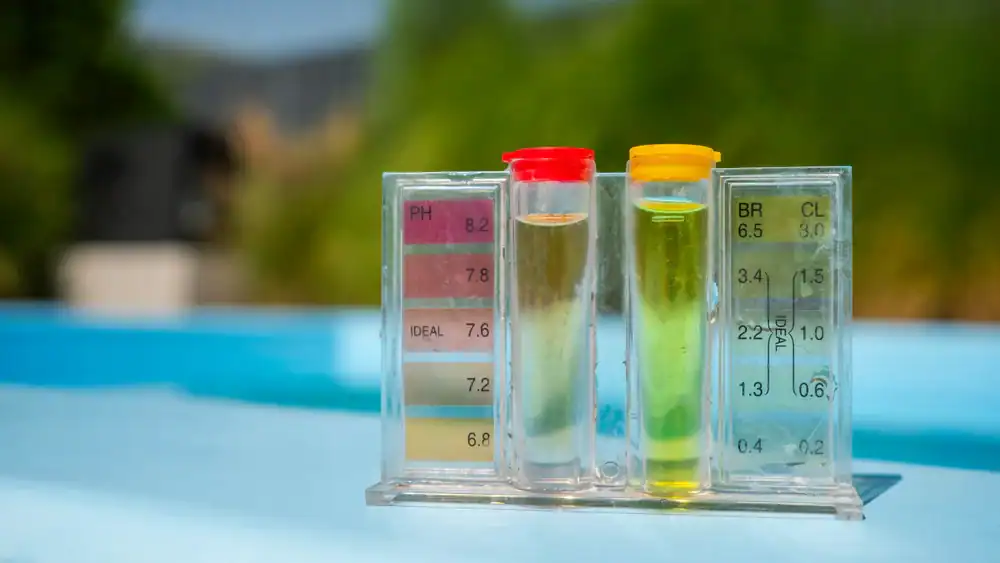
Test strips work by matching a color change to a printed chart which sounds straightforward until you factor in the variables. Strips expire, humidity affects their accuracy, and reading color under direct South Georgia sunlight introduces real margin for error. The result you get is a range, not a number. For basic weekly monitoring, strips can give you a general sense of where things stand. For diagnosing a persistent problem or establishing an accurate baseline, they’re not precise enough to be reliable.
Digital water analysis measures each parameter with equipment that gives you an actual number not a color match. That precision matters when you’re trying to correct a specific imbalance, because pool chemistry is a system. Adjusting one parameter affects others, and if your starting numbers are off by even a small margin, your correction plan can miss the mark. For pool owners in Willacoochee who don’t have a pool supply store nearby to run a second opinion, getting an accurate result the first time is especially important.
Yes and it’s one of the most common forms of pool damage that homeowners don’t catch until it’s already expensive to fix. When your pool water is low in calcium, it becomes what’s called aggressive or corrosive water. To reach its natural mineral equilibrium, it pulls calcium from whatever surface it’s in contact with which, in a gunite or plaster pool, means your pool’s finish. Over time, this shows up as pitting, roughness, or etching on the surface. It’s not dramatic at first, but it compounds quietly over seasons.
For pools in Atkinson County, this is worth paying specific attention to. The local fill water supply has its own mineral profile, and if you’re regularly topping off your pool with water that’s naturally low in calcium, you may be starting every refill with water that’s already pulling in the wrong direction. We test calcium hardness as part of every water chemistry analysis and flag this issue before it becomes a resurfacing conversation. Catching it early is straightforward. Fixing a damaged surface is not.
Cyanuric acid often called CYA or pool stabilizer is the chemical that protects your chlorine from being destroyed by UV light. Without it, direct sunlight can break down a significant portion of your free chlorine within just a couple of hours. In Willacoochee’s summer climate, where pools are in full sun for most of the day from May through September, that’s not a small problem. It means you could be adding chlorine regularly and still have a pool that’s effectively under-sanitized by midday.
The goal is to keep CYA within a specific range high enough to protect your chlorine from UV degradation, but not so high that it starts suppressing chlorine’s ability to sanitize. When CYA climbs too high, your chlorine becomes less effective even when the test reading looks normal. This is a balance that test strips don’t measure accurately, and it’s one of the first things we check during a professional water analysis because in South Georgia’s sun, getting this number right is what makes everything else work.
It does, and it affects it more than most pool owners expect. South Georgia’s pine forests the same ones that drove the turpentine industry that built communities like Willacoochee drop heavy pollen loads on outdoor pools every spring, typically from late February through April. When pollen settles into your pool water, it increases the organic load, which increases the demand on your chlorine. Your sanitizer gets consumed faster, pH can become less stable, and the water can turn hazy or develop a faint green tint even if you’ve been keeping up with your chemical routine.
The practical impact is that during pollen season, your normal chemical schedule may not be enough. Pools that held their balance fine through winter can start slipping in March and April simply because the organic load has increased. If you’re seeing your pool go through more chlorine than usual, or noticing cloudiness that clears up and then returns, pollen loading is often a contributing factor. A professional water test during this window gives you an accurate read on where your chemistry actually stands so you can adjust your routine for the season instead of chasing a problem that keeps coming back.
Other Services we provide in Willacoochee