
Hear from Our Customers
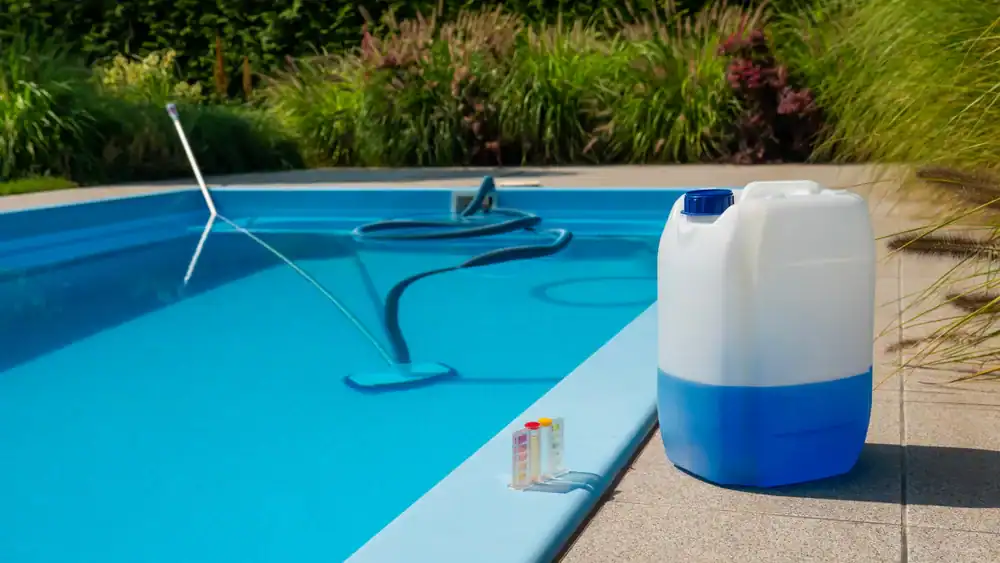
Most pool problems don’t start with algae. They start with a number that’s slightly off pH creeping above 7.8, calcium hardness drifting too low, cyanuric acid building up past the point where chlorine can do its job. By the time you see green water or feel eye irritation, the chemistry has been wrong for a while. Professional testing catches those shifts before they become the kind of problem that costs real money to fix.
In Coffee County, this matters more than most places. The municipal water supply in Douglas runs at about 6 grains per gallon moderately hard which means every time you top off your pool after evaporation, you’re adding minerals that concentrate over time. Combine that with South Georgia’s summer heat pushing well past 95 degrees and UV that can burn through unprotected chlorine in under two hours, and you’ve got a chemistry environment that changes fast. A test strip isn’t built for that. Digital water analysis is.
When your water is properly balanced, your chlorine actually works, your surfaces stay protected, and your pool is safe for the kids and grandkids who are in it every weekend from May through September. That’s not a small thing in a community where pools are family assets, not luxury amenities.
We’re based in Douglas, Georgia the Coffee County seat, and the same county as Wilsonville. That’s not a geographic coincidence worth glossing over. It means when we show up to test your water, we drive the same roads, work with the same municipal water supply, and have spent decades managing pool chemistry in the same South Georgia heat you’re dealing with every summer.
Our experience goes back more than 30 years long before we were formally established in 2014. That history is rooted in concrete, plumbing, and custom pool construction, which means we understand water chemistry not just as a balancing act, but as something that directly affects your pool’s surfaces and equipment over time. We’ve built and resurfaced enough pools in this region to know what chronically imbalanced water actually does to a plaster finish.
Licensed, insured, and locally accountable not a regional chain with a call center, but a Coffee County business with a reputation to protect in Wilsonville and the surrounding area.
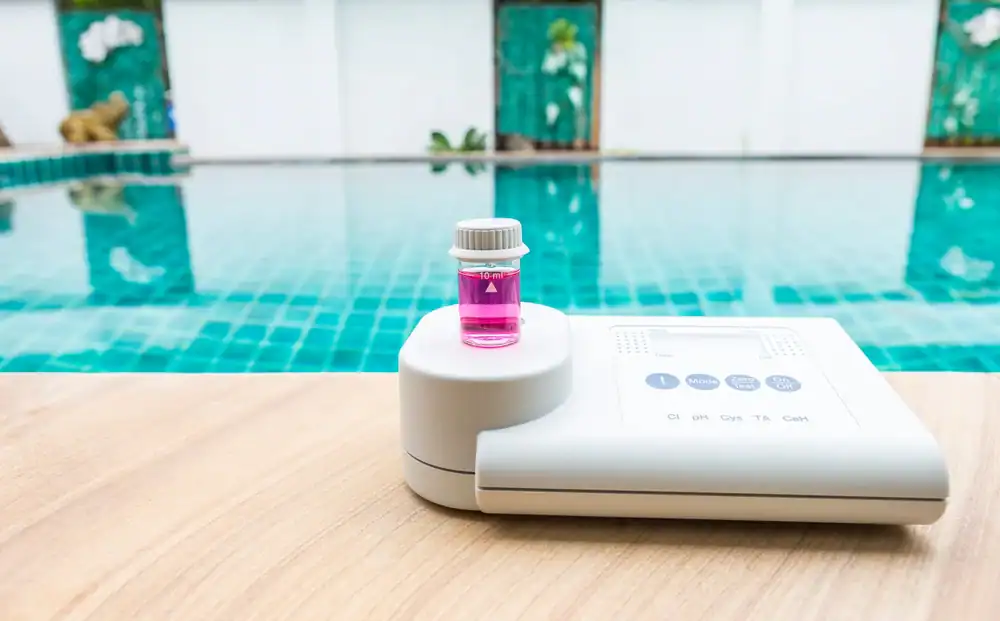
It starts with a proper water sample and digital analysis not a strip dipped in the deep end and held up to a color chart. Our testing equipment measures free chlorine, combined chlorine, pH, total alkalinity, calcium hardness, cyanuric acid, and total dissolved solids. Each of those numbers tells a specific part of the story, and they have to be read together to make sense of what’s actually happening in your pool.
Once the results are in, you get a plain-language explanation of what’s off and why. If your pH is high, you’ll understand how that’s affecting your chlorine’s ability to sanitize not just that it needs to come down. If your calcium hardness is low, you’ll know what that’s doing to your plaster surface over time. The correction plan is built around your pool’s actual numbers, not a generic protocol.
In Wilsonville and the surrounding Coffee County area, timing matters. After a summer thunderstorm drops three or four inches of rain in an afternoon which happens regularly from July through August pool chemistry can shift enough in 24 to 48 hours to create conditions algae loves. Knowing your baseline numbers makes it much easier to respond quickly when the weather does what South Georgia weather does.
Ready to get started?
Our professional water testing covers the full panel not just the two or three things a test strip can approximate. That means free chlorine and combined chlorine (chloramines are what cause that sharp smell and eye irritation, and strips can’t detect them), pH, total alkalinity, calcium hardness, cyanuric acid, and total dissolved solids. If your Wilsonville pool is filled from a private well rather than the county supply, we include metals testing for iron and manganese, because well water in South Georgia frequently carries mineral content that causes staining and throws off chlorine readings in ways that standard panels miss entirely.
Each of those parameters connects to something real. Total alkalinity is what keeps your pH from bouncing all over the place after a heavy rain. Cyanuric acid stabilizes chlorine against UV degradation critical in a climate where your pool sits in direct South Georgia sun for eight or more hours a day. Calcium hardness protects your pool’s surface from the water itself; when it drops too low, plaster and aggregate finishes start to break down from the inside out.
For Wilsonville pool owners dealing with Coffee County’s moderately hard fill water, calcium hardness and TDS levels need consistent monitoring. The minerals in your fill water concentrate as water evaporates over a long swim season, and without regular testing, scaling on surfaces and equipment becomes a slow, expensive problem. Testing is what keeps that from sneaking up on you.
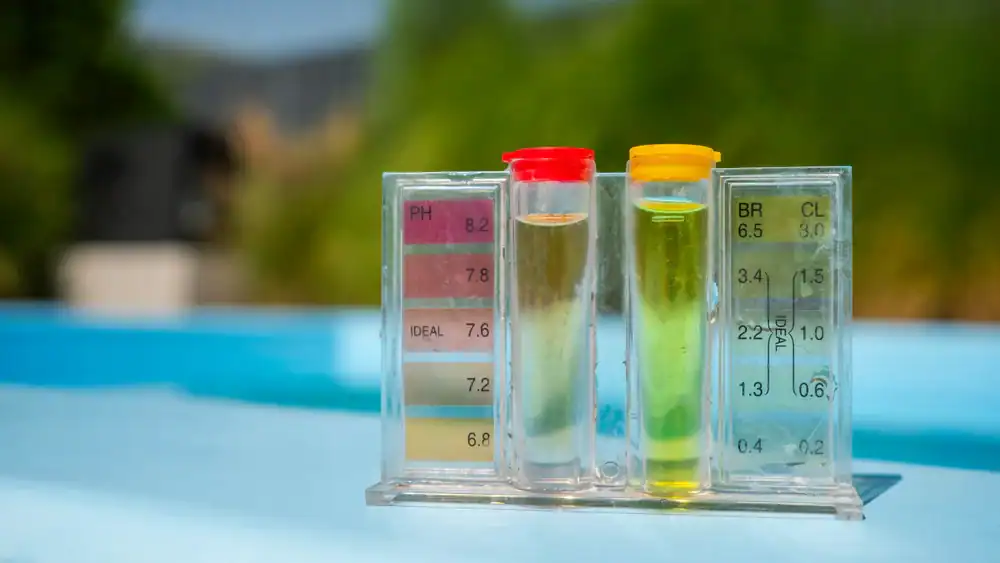
For most pools in the Wilsonville area, we recommend professional testing at least once a month during swim season as a reasonable baseline but that frequency should go up after any significant weather event. Coffee County gets hit with heavy summer thunderstorms regularly from June through August, and a hard rain can dilute your chemicals, drop your pH, and introduce enough organic material to shift your pool’s chemistry within a day or two. If you’re running your pool through a long South Georgia summer with kids in the water every weekend, monthly testing gives you a real picture of where things stand and catches problems before they become visible.
Beyond the seasonal schedule, there are specific moments when testing is non-negotiable: when you open the pool in spring, after any major rainstorm, if you notice cloudiness or a color change, and before you close for the season. The goal is to stay ahead of the chemistry, not react to it after the water’s already gone wrong.
This is one of the most common frustrations pool owners in Wilsonville bring to us, and the answer almost always comes back to pH or cyanuric acid two things a basic test strip doesn’t measure accurately enough to catch. When your pH climbs above 7.8, chlorine loses roughly half its sanitizing power even when the chlorine reading looks normal. You can be adding the right amount of chlorine and still have water that’s barely disinfected, because the pH is making it ineffective.
The other common culprit is cyanuric acid buildup. CYA is a stabilizer that protects chlorine from UV degradation useful in South Georgia’s intense sun but when it accumulates past a certain threshold, it actually blocks chlorine from working. This is called chlorine lock, and it’s invisible to test strips. Digital water analysis catches both of these issues precisely, which is why pools that have stumped their owners for weeks often have a clear answer within the first professional test.
Yes, and it’s something Wilsonville pool owners should pay attention to specifically. The municipal water supply serving Coffee County runs at about 6 grains per gallon, which puts it in the moderately hard range. That mineral content doesn’t disappear when the water goes into your pool it stays, and as water evaporates through a long South Georgia summer and gets replaced with fresh fill water, those dissolved minerals concentrate. Over time, calcium hardness levels can climb into scaling territory, which means deposits forming on your pool walls, waterline tile, and inside your filter and pump equipment.
The flip side is also true. If your calcium hardness drops too low which can happen after heavy dilution from rain or if you drain and refill with a lower-mineral water source the water becomes aggressive and starts pulling calcium out of your pool’s plaster or aggregate surface. That kind of corrosive chemistry is invisible until the surface damage is already done. Regular calcium hardness testing is the only way to stay ahead of both problems.
Free chlorine is the active, working chlorine in your pool the portion that’s actually available to sanitize the water and kill bacteria. Total chlorine includes free chlorine plus combined chlorine, which is chlorine that has already reacted with contaminants like sweat, sunscreen, and organic material and is now chemically bound and no longer effective as a sanitizer. The gap between those two numbers is called combined chlorine, or chloramines, and it’s what causes that strong chemical smell and the eye irritation people often associate with “too much chlorine.” In reality, that smell usually means there’s not enough free chlorine doing its job.
Test strips typically only show you total chlorine, which means you can get a reading that looks fine while your free chlorine is actually low and your combined chlorine is high. In a pool that gets heavy use during South Georgia’s summer months especially with multiple swimmers, sunscreen, and long days in the heat combined chlorine builds up faster than most people expect. Digital testing separates these two numbers clearly, so you know exactly what your water is actually doing.
You can, but well water in South Georgia frequently contains elevated iron, manganese, and other minerals that don’t show up in standard pool chemistry tests and can cause significant problems if you don’t account for them. Iron is the most common issue it can turn pool water a brownish-green color that looks like algae but doesn’t respond to shock treatment, because it’s a metal stain, not a biological problem. Manganese can cause black or purple staining on pool surfaces. Both are invisible in the water until something goes wrong.
If your Wilsonville property uses a private well rather than the Coffee County municipal supply, we recommend getting a metals test before and after a fill. The correction approach for metal-heavy water is different from standard chemistry balancing it involves sequestering agents and careful pH management rather than just adjusting chlorine and alkalinity. Knowing what’s in your well water before it becomes a surface stain saves you from a much more complicated and expensive fix later.
Pool store testing is built around selling you something. That’s not an accusation it’s just the business model. The test is free because the recommendation that follows it almost always involves a product purchase. There’s nothing wrong with pool store products, but when the test and the solution come from the same place with the same financial incentive, it’s worth understanding that dynamic before you take the diagnosis at face value.
Our water testing is independent. The goal is to tell you exactly what’s in your water, explain what it means, and give you a correction plan based on your pool’s actual numbers not a product lineup. For Wilsonville pool owners who have already been through the cycle of buying the recommended chemicals and still dealing with the same problem the following week, that distinction matters. You’re getting a professional read from a team that has been managing pool chemistry in Coffee County’s specific climate and water conditions for decades, not a sales-driven recommendation from someone who’s never seen your pool.
Other Services we provide in Wilsonville