
Hear from Our Customers
Putney summers don’t ease up. From May through September, the heat and humidity out here push chlorine levels off balance faster than most homeowners realize and the afternoon thunderstorms that blow through Dougherty County almost every day in July and August don’t help. They dump fresh water into your pool overnight, dilute your chemistry, and wash in whatever the pecan trees and surrounding fields decided to shed that day. By the time you notice the water turning, you’re already looking at days of remediation instead of an afternoon swim.
Professional weekly maintenance stops that cycle before it starts. You get a pool that’s chemically balanced, visually clear, and actually safe not just one that looks okay from the back porch. For families and retirees in Putney who use their pool as the centerpiece of their summer, that consistency is the whole point.
The older ranch-style homes that make up a lot of Putney’s housing stock also mean aging equipment that needs more attention than a newer installation would. Pumps, filters, and heaters that have been running for decades don’t give you a lot of warning before they fail. Catching small issues during routine visits is what keeps a $400 repair from turning into a $4,000 replacement.
We were founded in 2014, but the experience backing our work goes back more than three decades of hands-on pool service in southwest Georgia the same climate, the same soil conditions, the same Dougherty Plain landscape that every pool owner in Putney is dealing with. This isn’t a franchise that moved into the Albany market from somewhere else. We’re a family-owned company built by people who have been doing this work in South Georgia long enough to know exactly what this environment does to a pool over time.
Being fully licensed and insured in Georgia isn’t just a legal requirement it’s the baseline of accountability that Putney homeowners deserve when someone is working on their property. Every visit, every repair, every installation is backed by that same standard. No shortcuts, no surprises, no excuses. That’s not marketing language. It’s how we built this business, and it’s the reason customers along the U.S. 19 corridor keep calling back.
It starts with a straightforward conversation about your pool its age, equipment, current condition, and what you’ve been dealing with. For a lot of Putney homeowners, especially those who bought an older home and inherited whatever pool came with it, that initial assessment is the most valuable part. You get a clear picture of what you’re working with, what needs attention now, and what can wait.
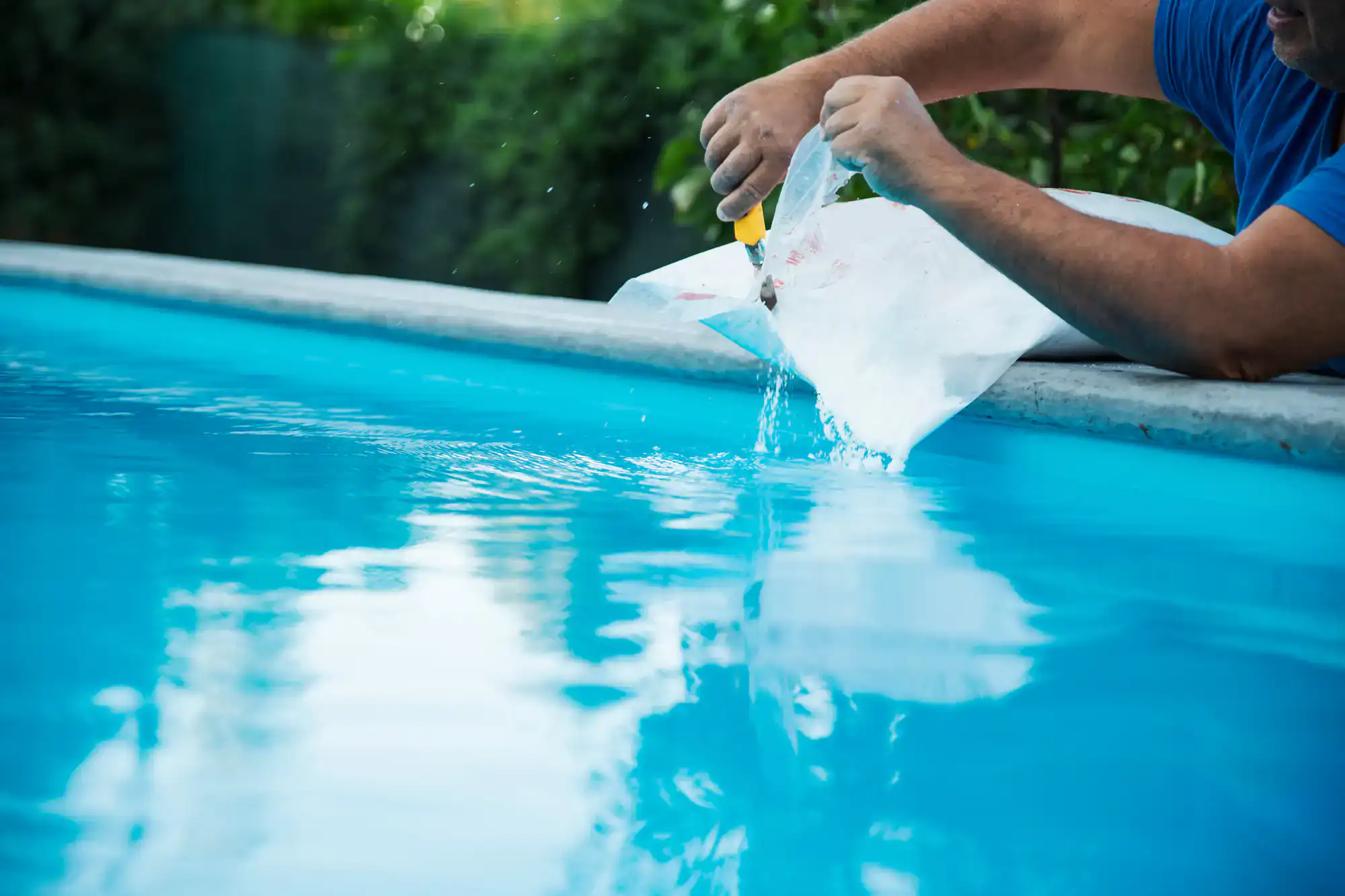
From there, our weekly maintenance visits cover professional-grade water testing, chemical balancing, skimming, brushing, and equipment checks. These aren’t quick walkthroughs every visit includes actual measurements of pH, chlorine, alkalinity, and calcium hardness using calibrated equipment, not consumer test strips. In a climate where a single afternoon storm can reset your pool’s chemistry overnight, that precision matters more than it would almost anywhere else.
Because Putney is unincorporated, any permitted pool construction or major renovation work falls under Dougherty County’s building department not a city office. We handle that process and know what’s required at the county level, so you don’t have to figure it out yourself. For repairs and maintenance, no permit is typically required, and service can usually begin quickly once the initial assessment is done.
Ready to get started?
Weekly pool maintenance is the foundation but Putney pool owners dealing with aging equipment, older liners, or years of deferred upkeep need more than a maintenance-only provider. We cover the full range: weekly maintenance, pool equipment repair across all major brands including Hayward, Pentair, Jandy, Sta-Rite, and Zodiac, leak detection, pool liner replacement, heater installation, filter cleaning, and emergency service when something goes wrong at the worst possible time.
Leak detection is worth calling out specifically for this area. Pools in Dougherty County’s soil conditions the porous, karst-influenced geology of the Dougherty Plain can develop leaks that quietly erode the ground around your pool shell before you ever notice a problem. Professional leak detection typically runs $300 to $1,000 for an inground pool, and catching it early is almost always cheaper than dealing with the structural consequences of letting it go.
Pool heater installation is another area where the investment pays off clearly. A properly maintained heater lasts 8 to 12 years. Without regular attention, that drops to 3 to 5 years. Whether you’re extending your swim season into November or protecting a heater you’ve already paid for, that maintenance window is real money. Emergency service is also available because in Putney’s summer heat, a broken pump or a green pool the week of a family gathering isn’t something you can put on a two-week waiting list.

In most parts of the country, you might get away with bi-weekly service during shoulder months. In Putney, that’s a harder sell. The combination of summer heat that regularly feels above 100°F and near-daily afternoon thunderstorms from June through August means your pool chemistry can shift significantly within days of a service visit. Chlorine burns off faster in high heat, and every storm that rolls through resets your pH and dilutes your sanitizer levels while dropping organic debris into the water.
For most Putney pool owners, weekly service during the peak season May through September is the standard that keeps a pool consistently clean and safe. During the cooler months, some homeowners scale back, but because Putney’s winters are mild enough that many pools stay in partial use year-round, it’s worth having an honest conversation about what your pool actually needs based on how often it’s being used and what equipment you’re running.
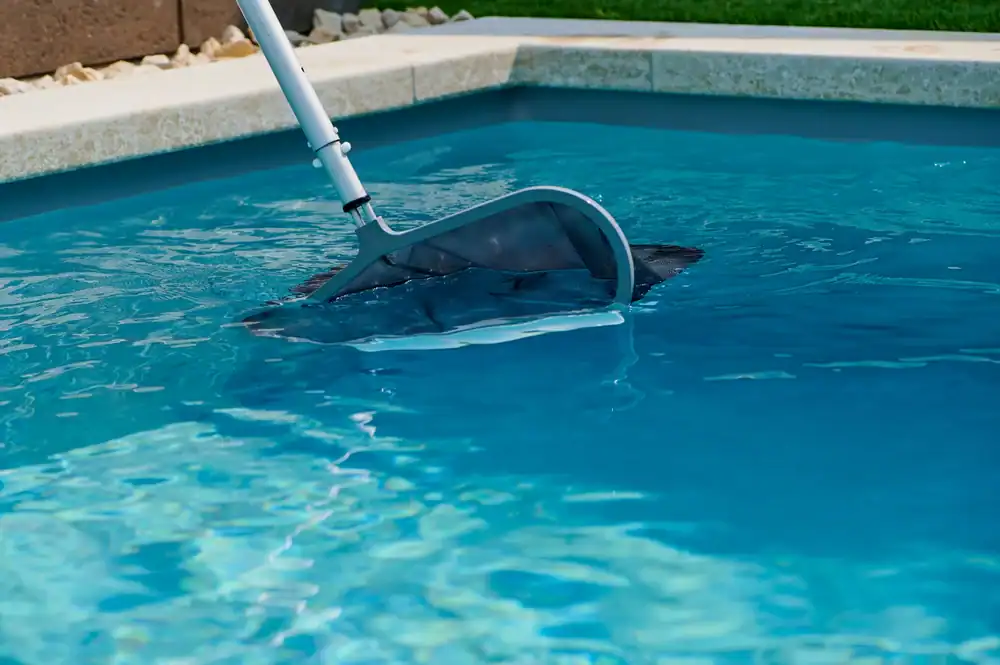
A real maintenance visit covers more than skimming leaves off the surface. Every visit should include professional water testing actual measurements of pH, free chlorine, total alkalinity, and calcium hardness not a quick dip of a consumer test strip. Based on those readings, we adjust chemicals as needed to keep the water balanced and safe. The pool is skimmed, the walls and floor are brushed, the pump basket and skimmer baskets are emptied, and the equipment is visually checked for anything that looks off.
In Putney specifically, debris management is a bigger part of the job than it might be in a purely suburban setting. If you have pecan trees near your pool and a lot of properties out here do you’re dealing with consistent organic debris that accelerates algae growth and puts extra load on your filter. We account for that and adjust the maintenance approach accordingly, rather than applying the same generic routine regardless of what’s actually going on with your pool.
This is one of the most common questions pool owners ask, and the answer matters financially. Normal evaporation in southwest Georgia’s heat can account for up to a quarter to half an inch of water loss per day during peak summer. If you’re losing more than that consistently especially if the loss is faster when the pump is running you’re likely dealing with a leak somewhere in the shell, plumbing, or equipment.
The bucket test is a simple starting point: fill a bucket with pool water, set it on a step, and mark both the bucket water level and the pool water level. After 24 hours, compare the two. If the pool lost significantly more water than the bucket, that’s a meaningful signal. In Dougherty County’s soil conditions, where the ground is relatively porous over karst limestone geology, an undetected leak doesn’t just waste water it can erode the soil supporting your pool shell over time. Professional leak detection typically costs $300 to $1,000 for an inground pool, and finding it early almost always costs less than the repair it prevents.
Green water is almost always an algae problem, and algae grows when sanitizer levels drop low enough to give it an opening. In Putney’s climate, that opening can come faster than most homeowners expect. High heat accelerates chlorine burn-off, and if a thunderstorm rolls through and dilutes your water the same week your chlorine was already running low, you can go from a clear pool to a green one in 48 to 72 hours.
The fix isn’t just adding more chlorine. You need to shock the pool with a high enough dose to kill the algae, brush the walls and floor to break up the biofilm, run the filter continuously until the water clears, and then retest and rebalance everything once it does. Depending on how far gone the water is, this process can take two to four days. More importantly, the reason it keeps happening usually comes down to inconsistent maintenance either the chemistry isn’t being checked frequently enough, or the chlorine levels aren’t being maintained between visits. Weekly professional service is what breaks that cycle.
It depends on how you use your pool and how long you want to use it. Putney’s natural swim season runs roughly March through October, which is already longer than most of the country. But if you want to swim comfortably in March when the water is still in the low 60s, or extend into November when afternoon temperatures are still pleasant but the pool has cooled down, a heater makes a real difference.
Gas and propane heaters heat water the fastest and work well regardless of air temperature useful in the shoulder months when heat pump efficiency drops. Heat pumps are more energy-efficient during the warmer months but slow down as temperatures fall. The installation cost for a pool heater typically runs $1,500 to $6,000 depending on the type and your pool’s size. The bigger long-term factor is maintenance: a heater that gets regular attention lasts 8 to 12 years. One that doesn’t often fails in 3 to 5 years. If you’re going to invest in the equipment, protecting it with routine service is the part that makes the math work.
Because Putney is an unincorporated community in Dougherty County, there’s no city permitting office involved all permits for pool construction, major renovations, or significant structural work run through Dougherty County’s building and planning department. For routine maintenance, chemical service, equipment repairs, and most equipment replacements, no permit is required. The permit question typically comes up when you’re talking about new pool construction, major plumbing changes, or electrical work.
Georgia also requires pool contractors performing residential work above $2,500 to hold a valid state contractor license. That’s worth verifying before hiring anyone licensed contractors carry the insurance and accountability that protects you if something goes wrong on your property. We’re fully licensed and insured in Georgia, which means every job, whether it’s a weekly maintenance visit or a full heater installation, is covered. If you’re unsure whether your specific project requires a Dougherty County permit, that’s a straightforward question to ask during the initial consultation and one worth getting answered before work begins.