
Hear from Our Customers
If you’ve added chemicals, waited, tested again, and still ended up with cloudy or green water you’re not doing it wrong, you’re just working with incomplete information. Test strips measure three to five parameters at best, and they do it with color-matching accuracy that falls apart in direct sunlight. What they miss is usually exactly what’s causing the problem.
Out here in Coffee County, the soil is sandy and naturally acidic. That means the groundwater whether you’re pulling from a well or topping off from a municipal line tends to run low in calcium and alkalinity. Water like that is quietly corrosive. It doesn’t turn your pool green. It just slowly attacks your plaster, your fittings, and your pump while everything looks fine on the surface.
Then there’s the summer itself. South Georgia’s UV load can destroy up to 90% of unprotected chlorine in under two hours. If your stabilizer levels aren’t dialed in, you’re adding chlorine into a pool that burns it off before it can do anything. A professional water test catches all of that pH, free chlorine, total alkalinity, calcium hardness, cyanuric acid, and more so you’re not guessing, and you’re not wasting money on chemicals that can’t work because the foundation isn’t right.
We’re based in Douglas the Coffee County seat, about 8 to 12 miles from Saginaw and the Nicholls area. This isn’t a regional chain dispatching technicians from an hour away. When you call us, you’re reaching a team that has been building and servicing pools in Saginaw and this specific part of South Georgia for over 30 years.
That history matters when it comes to water chemistry. The wiregrass region’s soil conditions, the well water that’s common on rural Coffee County properties, the way Georgia’s pollen season runs from February through October and keeps organic load high these aren’t abstract concerns for us. They’re what we work around every week.
We use advanced digital water analysis instead of color-matching test kits, and we’re licensed and insured. When we hand you a readout, we walk you through every number in plain language what’s off, why it matters, and exactly what needs to happen to fix it. No mystery chemicals, no guesswork.
It starts with a water sample pulled correctly from the right depth, away from return jets and skimmers, which is something that actually affects the accuracy of the reading. Most homeowners don’t know that, and it’s one of the reasons DIY tests come back looking fine when the water isn’t.
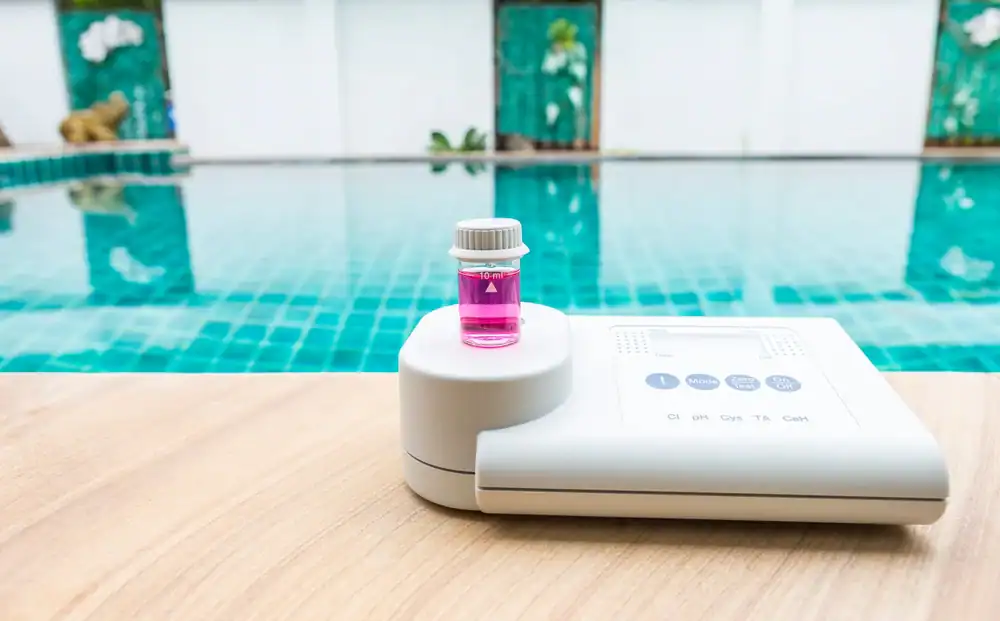
From there, we run a full digital analysis. That covers free chlorine, total chlorine, combined chlorine, pH, total alkalinity, calcium hardness, cyanuric acid, and where applicable, metals and total dissolved solids. That last one matters more than most people realize out here in rural Coffee County, where well water is common and iron or manganese in the water supply can cause staining and throw off chemical balance in ways that standard testing completely misses.
Once we have the full picture, we go through it with you. Not in technical shorthand in plain terms. Here’s what’s off, here’s what it’s doing to your pool, here’s what we’re going to do about it, and here’s what you can expect after. In a rural area like Saginaw where a service call isn’t a five-minute drive, getting it right the first time isn’t just professional it’s the only way to do it.
Ready to get started?
A professional water test from us covers the full range of chemistry parameters not just the ones that are easy to check. pH and free chlorine get the most attention, but they don’t tell the whole story. If your pH climbs above 7.8, chlorine loses roughly half its sanitizing power even when the reading looks normal. That’s a problem that strips won’t catch and that South Georgia’s heat and evaporation cycles make worse throughout the season.
Total alkalinity is what keeps your pH stable between tests. Calcium hardness protects your pool’s surface especially important for gunite and plaster finishes, which are more sensitive to soft, corrosive water than fiberglass or vinyl. Cyanuric acid keeps chlorine from burning off under direct sunlight, which is a real and constant issue during Coffee County’s long pool season running from roughly April through October. And if your pool is filled or topped off with well water, metal testing matters iron and manganese don’t just stain surfaces, they interfere with chlorine and create chemistry problems that look like something else entirely.
Every test we run is documented and explained. You leave the conversation knowing what your water actually looks like, what it was doing to your pool, and what’s been corrected not just handed a bag of chemicals and a bill.
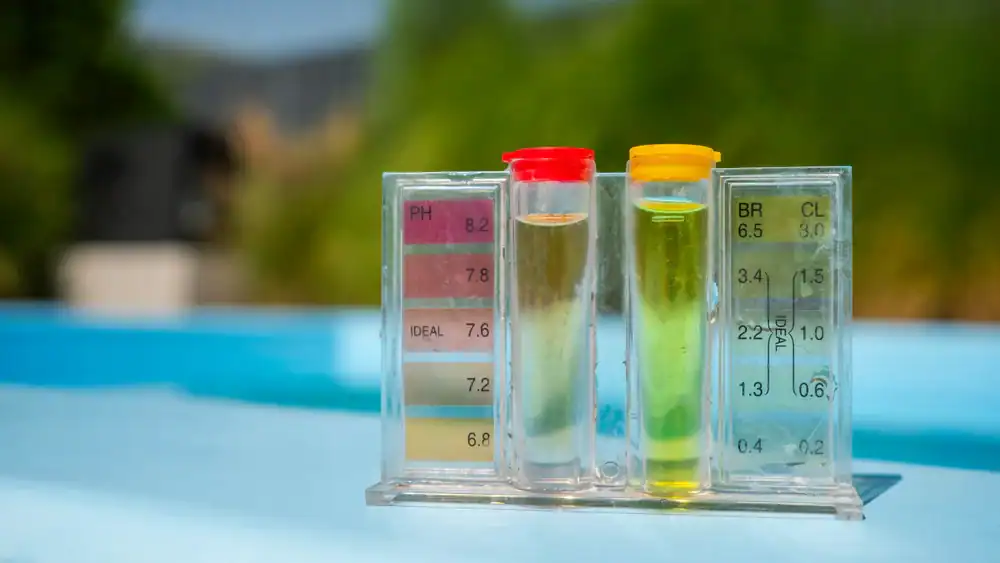
For most pools in Saginaw and Coffee County, a professional test at least once a month during the active season is a solid baseline but the honest answer is that it depends on what’s happening around your pool. After a heavy South Georgia thunderstorm, your water chemistry can shift significantly within 24 hours. Rainwater is naturally acidic, it dilutes your chemicals, and it washes in organic material from your yard, surrounding pines, and whatever’s growing nearby. A pool that tested balanced on a Tuesday can be noticeably off by the weekend after a hard rain.
Georgia’s pollen season also plays a bigger role than most people expect. With tree pollen running from February through May and grass pollen continuing into early summer, the organic load hitting your pool water is substantial in Saginaw and the surrounding rural areas. Heavy pollen events spike chlorine demand and make pH harder to hold steady. If your pool sees a lot of use, sits in direct sun most of the day, or gets topped off with well water, monthly professional testing is the minimum not the maximum.
This is one of the most common frustrations we hear from pool owners in Coffee County, and it almost always comes down to one of two things: either the chlorine isn’t working because the pH or cyanuric acid levels are off, or the chlorine is being destroyed faster than you’re adding it.
When pH rises above 7.8, chlorine loses a significant portion of its sanitizing effectiveness even when the chlorine reading looks fine on a test strip. And in South Georgia’s summer sun, unprotected chlorine without adequate cyanuric acid (stabilizer) can be burned off in under two hours. So you add chlorine, the sun destroys it, the pH creeps up, and the algae keeps growing. It’s a cycle that feels impossible to break because you’re only seeing part of the picture. A full digital water analysis identifies which variable is actually driving the problem, so you’re treating the cause instead of chasing the symptom.
It does, and it’s something that doesn’t get nearly enough attention in generic pool care advice. Many properties in Saginaw and unincorporated areas of Coffee County rely on private wells, and well water in this wiregrass region often contains elevated iron, manganese, or other minerals that municipal water treatment removes before it ever reaches your tap.
When that water goes into your pool, those minerals don’t disappear they accumulate. Iron can cause brown or rust-colored staining on your pool surfaces and equipment. Manganese can cause black or purple staining. Both interfere with chlorine and make your water chemistry harder to stabilize. Standard pool test strips don’t test for metals, and most pool store tests don’t either. A professional analysis that includes metal testing and total dissolved solids gives you a complete picture of what you’re actually working with, which is the only way to treat a well-water pool correctly.
Calcium hardness is the measure of how much dissolved calcium is in your pool water, and it matters more than most homeowners realize especially in Coffee County. The sandy, acidic soils of the wiregrass region mean that groundwater here naturally runs low in calcium. When pool water is too soft (low calcium hardness), it becomes corrosive. It pulls calcium out of whatever it can find and in a gunite or plaster pool, that means your pool’s own surface.
The damage is slow and invisible at first. You won’t see it happening. But over time, low calcium hardness etches plaster, pits gunite, and degrades the finish in ways that are expensive to repair. A professional water test that includes calcium hardness testing lets you catch and correct this before it becomes a resurfacing job. The target range is typically 200 to 400 parts per million, and keeping it there is one of the most cost-effective things you can do to protect a pool’s long-term condition.
Pool store testing has its place, but it’s worth understanding what it is and what it isn’t. Most pool store tests are designed to help you buy the right chemicals from their shelves that’s the business model, and there’s nothing wrong with it, but it shapes what they test for and what they recommend. The results are real, but the recommendations that follow are filtered through what’s available in the store.
Our professional water test is independent. We’re not selling you a specific brand of shock or a particular algaecide we’re giving you an accurate read of your water and telling you what it actually needs. We also test parameters that most pool store tests skip, including combined chlorine, cyanuric acid at accurate levels, metals, and total dissolved solids. For a pool in Saginaw that’s dealing with well water, South Georgia’s UV conditions, and a seven-month swim season, that additional depth matters. It’s the difference between a diagnosis and a guess.
The short answer is that skipping regular testing in South Georgia’s climate is expensive. The longer answer is that the problems that develop when chemistry goes unmonitored don’t always announce themselves with green water or a strong smell. Corrosive water caused by low pH, low alkalinity, or low calcium hardness, all of which are common tendencies in Coffee County’s naturally soft water environment works quietly. It etches plaster, corrodes metal fittings, and degrades pump components while the water looks completely clear.
By the time you notice something is wrong, you’re often looking at equipment repairs or a resurfacing job that runs into the thousands. Regular professional testing especially through Coffee County’s long swim season and after the heavy rainfall events that South Georgia sees regularly catches chemistry drift before it becomes structural damage. A professional test costs a fraction of what a single service call for a corroded pump or a replastering job does. For most pool owners out here, it’s not really a question of whether they can afford to test regularly it’s whether they can afford not to.