Hear from Our Customers
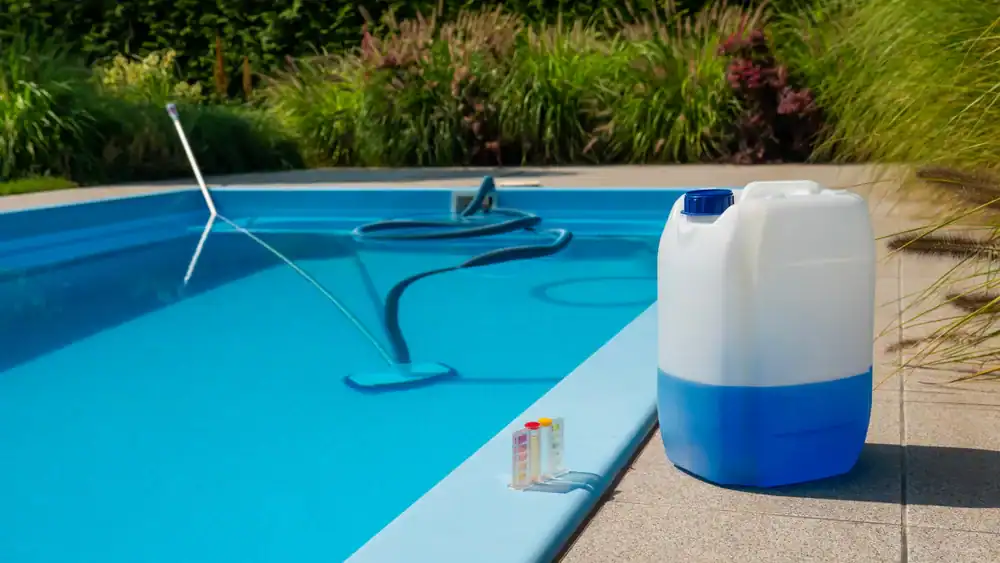
When your pool water is truly balanced, you stop chasing problems. No more dumping in chlorine and hoping for the best. No more green water the week after a summer storm rolls through Coffee County. No more staining you can’t explain and can’t seem to fix. That’s what accurate water testing actually gives you not just a number on a strip, but a real picture of what’s happening in your water and a clear plan to correct it.
Out here along US 221, a lot of pools are filled from private wells. That means iron, manganese, and variable calcium hardness are part of the equation before you even add your first chemical. Those minerals don’t show up on a standard test strip, and they don’t care how much chlorine you pour in. Left unchecked, they stain plaster, clog equipment, and create problems that look like a chemistry failure when they’re actually a source water issue.
South Georgia summers make all of this more urgent. When temperatures are sitting in the low 90s and your pool is getting full afternoon sun, chemistry can shift in 48 hours. A pool that tested fine on Saturday can have a real problem by Monday. Professional water testing gives you an accurate baseline so you’re correcting the right thing, not just guessing.
Deep Waters Pools is based in Douglas the Coffee County seat right down US 221 from West Green. This isn’t a regional company dispatching from two counties away. When you call, you’re talking to people who drive these roads, know this climate, and have been building pools in this corner of South Georgia for over 30 years.
That construction background matters more than most people realize. Understanding how gunite and shotcrete surfaces interact with water chemistry how soft well water eats at plaster, how calcium hardness affects a pebble finish over time that’s not something you learn from a pool supply manual. It comes from decades of building these pools and watching what happens when the chemistry isn’t right.
We’re licensed, insured, and use advanced digital water analysis not color-matching strips to give you readings you can actually act on. The goal is a clear answer and a straight recommendation, not a bag of chemicals and a receipt.
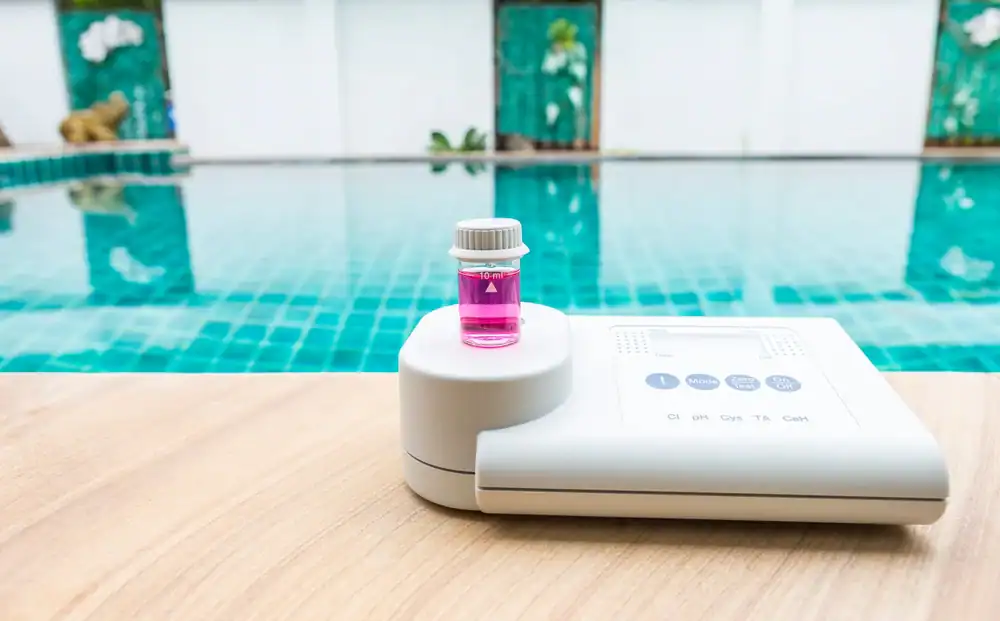
It starts with a full digital water analysis. That means testing free chlorine, total chlorine, pH, total alkalinity, calcium hardness, cyanuric acid, total dissolved solids, and metals specifically iron and copper. For pools in and around West Green that are fed by private wells, that metals panel isn’t optional. It’s often the piece that explains everything else that hasn’t been working.
Once the results are in, you get a plain-English breakdown of every parameter what’s off, by how much, and why it matters. There’s no pressure to buy anything on the spot. The point is that you leave the conversation knowing exactly what your water needs, in what order, and roughly what it’ll take to get there. If corrections are needed, those can be handled as part of the service or you can take the report and work from it yourself.
Timing matters in South Georgia. If you’re opening your pool after a pollen-heavy spring or trying to recover after a stretch of summer thunderstorms, the sequence of corrections is just as important as the corrections themselves. Getting pH right before you adjust alkalinity, stabilizing CYA before you evaluate chlorine demand the order is part of the process, and that’s exactly what you’ll walk away with.
Ready to get started?
A professional water test from Deep Waters Pools covers every variable that drives real pool problems in this area. That includes pH level balancing, total alkalinity, free and combined chlorine, cyanuric acid, calcium hardness, total dissolved solids, and a metals panel for iron and copper. For pools in West Green specifically, that last one is often the most revealing well water in South Georgia’s Coastal Plain regularly carries iron and manganese at levels that cause staining and surface damage long before they’re visible in the water.
Calcium hardness testing is another area where local conditions make a real difference. The naturally softer water that comes from wells in this region tends to be low in calcium, which makes it corrosive. Soft water doesn’t stay soft it pulls calcium from wherever it can find it, which usually means your pool’s plaster or concrete surface. Catching a low calcium hardness reading early is the difference between a chemistry adjustment and a resurfacing conversation.
Every test includes a full written breakdown of results and a specific correction plan what to add, in what order, and what to watch for afterward. No vague recommendations, no upsell pressure. Just accurate data and a clear path forward for your specific pool, your specific water source, and the specific season you’re in.
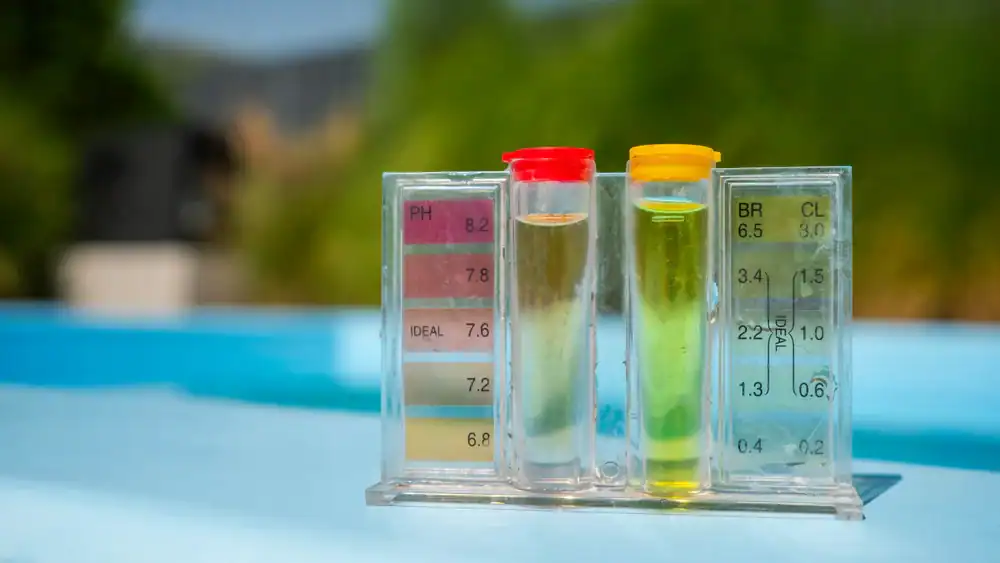
Clear water isn’t the same as balanced water. Some of the most damaging chemistry conditions low calcium hardness, high cyanuric acid, elevated metals produce no visible symptoms until the damage is already done. A pool with soft well water and low calcium hardness can look perfectly clear while it’s slowly etching the plaster surface. By the time you see pitting or roughness, you’re already looking at a resurfacing cost, not a chemistry fix.
In West Green, where a lot of pools are filled from private wells rather than a municipal system, this is especially relevant. Iron and manganese in well water are invisible at first fill. They only become visible as brown or green tinting and stubborn staining once the pH shifts or the water chemistry changes. Professional water testing catches those metal levels before they cause surface damage or stain your equipment. Clear water is a good sign, but it’s not a green light to skip testing.
At minimum, professional water testing at the start of the season and after any major weather event is a reasonable baseline. But in South Georgia’s summer conditions temperatures in the low 90s, intense UV exposure, and regular afternoon thunderstorms chemistry can shift meaningfully within a few days. If you’re swimming frequently, dealing with heavy pollen load, or recovering from a storm that dropped a couple of inches of rain, waiting weeks between tests is too long.
The practical answer for most West Green pool owners is this: test professionally at opening, again mid-summer, and any time something looks or feels off cloudy water, skin irritation, persistent algae, or a strong chlorine smell. That last one, the strong smell, is actually a sign of combined chlorine (chloramines), not excess chlorine. It means your water is chemically stressed, not oversanitized. Professional water testing will confirm it and tell you exactly how to fix it.
This is one of the most common frustrations we hear, and the answer is almost never “add more chlorine.” When a pool keeps going green despite regular chlorine additions, the usual culprits are pH that’s drifted too high, cyanuric acid that’s built up to a level where it’s blocking chlorine from working, or combined chlorine that’s consuming your free chlorine before it can do its job. None of these are visible, and none of them show up accurately on a standard test strip.
In South Georgia’s summer heat, high CYA is a particularly common problem. Stabilized chlorine tablets the kind most people use in a floater or skimmer basket add CYA every time you use them. Over a season or two, CYA levels can climb high enough to essentially lock your chlorine, making it ineffective even at high readings. The fix isn’t more chlorine. It’s a partial drain and refill, followed by a recalibrated chemistry plan. Professional water testing will tell you exactly where your CYA stands and whether that’s what’s driving your green water.
pH is the foundation that everything else in your pool chemistry depends on. When pH is too high above 7.8 chlorine loses roughly half its sanitizing power, even if your chlorine reading looks normal. That means you can have adequate chlorine in the water and still have a sanitation problem. High pH also causes calcium scaling on surfaces and equipment. When pH is too low, the water becomes corrosive it eats at metal fittings, irritates eyes and skin, and degrades pool surfaces over time.
For pools in the West Green area that are fed by well water, pH management is more complex than it is for municipal water customers. Well water has its own natural pH that varies by well depth and local geology, and it doesn’t behave the same way treated city water does. Rainwater and Coffee County gets over 50 inches of it annually is naturally acidic and pulls pH down every time it dilutes your pool. Keeping pH in the 7.4 to 7.6 range isn’t just about comfort. It’s what makes every other chemical in your pool actually work.
Yes, and it’s more common out here than most people expect. Iron in well water is one of the leading causes of pool staining in rural South Georgia, and it’s almost always invisible until it’s already causing problems. When iron-laden water is first added to a pool, it looks fine. The trouble starts when pH shifts, chlorine is added, or the water chemistry changes in a way that causes the iron to oxidize. At that point, you can get brown or rust-colored water, green tinting, or dark stains on the pool floor and walls that won’t respond to shock treatment because they’re not an algae problem they’re a metal problem.
Standard test strips don’t measure iron or copper at all. You won’t know your metal levels from a strip test, no matter how carefully you read it. We include a full metals panel in our digital water analysis, which is the only way to know what you’re dealing with before it shows up as a stain. If iron is present, there are sequestering agents and treatment protocols that keep it in solution and prevent it from depositing on surfaces but you have to know it’s there first.
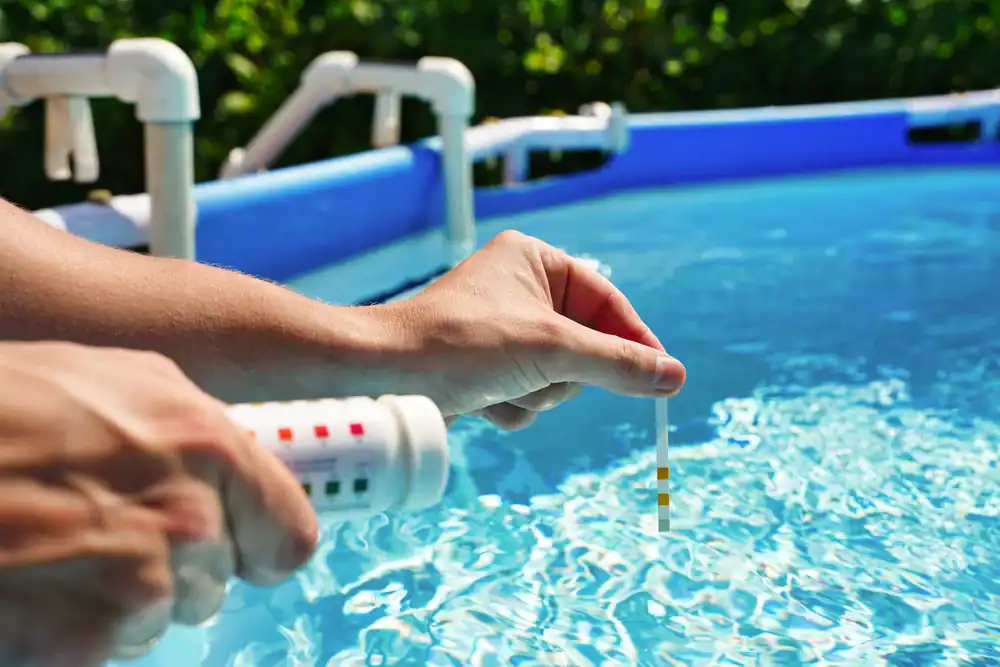
The honest answer depends on what “doing it yourself” actually means. If you’re using test strips from a hardware store, you’re getting rough approximations on three or four parameters, with no metals testing, no precise CYA reading, and no way to detect combined chlorine accurately. That’s enough to make basic adjustments, but it leaves a lot of chemistry invisible and in a rural area like West Green where well water is common and the summer climate is aggressive, the invisible stuff is often what causes the real damage.
The cost of professional water testing is a fraction of what it costs to treat a full algae bloom, replace a corroded pump, or resurface a pool that’s been slowly etched by soft, low-calcium water. For a homeowner who has already invested in an inground pool a significant piece of property value out here professional testing is less of an added expense and more of a way to protect what you’ve already put in. One accurate test that catches a metal issue or a CYA problem early can save you several hundred to several thousand dollars in repairs. That math tends to be pretty straightforward once you’ve seen it play out once.
Other Services we provide in West Green