Converting your chlorine pool to saltwater in Douglas County, GA offers dramatic savings, easier maintenance, and softer water that's gentler on skin and eyes.
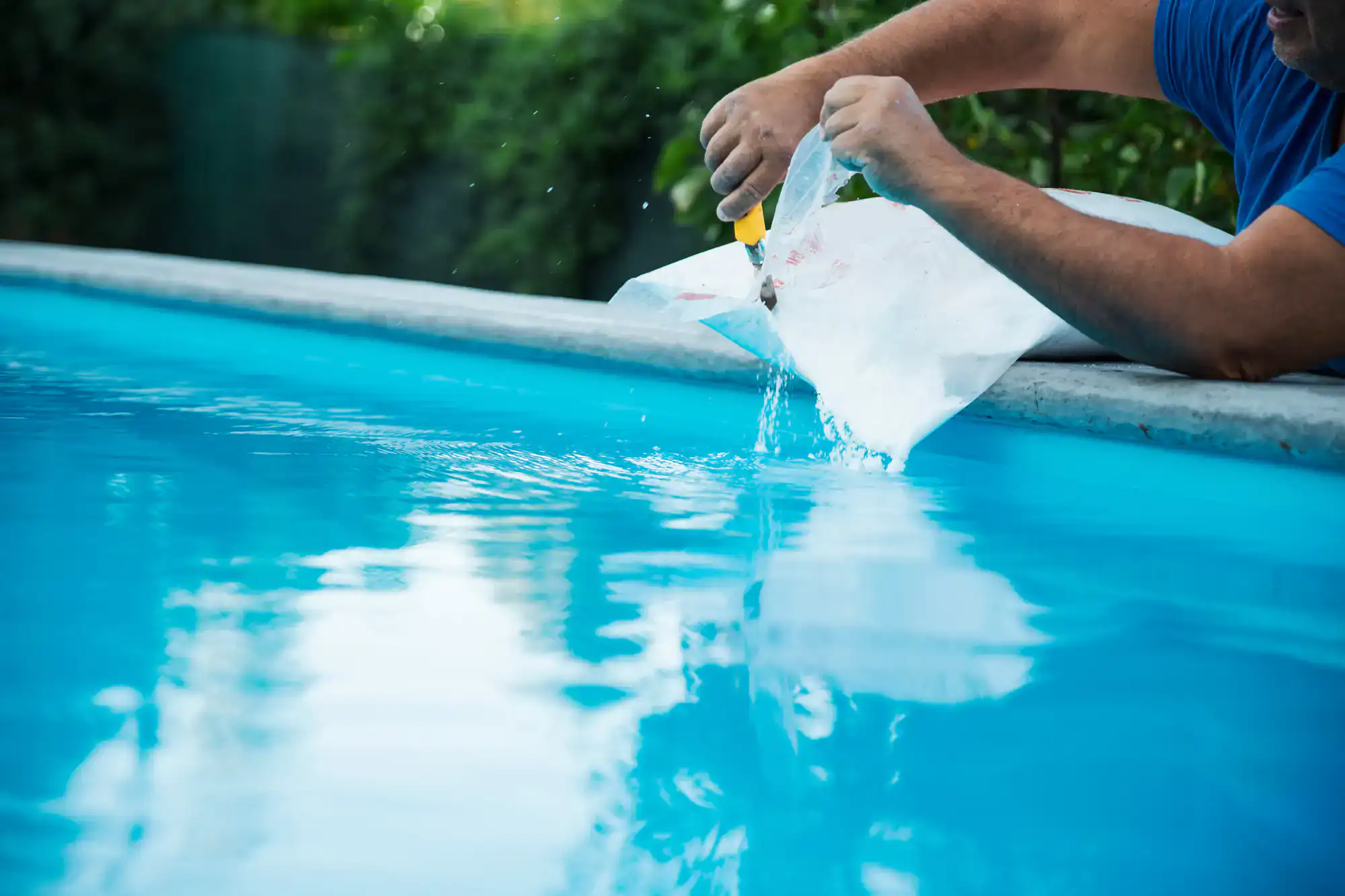
Converting to saltwater doesn’t mean filling your pool with ocean water. It means installing a salt chlorine generator that automatically produces chlorine from salt dissolved in your pool water.
The system uses electrolysis to split salt molecules into chlorine and sodium. The chlorine sanitizes your pool, then recombines with sodium to become salt again. It’s a continuous cycle that eliminates the need to constantly buy and add chlorine tablets or liquid.
Your pool still has chlorine—it’s just produced automatically at consistent, lower levels. That’s why the water feels softer and doesn’t have that harsh chemical smell or irritation you get with traditional chlorine pools. Many homeowners describe it as close to maintenance-free pools once the system is properly balanced.
The heart of any saltwater system is the salt cell. Water flows through this cell, which contains titanium plates coated with precious metals like ruthenium or iridium. When the control board sends an electrical charge to the cell, electrolysis occurs.
During electrolysis, the dissolved salt transforms into hypochlorous acid—the same sanitizing agent produced when you manually add chlorine to a pool. The difference is that this process happens automatically and continuously as water circulates through your filtration system. This is what makes professional salt system setup so valuable—proper installation ensures optimal water flow and consistent chlorine production.
Salt levels in a converted pool typically run between 3,000 and 3,500 parts per million. That’s about ten times less salty than ocean water. You won’t taste it, and it won’t leave that sticky ocean residue on your skin. In fact, the salt concentration is close to the level found in human tears, which is why the water feels so natural and comfortable.
The generator adjusts chlorine production based on your pool’s needs and your settings. During heavy use or hot weather, you can increase output. During cooler months or light use, you can dial it back. This flexibility means you’re never over-chlorinating or under-sanitizing your pool.
Most systems include digital controls that let you monitor salt levels, cell performance, and chlorine output. Some even connect to smartphone apps. But the real benefit is how little you actually have to do once the system is properly installed and balanced. The generator handles the work while you handle the swimming.
The actual conversion is more straightforward than most people expect. You don’t need to drain your pool or replace your existing equipment in most cases. The chlorine already in your water is fully compatible with a salt system.
The process starts with balancing your pool water chemistry . pH, alkalinity, and calcium levels need to be in the proper range before you add salt or install the generator. This step ensures your new system works efficiently from day one and prevents issues like scaling or cloudy water down the road.
Next comes installing the salt chlorine generator. The salt cell gets plumbed into your existing filtration system—typically after the pump and filter, before the water returns to the pool. The control unit mounts nearby and connects to power. Professional salt system setup ensures proper placement, secure connections, and correct electrical setup that meets Douglas County, GA building codes.
Once the generator is in place, you add pool-grade salt directly to the water. The amount depends on your pool’s volume and the manufacturer’s recommended salinity level. For a typical 15,000-gallon pool, you’re looking at around 400 pounds of salt. That sounds like a lot, but it’s a one-time addition. Salt doesn’t evaporate like chlorine does, so you’ll only need to add small amounts occasionally to replace what’s lost through splashing, backwashing, or heavy rain.
After the salt dissolves—which takes a few hours with the pump running—you test the water and adjust the generator settings. The system needs a day or two to stabilize, but once it does, you’re swimming in softer, cleaner water. The entire process, from start to finish, typically takes less than a day when handled by experienced professionals who know Georgia pool systems.
Want live answers?
Connect with a Deep Waters Pools expert for fast, friendly support.
The investment in saltwater pool conversion typically runs between $1,500 and $2,500 for most inground pools in Douglas County, GA. That includes the salt chlorine generator, professional installation, and the initial salt needed to get your system running.
The biggest variable is the generator itself. Larger pools need more powerful units, and higher-end models offer features like digital displays, app connectivity, and longer-lasting cells. Pool size matters too—a 10,000-gallon pool requires less equipment capacity than a 25,000-gallon pool.
But here’s what matters more than the upfront cost: the long-term savings. Traditional chlorine pools cost $370 to $900 per year in chemicals. Saltwater pools run $70 to $100 annually for salt and occasional pH adjusters. That difference adds up fast. Most pool owners recover their conversion investment within two to three swimming seasons just from chemical savings alone.
Generator capacity drives most of the cost difference. You want a system rated for at least 1.5 to 2 times your pool’s actual volume. This oversizing isn’t wasteful—it extends the life of your salt cell and ensures consistent chlorine production even during peak demand.
For a 20,000-gallon pool, you’d want a generator rated for 30,000 to 40,000 gallons. Undersized systems run constantly at maximum output, which wears out the cell faster and costs more in electricity. Properly sized systems run efficiently and last longer, getting you closer to truly maintenance-free pools.
Installation complexity also factors in. Most Douglas County, GA pools have straightforward plumbing that makes salt cell installation simple. But if your equipment pad is cramped, if you need electrical upgrades, or if your pool has unusual plumbing configurations, expect some additional labor time.
The quality of components matters too. Salt cells are rated by hours of use—typically 8,000 to 15,000 hours. Higher-rated cells cost more upfront but last longer before needing replacement. Cell replacement runs $700 to $1,100, so investing in a quality cell from the start makes financial sense.
Professional installation isn’t just about connecting pipes and wires. It’s about sizing the system correctly for your pool, positioning components for optimal performance and easy maintenance, ensuring all electrical connections meet code, and training you on how to use and maintain your new system. The difference between properly executed professional salt system setup and a DIY job shows up in performance, longevity, and whether you actually get the benefits you paid for.
Georgia soil conditions and local building codes also play a role. Douglas County, GA has specific regulations for pool equipment installations. We work with these requirements to prevent permit issues and ensure your installation meets all safety standards.
The financial case for saltwater conversion gets stronger every year you own the system. Yes, your electricity bill will increase by $35 to $50 per month while the generator runs. But that’s offset by eliminating weekly chlorine purchases.
Chlorine tablets have tripled in cost recently. A summer’s supply for a traditional pool can easily run $400 to $600. With saltwater, you’ll spend maybe $30 to $50 per year on salt—and that’s only to replace what’s lost through splashing or backwashing. The salt doesn’t evaporate or get used up the way chlorine does.
Maintenance becomes simpler too. You’ll still test pool water chemistry weekly and adjust pH or alkalinity as needed. But you’re not hauling heavy chlorine buckets or dealing with dissolving tablets. You’re not constantly shocking the pool to break down chloramines. The generator handles sanitization automatically.
Salt cells do require cleaning a few times per season to remove calcium buildup. This takes about 15 minutes—you remove the cell, soak it in a mild acid solution, rinse it, and reinstall it. Some systems have self-cleaning functions that reverse polarity to reduce scaling, which means even less hands-on maintenance.
Eventually, you’ll need to replace the salt cell. A well-maintained cell lasts 3 to 7 years depending on usage and water chemistry. That $700 to $1,100 replacement cost is spread over several years, and it’s still less than what you’d spend on chlorine during that same period.
The control board can also need replacement, typically after 5 to 10 years. That’s a $500 to $900 expense, but again, it’s infrequent and predictable. Compare that to the ongoing, never-ending cost of buying chlorine every single week for the life of your pool. The math clearly favors saltwater for anyone planning to keep their pool long-term.
If you’re spending $50 to $75 every month on chlorine and pool chemicals, if your family complains about red eyes and dry skin, or if you’re simply tired of the constant maintenance routine, saltwater conversion makes sense. The upfront investment pays for itself through chemical savings, and the quality-of-life improvement is immediate.
The water really does feel different. Softer. Gentler. More like swimming in a natural body of water than a chemical bath. Your swimsuits and towels last longer without harsh chlorine breaking down the fabric. And you’re not storing dangerous chemicals in your garage where kids or pets might get into them.
Professional salt system setup ensures you get these benefits without the headaches that come from improper sizing or installation. We bring over 30 years of pool construction experience to every saltwater pool conversion in Douglas County, GA. Our team understands Georgia soil conditions, local regulations, and what actually works in South Georgia pools—not just what looks good in a brochure.
Summary:
Share: