Dark bottom pools combine stunning visual appeal with practical benefits like natural heat absorption and energy savings, making them the ideal choice for modern Georgia homeowners.
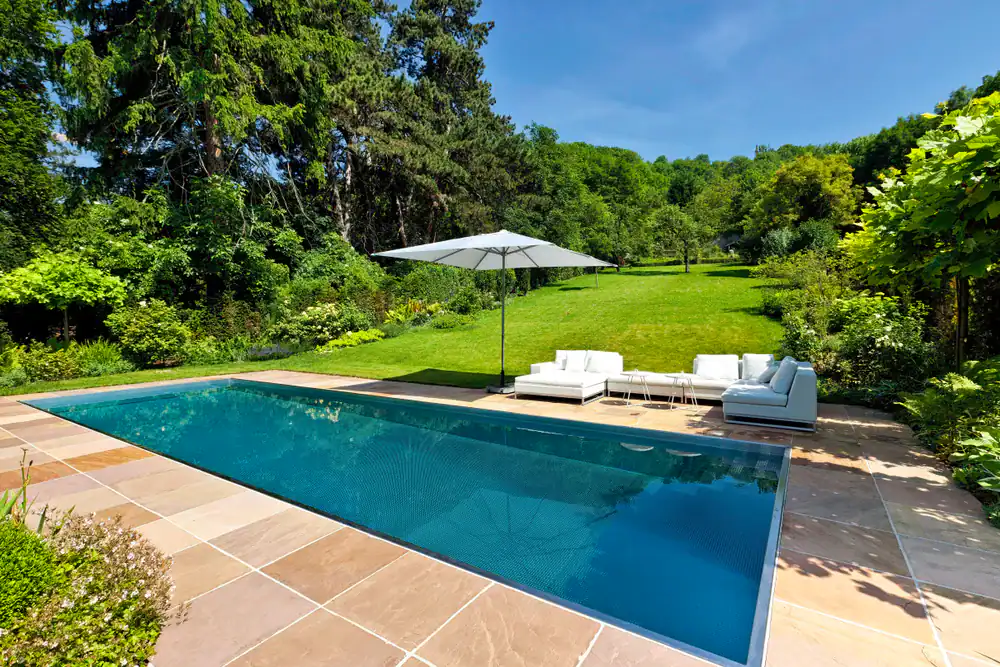
When you hear “dark bottom pool,” you might picture straight-up black. But the reality is more nuanced. Dark pool finishes range from deep midnight blue and rich graphite grey to charcoal and true black. The color you choose changes how the water looks throughout the day.
What sets these pools apart isn’t just the color—it’s the effect. Light pools reflect. Dark pools absorb. That changes everything from how warm your water gets to how the pool interacts with your landscape. A dark finish turns your pool into something that mirrors the sky, reflects surrounding trees, and creates visual depth that makes the space feel larger.
In Douglas County, where you’ve got beautiful natural surroundings, a dark pool doesn’t compete with your landscape. It complements it. The water takes on a lagoon-style quality that feels organic rather than artificial.
Here’s where dark bottom pool design moves from aesthetic choice to practical advantage. Dark surfaces absorb sunlight. It’s basic physics, but the impact on your pool is significant.
A dark pool finish can absorb 20-30% more solar energy than traditional light-colored finishes. That translates to water that’s naturally 2-4 degrees warmer without running your heater. In Georgia, where you’ve got plenty of sunny days but cooler evenings, that natural heat absorption extends your swimming season and cuts down on heating costs.
Think about it this way: every degree your pool heats naturally is a degree you’re not paying to heat artificially. Over a season, that adds up. You’re looking at real energy savings, especially if you’re someone who likes to swim into the fall or start early in the spring.
The darker the finish, the more heat it absorbs. A midnight blue or graphite grey will give you noticeable warmth. True black maximizes heat absorption. But even mid-tone dark finishes outperform light blue or white when it comes to holding onto the sun’s energy.
This isn’t just about comfort. It’s about efficiency. Modern pool design is moving toward features that reduce operational costs, and a dark finish is one of the simplest ways to do that. No additional equipment. No complex systems. Just a smarter choice in materials that works with your climate instead of against it.
The heat retention benefit is especially valuable in South Georgia. You’ve got warm days, but temperatures can drop at night. A dark pool holds onto that daytime warmth longer, so your morning swim isn’t a shock to the system. And when you do need to heat the pool, you’re starting from a higher baseline temperature, which means less energy required overall.
Let’s be honest—a big reason people choose dark bottom pool design is because it looks incredible. But understanding why it looks that way helps you make a smarter decision about whether it’s right for your space.
Dark water creates a mirror effect. On a calm day, your pool becomes a reflection of everything around it—clouds, trees, the sky at sunset. That reflective quality adds dimension to your backyard. It’s not just a pool sitting there. It’s an element that interacts with the environment.
The depth illusion is real. Dark finishes make it harder to see the bottom, which creates the perception that your pool is deeper than it actually is. That “bottomless” look is part of what gives these pools their dramatic, high-end feel. It’s the same effect you get looking at a natural lake or lagoon.
Lighting changes everything. During the day, a dark pool might look deep blue or even black depending on the sun angle. At dusk, it takes on softer tones. At night, with underwater LED lights, the effect is stunning. The dark background makes the lights pop in a way that just doesn’t happen with light-colored finishes.
This is where lagoon-style aesthetics come into play. If you’re pairing your pool with natural stone, tropical landscaping, or modern architectural features, a dark finish ties it all together. It doesn’t look like a traditional suburban pool. It looks intentional. Designed. Like something you’d find at a resort, not just a rectangle of blue water in the backyard.
But here’s what matters: the visual impact isn’t just about impressing guests. It’s about how you experience your own space. When your pool looks like something special, you use it more. You spend time around it. It becomes a focal point for your outdoor living, not just a seasonal amenity.
One thing to consider—if your yard has a lot of shade, a dark pool can look almost black in low light. That’s not necessarily a bad thing, but it’s different from the bright, tropical vibe of a light pool. Know your lighting conditions. Understand how much direct sun your pool area gets. That’ll help you predict how the color will read throughout the day.
And if you’re worried about it looking too dark or moody, remember that you control the finish tone. You don’t have to go full black. A deep blue or grey can give you the benefits of a dark pool while keeping a bit more color variation in the water.
Want live answers?
Connect with a Deep Waters Pools expert for fast, friendly support.
Pool design has shifted. The standard light blue pool with white plaster isn’t the default anymore. Homeowners want something that reflects their style, fits their architecture, and feels current.
Dark finishes are part of a broader move toward sophisticated, intentional design. Geometric shapes with clean lines. Natural materials like stone and wood. Integrated features like tanning ledges and spillover spas. Dark pool interiors fit right into that aesthetic.
The data backs this up. In 2025, grey and modern tones saw significant growth in pool finish selections. Silver grey increased by 16%. Graphite grey surged in popularity. Even among blue finishes, deeper, more reflective options like Shimmer Sky jumped 32%. The trend is clear—people are moving away from the bright, traditional pool look toward something more refined.
Not all dark finishes are created equal. The material you choose affects durability, color consistency, and how the pool looks over time.
Standard plaster is the most budget-friendly option. You can get it in dark colors, and it’ll last 7-10 years with proper maintenance. But plaster is more prone to staining, fading, and showing imperfections. On a dark finish, those issues are more visible than they would be on a light pool.
Pebble finishes are where most people land when they want a dark pool that’ll last. These finishes use small stones mixed into the plaster, creating texture and natural color variation. They’re more durable—lasting 15-20 years or more—and they resist fading better than standard plaster. The texture also adds slip resistance, which is a practical benefit if you’ve got kids or older family members using the pool.
Glass bead finishes take it up a notch. They add reflectivity and shimmer, especially under pool lights. If you want that high-end, resort-style look, glass beads deliver. They’re smooth, durable, and create visual interest without being over the top.
When you’re selecting a color, think about your surroundings. If your home is modern with clean lines, graphite grey or charcoal works beautifully. If you’re going for a tropical, lagoon-style vibe, midnight blue or deep teal gives you that natural water feel. True black is dramatic and works well with contemporary architecture, but it’s bold—make sure it fits your overall design.
Also consider your decking and landscaping. Light-colored stone or pavers create a striking contrast with dark water. Natural wood decking softens the look and adds warmth. Lush greenery around a dark pool enhances that lagoon aesthetic.
One thing people don’t always think about: pool plaster colors can look different once the pool is filled. The water depth, sunlight, and even the time of day change how the color reads. Ask your builder for samples, and if possible, see a completed pool with the finish you’re considering. Photos help, but seeing it in person gives you a better sense of what you’re getting.
Quality matters here. A cheap dark finish will fade unevenly, show trowel marks, and develop blotchy patches. Invest in good materials and experienced installation. It costs more upfront, but it saves you from having to replaster in five years because the finish didn’t hold up.
Let’s address the elephant in the room. Dark pools do show certain things more than light pools. Calcium deposits, mineral scale, and any imperfections in the plaster will be more visible against a dark background. That’s not a dealbreaker, but it does mean you need to stay on top of water chemistry.
Balanced water is non-negotiable. If your pH, alkalinity, or calcium hardness is off, you’ll see the evidence on a dark finish faster than you would on a light one. The good news? Proper water chemistry isn’t harder with a dark pool—it’s just more important. Regular testing, consistent chemical balance, and routine brushing keep your pool looking the way it should.
Some people worry that algae will be harder to spot on a dark surface. In practice, this isn’t usually an issue if you’re maintaining your pool correctly. Algae shows up as a texture change or a cloudy water issue before it becomes a visible problem. And honestly, if you’re letting algae grow to the point where you’re relying on visual inspection to catch it, you’ve got bigger maintenance problems.
Safety is a legitimate consideration. Dark finishes can affect depth perception. It’s harder to see the bottom, which means swimmers—especially kids—might misjudge how deep the water is. This is manageable with the right approach.
Underwater LED lighting is essential. Good lighting eliminates most visibility concerns and makes the pool safer for evening use. Depth markers, contrasting tile along the pool edge, and clear step indicators help swimmers gauge where they are. These aren’t optional add-ons—they’re part of responsible design when you choose a dark finish.
If you’ve got young children, talk to us about lighting placement and safety features. A well-lit dark pool is just as safe as a light pool. An under-lit one isn’t.
One more thing: some municipalities have regulations about pool finishes, particularly darker colors, due to safety concerns. Check local codes before you commit. In most areas, it’s not an issue, but it’s worth confirming.
The maintenance reality is this—dark pools aren’t harder to maintain, but they’re less forgiving of neglect. If you’re someone who stays on top of pool care or uses a professional service, you’ll be fine. If you tend to let things slide, a dark finish will show it.
Dark bottom pool design offers real benefits—natural heat absorption, energy savings, and a sophisticated look that elevates your entire backyard. It’s not just about following a trend. It’s about choosing a finish that works with Georgia’s climate, fits your style, and delivers both beauty and function.
If you’re drawn to modern aesthetics, want to reduce heating costs, and appreciate the lagoon-style look that dark water creates, this is worth serious consideration. Pair it with quality materials, proper lighting, and a commitment to balanced water chemistry, and you’ll have a pool that looks stunning and performs well for years.
The key is working with a builder who understands the nuances. Someone who can guide you through finish options, explain the trade-offs, and install it correctly the first time. That’s where experience matters.
We’ve been building custom inground pools in Douglas County for nearly a decade, backed by over 30 years of hands-on construction expertise. If you’re ready to explore what a dark bottom pool could look like in your backyard, reach out. Let’s talk about your space, your vision, and how to make it happen right.
Summary:
Share: