Not all pool contractors handle Georgia's red clay soil, local permits, or warranties the same way. Here's what to ask before hiring a pool builder.
This isn’t a courtesy question. It’s the foundation of everything else when hiring a pool contractor.
In Georgia, pool contractors need proper licensing to legally perform the work. That license means we’ve met state requirements, understand building codes, and have the training to handle complex construction. If a contractor is operating without one, they’re not just cutting corners—they’re breaking the law.
Insurance is just as critical. Pool construction involves excavation, heavy equipment, electrical work, and plumbing. If someone gets hurt on your property or something gets damaged during the build, you need to know you’re not the one paying for it. Ask for proof of both general liability insurance and workers’ compensation coverage. A legitimate pool construction contractor will hand it over without hesitation.
Hiring an unlicensed pool contractor might save you money upfront, but it puts everything at risk. For one, they can’t pull permits. That means your pool is being built without inspections, without oversight, and without any guarantee it meets local code requirements in Douglas County, GA.
If the work doesn’t meet code, you could be forced to tear it out and start over. Or worse, you might not find out until you try to sell your home years later and a buyer’s inspector flags the issue. At that point, you’re stuck with a liability that tanks your home’s value and delays or kills the sale.
Then there’s the liability issue. If an unlicensed worker gets injured on your property during pool construction, you could be held financially responsible for their medical bills and lost wages. That’s not a maybe—it’s a real legal risk that homeowners face when they skip the licensing check.
Beyond the legal and financial risks, unlicensed contractors often lack the expertise to handle Georgia’s specific challenges. Douglas County sits on red clay soil that expands and contracts with moisture. Pool construction here requires specialized knowledge about soil stabilization, drainage, and structural reinforcement. An unlicensed builder may not understand these conditions, leading to cracks, leaks, and settling issues that show up months or years after the project wraps.
You’re not just hiring someone to dig a hole and pour concrete for your custom pool building project. You’re hiring someone who understands how that concrete will behave in Georgia’s climate, how to handle permits with local building departments, and how to install plumbing and electrical systems that meet safety standards. None of that happens without proper contractor licensing and training.
Before you move forward with any pool contractor, verify their credentials. Ask for their license number and check it with the Georgia Secretary of State or your local licensing board. Make sure it’s current, matches the name of the business, and covers the scope of work they’re promising to do. If they hesitate, make excuses, or tell you licensing isn’t necessary, walk away.
Experience matters, but local experience matters more when hiring a pool contractor. A contractor who’s built hundreds of pools in Florida or Arizona might have impressive credentials, but Georgia’s soil, climate, and building codes are different. You need someone who’s worked in Douglas County, GA specifically and understands what that entails.
Red clay soil is one of the biggest challenges in South Georgia pool construction. It’s dense, retains water, and shifts as moisture levels change. That creates pressure on pool walls, can cause cracking, and requires specific engineering solutions that contractors from other regions might not be familiar with. A builder with local experience knows how to handle excavation in clay, how to reinforce the structure, and how to install proper drainage to prevent long-term issues.
Local pool contractors also have established relationships with building inspectors, suppliers, and subcontractors in the area. That means smoother permit approvals, faster material delivery, and fewer delays caused by miscommunication or unfamiliarity with local processes. We know which inspectors are strict about certain details, which suppliers stock the right materials, and how long each phase of the project typically takes in this area.
Ask how many pools a contractor has built in Douglas County specifically. Ask if they can show you examples of completed custom pool building projects nearby. Better yet, ask if they can connect you with a homeowner who had a pool built by them in the last year or two. Talking to someone who went through the process with a pool construction contractor gives you insight you won’t get from a sales pitch or a polished website.
You also want to know if they’ve dealt with challenging sites before. Not every backyard is flat and easy to work with. Some have slopes, trees, septic systems, or underground utilities that complicate the build. A contractor with deep local experience has seen these issues before and knows how to navigate them without blowing your budget or timeline.
Length of time in business also speaks to stability. A company that’s been around for a decade or more has weathered economic shifts, built a reputation, and developed systems that keep projects on track. Newer companies aren’t automatically bad, but they come with more risk. If something goes wrong a year after your pool is finished, you want to know the company will still be around to honor their warranty.
Don’t settle for vague answers like “we’ve been doing this for years” or “we work all over Georgia.” Get specifics. How many years? How many projects in Douglas County? Can you see their work? Can you talk to their customers? If they can’t or won’t provide that information, that’s a red flag.
Want live answers?
Connect with a Deep Waters Pools expert for fast, friendly support.
A project estimate from your pool contractor should be detailed, transparent, and cover everything from start to finish. If a contractor hands you a one-page quote with a single number and no breakdown, you’re looking at trouble.
You need to see exactly what’s included in your custom pool building project: excavation, materials, labor, permits, plumbing, electrical work, equipment installation, decking, fencing, and cleanup. You also need to know what’s not included. Some pool contractors leave out costs like electrical hookups, landscaping, or filling the pool with water. Those aren’t small expenses, and if you don’t know about them upfront, your budget gets blown halfway through the project.
Ask about the timeline too. When does the pool construction start? How long will each phase take? What could cause delays? Weather is a factor in Georgia, especially during storm season, so a realistic estimate should account for that.
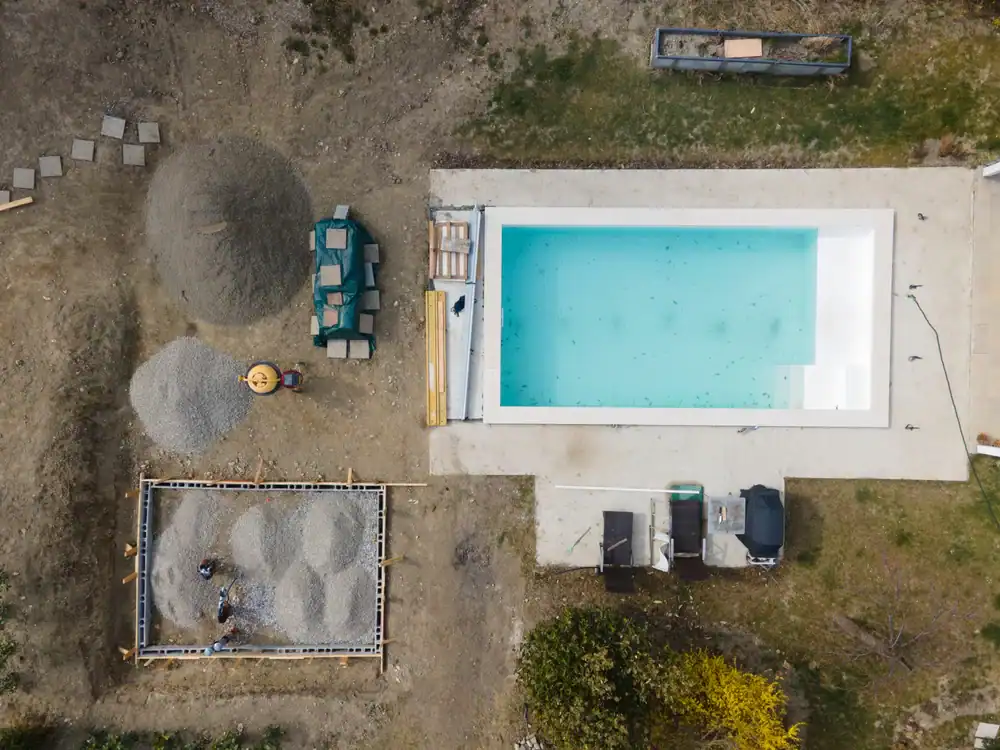
A legitimate project estimate from a pool construction contractor breaks down every part of the project so you understand exactly what you’re paying for. It should list materials by type and quantity, labor costs for each phase, and any third-party services like electrical or plumbing work that might be subcontracted out.
For example, the estimate should specify the type of concrete or gunite being used for your custom pool building, the brand and model of the pump and filtration system, the thickness and finish of the decking, and the style of coping and tile. If the contractor just writes “standard pool equipment,” that’s not enough. You need to know what “standard” means and whether it’s actually suited to your pool’s size and your family’s usage.
Permit costs should be itemized separately. In Douglas County, GA, you’ll need building permits before pool construction can begin, and those fees vary depending on the size and complexity of the project. A good pool contractor handles the permit process for you, but the cost should be clearly outlined in the project estimate so there are no surprises.
Excavation costs depend on your site conditions. If your yard has a slope, rocky soil, or obstacles like tree roots or old foundations, excavation becomes more complex and expensive. The estimate should reflect a site evaluation and account for any challenges the contractor identified during their initial visit. If they gave you a quote without ever seeing your property, that’s a major red flag when hiring a pool contractor.
Plumbing and electrical work are often subcontracted to licensed specialists. Your estimate should specify whether those costs are included or if you’re responsible for hiring those trades separately. In Georgia, electrical hookups for pool equipment must be done by a licensed electrician and inspected to meet code. If that’s not in the pool construction checklist, you’ll be paying for it later.
Equipment installation includes your pump, filter, heater (if you’re adding one), and any automation systems for controlling temperature, lighting, or cleaning cycles. The estimate should list each piece of equipment by brand and model, along with warranty information. Cheap equipment might lower the initial cost, but it’ll cost you more in repairs and replacements down the line.
Decking and hardscaping are a big part of the custom pool building project, both in terms of cost and visual impact. The estimate should specify the type of material (concrete, pavers, stamped concrete, etc.), the square footage being installed, and any additional features like steps, retaining walls, or built-in seating. If you’re planning a pool deck that extends around the entire pool with extra space for lounging and entertaining, that’s a different scope—and price—than a basic walkway.
Safety features are required by Georgia law. Your pool needs a barrier at least 48 inches high with a self-closing, self-latching gate. The pool construction estimate should include fencing or another approved barrier, and it should meet local code requirements. Some contractors try to leave this out of the initial quote to make their bid look lower, then add it later as an “extra.” Don’t fall for that.
Finally, the project estimate should outline the payment schedule. Most pool contractors ask for a deposit to start the project, then collect payments at specific milestones—after excavation, after plumbing rough-in, after equipment installation, and so on. Be wary of anyone asking for a large percentage upfront. A standard deposit is usually 10-20%, not 50% or more. If a pool construction contractor is asking for a huge down payment before they’ve done any work, that’s a warning sign they might be using your money to finish someone else’s project or don’t have the financial stability to fund materials and labor on their own.
Permits aren’t optional when hiring a pool contractor. In Georgia, all residential swimming pools require building permits before construction begins. That includes site plans, safety barrier details, and compliance with the International Swimming Pool and Spa Code as well as Douglas County’s local requirements.
A professional pool construction contractor handles the permit process for you. We know what documents are needed, how to submit them, and how to work with local building officials to get approvals without unnecessary delays. We’ll also schedule inspections at the required stages of construction—after excavation, after plumbing and electrical rough-in, and after final completion.
If a pool contractor tells you permits aren’t necessary, or suggests skipping them to save time or money, that’s a deal-breaker. Building without permits puts you at legal risk, voids your homeowner’s insurance coverage for the pool, and creates problems when you try to sell your home. Buyers and their lenders will want to see proof that the pool was built legally and inspected properly. If you can’t provide that, it tanks your sale.
Ask your pool contractor how long the permit process typically takes in Douglas County, GA and whether they’ve had any issues with permits in the past. A contractor with a good track record and strong relationships with local inspectors can move through this phase smoothly. Someone who’s constantly dealing with permit rejections or code violations is going to slow your custom pool building project down and cost you more in the long run.
You should also ask what happens if an inspection fails during pool construction. Sometimes inspectors flag minor issues that need correction before moving to the next phase. That’s normal. What’s not normal is a contractor who doesn’t know how to fix the issue or argues with the inspector instead of making the required changes. You want someone who understands code requirements and can address inspector feedback quickly so your project stays on schedule.
Permits also protect you if something goes wrong. If your pool develops structural issues later, having a permitted and inspected build gives you documentation that the work was done to code. That matters for insurance claims, warranty disputes, and resale value. Skipping permits might seem like a shortcut, but it’s a risk that’s never worth taking when hiring a pool contractor.
Hiring a pool contractor isn’t just about finding someone who can dig a hole and pour concrete. It’s about finding someone who understands Georgia’s soil conditions, knows how to navigate local permits, communicates clearly, and stands behind their work long after the pool construction project is finished.
The questions you ask upfront determine whether your pool becomes a source of enjoyment or a source of regret. Check contractor licensing and insurance. Verify local experience with custom pool building. Get a detailed project estimate that covers every part of the work. Make sure permits and inspections are handled properly. Ask about warranties and what happens if something goes wrong.
When you’re ready to move forward with a pool construction contractor who brings decades of hands-on experience, understands Douglas County’s unique challenges, and treats your project with the care it deserves, Deep Waters Pools is here to help. From custom design to final inspection, we handle every detail so you can focus on enjoying your new pool.
Summary:
Share: