
Hear from Our Customers
Most pool problems don’t start with a green pool. They start weeks earlier when pH quietly drifts, chlorine stops working, or calcium hardness drops low enough to start etching your plaster. By the time something looks wrong, the damage is already underway. Professional pool chemistry analysis catches those shifts before they cost you.
Here in Bacon County, your pool is dealing with conditions that most generic pool advice doesn’t account for. Alma’s surrounding blueberry farms, cotton fields, and peanut crops push heavy pollen and organic material into residential pools every spring and that organic load spikes chlorine demand fast. Add in South Georgia’s afternoon thunderstorms from June through September, and your chemistry can shift from balanced to problematic within 48 hours of a single storm.
The other piece most Alma pool owners don’t think about: the City of Alma’s water treatment plant uses a lime-soda softening process that affects the baseline mineral profile of your water from the moment you fill or top off your pool. If you’re on a rural property outside city limits and pulling from a well, you may be dealing with elevated iron or manganese that test strips will never show. Either way, knowing your actual starting point isn’t optional it’s the foundation of everything else.
We’re based in Douglas, Georgia about 25 miles from Alma via US 1/US 23, the same corridor most Bacon County residents already travel for shopping and appointments. Deep Waters Pools was founded in 2014, but the experience behind our work goes back more than 30 years. That’s three decades of building, renovating, and servicing pools across the wiregrass region through drought years, flood seasons, and everything South Georgia summers throw at a pool.
We specialize in gunite and shotcrete pool construction, which means we understand the chemistry demands of concrete pool surfaces better than most. Calcium hardness, pH balance, and saturation index aren’t abstract concepts here they’re the difference between a pool surface that lasts and one that needs resurfacing ahead of schedule. We’re licensed, insured, and built on the kind of accountability that travels fast in a small community like Alma.
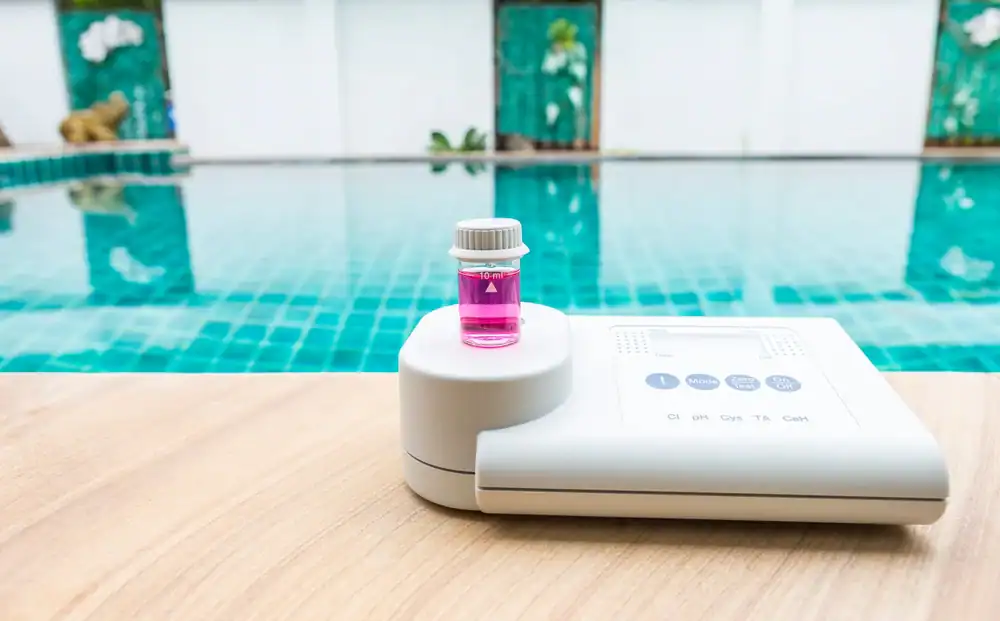
It starts with a water sample and a digital analyzer not a color-matching strip. We use advanced digital water analysis that produces precise readings across every parameter that matters: free chlorine, total chlorine, combined chlorine, pH, total alkalinity, calcium hardness, cyanuric acid, salt levels, total dissolved solids, and metals. Each number tells a specific story about what your water is doing and what it needs.
Once the analysis is complete, you get a clear breakdown of where your chemistry stands and a specific correction plan not a bag of chemicals and a vague suggestion. If your cyanuric acid is too low for Alma’s intense summer UV exposure, that gets flagged. If your calcium hardness is trending toward the corrosive range which matters especially for gunite and plaster surfaces that gets addressed before it becomes a resurfacing conversation. If you’re on well water in rural Bacon County and there’s iron present, you’ll know before it stains your pool walls.
Timing matters here too. The best windows for professional testing in Alma are at spring opening (before the blueberry pollen season hits full swing), after any significant storm event, and heading into fall closing. If you’re planning to have the pool ready for the Georgia Blueberry Festival in June, getting a test done in late April or early May gives you enough runway to correct anything before guests arrive.
Ready to get started?
A professional water test from Deep Waters Pools covers the full picture. pH level balancing is always the starting point because if your pH is above 7.8, your chlorine loses roughly half its sanitizing power regardless of how much you’ve added. That’s the most common reason pools in this area stay cloudy or turn green despite regular chemical additions. Fixing pH first is what makes every other adjustment actually work.
From there, the analysis moves through total alkalinity, which stabilizes your pH so it doesn’t bounce around after every rain; calcium hardness, which protects your pool’s plaster or gunite surface from corrosive water; and cyanuric acid, which shields your chlorine from South Georgia’s UV intensity. In Alma’s summer sun, unprotected chlorine can be destroyed in under two hours. Getting your stabilizer level right is what keeps your sanitizer working through a full day of use.
Chlorine levels both free and combined round out the core analysis. Combined chlorine (chloramines) is what causes that harsh chemical smell and eye irritation that people mistakenly associate with too much chlorine. It’s actually a sign of not enough effective chlorine. For Bacon County pool owners dealing with heavy organic loads from the surrounding agricultural environment, monitoring combined chlorine is especially important throughout the season.
Alma’s Water Treatment Plant uses a lime-soda softening process, which means calcium and magnesium ions are removed from the source water before it reaches your tap. When you fill or top off your pool with city water, you’re starting from a specific mineral baseline that’s different from communities using standard municipal treatment. That matters because calcium hardness in your pool needs to stay within a target range too low and the water becomes corrosive to plaster and grout, too high and you get scaling on surfaces and equipment.
The practical issue is that generic pool chemistry advice doesn’t account for Alma’s specific water profile. A calcium hardness target that works in one city may leave your pool water slightly corrosive right out of the gate in another. We establish your actual starting point so that every chemical adjustment is based on what’s really in your water not a national average. It’s also worth noting that the City of Alma does not fill pools directly. If you’re doing an initial fill, you’re sourcing and transporting that water yourself, which makes knowing your baseline chemistry even more important before you start adding chemicals.
Yes, significantly. Well water in the wiregrass region of Georgia commonly contains elevated iron, manganese, and varying mineral content that city-treated water doesn’t. The problem is that basic test strips don’t measure metals so your water can look fine on a standard test while iron is quietly building up in your pool. When iron oxidizes, it causes rust-colored staining on pool walls and floors that’s difficult and expensive to remove once it sets.
Manganese causes similar issues, often showing up as dark brown or black staining. Beyond staining, high mineral content from well water can throw off your total dissolved solids and affect how your sanitizer performs over time. If you’re on a rural property outside Alma’s city limits and you’re using well water to fill or top off your pool, a professional water test that includes a metals panel is the most important thing you can do before pool season starts. Catching iron or mineral issues early before they stain your surface or clog your filter is far less expensive than addressing them after the fact.
For most Alma pool owners, three to four professional tests per season covers the critical windows. The first test should happen at spring opening before you add chemicals and before blueberry pollen season hits full swing in Bacon County. Starting the season with a clean baseline means every adjustment you make through the summer is working from accurate information.
After that, testing after any major storm event is worth doing. South Georgia’s summer thunderstorm pattern heavy afternoon storms from June through September dilutes pool chemicals, drops pH, and introduces organic material with every significant rainfall. A storm that dumps two or three inches overnight can shift your chemistry enough to trigger an algae bloom within a couple of days. Testing before you close the pool for fall is the third essential window, because the chemistry you leave your pool in over winter directly affects how easy or difficult opening is the following spring. If you’re running your pool hard during peak summer or hosting regularly, a mid-season check in July or August is a smart addition.
This is the most common frustration pool owners bring to us, and the answer almost always comes back to one of three things: pH is too high, cyanuric acid is out of range, or combined chlorine has built up to the point where your free chlorine can’t do its job effectively. None of these show up accurately on a basic test strip.
When pH climbs above 7.8 which happens quickly in South Georgia’s heat, especially after a rain event chlorine loses a significant portion of its sanitizing power. You can be adding chlorine every day and still have ineffective water. Cyanuric acid is the other common culprit. If your stabilizer level is too low, Alma’s intense summer UV is destroying your chlorine faster than you can replace it. If it’s too high, your chlorine becomes chemically bound and can’t sanitize properly a condition called chlorine lock. Digital water analysis identifies exactly which of these is happening and gives you a precise correction path, rather than the trial-and-error approach that usually ends with a green pool and a frustrated pool owner.
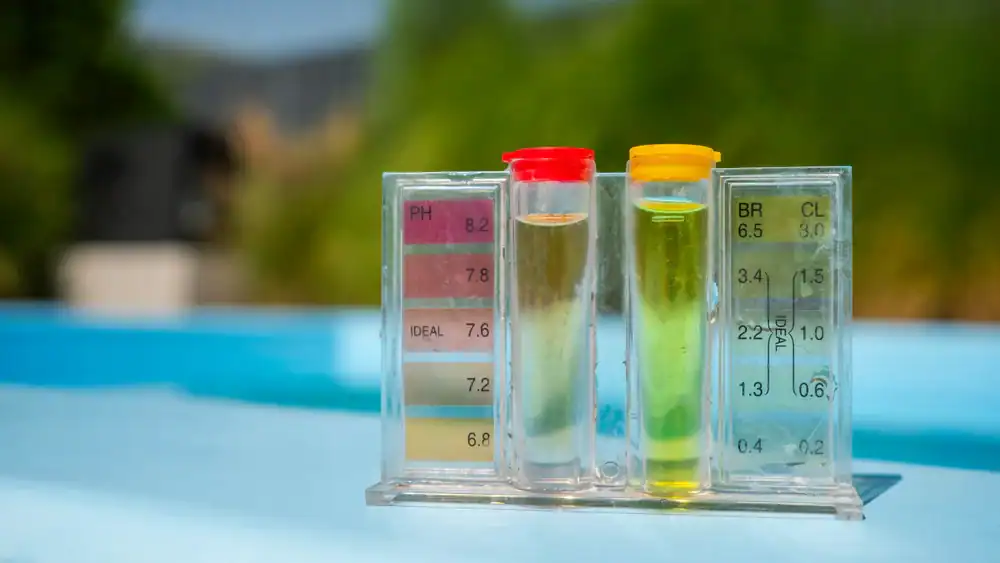
Test strips give you a rough color-match estimate across a handful of parameters. They’re useful for a quick daily check, but they’re not accurate enough to make meaningful chemistry decisions especially in an environment like Alma’s, where agricultural pollen, summer storms, and local water chemistry all create conditions that require precise measurement.
Digital water analysis measures free chlorine, total chlorine, combined chlorine, pH, total alkalinity, calcium hardness, cyanuric acid, salt levels, total dissolved solids, and metals each to multiple decimal points. That level of precision matters because small differences in readings lead to very different correction actions. A pH of 7.6 and a pH of 7.9 look close on a color strip but represent meaningfully different chlorine effectiveness. Calcium hardness at 150 ppm and 250 ppm both look “fine” on a strip but have opposite effects on a plaster surface over time. For Bacon County pool owners dealing with the organic load from surrounding farms and the specific mineral profile of local water sources, the precision of digital testing isn’t a luxury it’s what makes the difference between managing your pool and constantly reacting to it.
Clear water and balanced water aren’t the same thing. A pool can look perfectly clean while calcium hardness is low enough to slowly etch the plaster surface, or while combined chlorine has built up to levels that cause irritation without any visible sign in the water. By the time something looks wrong, the chemistry has usually been off for a while.
In Alma’s environment specifically, the gap between “looks fine” and “is fine” closes faster than most pool owners expect. Heavy spring pollen from the surrounding blueberry and agricultural landscape, frequent summer storm events, and South Georgia’s UV intensity all create conditions where chemistry shifts happen quickly and quietly. A professional test in late April before the season gets going takes about 30 minutes and gives you a documented starting point for the entire summer. Compare that to the cost of a single algae treatment, an emergency chemical run to Douglas or Waycross, or the early signs of plaster erosion that show up after a season or two of unknowingly corrosive water. The test is the cheaper option by a wide margin, and it’s the one that keeps your pool in good shape for the long run.