
Hear from Our Customers
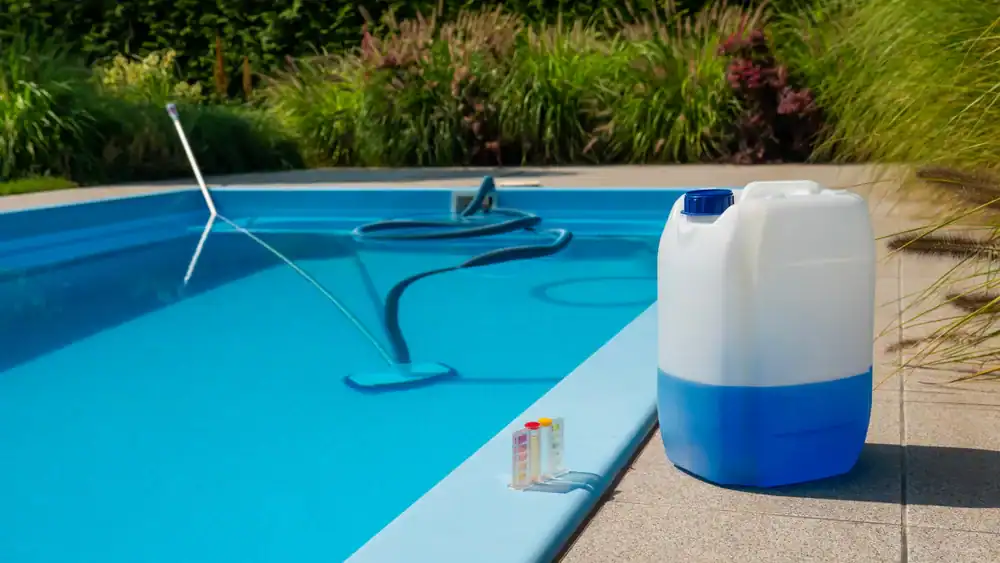
Most pool owners in Boston are not dealing with a chemical problem they are dealing with a chemistry problem they cannot see yet. Test strips give you a color. Professional water testing gives you a number, a cause, and a fix. That difference is what separates a pool you can actually use from one you are constantly fighting.
Thomas County’s long pool season runs nearly seven months. From late March through October, your water is absorbing UV radiation, getting diluted by heavy summer storms, and pulling in organic load from the same beautiful oak canopy that makes this part of Southwest Georgia worth living in. Every one of those events shifts your chemistry sometimes within 24 hours. When pH drifts above 7.8, your chlorine loses roughly half its effectiveness even when the reading looks fine. You add more chemicals, nothing changes, and you still can’t figure out why the water looks off.
Water sourced in this region can also be naturally low in calcium hardness due to the Floridan Aquifer system that underlies much of Southwest Georgia. A pool filled with soft water is quietly corrosive it pulls calcium out of your plaster, etches surfaces, and wears on equipment long before anything looks wrong from the outside. Getting a real baseline on your water’s calcium hardness, total alkalinity, chlorine levels, and pH is not a premium service. It is the starting point for every decision you make about your pool.
We have been in the concrete pool business for over 30 years. Deep Waters Pools was formally established in 2014, but the experience behind it goes back three decades of building, finishing, and resurfacing gunite and shotcrete pools across South Georgia including right here in Thomas County and the Boston area. That construction background is not a footnote. It is the reason our water testing means something.
When you have spent years installing plaster finishes and running pool plumbing, you understand what water chemistry actually does to a pool’s structure over time. We have seen what low calcium hardness does to a surface. We have watched what happens when cyanuric acid builds up unchecked through a South Georgia summer. That is a different level of understanding than what you get from a retail store running a free test to sell you chemicals.
We serve the South Georgia corridor, and Boston is not an afterthought on that map. We travel US-84 to reach Thomas County customers because this area deserves the same level of professional service as anywhere else in the region and we bring the same digital analysis equipment and 30-plus years of pool knowledge to every visit.
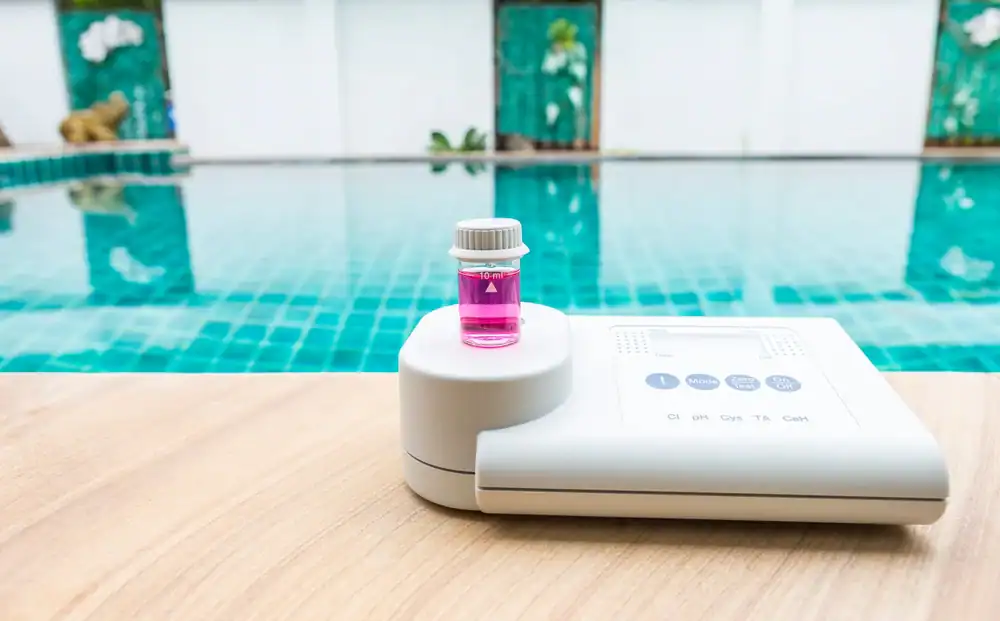
When we arrive, we use digital water analysis equipment not color-matching test strips to pull accurate readings across every critical parameter. That includes free chlorine, total chlorine, pH, total alkalinity, calcium hardness, cyanuric acid, and total dissolved solids. Each one tells a different part of the story, and missing any of them means you are working with incomplete information.
Once we have the full picture, we walk you through what the numbers mean in plain language. Not a printout with a list of products to buy an actual explanation of what is off, why it matters, and what the correction looks like. If your CYA has been building up through the summer and is now suppressing your chlorine’s effectiveness, we tell you that directly. If your calcium hardness is running low because of how Thomas County source water behaves in this part of the Floridan Aquifer system, that context matters for how we approach the fix.
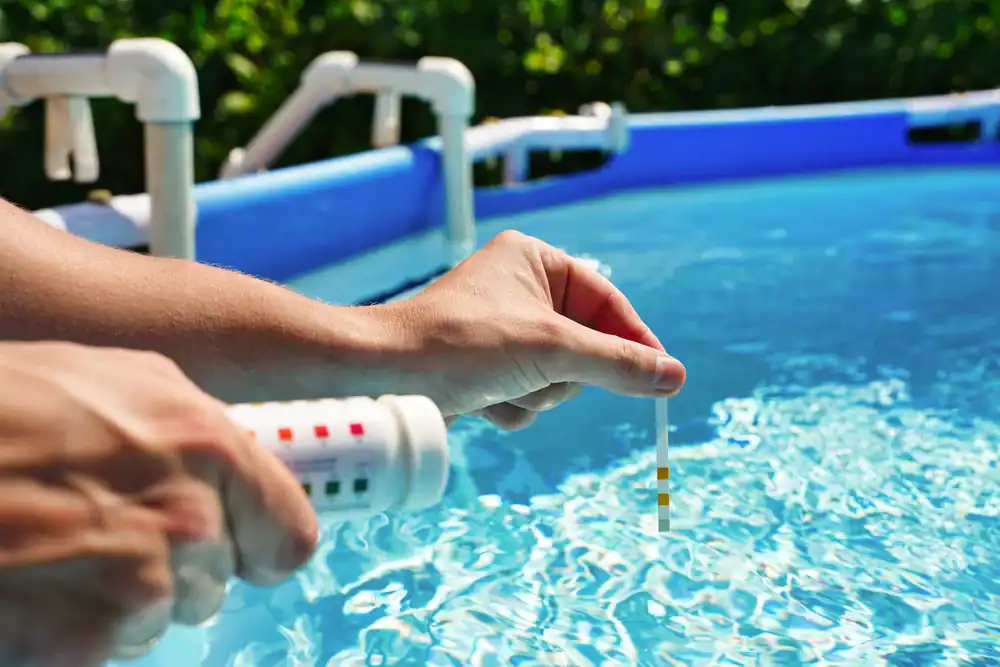
From there, we give you a clear correction plan. Some adjustments you can make yourself. Others are better handled with a follow-up service visit. Either way, you leave the conversation knowing exactly where your pool stands not guessing based on a strip that turned a slightly different shade of yellow. In a climate that can reset your chemistry after a single afternoon storm, having that kind of clarity is what keeps your pool usable all season.
Ready to get started?
A complete water test from us covers the full chemistry picture not just the two or three readings a retail strip can approximate. We test free and total chlorine to identify combined chlorine buildup (chloramines), which causes that strong chemical smell and skin irritation even when chlorine levels look normal. We test pH and total alkalinity together because they work as a system alkalinity is what keeps pH stable between visits, and when it is off, pH swings become unpredictable and frequent. Both matter for how well your sanitizer actually performs.
Calcium hardness testing is a core part of every analysis we run, and it carries particular weight for Boston-area pools. Gunite and shotcrete pools the most common inground pool type in South Georgia have plaster or pebble finishes that interact chemically with your water every single day. Too little calcium and the water becomes corrosive. Too much and you get scaling, stained tile, and clogged jets. Getting that number right is part of protecting the surface your pool was built with. We also check cyanuric acid levels, which tend to climb steadily through a long South Georgia season and can quietly make your chlorine ineffective if left unmonitored.
The goal of every test is to give you an honest, complete read on your water so you are not spending money on chemicals that cannot work in the conditions your pool is actually in. For Thomas County pool owners who are already driving into Thomasville for supplies, this kind of independent analysis changes the conversation entirely.
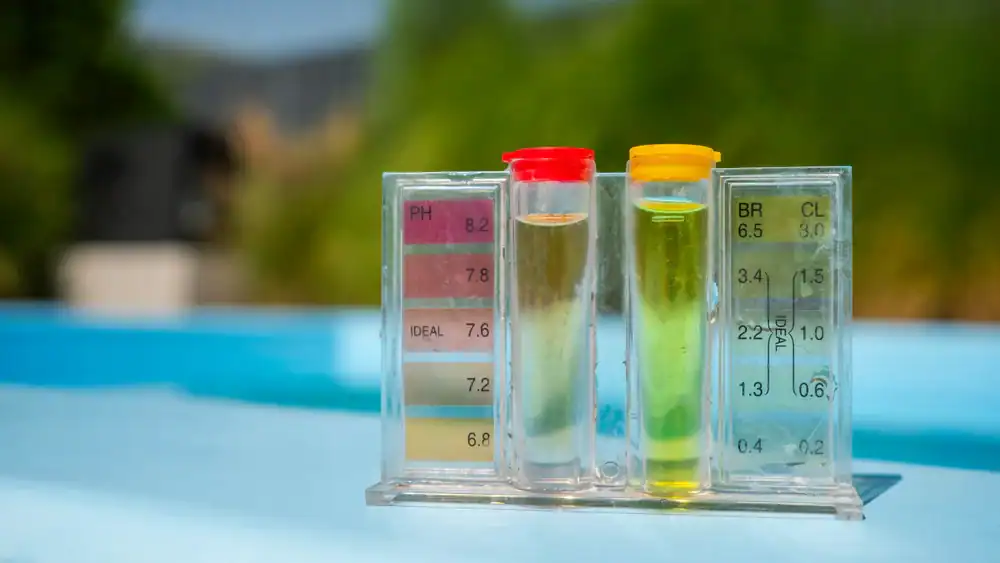
For pools in the Boston area, testing every two weeks during the active season is the professional standard and in the peak of summer, you may need it more often than that. South Georgia’s combination of intense UV exposure, frequent afternoon thunderstorms, and high bather load during July and August creates conditions where chemistry can shift significantly within a few days. A pool that was balanced on a Tuesday can be noticeably off by Friday after a couple of storm systems roll through Thomas County.
At minimum, you want a professional-level test at season opening in late March or early April before you add any chemicals, again at midsummer when CYA accumulation and UV stress are at their peak, and once more before closing in October or November. Improper chemistry at closing is one of the leading causes of plaster damage discovered when pools are reopened in spring and that kind of damage is expensive. Routine testing throughout the season is significantly cheaper than the repairs that come from skipping it.
This is the most common frustration pool owners bring to us, and the answer almost always comes down to pH or cyanuric acid not the chlorine itself. When pH rises above 7.8, chlorine loses roughly half its sanitizing power even when the reading looks normal on a test strip. You add chlorine, the strip says you are fine, and the pool still turns green because the chlorine you added cannot actually do its job at that pH level.
The other frequent culprit in South Georgia pools is elevated cyanuric acid. CYA is a stabilizer that protects chlorine from burning off in UV light which is useful up to a point. But after a full summer of using stabilized chlorine tablets, CYA levels can climb high enough that they start blocking chlorine’s effectiveness entirely. It is called chlorine lock, and no amount of additional chlorine will fix it until the CYA level is brought back down. A digital water test measures both of these parameters accurately, which is where the real diagnosis starts.
Calcium hardness is the measure of how much dissolved calcium is in your pool water, and it matters because water is always trying to reach chemical equilibrium. If your water does not have enough calcium, it will pull calcium from the nearest available source which in a gunite or shotcrete pool is your plaster finish. This process is called etching, and it happens slowly and silently until you start seeing rough patches, pitting, or staining on the pool surface.
In the Boston area, this is worth paying close attention to. Water in Thomas County and surrounding parts of Southwest Georgia can be naturally lower in calcium hardness due to the Floridan Aquifer system that underlies much of this region. If you are filling your pool with soft source water and not actively managing calcium hardness, you may be starting every season with water that is already pulling in the wrong direction. On the other end, water that is too high in calcium combined with elevated pH will scale your surfaces, cloud your water, and clog equipment. The right range sits between 200 and 400 parts per million, and a professional test tells you exactly where you are.
The free testing at stores like Thomasville Pools and Spas or Pinch A Penny along the Thomasville corridor is real those tests do measure actual parameters. But there is an important distinction between a retail water analysis and an independent professional one. Retail testing is a sales tool by design. The result of that test is a recommendation to purchase specific products from that store’s inventory. That does not mean the recommendation is wrong, but it does mean you have no way of knowing whether it reflects your pool’s actual needs or the store’s product margins.
We run an independent professional test with no retail floor attached to it. We are not recommending products we stock. We are reading your water, telling you what is actually off, and giving you a correction plan based on what your pool needs not what happens to be on sale. For Boston pool owners who are already making the drive into Thomasville for supplies, having an independent baseline test done first means you know exactly what to buy and why before you walk through that door.
Rainfall is one of the most underestimated chemistry disruptors in a South Georgia pool. When a significant storm rolls through and in Thomas County during July and August, that can happen multiple times a week the rainwater dilutes your pool’s chemicals, drops total alkalinity, and introduces organic debris that spikes your chlorine demand almost immediately. The result is a pool that was balanced before the storm and significantly off-balance within 24 to 48 hours after it.
The bigger issue is that these shifts are invisible until they become a problem. Your water can look perfectly clear while pH is drifting upward and chlorine effectiveness is quietly dropping. By the time you notice cloudiness or early algae growth, the chemistry has already been off for several days. In a climate like Boston’s where the pool season runs nearly seven months and afternoon thunderstorms are a regular occurrence from late spring through early fall building a testing cadence around storm activity is one of the most practical things a pool owner can do to stay ahead of it.
Yes. We are based in Douglas, GA, and serve the South Georgia corridor including Thomas County and the Boston area. Boston sits right on US Route 84, the same highway that connects much of the region we work in, and Thomas County is part of our regular service geography. You are not on the edge of our map this is an area we know and travel regularly.
Boston is a small community, and we understand that pool owners here are making practical decisions about where to spend their money. With a pool season that stretches from late March through October and a climate that puts real stress on water chemistry, having a professional service provider who will come to your property, run a complete digital water analysis, and give you honest answers is worth the call. There are no retail shelves behind our recommendations just 30-plus years of pool construction and chemistry experience applied directly to your water.