
Hear from Our Customers
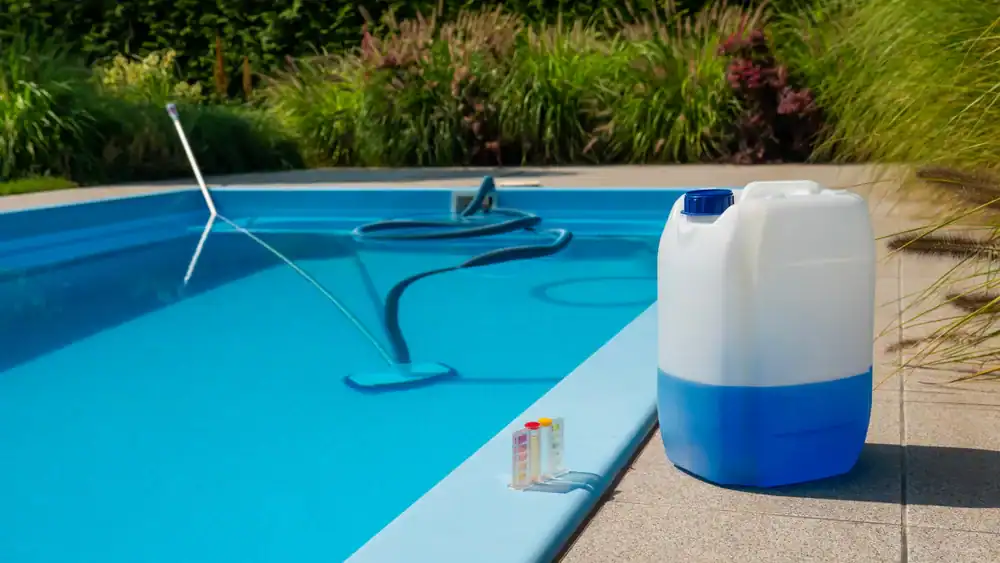
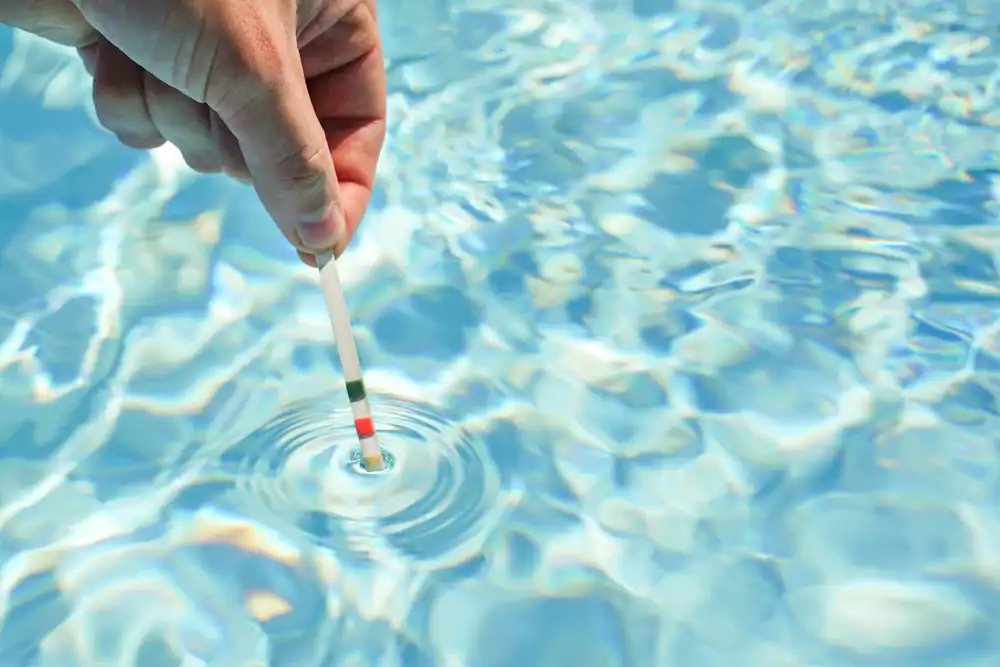
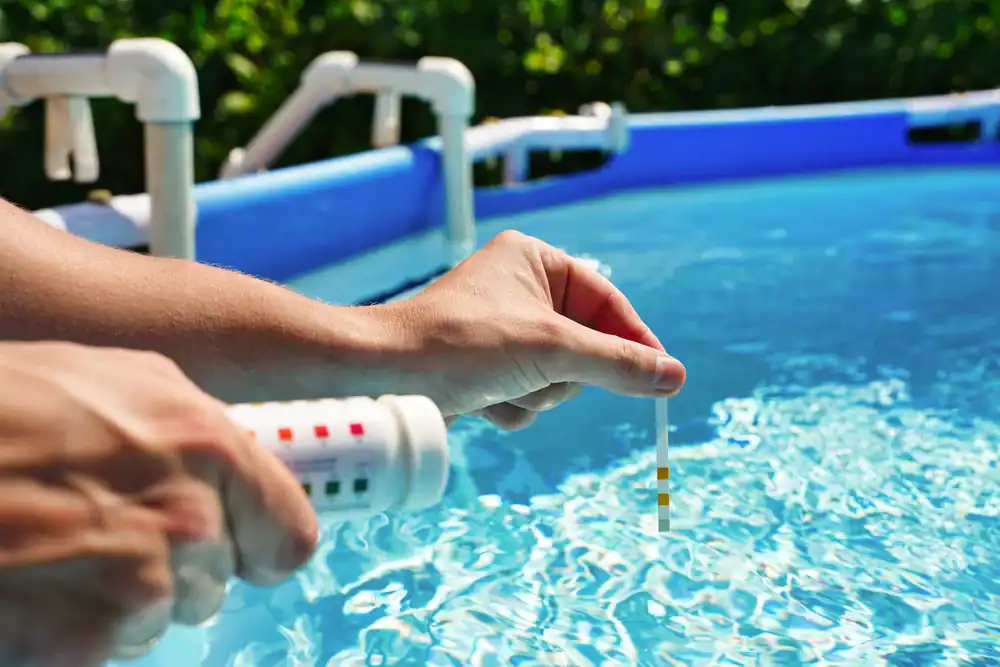
Most pool owners in Broxton aren’t doing anything wrong they’re just working with the wrong information. Test strips give you a rough approximation. They don’t tell you that your cyanuric acid is depleted, that your calcium hardness is quietly eating your plaster, or that last Thursday’s thunderstorm dropped your alkalinity low enough to make your chlorine almost useless. You add chemicals, nothing changes, and you’re back at the hardware store in Douglas by the weekend.
South Georgia’s summer doesn’t give you much margin. July lows in Broxton stay above 73°F warm enough overnight for algae to keep growing while you sleep. The UV intensity during the day can wipe out unprotected chlorine in under two hours. When your chemistry is dialed in precisely, your chlorine actually works, your water stays clear between rain events, and you stop spending money on chemicals that aren’t solving anything.
For homeowners in Broxton who’ve invested in a concrete or plaster pool, getting the chemistry right also protects the surface itself. Water that’s too soft becomes corrosive. Water that’s too hard leaves mineral scale across your walls and clogs your equipment. A professional water test catches both problems before they turn into a resurfacing bill.
We’re based in Douglas about nine miles south of Broxton on U.S. 441 and have been building and servicing pools across Coffee County and the surrounding region for decades. Our experience goes back more than 30 years, starting in concrete and plumbing before expanding into full custom pool construction. That background matters when it comes to water chemistry, because understanding how a pool is built tells you exactly what the water needs to do.
Our specialization is gunite and shotcrete construction the same concrete pool surfaces that are most common throughout Coffee County and most sensitive to chemistry errors. When the company that built pools like yours is the one reading your water test, you’re not getting a generic recommendation. You’re getting a diagnosis from someone who knows what’s underneath the waterline.
Broxton has no pool service company of its own. When something goes wrong with your water, we’re the closest qualified option and one that already knows this area, this climate, and this region’s water conditions.
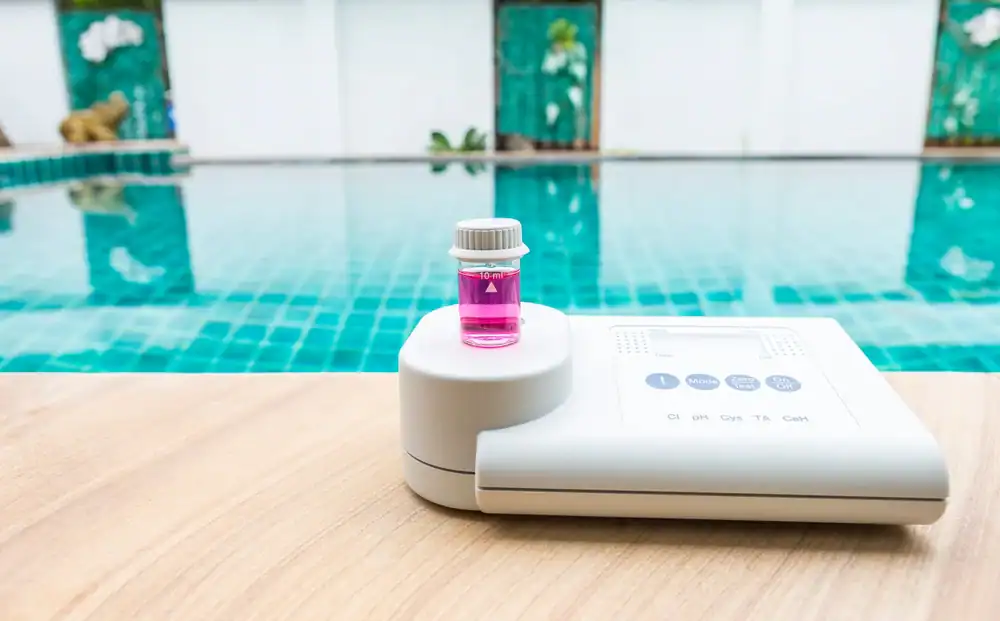
The process starts with a digital water analysis not a test strip, not a color-match card. Every critical parameter gets measured: free chlorine, combined chlorine, pH, total alkalinity, calcium hardness, cyanuric acid, and total dissolved solids. These numbers tell a complete story about what your water is doing and what it needs, and they’re accurate to a level that consumer-grade strips simply can’t match.
Once the analysis is complete, you get a clear breakdown of every reading and what it means. If your pH is drifting high, you’ll know why your chlorine isn’t working even when the levels look fine. If your cyanuric acid is low, you’ll understand why Broxton’s intense summer sun is burning through your sanitizer before it can do its job. There’s no upsell pressure and no list of products you have to buy just an honest picture of where your water stands and what it takes to correct it.
From there, we put together a specific treatment plan based on your pool’s actual numbers. If you have a concrete or plaster surface, calcium hardness and LSI balance get particular attention, because those are the readings that determine whether your water is protecting or slowly damaging your pool. In a region where summer thunderstorms can reset your chemistry multiple times a week, having a precise baseline makes every follow-up correction faster and more effective.
Ready to get started?
A complete water test from us covers every reading that actually matters for a South Georgia pool. Free and combined chlorine levels, pH, total alkalinity, calcium hardness, cyanuric acid, and total dissolved solids all measured digitally and all reviewed in context of your specific pool surface and the conditions it’s operating in. For Broxton homeowners with concrete or plaster pools, calcium hardness testing isn’t a bonus item; it’s one of the most important numbers in the analysis.
Cyanuric acid gets particular attention here because of what Coffee County’s summer sun does to unprotected chlorine. If your stabilizer level is off too low or too high your chlorine either burns off before it can work or becomes chemically locked and ineffective. Either way, your pool looks like the chemistry isn’t working even when you’re adding the right products. Getting that number right is often the single fix that makes everything else fall into place.
For homes in the rural areas outside Broxton’s municipal water service, well water fill adds another layer of complexity. Groundwater in Georgia’s coastal plain can carry elevated iron and mineral content that throws off pool chemistry from the first fill. That’s accounted for in the analysis not treated as an afterthought. Whether you’re on city water or a private well, the test gives you a complete picture of what you’re actually working with.
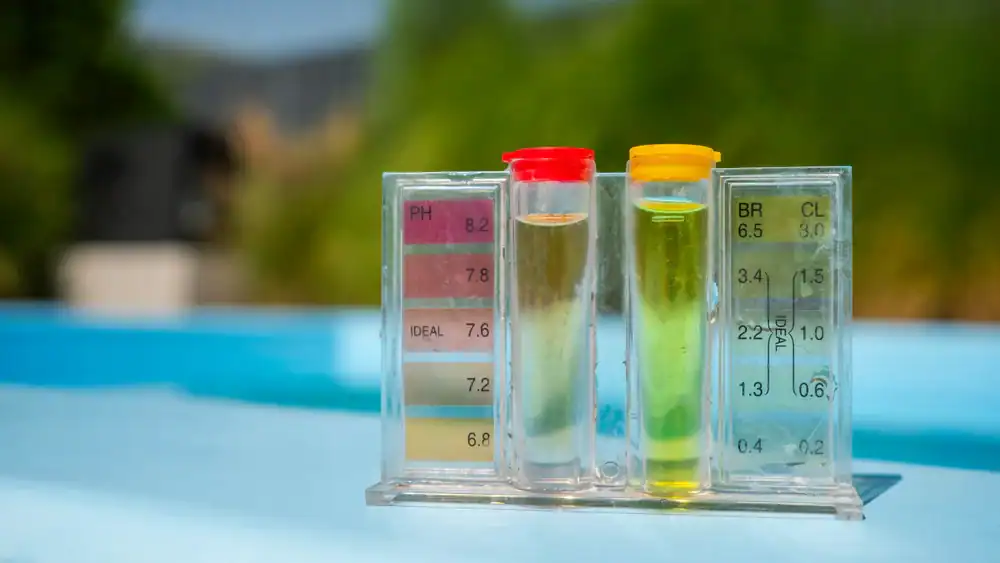
In most parts of the country, testing once a week is a reasonable baseline. In Broxton, it’s not enough during peak summer. When heat index values are regularly hitting 107°F and afternoon thunderstorms are rolling through multiple times a week, your pool chemistry can shift significantly within 24 to 48 hours. High temperatures accelerate algae growth and increase chlorine demand. Every rain event dilutes your chemical balance, drops your pH, and reduces your sanitizer concentration.
A practical approach for Broxton pool owners during July and August is to test at minimum twice a week and always after a significant rain event. That doesn’t mean you need a professional test every time. A reliable digital home tester handles routine monitoring well. Where professional testing becomes valuable is at the start of the season, after any major chemistry correction, and anytime your water isn’t responding the way it should. Getting a precise professional baseline makes every subsequent adjustment faster and more accurate.
This is one of the most common frustrations pool owners in Coffee County bring to us, and it almost always comes down to one of three things: pH is too high, cyanuric acid is out of range, or combined chlorine has built up to the point where your free chlorine can’t do its job.
When pH climbs above 7.8, chlorine loses the majority of its sanitizing effectiveness even if the concentration looks fine on a test strip. In South Georgia’s summer heat, pH tends to drift upward naturally. At the same time, if your cyanuric acid level is too low, the intense UV exposure is destroying your chlorine faster than you can add it. You can pour in shock after shock and still lose the battle because the stabilizer isn’t there to protect it. A full digital water analysis identifies exactly which variable is the problem, so you’re correcting the actual cause rather than adding more product to a chemistry imbalance that won’t respond until it’s fixed at the root.
Calcium hardness is the measurement of how much dissolved calcium is in your pool water. For a concrete or plaster pool which is the most common type in the Coffee County area this number has a direct impact on the condition of your pool’s surface over time.
Water that’s too low in calcium becomes aggressive. It pulls minerals out of whatever surface it’s in contact with, which means it slowly etches and pits your plaster finish. Water that’s too high deposits calcium scale on your walls, floor, and equipment the white chalky buildup you might have noticed around your waterline or on your returns. The target range for most concrete pools is 200 to 400 ppm, and staying within that range is what keeps your surface intact year after year. Test strips don’t measure calcium hardness reliably. It requires a proper chemical titration or digital analysis to get an accurate reading, which is one of the main reasons professional testing catches problems that home strips miss entirely.
It does, and it happens faster than most people expect. Rainwater is naturally slightly acidic and has essentially zero alkalinity. When a significant amount of it enters your pool even an inch of rain can add thousands of gallons of dilution depending on your pool’s surface area and the runoff from surrounding decking it pulls your pH and total alkalinity down. Lower alkalinity makes your pH unstable, which means it swings more dramatically in response to any other variable. Lower pH makes your water more corrosive to pool surfaces and equipment.
Broxton sits in a wet, year-round climate with heavy summer thunderstorm activity. During July and August, it’s not unusual to have multiple rain events in a single week. If you’re not testing and adjusting after those events, you’re likely running your pool in a chemistry state that’s either corrosive or ineffective for significant stretches of the season. Post-rain testing is one of the simplest habits that makes the biggest difference in keeping a South Georgia pool consistently clear and balanced.
Yes, and it’s a more common issue in the rural areas surrounding Broxton than most homeowners realize. Georgia’s Atlantic Coastal Plain geology the same sandstone formation that surfaces at Broxton Rocks about ten miles north of town influences the mineral content of groundwater throughout this region. Well water in Coffee County can carry elevated levels of iron, manganese, and calcium that immediately affect pool chemistry when used to fill or top off a pool.
Iron is particularly problematic. Even small concentrations can cause staining on pool surfaces and equipment, and iron doesn’t show up on a standard test strip at all. If you’re on a private well and your pool has developed brownish or rust-colored staining, that’s likely the culprit. A full professional water analysis includes testing for metals and mineral content so you know exactly what you’re starting with and what sequestering agents or pre-treatment steps are needed before you add any chlorine or adjust pH. Skipping that step and going straight to standard chemical corrections often makes metal-related problems significantly worse.
The honest answer is that the cost of a professional water test is a fraction of what most chemistry problems end up costing when they go undiagnosed long enough. In Broxton, where the median home value runs around $152,900 and a pool represents a meaningful share of a property’s total investment, a resurfacing job or equipment replacement from chemistry-related damage is not a minor inconvenience it’s a significant financial hit.
Plaster resurfacing on a concrete pool typically runs several thousand dollars. A corroded pump or a scaled-up filter system adds repair costs on top of that. And the chemical waste from months of adding products to a pool with an underlying imbalance adds up faster than most people track. One professional test that correctly identifies the root problem whether it’s calcium hardness, CYA, combined chlorine, or source water minerals saves you the cost of guessing wrong repeatedly. For a Broxton homeowner who’s been fighting the same water problem for a season or two, a precise diagnosis is usually the most cost-effective move available.