
Hear from Our Customers
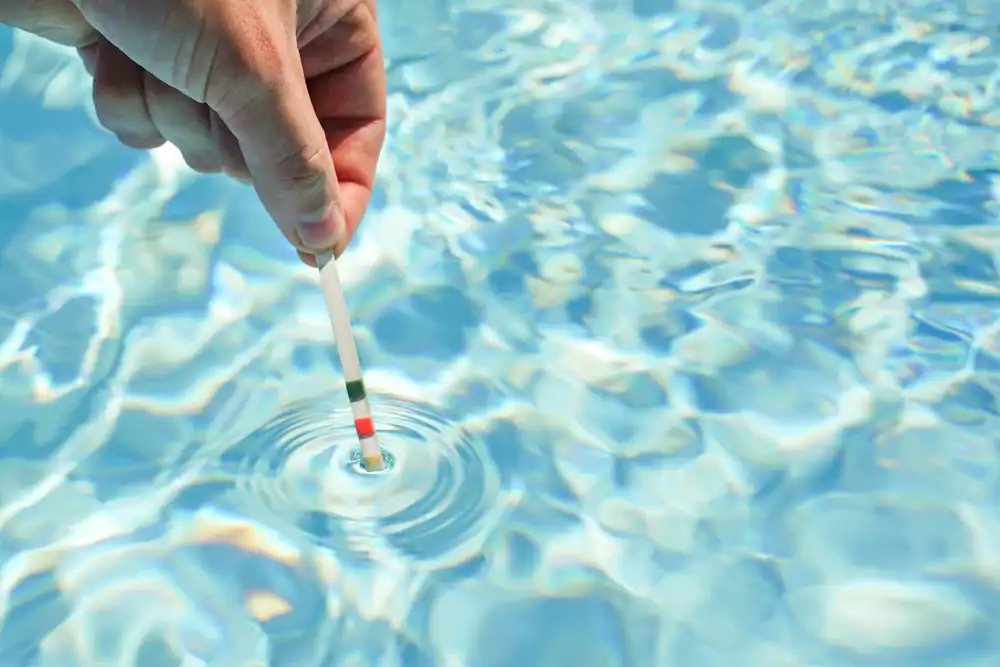
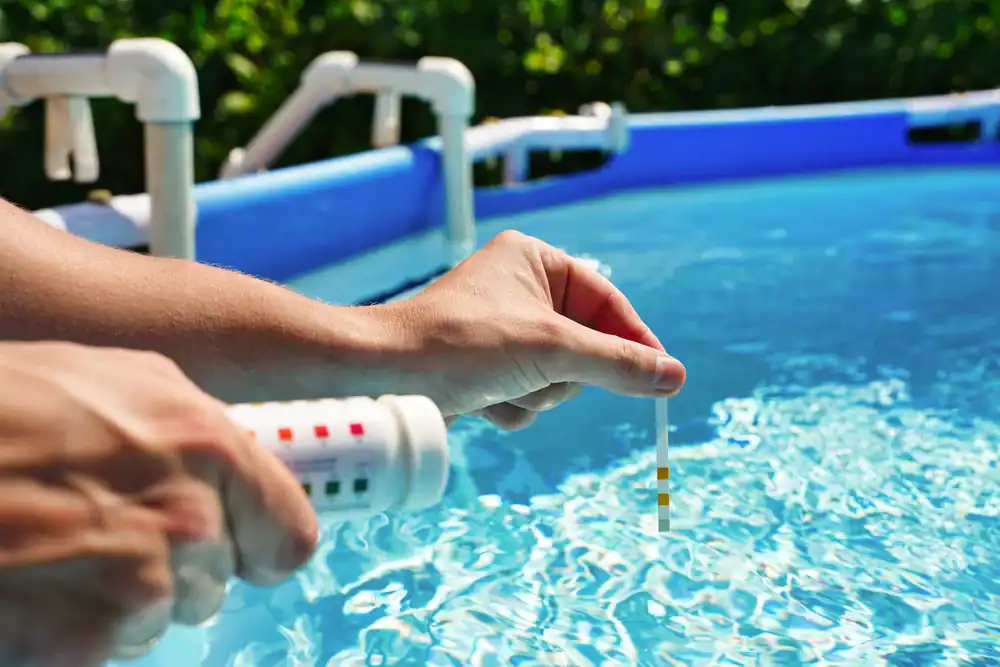
Most pool owners in Lehigh aren’t doing anything wrong they’re just working with incomplete information. Test strips give you a rough ballpark, but they can’t tell you why your chlorine isn’t holding, why the water looks dull after you just shocked it, or why that hazy film keeps coming back. Those answers come from a real chemistry analysis, not a color chart.
Here’s something worth knowing: if your pH climbs above 7.8 which happens fast during Coffee County’s brutal summer heat your chlorine loses roughly half its effectiveness, even when the reading looks normal. You can add chemical after chemical and still end up with a green pool by Wednesday. That’s not a product problem. That’s a chemistry problem that only shows up in a precise, professional test.
And if you’re on well water out in rural Lehigh, your baseline is already different from someone on Douglas city water. Iron, calcium, and dissolved minerals in private well water vary enough that what works for one pool won’t work for yours. Getting that foundation right from the start is the difference between a pool that stays clear and one that keeps you guessing all summer.
We’re based in Douglas the Coffee County seat, just down the road from Lehigh. We’re not a franchise reaching in from Tifton or a metro company making a long drive out to South Georgia. We work here, we know the roads, and we understand what the local climate does to a pool’s chemistry across every season.
What sets us apart isn’t just the testing equipment it’s the construction background behind it. We’ve been building gunite and shotcrete pools for more than 30 years. That means when we test your water, we’re reading the chemistry against the specific demands of a concrete pool surface, not just checking boxes on a generic report. Corrosive water eats plaster. Scaling water clogs equipment. We know exactly what the numbers mean for the pool you actually have.
Licensed, insured, and genuinely local that combination is harder to find in Coffee County than it should be.
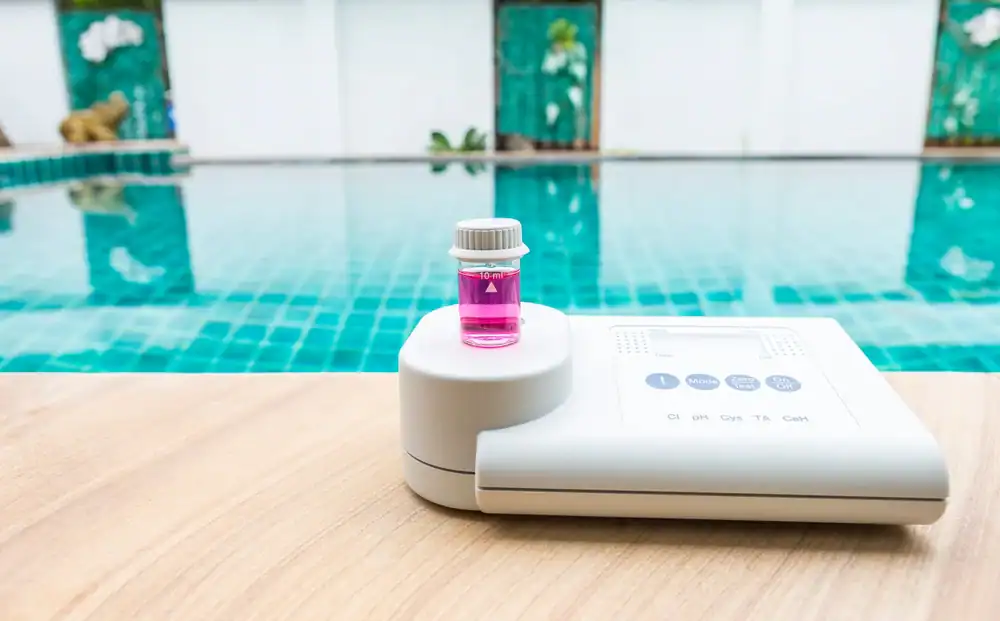
When we come out to test your water, we’re not dipping a strip and reading a color. We use digital water analysis equipment that gives precise readings across every critical parameter free chlorine, total chlorine, pH, total alkalinity, calcium hardness, cyanuric acid, total dissolved solids, and metals like iron and copper. That last one matters a lot if you’re pulling from a private well, which many Lehigh properties do.
Once the analysis is complete, you get a clear picture of exactly where your water stands and what it needs not a bag of shock and a vague suggestion, but a specific, prioritized correction plan. If your pH is off, that gets addressed first, because nothing else works correctly until it’s in range. If your calcium hardness is low and your plaster is at risk, you’ll know that before it becomes a resurfacing bill.
Timing matters here too. Coffee County’s heavy spring pollen season all that pine dust coating everything from March through May creates an organic load in pools that spikes chlorine demand in ways most homeowners don’t anticipate. Summer thunderstorms dilute and destabilize chemistry fast. A professional test after a major rain event or at pool opening isn’t overkill in this climate, it’s just practical.
Ready to get started?
A complete water test from us covers the full picture of your pool’s chemistry. pH level balancing is the foundation get that wrong and everything downstream is compromised. Total alkalinity acts as the buffer that keeps pH stable, so that gets checked and corrected alongside it. Chlorine levels are measured as both free and total, because the gap between those two numbers tells you whether combined chlorine the stuff that causes eye irritation and that strong chemical smell is building up in your water.
Calcium hardness testing is especially important for pools in the Lehigh area. Gunite and shotcrete pools have specific calcium requirements, and well water in rural Coffee County can push those numbers in either direction. Too low and the water turns corrosive, slowly eating your plaster finish. Too high and you get white scaling on surfaces, cloudy water, and clogged filters. Cyanuric acid levels are also checked this is the stabilizer that protects your chlorine from South Georgia’s intense UV exposure, which can destroy up to 90% of unprotected chlorine in under two hours on a direct summer day.
Metals testing rounds it out. Iron in well water is a common cause of pool staining in rural areas, and it won’t show up on a standard test strip. If your pool has unexplained discoloration, this is often why. Every reading gets reviewed in context not just against a generic ideal range, but against what’s appropriate for your pool type, your water source, and the season you’re in.
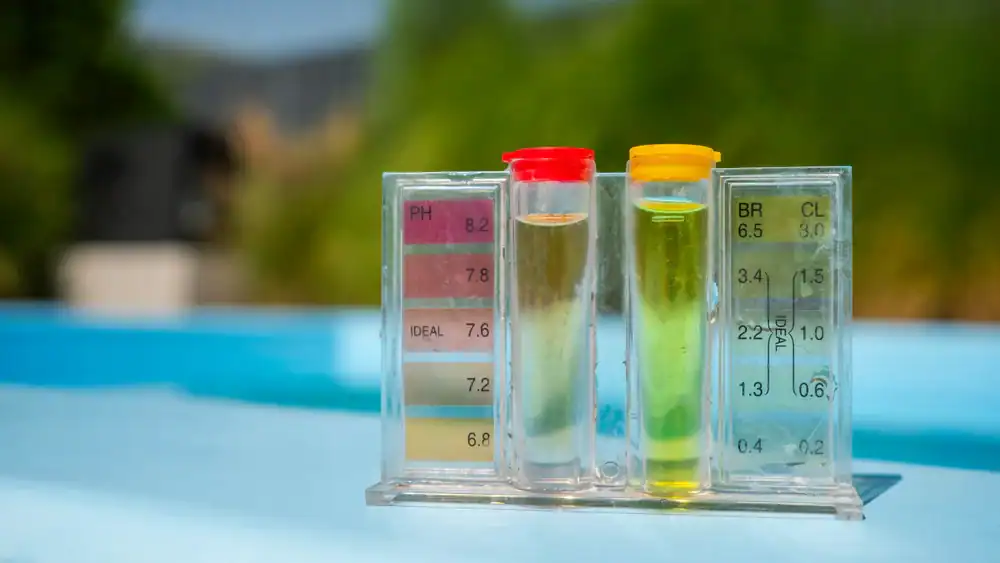
This is the most common frustration for pool owners in Lehigh and throughout Coffee County, and it almost always comes down to pH. When pH climbs above 7.8 which happens quickly during South Georgia’s summer heat chlorine loses roughly half its ability to sanitize, even when the chlorine reading looks fine on a test strip. You can shock the pool repeatedly and still have algae because the chemistry environment isn’t allowing the chlorine to work.
The other factor specific to Lehigh is the organic load. Surrounded by pine forests and agricultural land, pools here deal with significant pollen and dust accumulation from spring through summer. Each wave of pollen or thunderstorm runoff spikes chlorine demand in ways that catch homeowners off guard. A professional water test identifies the actual root cause whether it’s pH drift, low cyanuric acid letting chlorine burn off too fast, or organic overload so you’re treating the real problem, not just adding more product and hoping.
For pools in Lehigh and the surrounding Coffee County area, a professional test at least once a month during swim season is a reasonable baseline but the honest answer is that certain events should trigger a test regardless of schedule. Any significant rain event, especially the heavy summer thunderstorms that hit South Georgia in July and August, dilutes and destabilizes chemistry fast enough that your pre-storm readings are no longer reliable. Pool opening in spring, after Coffee County’s intense pine pollen season, is another point where a professional test is worth doing before you start swimming.
If you’re on well water in rural Lehigh, the baseline variability in your water source is another reason to test more frequently than someone on Douglas city water. Mineral content in private wells can shift seasonally, and those shifts affect your pool’s calcium hardness and pH in ways that build up gradually until something visibly goes wrong. Catching those shifts early is far cheaper than correcting a scaling or staining problem after the fact.
The free in-store test isn’t useless, but it’s worth understanding what it’s designed to do. Pool store tests are built around a retail model the result of the test is a product recommendation. That doesn’t mean the staff are being dishonest, but the system is oriented toward selling chemicals, not diagnosing your specific pool’s problem. The recommendations that come out of a free test are influenced by what’s on the shelf.
A professional water test from us uses digital analysis equipment that measures parameters a typical in-store test doesn’t cover combined chlorine levels, metals like iron and copper, and total dissolved solids. For a Lehigh homeowner on well water, those metals readings can explain staining problems that no amount of shock or algaecide will fix. The result isn’t a shopping list it’s a specific diagnosis and a correction sequence based on what your pool actually needs. That’s a different thing entirely.
Yes, significantly and this is where our construction background actually matters for a water testing service. Gunite and shotcrete pools, which are common on larger rural properties throughout Coffee County, have specific calcium hardness requirements that vinyl liner or fiberglass pools don’t share in the same way. Concrete pool surfaces are porous, and they interact with the water chemistry directly. If calcium hardness drops too low, the water becomes aggressive and starts pulling calcium out of the plaster itself, causing etching and surface deterioration over time.
On the flip side, if calcium hardness runs too high which can happen when well water with elevated mineral content is used to fill the pool you get white scale deposits on the waterline, cloudy water, and strain on your filtration equipment. Knowing the correct target range for your specific pool type and water source, and testing to those targets rather than a generic chart, is what keeps a concrete pool’s finish in good shape for the long term.
Cyanuric acid sometimes called pool stabilizer or conditioner is what protects your chlorine from being destroyed by UV sunlight. In South Georgia, where direct summer sun is intense and pools are used outdoors for five or six months of the year, this matters more than it would in a milder climate. Without adequate cyanuric acid, UV exposure can break down your free chlorine in under two hours on a clear summer day. You’d essentially be adding chlorine and watching it disappear before it can do anything.
The tricky part is balance. Too little cyanuric acid and your chlorine evaporates before it sanitizes. Too much which happens when stabilized chlorine products are used repeatedly over several seasons and the cyanuric acid actually starts to suppress chlorine’s effectiveness, a condition sometimes called chlorine lock. Standard test strips don’t measure cyanuric acid accurately at higher levels, so this is one of the parameters where digital analysis makes a real difference. Getting this number right is one of the more important factors in keeping a Lehigh pool clear through a full South Georgia summer.
It can, and it’s one of the more frustrating problems to deal with because it doesn’t look like a chemistry issue at first it looks like a stain. Iron in well water is a known issue in parts of rural South Georgia, and when that water is used to fill or top off a pool, the iron oxidizes when it contacts chlorine and deposits onto pool surfaces as a rust-colored or brownish stain. Shocking the pool makes it worse, not better, because more chlorine means more oxidation.
The fix isn’t more shock or algaecide it’s metal sequestrant, applied correctly after a proper diagnosis. But you can only diagnose it if you test for it, and standard test strips don’t measure metals. If you’re in rural Lehigh on a private well and you’ve noticed discoloration on your pool walls or floor that doesn’t respond to normal treatment, iron is a likely culprit. A full digital water analysis that includes metals testing is the only way to know for certain and knowing is the only way to actually fix it rather than keep treating the wrong problem.