
Hear from Our Customers
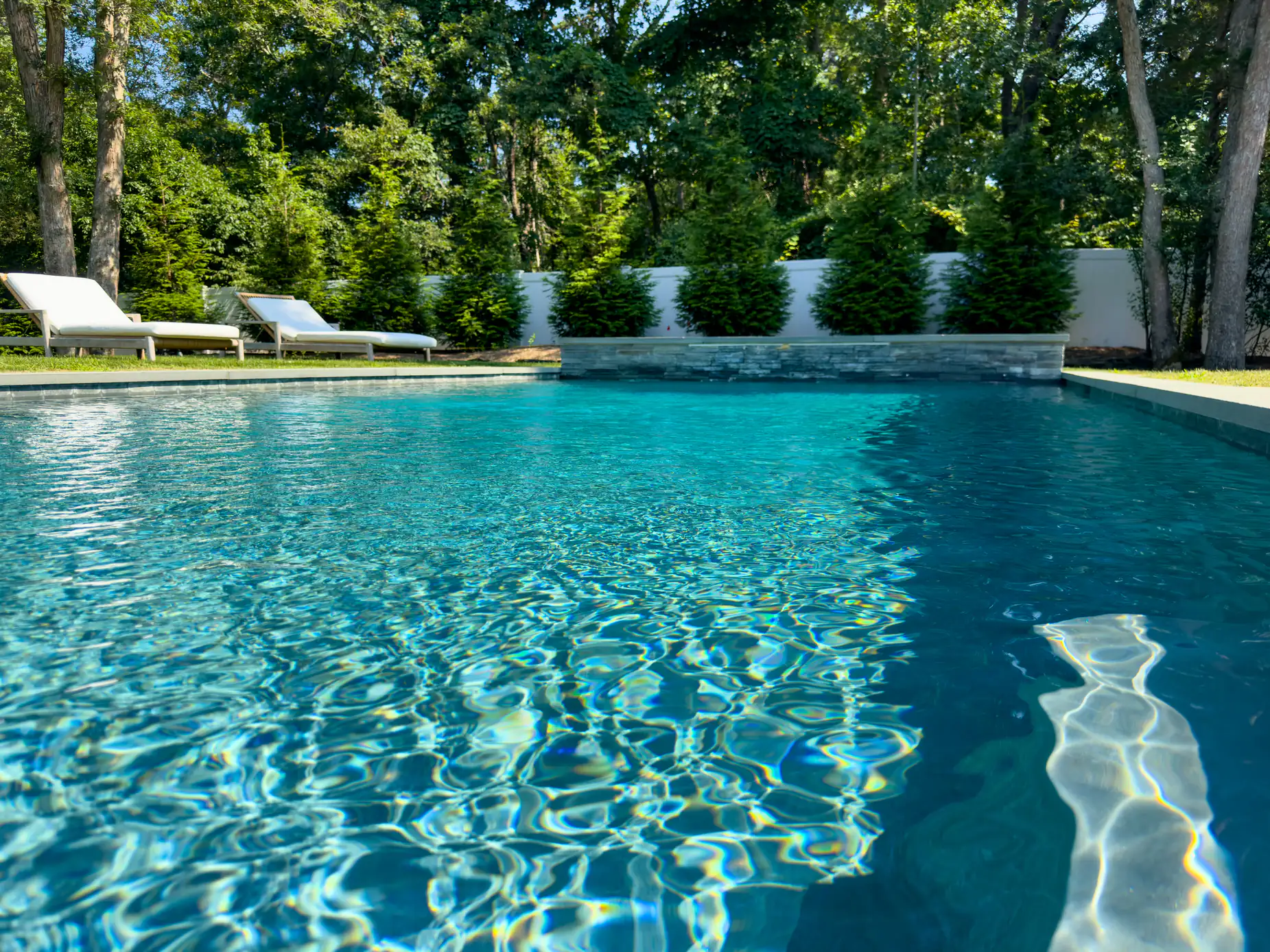
From April through October, South Georgia doesn’t let up. Seven months of heat, humidity, and ninety-degree afternoons and if you’ve got a backyard pool built right, your family stops driving anywhere. No public facility, no waiting, no loading the car. Just your own space in Douglas, ready when the weather says go.
But the pool itself is only part of what you’re getting. When the build is engineered for Coffee County’s clay soil not for some regional average that doesn’t account for what actually shifts under your yard you get a structure that holds. Seasonal moisture expands that ground. Dry stretches pull it back. A pool that wasn’t designed with that in mind will show it within a few years. One that was designed for it won’t.
The other thing you get is a build where nothing falls through the cracks between crews. Every phase excavation, rebar, gunite application, plumbing, electrical, finishing is handled by our in-house team from start to finish. No handoffs, no strangers showing up on your property, no accountability gaps. In Douglas, where contractor reputations travel fast, that consistency matters more than most people realize until they’ve seen what happens without it.
Deep Waters Pools is headquartered at 839 Boardwalk Circle, right here in Douglas. We’re not a regional company with a service territory that happens to include Coffee County we’re a Douglas company, with a local phone number, a local crew, and a decade-plus of pulling permits with the same city offices your project will go through.
Our founding team brought over 30 years of hands-on concrete, plumbing, and pool construction experience to this company before it was ever formally incorporated. That experience wasn’t earned in Atlanta or on the Florida coast it was earned in South Georgia, working with the same clay soil, the same climate, and the same building environment that your project will face.
We started Deep Waters because we watched too many Coffee County families get burned by contractors who took deposits and disappeared, or finished pools that failed within five years. That’s the reason this company exists. And it’s why every project, whether it’s off Pine Valley Road or out on Westgreen Highway, gets treated like it’s going in a neighbor’s backyard. Because it is.
Before anything touches your yard, you’ll see the finished pool in 3D. Every shape, every depth, every feature designed around your actual lot and your family’s needs, not pulled from a catalog. For properties in Douglas with larger lots and more design flexibility, this step matters. You’re not picking from three options; you’re building something specific to your space.
Once the design is locked, we handle every permit in-house building permit, electrical permit, and every required inspection along the way. As a Douglas-based company, we’ve worked with the city’s permitting process repeatedly, including coordination with the locally managed Electric Department. You don’t call the city, schedule an inspector, or track a form. We handle that.
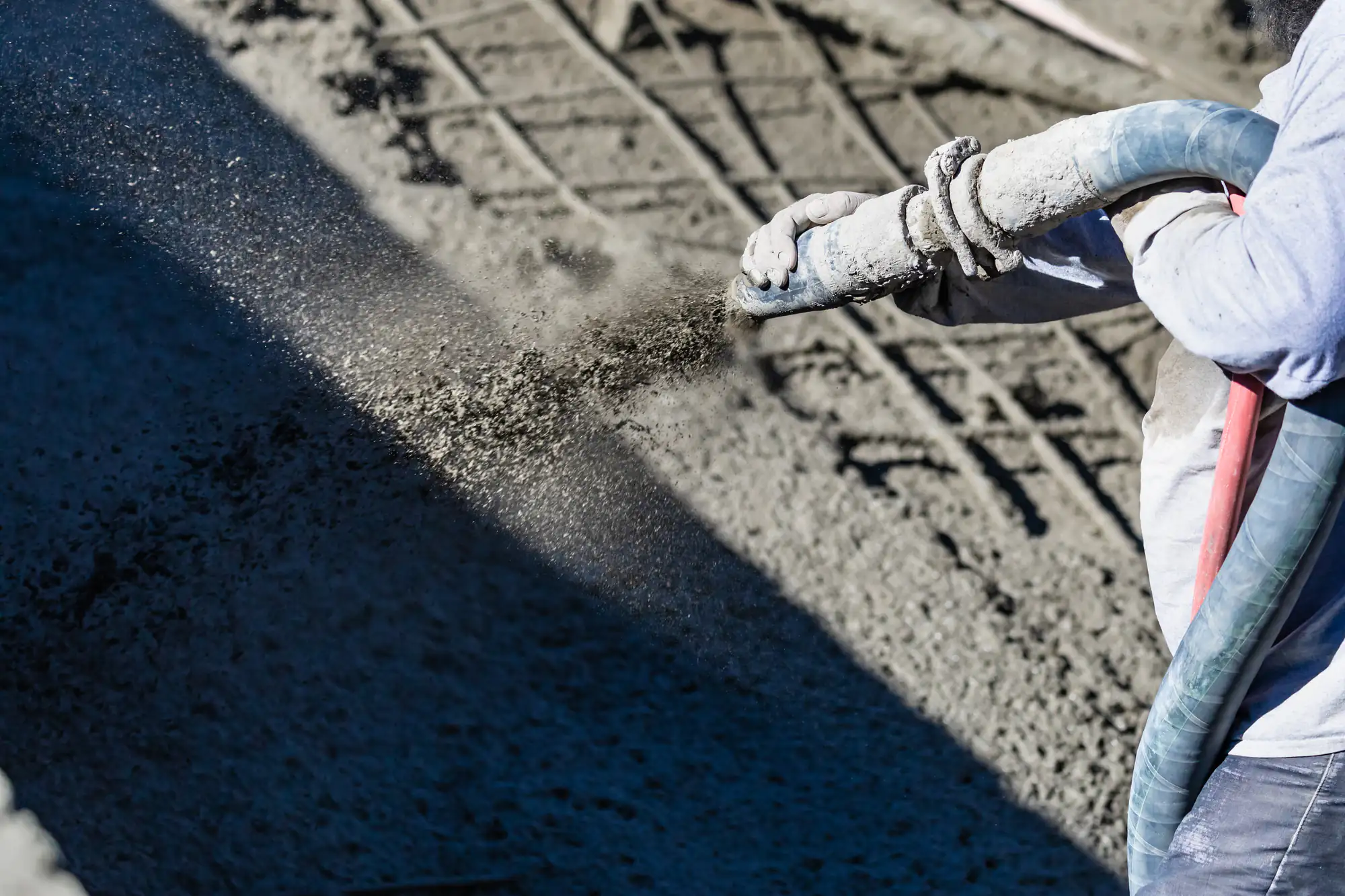
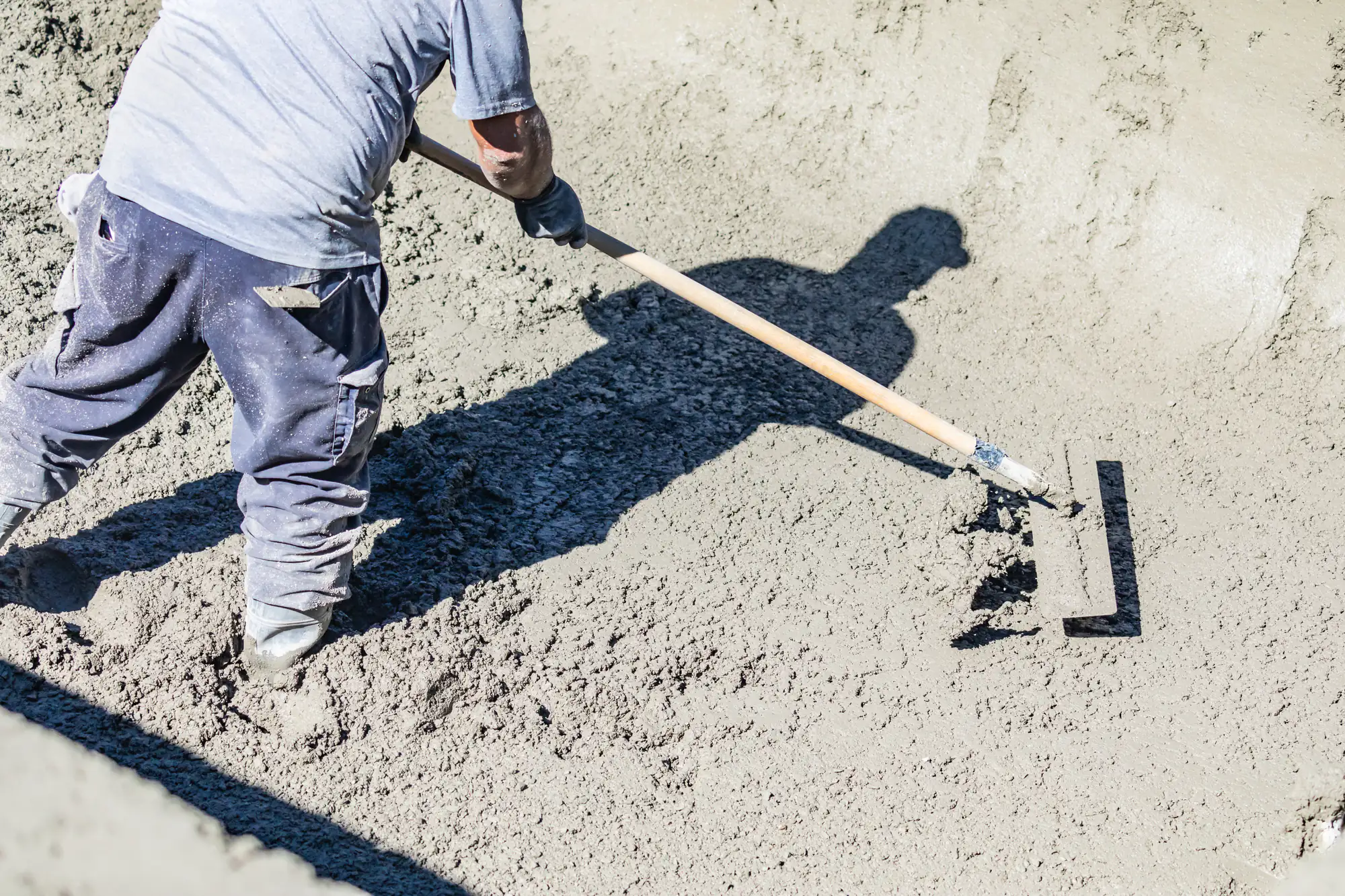
Then the build begins. Excavation, rebar framework, gunite application, plumbing, electrical bonding and grounding, surface finishing, decking, and equipment installation all done by our crew, in sequence, with no subcontractors involved at any stage. The honest timeline for a complete gunite build in South Georgia, done correctly, is three to six months. That includes proper curing time, all required inspections, and a finish that’s actually ready before the heat arrives. If you’re starting the conversation now, the best time to build is before the spring rush fall and winter builds in Coffee County consistently come in with shorter permit queues and more crew availability.
Ready to get started?
A gunite pool from Deep Waters is a complete build, not a construction management project where you’re the one keeping track of who’s doing what. Excavation, structural rebar, gunite or shotcrete application, all plumbing, electrical bonding and grounding per NEC Article 680, surface finishing, coping, decking, and full equipment installation every phase is in-house, every phase is accountable to our team.
We install equipment from the major brands Hayward, Pentair, Jandy, Sta-Rite, and Zodiac and we service what we install. That matters in Douglas, where your nearest alternative service option is a company that focuses primarily on vinyl liner pools and maintenance. When your builder and your service company are the same family-owned business, you’re not starting over every time something needs attention.
For Coffee County homeowners, the pool is also engineered with the local ground in mind from day one. Wall thickness, rebar density, and structural design are calculated for the seasonal expansion and contraction of South Georgia’s clay-heavy coastal plain soil not for a generic Southern standard. That engineering is what separates a pool that holds its shape for thirty years from one that starts showing stress fractures in five. Gunite pools built to this standard typically need resurfacing once every ten to fifteen years. That’s what properly built concrete pools actually do.
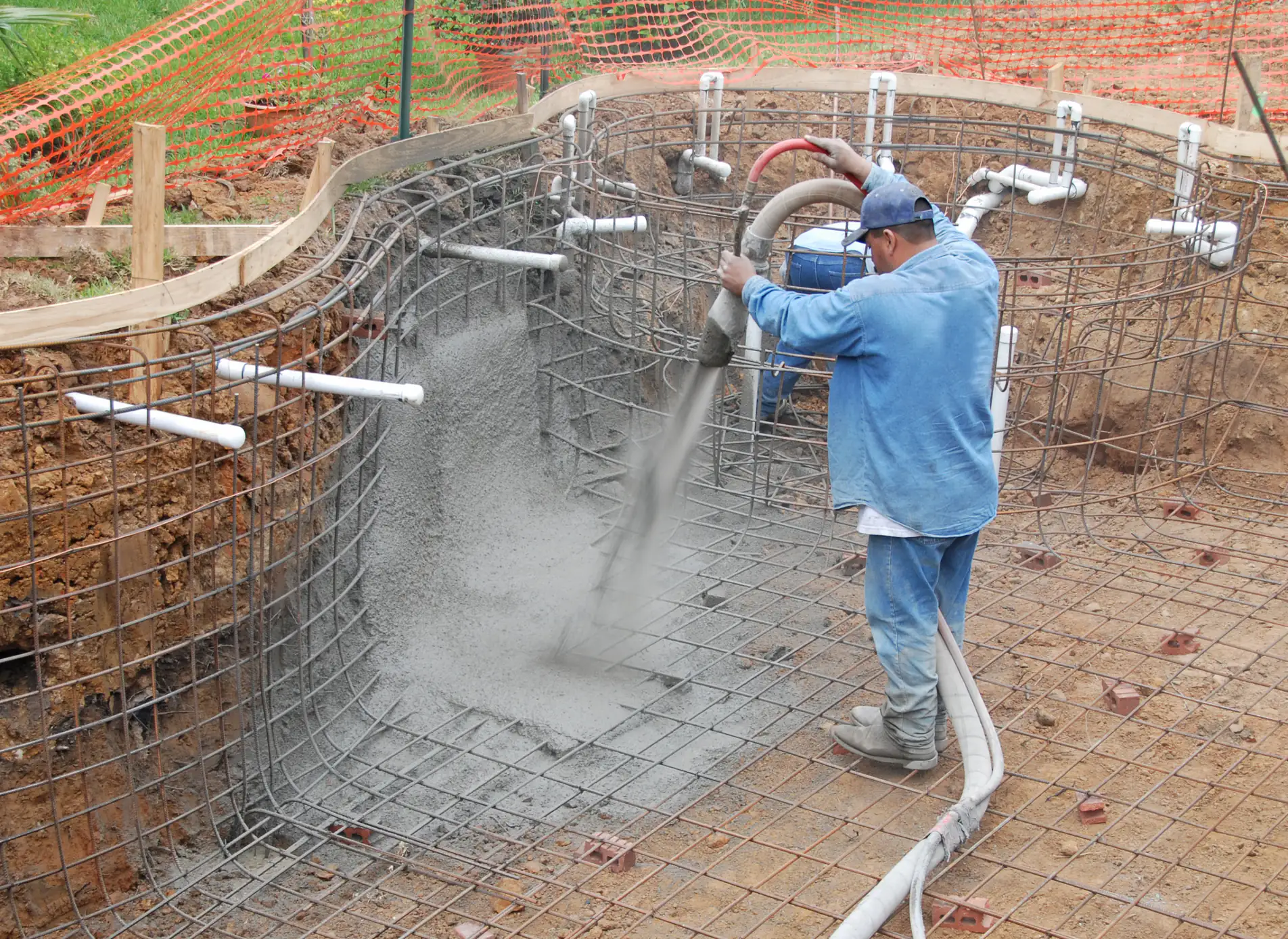
This is the most common concern we hear from Coffee County homeowners, and it’s worth addressing directly. The claim that South Georgia soil causes gunite pools to crack is real but it describes what happens when a builder doesn’t engineer for the local ground, not what happens when they do. Douglas sits on the South Georgia coastal plain, where clay-heavy soil expands with seasonal moisture and contracts during dry stretches. That movement is predictable, and it’s entirely manageable when the pool’s rebar density, wall thickness, and structural design are calculated specifically for those conditions.
A pool engineered for Douglas’s soil behaves differently than one built to a generic regional standard. We design every build with Coffee County’s ground conditions factored in from the start not as an afterthought, but as a core part of the structural plan. Properly engineered gunite pools in South Georgia hold their shape for decades. The cracking stories you’ve heard come from builds that skipped that step, not from the material itself.
For a residential gunite pool in Georgia, the typical range runs from $75,000 to $150,000, with most custom builds landing around $100,000 depending on size, shape, features, and site conditions. In Douglas, where the upper end of the housing market sits between $250,000 and $475,000, that investment represents a meaningful addition to your property and one that typically adds around 7% to home value based on Georgia real estate data.
What affects cost most is scope: a straightforward rectangular pool with standard equipment will come in lower than a custom freeform design with a spa, water features, and upgraded decking. Site conditions on your specific lot drainage, slope, and soil depth can also affect excavation costs. The best way to get an accurate number for your property is to go through the design process first. We provide 3D renderings before any commitment is made, so you can see exactly what you’re getting and what it costs before a shovel touches the ground.
A complete gunite pool build in South Georgia done correctly takes three to six months from permit approval to finished product. That timeline includes excavation, rebar installation, gunite application, proper curing time, plumbing, electrical work, surface finishing, and all required inspections. Builders who quote eight to twelve weeks are either cutting corners on curing time or leaving inspections until after the fact. Neither is a good situation for a structure you’re planning to use for thirty years.
In Douglas, permit timing is a real variable. Spring is the busiest season for pool construction inquiries, which means permit queues run longer and crew availability tightens. Homeowners who start the process in fall or early winter October through February consistently see faster permit approvals and more scheduling flexibility. If your goal is to swim by Memorial Day, the conversation needs to start well before the new year. We handle all permitting in-house, so we can give you a realistic timeline based on current conditions at the time you reach out.
Building an inground pool in Douglas requires a building permit and an electrical permit at minimum, both pulled through the appropriate local authority. Electrical work on pool projects must comply with NEC Article 680, which governs bonding and grounding standards specifically for swimming pools, spas, and fountains. Georgia state law also requires that pool construction above a certain contract value threshold be performed by a licensed contractor under the State Licensing Board for Residential and Commercial General Contractors.
Unpermitted pools in Georgia create real problems fines, forced remediation, and complications when you go to sell the property. In Douglas, the city operates its own Electric Department, which means electrical permit coordination involves city-specific processes that out-of-area contractors may not be familiar with. We handle every permit and inspection in-house. As a company that’s been pulling permits in Douglas for years, we know the local process, the local inspectors, and the realistic timeline. You don’t manage any of it.
For most homeowners in South Georgia who are planning to stay in their home long-term, gunite is the stronger investment. The core advantage is longevity and customization. A properly built gunite pool can last thirty to fifty years. You choose the shape, the depth, the features, and the finish nothing is limited by a prefabricated mold. Fiberglass pools come in fixed shapes and sizes, which works fine for some lots but creates real limitations on others, especially the larger properties common in Coffee County.
On maintenance, the comparison is more nuanced than competitors make it sound. A quality gunite pool needs resurfacing every ten to fifteen years. Vinyl liner pools, by comparison, typically need liner replacement every five to nine years at $4,000 to $4,500 per replacement. Over a thirty-year ownership period, the math on a well-built gunite pool is competitive. The key word is well-built which is exactly why the builder matters more than the material.
The most important thing to verify is whether the builder handles every phase in-house or subcontracts portions of the work. Most pool builders sub out at least a few phases excavation, electrical, or plumbing to separate crews. That’s not automatically a problem, but it creates accountability gaps. When something goes wrong between phases, you’re the one trying to figure out who’s responsible. A builder who owns every phase of the process has nowhere to point but themselves, and that changes how carefully the work gets done.
Beyond that, confirm they’re licensed under Georgia’s contractor licensing requirements, that they pull all required permits before breaking ground, and that they have verifiable experience building in Coffee County’s specific soil conditions. Ask to see how they account for clay soil movement in their structural design a builder who’s done this work in South Georgia will have a direct, specific answer. In Douglas, you can also ask around. Contractor reputations are not hard to trace in a town of this size, and the builders who’ve done good work here have a track record you can actually verify before you sign anything.