Building a pool in Douglas County? Here's what actually happens between excavation and your first swim—including the phases most builders won't explain upfront.
Most people think pool construction starts with excavation. It doesn’t. It starts with paperwork, planning, and approvals—and this phase can take longer than you’d expect.
First comes design. You’ll work with your builder to finalize the layout, size, depth, and features. Depending on how decisive you are and how complex your vision is, this can take anywhere from one to four weeks. Then there’s the permit process. In Georgia, all residential pools require a building permit before construction begins. How long that takes depends entirely on your local building department. Some counties push permits through in two weeks. Others take a month or more, especially during busy spring and summer seasons.
If your property has a septic system, you’ll also need approval from the health department to make sure your pool location won’t interfere with your drain field. Add it all up, and you’re looking at anywhere from three to eight weeks before anyone touches your backyard. It’s not glamorous, but it’s necessary—and skipping steps here can cause major headaches later.
As of January 1, 2026, Georgia adopted updated building codes, including revisions to the International Swimming Pool and Spa Code. If you’re building a pool this year, your project falls under these new standards, which means your builder needs to be up to speed on the latest requirements.
The permit process in Georgia isn’t just about getting a green light to dig. It involves site plan reviews, setback verifications, and safety barrier requirements. Your pool has to be a certain distance from property lines. You’ll need a compliant fence that’s at least 48 inches high with self-closing, self-latching gates. The latch has to be at least 54 inches off the ground so young kids can’t reach it.
Your builder should handle most of this, but it’s worth understanding what’s happening behind the scenes. If your plans don’t meet code, they’ll get kicked back for revisions, and that adds time. If the building department is backlogged, that adds time too. Some homeowners get lucky and sail through in two weeks. Others wait six. It’s one of the most unpredictable parts of the process, which is exactly why any builder promising you a start date before permits are approved is either overly optimistic or not being straight with you.
The best thing you can do? Get your design locked in early, submit permit applications as soon as possible, and stay in communication with your builder about where things stand. The sooner permits come through, the sooner construction can actually begin.
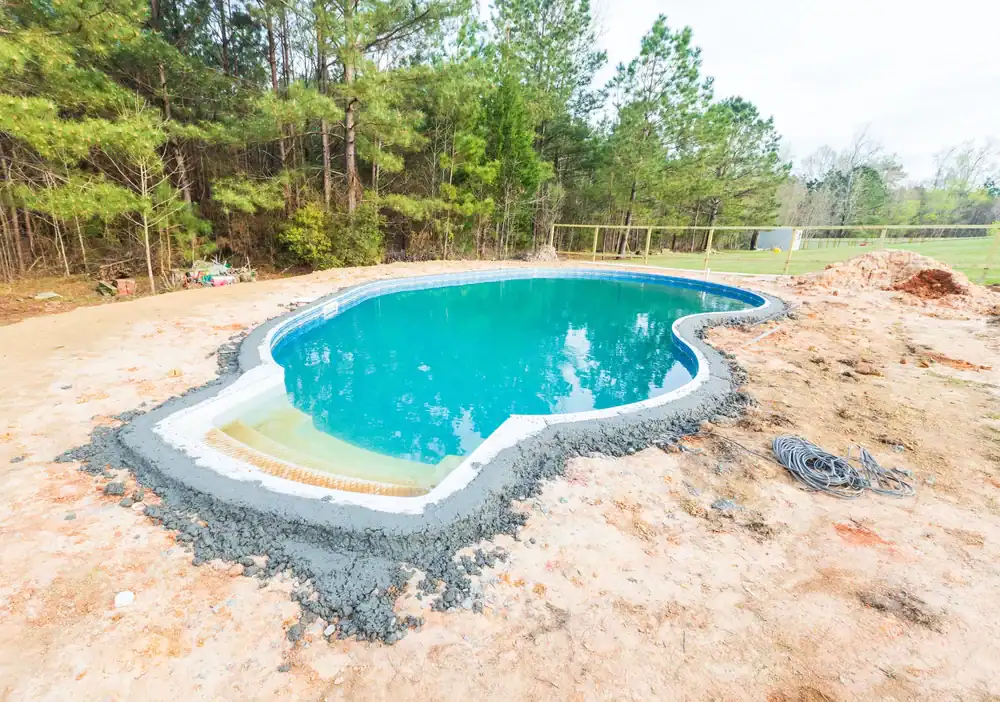
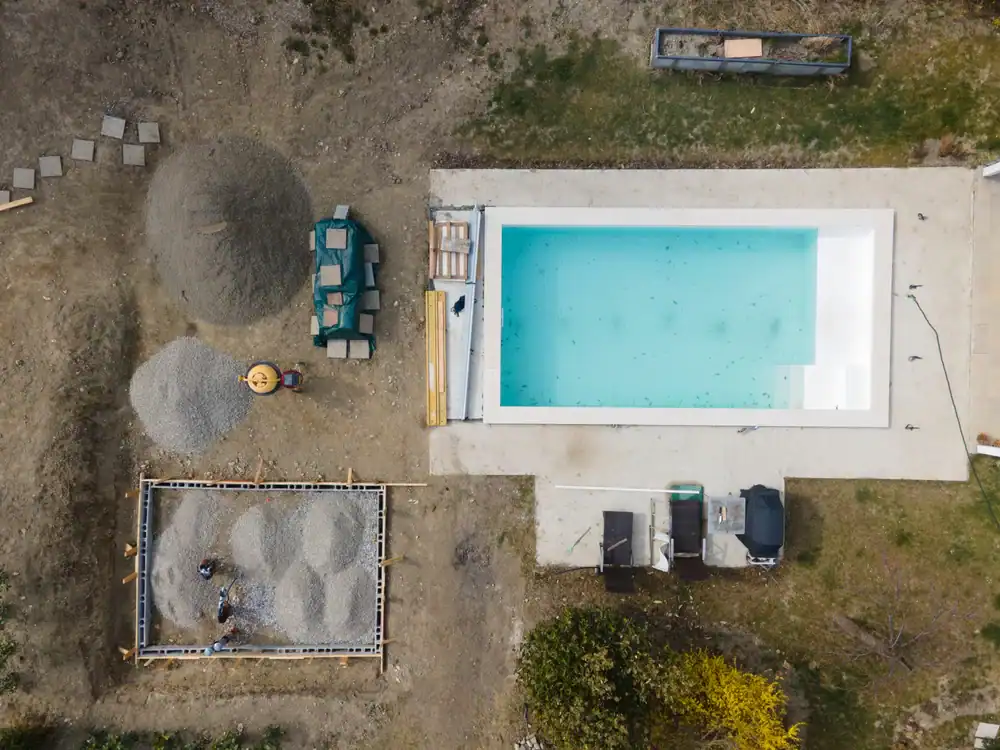
Once permits are in hand, excavation is usually the first phase that feels real. Heavy equipment shows up, your yard gets marked off, and within a day or two, there’s a massive hole where your pool is going to be.
For most residential pools, excavation takes about one day—sometimes two if the pool is large or the layout is complex. Crews use excavators and backhoes to dig out the shape and depth of your pool, then haul away the dirt. And there’s a lot of dirt. More than you’d think. Some contractors say to picture the amount you expect, then multiply it by five.
But here’s where things can get tricky. Soil conditions matter. If your yard has a lot of rock, clay, or unstable soil, excavation takes longer. If crews hit bedrock or large boulders, they may need to bring in a hydraulic hammer to break it up. Weather plays a role too—heavy rain can halt work and turn your site into a mud pit.
Accessibility is another factor. If your backyard is tight or fenced in, the excavation team might need to remove sections of fencing to get equipment in and out. All of this is normal, but it’s why even the “simple” phase of digging can occasionally stretch from one day to a full week.
Once the hole is dug, the site gets graded and prepped for the next phase. This is also when any underground plumbing lines are roughed in. Your builder should pressure-test these lines before moving forward to make sure there are no leaks. Catching a problem now is a lot easier than catching it after the pool shell is in place.
Want live answers?
Connect with a Deep Waters Pools expert for fast, friendly support.
After excavation, the pool starts to take shape. But this phase isn’t as fast as people expect, especially if you’re building a gunite or concrete pool.
First, steel rebar gets installed to create the framework that supports the pool shell. This usually takes one to two weeks, depending on the complexity of your design. If you’re adding custom features like a spa, bench seating, or water features, expect this phase to take a bit longer. Once the rebar is in place, plumbing lines are connected. This includes your main drain, skimmer, return lines, and any additional water features.
Then comes the gunite application. Gunite is a dry mix of concrete and sand that’s sprayed under high pressure onto the rebar framework. It’s what gives your pool its structure and strength. The application itself usually happens in one day, but then the real waiting begins. Gunite needs time to cure—typically 28 days. During this time, the concrete hardens and gains strength. You can’t rush this. Trying to skip or shorten the curing process leads to cracks, weak spots, and costly repairs down the road.
If there’s one phase of pool construction that frustrates homeowners, it’s the curing period. You’ve got a pool-shaped hole in your yard, and it looks like it’s almost done. But nothing happens for nearly a month.
Here’s why that wait is necessary. Gunite doesn’t just dry—it cures. Curing is a chemical process where the concrete bonds and hardens over time. Rushing this process weakens the structural integrity of your pool. In mild climates, curing might take a week or two. But in cooler or rainier conditions, it can take the full 28 days or longer. Some builders in colder regions even set up heated enclosures to ensure proper curing during winter months.
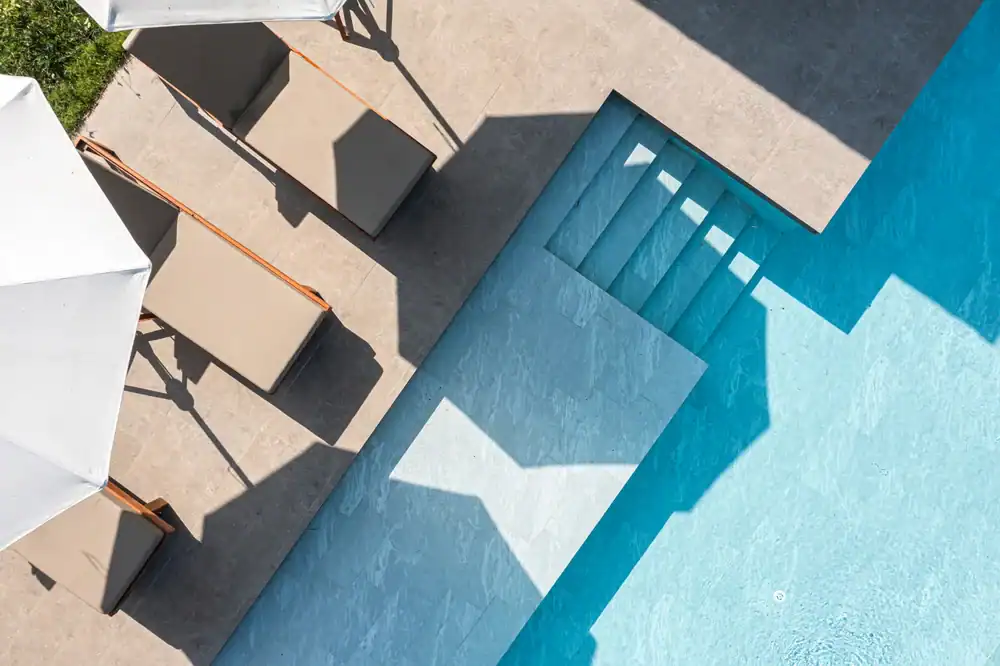
During the curing period, your builder isn’t just sitting around. This is when tile and coping get installed. Tile is typically placed first because it establishes the level line of the pool. Tile installers carefully set the waterline tile along a precise, level line, and then coping is installed on top of that. Coping is the cap that goes around the edge of your pool, forming a border and creating a non-slip surface for swimmers.
Tile and coping installation usually takes one to two days, but complex designs with custom tile patterns or natural stone coping can take longer. Once tile and coping are done, the pool deck can be poured. Decking usually takes three to five days, depending on the size and material. Some homeowners choose stamped concrete, pavers, or natural stone, and each option has its own installation timeline.
The key thing to understand is that even though it feels like nothing is happening during the curing period, a lot of critical work is being done. And when curing is complete, you’re in the home stretch.
Once the gunite has cured and the tile, coping, and decking are in place, it’s time for the finishing stages. This is when your pool goes from a concrete shell to something you can actually swim in.
Plaster is the final interior finish. It’s a smooth, waterproof coating that gets applied to the inside of the pool. The plaster crew installs interior fittings like the main drain and rope anchors, then applies the plaster in about three-quarters of a day. Once plastering is done, the crew will start filling the pool with water. This is critical: once you start filling, you cannot stop the water until it reaches halfway up the tile. Stopping the fill can cause permanent staining or cracks in the fresh plaster.
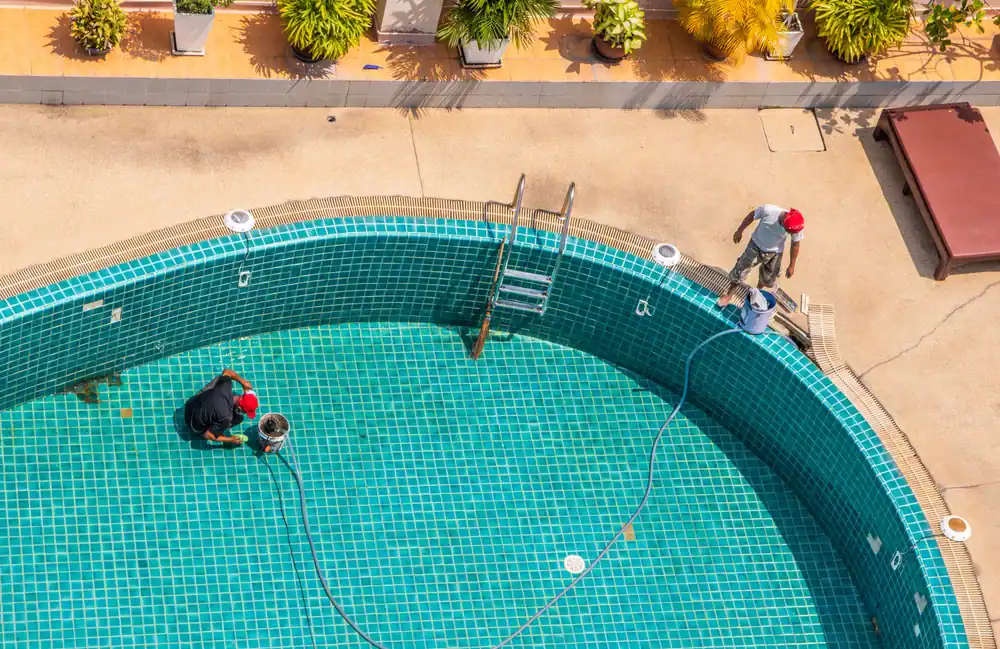
Filling the pool usually takes a day and a half to two days. Once it’s full, your builder will schedule the startup. This is when the filtration and pumping systems get turned on for the first time. The crew will clean out any minor construction debris, check all the equipment, and make sure everything is working properly. They’ll also walk you through how to operate and maintain your pool.
After startup, there’s usually a final inspection from the local building department. The inspector checks the pool deck, coping, safety features like fencing and gates, and all the mechanical equipment. If everything passes, you’re good to go. If there are issues, they’ll need to be corrected before you get final approval.
From plaster to first swim, you’re looking at about three to five days. And then, finally, it’s yours.
So how long does it really take to build a pool? For most gunite pools in Georgia, you’re looking at 8 to 12 weeks of active construction once permits are approved. Add in the design and permitting phase, and the full timeline from start to finish is typically three to six months.
But here’s the thing: timelines aren’t guarantees. Weather delays happen. Permit offices get backlogged. Material shortages pop up. Unexpected site conditions—like hitting rock during excavation—can add days or even weeks. Any builder who promises you an exact timeline without acknowledging these variables isn’t being realistic.
What matters more than speed is quality. A pool built right will last decades. A pool rushed through to meet an arbitrary deadline can develop problems that cost you thousands to fix later. If you’re planning a pool project in Douglas County or anywhere in Georgia, work with a builder who’s transparent about the process, experienced with local permit requirements, and committed to doing the job correctly. We’ve been building custom inground pools across South Georgia for years, and we know that the best pools aren’t the fastest ones—they’re the ones built to last.
Summary:
Share: