

Hear from Our Customers
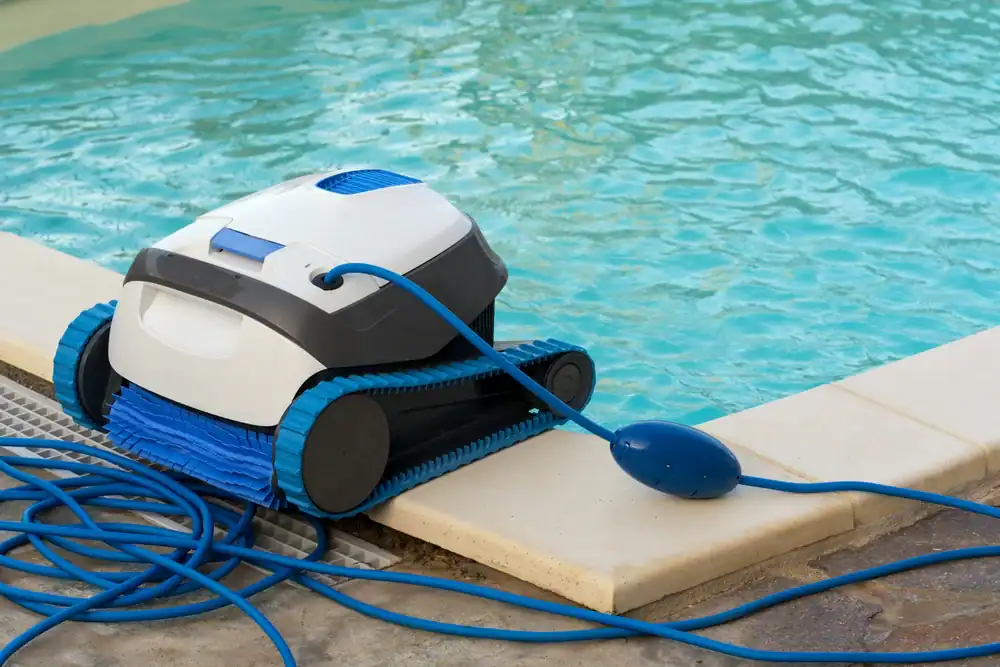
When the heat index in Ocilla climbs past 109 degrees which it does regularly every July and August your pool chemistry doesn’t just drift. It crashes. Chlorine burns off faster than most homeowners expect, algae can establish in a matter of days, and what looked clean on Monday can be green by Friday.
What professional pool cleaning actually gives you is time back and problems avoided. No emergency algae treatments. No weekend spent wrestling with chemistry you’re not sure about. No pump strain from a clogged skimmer basket that nobody caught in time. Your pool is ready when your family wants to use it which, in Irwin County, is a long season. From the first warm weekends in March through the outdoor gatherings that stretch into October around the Sweet Potato Festival, that’s a lot of days your pool should be working for you, not against you.
There’s also the investment angle. In Ocilla, where the median home value sits around $108,000, a backyard pool represents real money. Neglected pools don’t just look bad they rack up repair bills. A single algae remediation can run $200 to $500. Equipment failures from deferred maintenance can push well past $1,500. Routine professional service costs a fraction of that and keeps everything running the way it should.
We’re based in Douglas, Georgia about 40 miles north of Ocilla on US 129, the same road that runs straight through downtown Ocilla past the Irwin County Courthouse. That’s not a coincidence. This region is where we’ve worked, where we understand the soil, the water, and the climate, and where we’ve been doing this long before the company formally launched in 2014.
Our founder spent more than three decades in concrete, plumbing, and pool work across South Georgia before starting Deep Waters Pools. And the reason we exist at all is worth knowing: we were built as a direct response to families in Ocilla and the surrounding area getting burned by contractors who made big promises and disappeared after the check cleared. That’s the standard every service visit is held to show up, do the full job, and be straight about what was found.
No franchise. No out-of-area call center. A real company on the same highway as Ocilla, with the kind of regional knowledge that only comes from actually working here for decades.
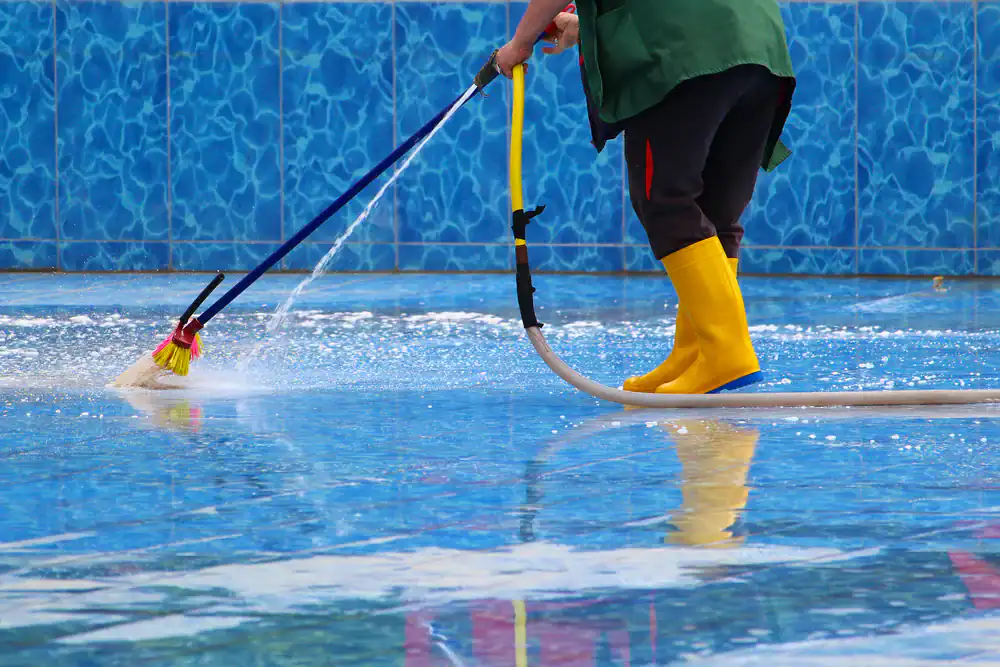
Every service visit starts with a full read of your pool’s current condition. Water gets tested for pH, chlorine, alkalinity, and any other chemistry that needs attention. That’s not a formality in Irwin County’s agricultural environment, where field dust and crop particulates from over 145,000 acres of surrounding farmland can affect water balance during planting and harvest seasons, getting an accurate baseline every visit matters more than it might somewhere else.
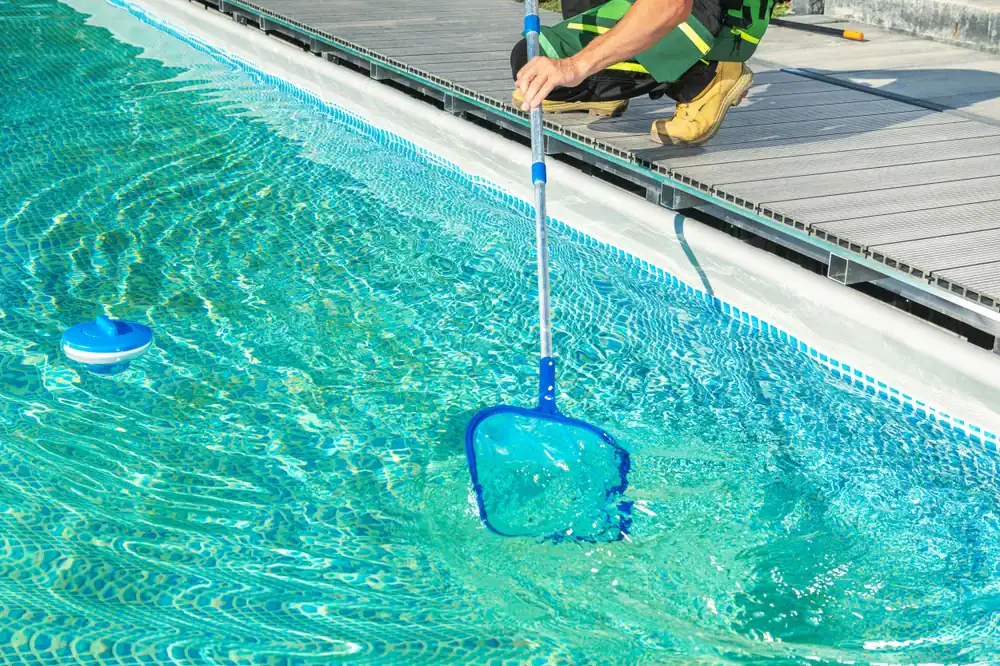
From there, the physical cleaning happens: skimmer baskets pulled and cleared, debris removed from the water surface and floor, brushing where needed, and equipment checked for anything that looks off. Skimmer basket cleaning might sound routine, but a full basket cuts water flow to your pump, and a stressed pump in a South Georgia summer is a repair bill waiting to happen. It gets done every time, not every other visit.
When the work is finished, you’ll know what was done, what chemicals were added, and what if anything needs attention before the next visit. No vague invoices. No guessing. If something was found that requires a follow-up, you’ll hear about it clearly and without pressure.
Ready to get started?
The core of what we provide in the Ocilla area covers routine maintenance, chemical balancing, pool debris removal, skimmer basket cleaning, and seasonal pool care the full range of what keeps a residential pool healthy and functional across South Georgia’s long swim season.
Chemical balancing in this climate isn’t a once-a-week checkbox. With Ocilla’s combination of extreme summer heat, high humidity, and the occasional agricultural dust load from the surrounding farmland, water chemistry can shift faster than it does in more temperate areas. Every visit includes a real water test and the appropriate chemical adjustments not a standard dose applied regardless of what the water actually needs that day.
Seasonal care is also part of the picture. Ocilla pools don’t need the heavy winterization that northern climates require, but they do need attention heading into and out of the colder months. A cold snap that pushes temperatures toward 29°F which does happen in Irwin County can damage equipment and plumbing in a pool that hasn’t been properly managed. Spring openings need to be timed right so your pool is ready for the first warm weekends, not still catching up in May. And if you want your pool in shape for fall entertaining which in Ocilla often means gatherings that run right through October that requires consistent service through the end of the season, not just through Labor Day.
For most Ocilla pool owners, weekly professional service during the peak season roughly May through September is the right call, not a luxury. The reason comes down to the heat index. When it’s regularly hitting 109 degrees in July and August, chlorine depletes faster than most people realize. A pool that tested fine on Monday can be out of safe range by Thursday without any intervention.
Outside of peak season, some homeowners shift to bi-weekly service in the spring and fall when temperatures are more moderate and the pool is used less. But even then, Irwin County’s spring pollen and fall agricultural activity sweet potato harvest season generates real particulate in the air means debris loads don’t disappear just because the temperature drops. The right schedule depends on your pool’s size, sun exposure, and how heavily it’s used, but weekly service in summer is almost always the right foundation for Ocilla residents.
Chemical balancing covers several interconnected measurements: pH, chlorine, alkalinity, calcium hardness, and in some cases stabilizer levels. When any of these are off, the problems compound quickly. Low chlorine means bacteria and algae can establish. High pH means your chlorine becomes far less effective even if the level looks fine on a basic test. Low alkalinity causes pH to swing erratically, which makes everything else harder to control.
In South Georgia’s climate, these numbers move faster than they do in cooler or drier regions. Heat accelerates chemical reactions, evaporation shifts mineral concentration, and heavy rain which Ocilla gets regularly can dilute chemistry quickly. A proper chemical balance isn’t just about clear water. It’s about water that’s safe for your family to swim in, and equipment that isn’t being corroded or scaled by water that’s out of range. Getting it right requires an actual water test at each visit, not a standard dose applied on autopilot.
Algae growth is directly tied to heat, sunlight, and chlorine availability and Ocilla delivers all the conditions algae needs to thrive. When the heat index is above 100 degrees, algae can go from invisible to visibly green in 48 to 72 hours if chlorine levels drop below the effective threshold. That threshold is typically 1 ppm of free chlorine, and in peak summer heat, chlorine burns off fast enough that a pool can dip below that level within a day or two of the last treatment.
The fix isn’t just dumping more chlorine in. You need the pH in the right range for chlorine to actually work, the stabilizer level high enough to protect chlorine from UV degradation, and consistent circulation to distribute everything evenly. A pool that’s consistently maintained at the right chemistry levels through the summer won’t turn green. A pool that goes two weeks without attention in August almost certainly will. If you’re already dealing with green water, that’s a pool rescue situation which costs more and takes longer than keeping up with it in the first place.
Seasonal pool care in the Ocilla area looks different from what you’d find in a northern state. You’re not draining the pool and blowing out the lines for a hard winter Irwin County’s winters are mild enough that most pools can stay operational or semi-operational year-round. What seasonal care actually covers here is making sure your pool transitions safely through the two ends of the season: opening and closing.
A proper spring opening means testing and rebalancing chemistry after winter dormancy, inspecting equipment for any damage from cold weather, cleaning out accumulated debris, and getting the pool ready before the first real swim weekend. A fall transition means keeping up with service long enough that the pool doesn’t sit neglected through the cooler months, which can lead to algae establishing in cold water and equipment issues that show up as expensive surprises in March. Even in a mild South Georgia winter, a pool that goes completely unmonitored for three months is a pool that costs more to open in the spring.
This is one of the most common frustrations pool owners in rural South Georgia run into. You search for pool cleaning service near Ocilla, and what comes back is either nothing local or a company based in Tifton or Fitzgerald that lists your county on their website but treats it as an afterthought. Finding someone who will actually show up consistently on schedule, not just when it’s convenient for them is harder than it should be in a community this size.
We serve the Ocilla and Irwin County area directly from our Douglas base, traveling south on US 129. That’s the same highway that runs through downtown Ocilla, and it’s a route that makes geographic sense not a stretch of service territory that gets deprioritized when the schedule gets busy. If you’ve dealt with unreliable service before, that’s exactly the problem we were built to solve. Deep Waters Pools started because South Georgia families kept getting let down by contractors who didn’t follow through, and that founding standard applies to every maintenance visit, not just the big construction jobs.
Most pool equipment problems don’t announce themselves loudly they show up gradually as water quality issues, higher chemical usage, or subtle changes in how the system sounds and performs. A pump that’s working harder than it should because of a partially clogged basket or a filter that’s past due for a backwash will still run, but it’s running stressed. Over time, that stress shortens the equipment’s lifespan and eventually leads to a failure that’s far more expensive than the maintenance that would have prevented it.
During every service visit, we do a basic equipment check not just the water chemistry. That means looking at the pump, the filter, the skimmer baskets, and anything else that’s part of the system’s operation. If something looks off, you’ll hear about it with a straight explanation of what was found and what the options are. In Irwin County’s summer heat, equipment that’s running at the edge of its limits doesn’t have much margin for error. Catching a problem early a worn seal, a basket that’s restricting flow, a filter that needs attention is almost always cheaper than dealing with it after it fails.