
Hear from Our Customers
There’s a reason your pool keeps turning on you. You shock it, it clears up, and three days later it’s back to green or cloudy. That cycle usually isn’t bad luck it’s a chemistry problem that never actually got fixed, just temporarily masked. When you know exactly what your water is doing, you stop guessing and start solving.
Ocilla’s well water is the starting point most pool owners overlook. Irwin County’s groundwater tends to carry higher mineral content than treated municipal water elevated calcium, iron, and other compounds that throw off your pool’s balance from the first fill. When calcium hardness runs too high, you get scaling on your plaster and equipment. When it runs too low, the water turns aggressive and starts pulling calcium right out of your pool’s finish. Neither shows up on a test strip.
Then there’s the summer. With July highs regularly hitting 90°F and afternoon thunderstorms rolling through Irwin County on a near-weekly basis, your pool chemistry is under constant pressure. Every storm dilutes your sanitizer, drops your pH, and dumps organic material into the water. Every hot, sunny afternoon destroys chlorine faster than most people realize. A proper water test catches those shifts early before they turn into an algae bloom, a stained surface, or a repair bill.
Deep Waters Pools is based in Douglas, GA and has been serving Irwin County and Ocilla for years traveling down US 129 to reach you because there’s simply no professional pool water testing option based here locally. We’re licensed, insured, and family-owned, and we’ve been in the pool construction and service business for over 30 years. That’s not a marketing number it’s the reason we catch things other companies miss.
We built our reputation on gunite and shotcrete pools the kind that demand precise chemistry management to protect the finish and keep equipment running. When we test your water in Ocilla, we’re applying the same knowledge we use when we build a pool from the ground up. That experience matters when your well water is starting the chemistry fight before you even open the gate.
Ocilla is a community where people hold their service providers accountable. We don’t take that lightly. If something’s off in your water, we’re going to tell you exactly what it is and exactly what it takes to fix it.
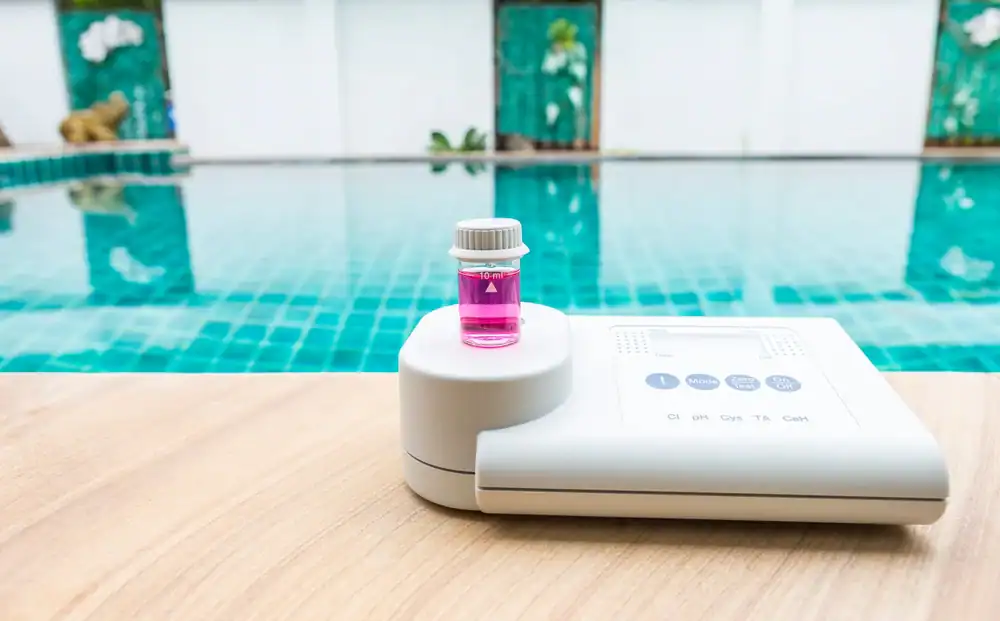
When we come out to your Ocilla property, we’re not dipping a strip in the water and reading a color chart. We use digital water analysis equipment that measures every critical parameter with precision free chlorine, total chlorine, combined chlorine, pH, total alkalinity, calcium hardness, and cyanuric acid. Each one tells a different part of the story, and each one affects the others.
We start with pH because everything else depends on it. If your pH is above 7.8, your chlorine loses roughly half its sanitizing power even when the chlorine reading looks fine. That’s one of the most common reasons pools in this area stay cloudy or keep growing algae despite regular chemical additions. Once pH is dialed in, we work through the rest of the panel and build a complete picture of your water’s condition.
From there, you get a plain-language breakdown of what’s off, why it matters, and what it takes to correct it in the right order. For Ocilla pool owners filling from a well, that often means addressing calcium hardness and iron content first, since those affect everything downstream. We time our visits around your pool’s needs, and during South Georgia’s summer storm season, that sometimes means coming back sooner than you’d expect. That’s just how this climate works.
Ready to get started?
A complete water test from us covers the full panel not just the two or three readings a pool store checks before pointing you toward a product shelf. You get free chlorine and total chlorine readings so we can identify chloramines, which cause eye irritation and that strong chemical smell people often mistake for too much chlorine. You get a precise pH level, total alkalinity, calcium hardness, and cyanuric acid measurement. If your pool is filled or topped off with well water which most Irwin County pools are we’re also watching for iron and metal content that can cause staining on plaster and gunite finishes.
Each reading comes with an explanation. Not a printout with numbers you have to Google, but an actual conversation about what’s happening in your water and what it means for your pool’s surface, your equipment, and your family’s comfort. If your calcium hardness is high from your well water, we tell you that and explain the scaling risk to your finish. If your cyanuric acid is depleted and your chlorine is disappearing in the South Georgia sun, we explain why shocking the pool isn’t going to help until that’s corrected.
This is the difference between testing as a service and testing as a sales tool. You leave knowing exactly what your water needs not holding a bag of chemicals someone handed you at a counter 20 miles away.
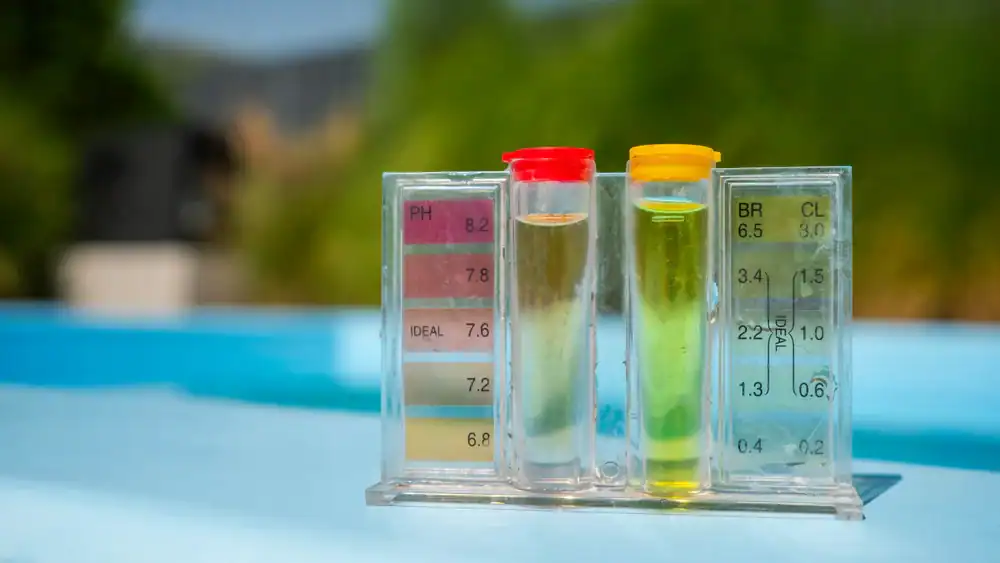
This is one of the most common frustrations for pool owners in Irwin County, and the answer almost always comes back to chemistry that’s out of sequence. Chlorine only works effectively within a specific pH range roughly 7.4 to 7.6. If your pH has drifted above 7.8, which happens quickly in South Georgia’s heat and after summer rainstorms, your chlorine loses a significant portion of its sanitizing power even when the reading looks normal on a test strip. You’re essentially adding chlorine to water that can’t use it properly.
The other factor that’s especially relevant for Ocilla pools filled with well water is cyanuric acid, sometimes called CYA or stabilizer. CYA protects chlorine from being destroyed by UV rays and in a South Georgia summer with long, intense sun exposure, unprotected chlorine can be gone within hours of being added. If your CYA is depleted or has never been properly established, you’re fighting a losing battle every time you shock the pool. A full digital water test identifies exactly which parameter is failing so you can fix the right thing instead of adding more of the same chemical that isn’t working.
For most pool owners in the Ocilla area, professional testing at least once a month during the active season is a reasonable baseline but the honest answer is that South Georgia’s summer demands more attention than that. Between June and August, afternoon thunderstorms can roll through Irwin County multiple times a week. Each one dilutes your sanitizer, shifts your pH, and introduces organic material from surrounding farmland. A pool that tested balanced on a Monday can be significantly out of range by Thursday after two or three rain events.
If you’re filling or topping off with well water, the testing frequency matters even more. Well water mineral content doesn’t stay consistent throughout the season, and each time you add water to compensate for evaporation, you’re potentially introducing new calcium, iron, or other compounds that shift your baseline. A professional test gives you a complete, accurate reading that a home test kit simply can’t match and catching a chemistry problem early is almost always cheaper than correcting a full algae bloom or treating a stained pool surface after the fact.
Yes and it’s one of the most underappreciated issues for pool owners in this part of Georgia. Unlike pools in areas served by large municipal water systems, most Irwin County pools are filled and topped off with well water. Well water in South Georgia typically carries higher mineral content than treated tap water, including elevated calcium and in some cases iron or manganese. When that water goes into your pool, it affects your baseline chemistry immediately.
High calcium hardness from well water creates scaling risk white deposits on your pool walls, tile, and equipment that are difficult to remove and can damage finishes over time. If your calcium hardness runs too low, the water becomes chemically aggressive and will actually pull calcium out of your plaster or gunite finish to compensate. Iron content from well water causes a different problem: brownish or rust-colored staining on your pool surfaces that chlorine alone won’t remove and can actually make worse. A digital water test measures all of these parameters precisely so you know what you’re starting with and what needs to be corrected before it becomes a surface or equipment problem.
Total alkalinity is essentially your pool water’s ability to resist sudden pH swings. Think of it as a buffer. When alkalinity is in the right range generally 80 to 120 parts per million your pH stays relatively stable even when rain, bather activity, or chemical additions try to push it around. When alkalinity is too low, pH becomes erratic and can spike or crash with very little provocation. When it’s too high, pH tends to creep upward and becomes difficult to bring back down.
For pools in the Ocilla area, total alkalinity tends to be a moving target during summer because of how frequently thunderstorms dilute the water. Rainwater is naturally slightly acidic, and repeated dilution events throughout the storm season can gradually pull your alkalinity down even if it was balanced at the start of the month. That’s why a total alkalinity check is part of every complete water test we run not an optional add-on. Getting alkalinity right is what makes the rest of your chemistry stable, and stable chemistry is what keeps your pool clear and your equipment protected through a full South Georgia summer.
That’s a fair question, and the honest answer is that options are limited here. There’s no pool water testing company physically based in Ocilla or anywhere else in Irwin County. The nearest competitor offering any coverage in this area is out of Tifton about 20 miles southwest on US 319 and their testing is done in-store, which means you’d need to bring a water sample to them rather than having a professional come to your pool.
We make the drive from Douglas down US 129 to serve Ocilla and Irwin County directly. We come to your property, test your water on-site with digital equipment, and give you a complete picture of your water’s condition without requiring you to make a round trip to another city. For pool owners in Ocilla who’ve been managing their water chemistry alone or skipping professional testing altogether because it wasn’t convenient, that’s a real difference. You shouldn’t have to drive 40 miles round-trip to find out why your pool is green.
The biggest difference is what happens after the test. When a pool store offers free water testing, the result of that test is almost always a recommendation to purchase products from their shelves. That’s not necessarily dishonest but it does mean the advice you’re getting is shaped by inventory, not just by what your water actually needs. There’s also a technical gap: most in-store testing uses reagent-based kits or test strips that have real limitations in accuracy, particularly at higher concentration ranges for parameters like cyanuric acid and calcium hardness.
We use digital water analysis equipment that delivers precise readings across the full panel free chlorine, total chlorine, combined chlorine, pH, total alkalinity, calcium hardness, and cyanuric acid. We’re not tied to selling you a specific product line, so the recommendations you get are based on what your water chemistry actually requires. In a community like Ocilla where most pools are drawing from well water with its own mineral profile, that independence matters. You get a complete, accurate reading and a straightforward explanation of what needs to happen not a shopping list built around what’s on the shelf that week.