
Hear from Our Customers
Test strips give you a rough idea. What they don’t give you is the full picture and in Lax, that gap costs real money. When your pool is surrounded by pine trees and filling up with well water from a rural Irwin County property, the chemistry challenges start before the first person ever gets in. Iron from the well, calcium buildup, pH swings from summer storms none of that shows up accurately on a color-matching strip.
When your water is actually balanced, the difference is immediate. Clear water. No cloudiness that keeps coming back. No green tint the morning after a thunderstorm rolls through. Your chlorine is actually doing its job instead of burning off in two hours under the South Georgia sun. Your pool surface isn’t quietly getting eaten away by water that’s too aggressive or scaling up from water that’s too hard.
We cover every parameter that matters free chlorine, combined chlorine, pH, total alkalinity, calcium hardness, cyanuric acid, metals, and total dissolved solids. That’s not a sales pitch. It’s just what a complete pool chemistry analysis looks like when someone’s actually trying to solve the problem.
We’re based out of Douglas in Coffee County right across the county line from Lax. That’s not a coincidence. This part of South Georgia is where we work, where we build pools, and where we’ve been solving water chemistry problems for over 30 years.
Our background started in concrete and plumbing before pool construction was ever part of the conversation. That matters because it means we understand how a gunite pool interacts with its water not just what the numbers on a test should read, but what happens to the surface when those numbers are off for weeks at a time.
Lax sits on the Irwin and Coffee County border, and a lot of properties out here rely on well water, sit under heavy pine canopy, and deal with chemistry swings that suburban pool owners in Tifton or Valdosta simply don’t face at the same intensity. We know the difference. That’s what 30 years in this specific region actually looks like.
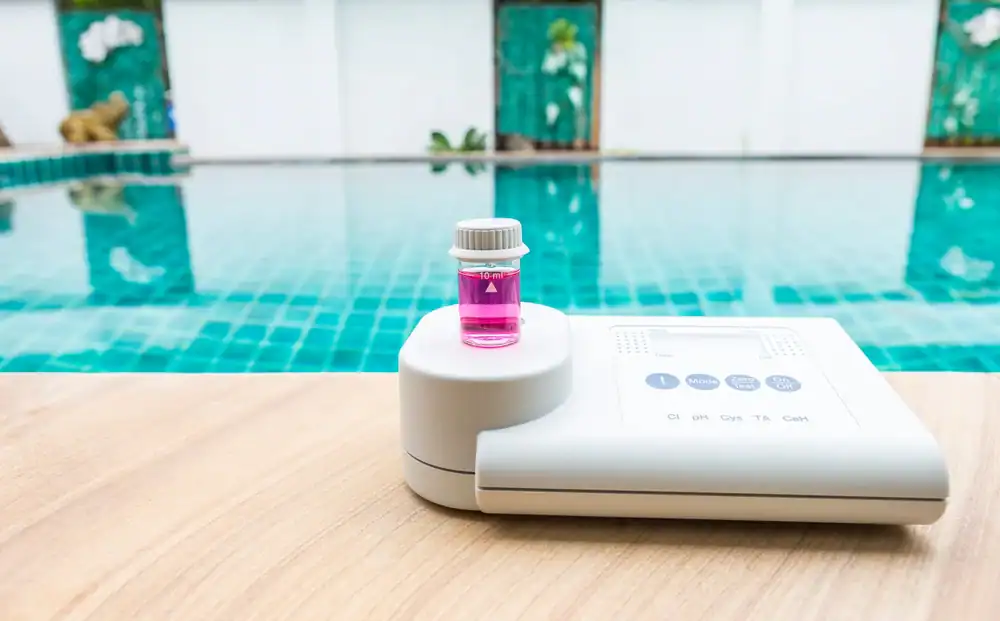
It starts with a complete digital water analysis not a strip, not a visual check. We test your water across every critical parameter: free and combined chlorine, pH, total alkalinity, calcium hardness, cyanuric acid, metals, and TDS. Each reading is precise to decimal points, which matters when you’re trying to diagnose a problem rather than just confirm that something is wrong.
Once we have the full picture, we walk you through what it means. If your pH is sitting above 7.8, your chlorine is operating at roughly half its rated effectiveness even if the chlorine number looks fine. If your calcium hardness is climbing because you’ve been topping off with well water, we’ll tell you exactly what that’s doing to your pool surface and what the correction looks like. No guesswork, no product push.
From there, we make the adjustments and retest to confirm the water is where it needs to be. For pool owners in the Lax area heading into summer when South Georgia UV is at its peak and afternoon storms are a weekly reality getting this done early in the season means you’re not chasing chemistry problems all the way through September. That’s the goal: one thorough service that puts your water in the right place and keeps it there.
Ready to get started?
A lot of pool owners in the Lax area have been to a pool store, handed over a water sample, and walked out with a bag of chemicals and no real explanation. That’s not what we do. When we test your water, you get a full digital readout of every parameter that affects your pool’s safety, clarity, and long-term condition along with a plain-language explanation of what each number means for your specific pool.
That includes pH level balancing, total alkalinity, free and combined chlorine, calcium hardness testing, cyanuric acid, metals screening, and total dissolved solids. For rural Irwin County properties on well water, the metals screening and calcium hardness check are especially important high iron causes staining that pool owners often misread as an algae problem, and calcium hardness that climbs unchecked leads to white scaling on pool surfaces that’s expensive to reverse.
We also account for what’s happening seasonally. Spring in this part of Georgia means heavy pine pollen that spikes chlorine demand fast. Summer means UV is destroying your sanitizer faster than you’re adding it if your cyanuric acid isn’t managed correctly. Post-storm testing after the thunderstorms that roll through Irwin County from June through September is something we actively recommend because a big rain event can shift your chemistry significantly within hours, and the window between a chemistry problem and an algae bloom is shorter than most people expect.
This is one of the most common frustrations we hear from pool owners in the Lax area, and the answer almost always comes down to one of a few things none of which a basic test strip can identify on its own. The most frequent culprit is pH that’s drifted too high. When your pH climbs above 7.8, chlorine loses roughly half its sanitizing power even when the chlorine reading looks normal. You’re adding chlorine, the number looks okay, but the water is still turning green because the chlorine isn’t actually working.
The second common cause is low or depleted cyanuric acid. In South Georgia’s summer sun, unprotected chlorine can be destroyed by UV exposure in under two hours. Without adequate CYA stabilizer, you’re essentially pouring chlorine into a pool that’s burning it off before it can do anything. A digital water analysis checks both of these parameters accurately and once we know which one is the actual problem, the fix is straightforward.
Most properties in and around Lax rely on private well water rather than a municipal supply, and that makes a real difference in how you manage pool chemistry from day one. Well water in rural South Georgia frequently contains elevated levels of iron, calcium, and other minerals that city-treated water doesn’t. When you fill or top off your pool with that water, you’re introducing those minerals directly into the pool and they accumulate over time.
High iron is the most visible problem. It causes brown or rust-colored staining on pool surfaces and floors that pool owners often mistake for an algae issue and treat with more chlorine which actually makes iron staining worse. High calcium contributes to calcium hardness levels that can climb well above the safe range of 200–400 ppm, leading to white scaling on pool walls, cloudy water, and filter stress. A complete water test that includes metals screening and calcium hardness testing is the only way to know what your well water is actually putting into your pool and what it will take to correct it.
During peak summer in South Georgia roughly June through September your pool chemistry is under more stress than at any other time of year. Heat accelerates algae growth, UV destroys chlorine faster, and the afternoon thunderstorms that are a regular part of summer in Irwin County can significantly dilute and shift your chemistry within hours of a major rain event. Testing once a week at minimum is a reasonable baseline during this period, but after any significant storm, you should test again before assuming your chemistry is still where it was.
For pool owners who are doing their own maintenance, a professional digital analysis at the start of the season and again mid-summer gives you an accurate baseline that your home test kit can work from. If you’ve been dealing with recurring problems cloudy water, algae, chlorine that seems to disappear a professional test is the fastest way to identify what’s actually driving the issue rather than continuing to treat symptoms.
Total alkalinity is essentially your pool water’s ability to resist sudden pH swings. Think of it as a buffer. When alkalinity is in the right range generally 80 to 120 ppm for most pools your pH stays more stable even when outside factors try to push it around. When alkalinity is too low, pH becomes erratic and hard to control. When it’s too high, pH tends to drift upward and lock in a range where chlorine becomes less effective.
In South Georgia, where summer storms regularly add large volumes of rainwater to your pool and pollen seasons send organic loads through the roof, total alkalinity management is especially important. Rain is naturally acidic and can drop your alkalinity quickly if it’s already on the low end. Once alkalinity drops, pH follows, and from there your entire chemistry balance starts to unravel. Checking total alkalinity as part of a complete water analysis not just pH and chlorine is what separates a real diagnosis from a guess.
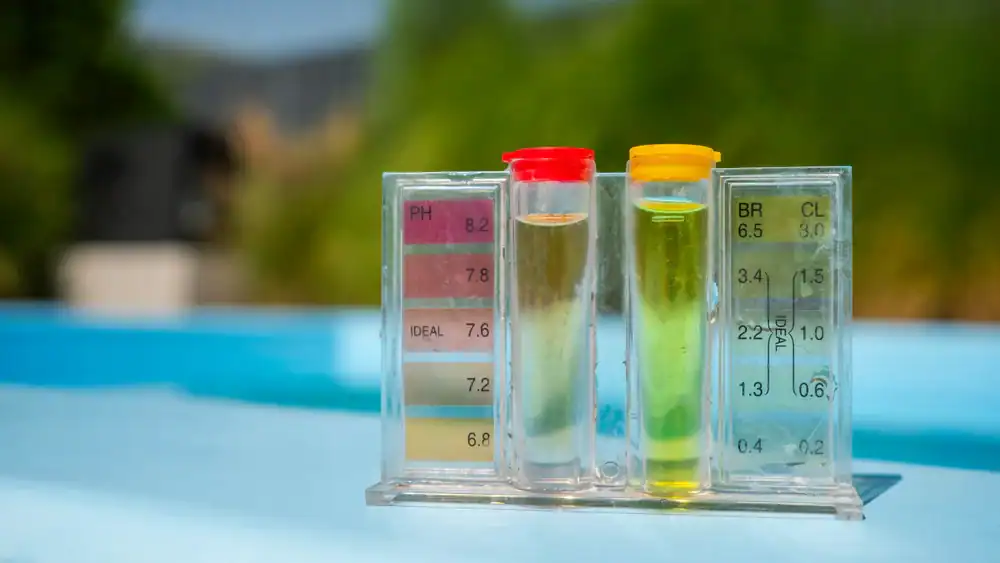
Test strips are better than nothing, but they have real limitations that matter when you’re trying to figure out why your pool isn’t responding the way it should. Standard test strips measure free chlorine and pH sometimes total alkalinity but they can’t accurately measure combined chlorine (chloramines), cyanuric acid levels, calcium hardness, metals like iron or copper, or total dissolved solids. Those are the parameters that most often explain why a pool looks off or keeps having the same problems despite regular chemical additions.
The color-matching process is also less precise than it sounds. Slight variations in lighting, the age of the strip, or how long you hold it before reading can shift the result. Digital water analysis reads each parameter electronically and reports it to decimal precision. For a pool owner in the Lax area dealing with well water, heavy pollen, and South Georgia summer heat, that level of accuracy isn’t overkill it’s what actually solves the problem instead of just temporarily masking it.
Calcium hardness is one of the most overlooked parameters in residential pool maintenance, and it’s one of the most damaging when it’s ignored. The ideal range for most concrete and gunite pools is 200–400 ppm. Below that range, your water becomes aggressive it’s actively seeking calcium to satisfy its mineral demand, and it pulls that calcium from wherever it can find it, including your pool’s plaster or gunite surface. Over time, that causes pitting, etching, and surface degradation that’s expensive to reverse.
Above the range, the opposite problem develops. Excess calcium precipitates out of the water and deposits as white scale on pool walls, tile lines, and inside your equipment. For pool owners in rural Irwin County filling their pools with well water which often already carries elevated calcium levels this is a real and recurring issue. Calcium hardness doesn’t show up on a standard test strip, which is why so many pools in this area develop scaling or surface damage that surprises their owners. A complete water analysis catches it early, when the correction is simple and inexpensive rather than structural.