Hear from Our Customers
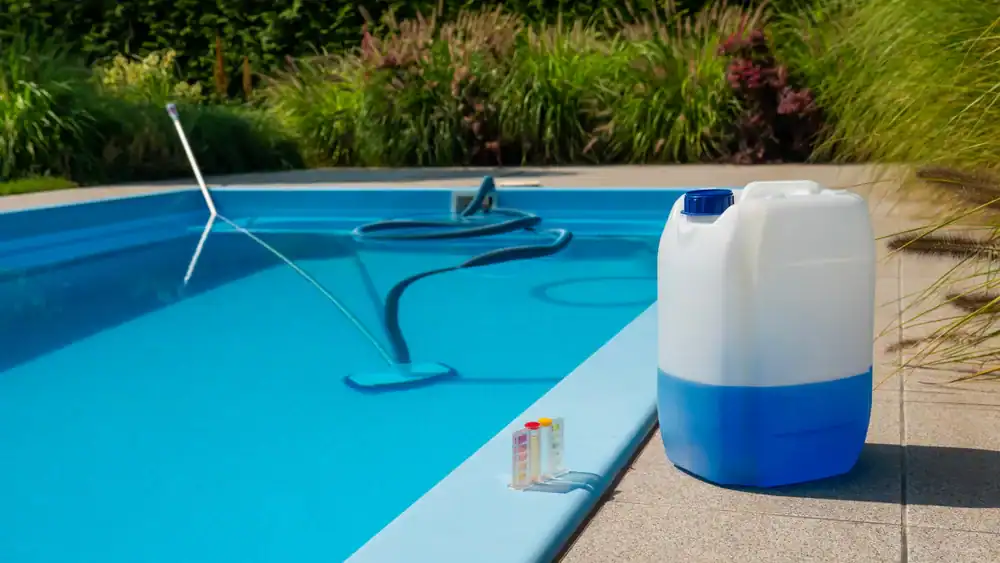
Most pool problems don’t start with a green pool. They start weeks earlier with pH that’s quietly drifted, calcium that’s slowly scaling your tile, or chlorine that’s burning off in the South Georgia sun before it ever does its job. By the time the water looks wrong, the damage is already in motion.
Adel’s municipal water comes from the Upper Floridian Aquifer, filtered through limestone and dolomite rock. That’s not a bad thing for drinking water but it does mean your pool starts with a naturally elevated calcium baseline. Without regular testing, that calcium builds up and starts attacking your tile lines, your equipment, and your finish. A professional test catches it early. A test strip doesn’t.
Then there’s the UV factor. Adel sits in flat, open Coastal Plains terrain with no shade to soften the summer sun. Unprotected chlorine can lose up to 90% of its effectiveness in under two hours of direct sunlight. If your stabilizer levels aren’t right, you’re essentially pouring money into the water and watching it disappear. A precise chemistry analysis tells you exactly where your levels stand so you stop guessing and start swimming.
We’re based in Douglas and have been serving Adel and Cook County for over 30 years. That’s not a marketing number it’s the difference between a company that knows what Adel’s limestone-filtered water does to a pool finish and one that’s still figuring it out. We build gunite and shotcrete pools from the ground up, which means when we read your water test results, we’re reading them through the eyes of someone who understands what’s underneath the surface.
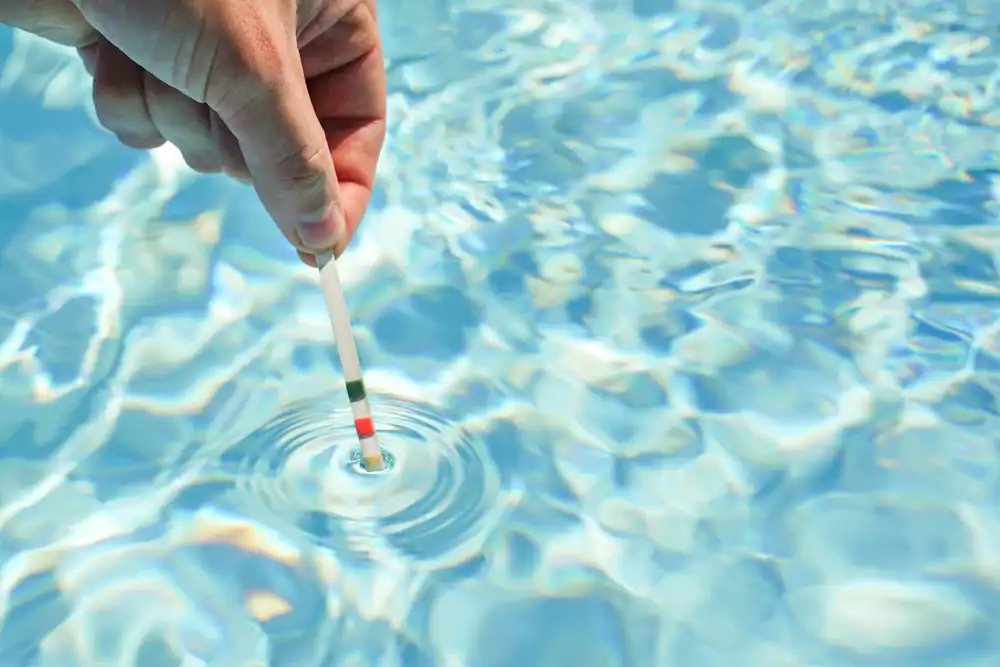
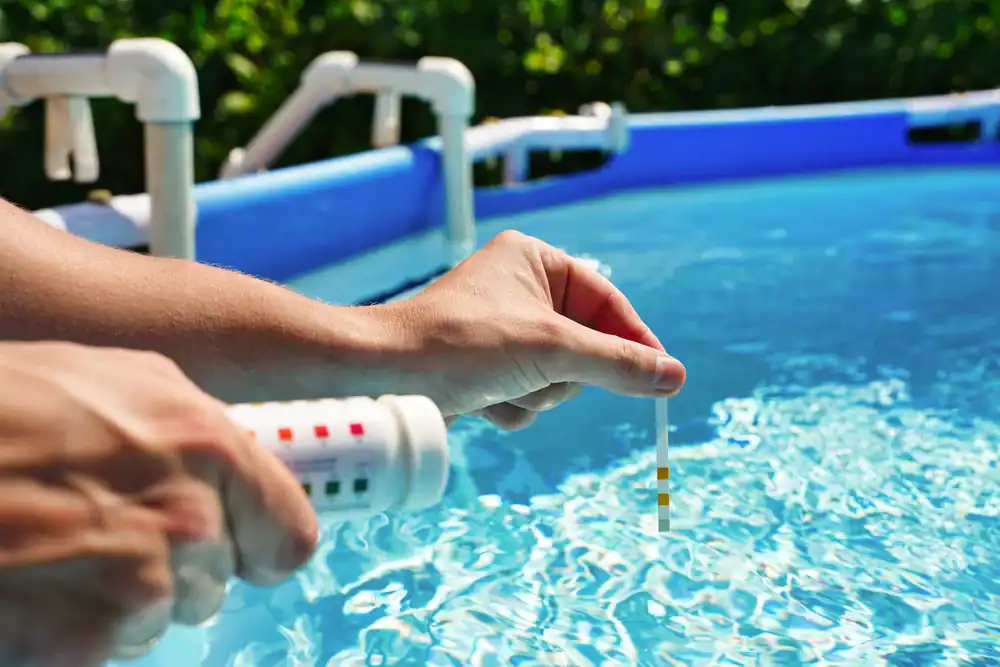
We’re licensed and insured, and we use digital water analysis equipment not color-matching strips that are hard to read accurately in bright sunlight. Every number we give you is precise, and every recommendation we make is based on your specific pool, not a generic checklist.
Families near Bear Creek, out by Reed Bingham State Park, and throughout Cook County have pools that deal with the same local conditions the same limestone-heavy water, the same punishing summer heat. We know Adel and the surrounding area, and we know what it takes to keep a pool clean, safe, and balanced in it.
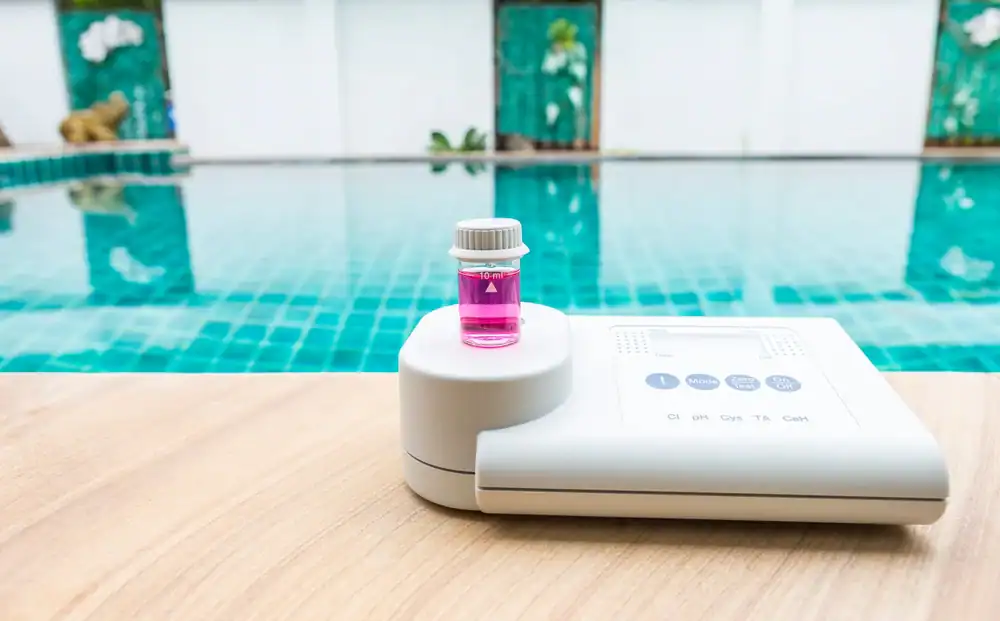
When you schedule a water test with us, we come to your pool not the other way around. We collect a water sample from the right depth and run it through professional-grade digital analysis equipment. That gives us precise readings on every parameter that matters: free chlorine, combined chlorine, pH, total alkalinity, calcium hardness, cyanuric acid, and metals. All of it. Not just the basics.
From there, we walk you through what the numbers mean in plain language. If your pH is sitting above 7.8, we’ll explain exactly why your chlorine has been underperforming even when the levels looked fine on a strip. If your calcium hardness is running high, which is common in Adel given the limestone aquifer water supply, we’ll show you what that means for your finish and how to get ahead of scaling before it becomes a repair bill.
The last step is a clear action plan. Not a bag of chemicals thrown at the problem, but a specific, sequenced correction what to add, how much, and in what order. South Georgia’s summer season moves fast, especially once June hits and pool use peaks. The goal is to get your water balanced and keep it there, so you’re not fighting the same battle every other weekend.
Ready to get started?
A real water test covers more than chlorine and pH. For pool owners in Adel and throughout Cook County, the full chemistry picture includes total alkalinity, calcium hardness, cyanuric acid, and metal content and each one matters for a different reason.
Total alkalinity acts as a buffer for your pH. When it’s off, pH swings constantly and nothing stays balanced for long. After a South Georgia thunderstorm rolls through and dumps rain into your pool, alkalinity is usually the first thing that shifts and the first thing that needs to be corrected before anything else will hold. Calcium hardness is especially relevant here because of Adel’s limestone-filtered water source. Too high and you get scaling on tile and equipment. Too low and the water turns corrosive, pulling minerals directly out of your pool’s plaster or quartz finish. Cyanuric acid the stabilizer is what keeps chlorine from burning off under direct sun. Without it at the right level, the heat and UV intensity of a Cook County summer will outpace whatever you add.
We also test for metals. USGS research on Cook County groundwater has identified dissolved iron in some local wells. Iron in pool water causes brown staining on pool surfaces, and it’s something test strips simply don’t catch. If your pool is fed by a well or you’ve noticed discoloration you can’t explain, metal testing is part of how we find the real answer.
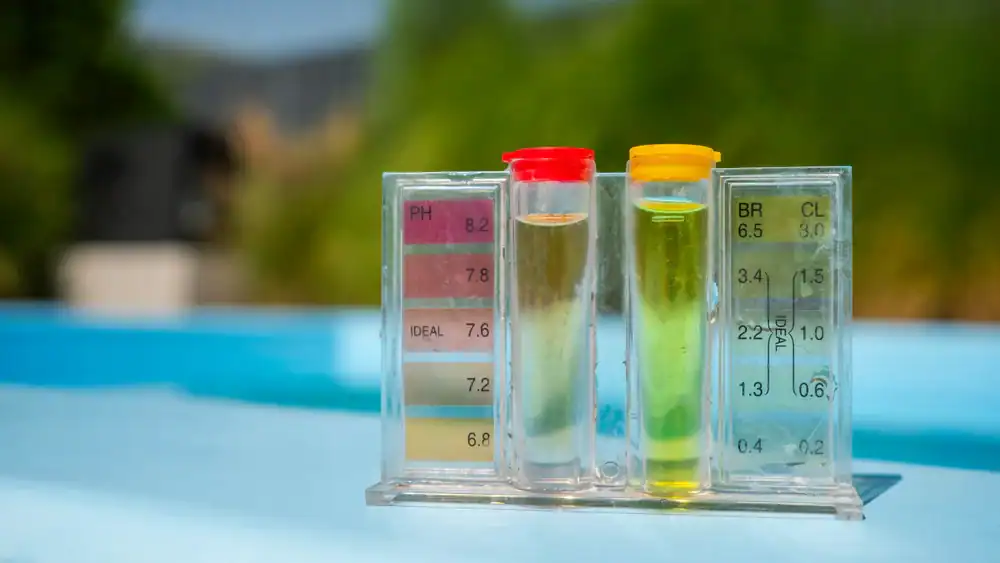
This is one of the most common frustrations we hear from pool owners in Adel, and the answer almost always comes down to pH or cyanuric acid not the amount of chlorine you’re adding. When pH climbs above 7.8, chlorine loses roughly half its sanitizing power. So even if your chlorine reading looks acceptable, it’s not actually doing the job. You can keep adding it and the pool will keep going green.
The other frequent culprit is low cyanuric acid, which is the stabilizer that protects chlorine from UV breakdown. In Adel’s climate flat terrain, full sun, temperatures pushing into the low 90s from June through August unprotected chlorine can burn off in a matter of hours. If your stabilizer level is too low, you’re essentially starting from zero every morning. A professional water test measures both of these precisely and tells you exactly which one is working against you, so you stop throwing chemicals at a problem that won’t respond to more of the same.
During peak swimming season roughly May through September in Cook County testing every one to two weeks is the minimum responsible practice. The combination of heavy sun exposure, high bather load, and frequent afternoon thunderstorms creates a chemistry environment that shifts fast. A pool that was balanced on a Friday can look completely different by the following weekend after a few storms and a full week of family use.
Beyond the regular schedule, there are specific events that should trigger an immediate test: any significant rainstorm, a period of unusually heavy pool use, or any time you notice the water starting to look hazy or off-color. Rainwater is slightly acidic, which lowers pH and dilutes your chemicals and South Georgia gets enough summer rainfall that this isn’t a rare event. Testing after storms is one of the simplest ways to stay ahead of problems before they become visible, and visible pool problems are always more expensive to fix than invisible chemistry ones.
Calcium hardness is one of the most overlooked parameters in residential pool care, and it’s especially relevant in Adel because of the local water source. The city’s municipal water comes from the Upper Floridian Aquifer, where it percolates through limestone and dolomite rock before reaching your tap. That process naturally elevates the mineral content of the water which means Adel pools tend to start with a higher calcium baseline than pools in areas with softer water.
When calcium hardness runs too high, the water becomes oversaturated and starts depositing minerals on your pool surfaces, tile lines, and equipment. That white, crusty buildup you see around the waterline is calcium scale and it clogs filters, wears down pumps, and stains surfaces in ways that require professional correction to fix. On the flip side, water that’s too low in calcium becomes corrosive and actually pulls minerals out of your pool’s plaster or quartz finish, which shortens the life of the surface significantly. The right range is specific to your pool’s finish type, your water temperature, and your other chemistry levels which is exactly why a precise calcium hardness test matters more here than in most other areas.
Yes and it’s more common in Cook County than most pool owners realize. USGS research on local groundwater has identified that shallow wells in the area can contain appreciable dissolved iron. When that iron-bearing water is used to fill or top off a pool, it oxidizes when it contacts chlorine and can deposit brown or rust-colored staining on your pool’s plaster, quartz, or pebble finish. The staining usually appears gradually and is often mistaken for algae or dirt until you try to brush it off and it doesn’t budge.
The problem with iron staining is that standard test strips don’t test for metals at all. If you’ve been chasing a discoloration issue with shock treatments and algaecides and nothing is working, there’s a real chance the source is your water, not your chemistry routine. Our professional water analysis includes metal testing, which identifies iron and other metals before they become a permanent stain problem. If iron is present, there are specific sequestrant treatments that address it but you have to know it’s there first.
There is, and it matters. Pool store water tests are typically offered for free, which sounds like a good deal but free tests exist to generate chemical sales, not to give you an unbiased diagnosis. The recommendations that come out of a pool store test are almost always tied to products on their shelves. That’s not necessarily dishonest, but it does mean the advice you’re getting has a built-in conflict of interest.
We use professional-grade digital analysis equipment that measures every parameter to precise decimal points not a color-matching strip or a basic photometer that only reads a handful of values. We test free chlorine, combined chlorine, pH, total alkalinity, calcium hardness, cyanuric acid, and metals. We have no chemicals to sell you, which means our only interest is in giving you an accurate picture of what’s actually happening in your water. The recommendation you get is based on your pool’s specific needs not on what’s overstocked in a back room.
Absolutely and this is one of the most important testing windows that Adel pool owners consistently skip. When a significant storm rolls through, several things happen to your pool chemistry at once. Rainwater is slightly acidic, which pulls your pH down. The volume of water added dilutes your chlorine, alkalinity, and stabilizer levels. And if there’s any runoff into the pool leaves, debris, organic material from the yard you’ve introduced phosphates and nitrogen that algae feed on directly.
Adel and the surrounding area see regular summer thunderstorm activity from June through September. After any storm that dumps a meaningful amount of rain, your pool’s chemistry has shifted whether it looks like it or not. Testing within 24 to 48 hours of a major rain event lets you make targeted corrections before the imbalance has time to develop into an algae bloom or a cloudy water problem. It’s a small step that consistently prevents the bigger, more expensive problems that show up a week later when the water finally turns.