
Hear from Our Customers
When your pool water is genuinely balanced not just “close enough” you stop fighting it. No more adding chlorine that disappears before it does anything. No more cloudy water after a summer storm rolls through. No more weekend mornings spent guessing which chemical to dump in next.
Out here in Coffee County, the conditions stack up fast. South Georgia’s summer heat pushes July highs close to 90 degrees, and that kind of UV exposure destroys unprotected chlorine in a matter of hours. If your cyanuric acid levels aren’t where they need to be, you’re essentially pouring money into the pool and watching it evaporate. A proper water test catches that before you waste another bag of shock.
Then there’s the well water reality. Iron and manganese from the Floridan Aquifer don’t announce themselves they build up quietly until you’ve got rust-orange staining on your plaster or a calcium scaling problem that’s already doing damage. Professional testing that includes metals analysis catches those issues early, when correction is simple and inexpensive, instead of after the surface has already paid the price.
We’re based right in Douglas the county seat, just down the road from Lotts. Deep Waters Pools was established in 2014, but our team has been working with concrete, plumbing, and custom pool construction in South Georgia for over 30 years. That matters because the same people testing your water in Lotts are the same people who have built and serviced pools across Coffee County in this exact climate, with this exact groundwater.
We’re not a regional chain that lists Coffee County on a map and sends someone from an hour away. We’re a locally owned, licensed, and insured Douglas business. When something’s off with your pool, you’re talking to people who already know what South Georgia’s aquifer does to calcium hardness, what pine pollen season does to chlorine demand, and what a July thunderstorm does to a pool that was balanced the day before.
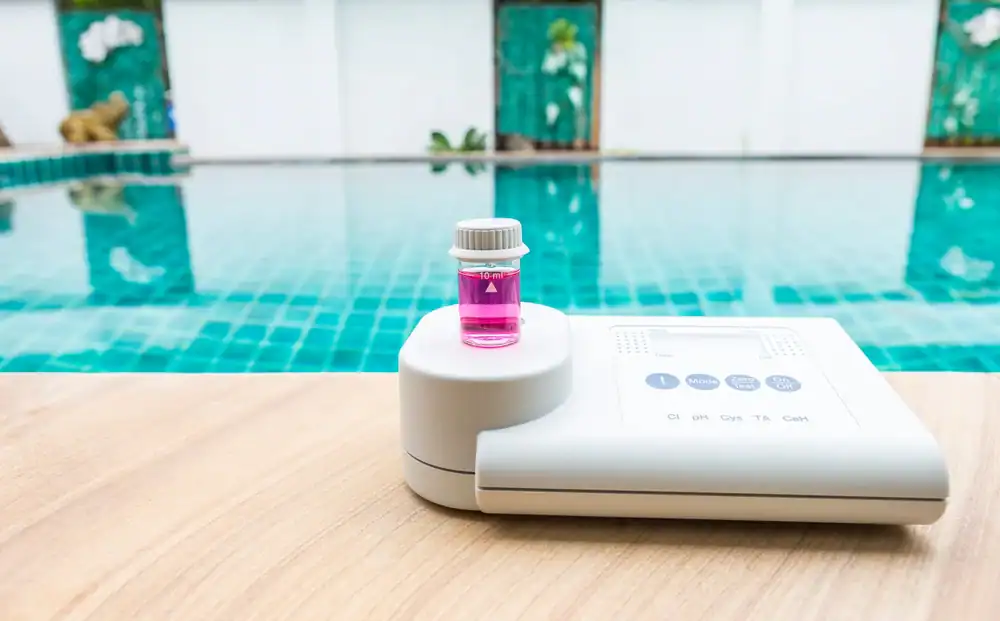
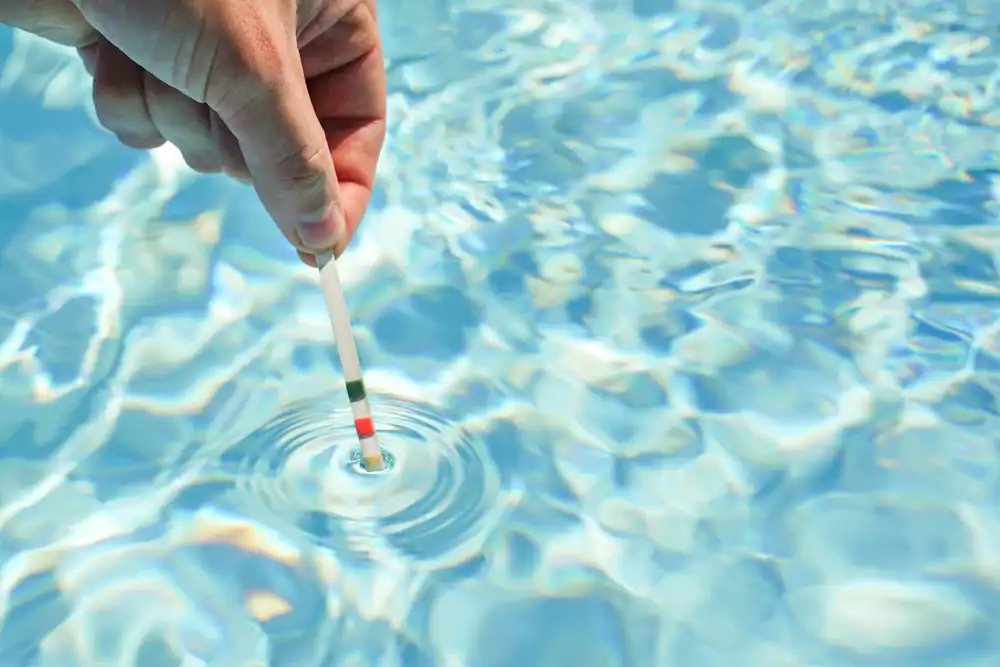
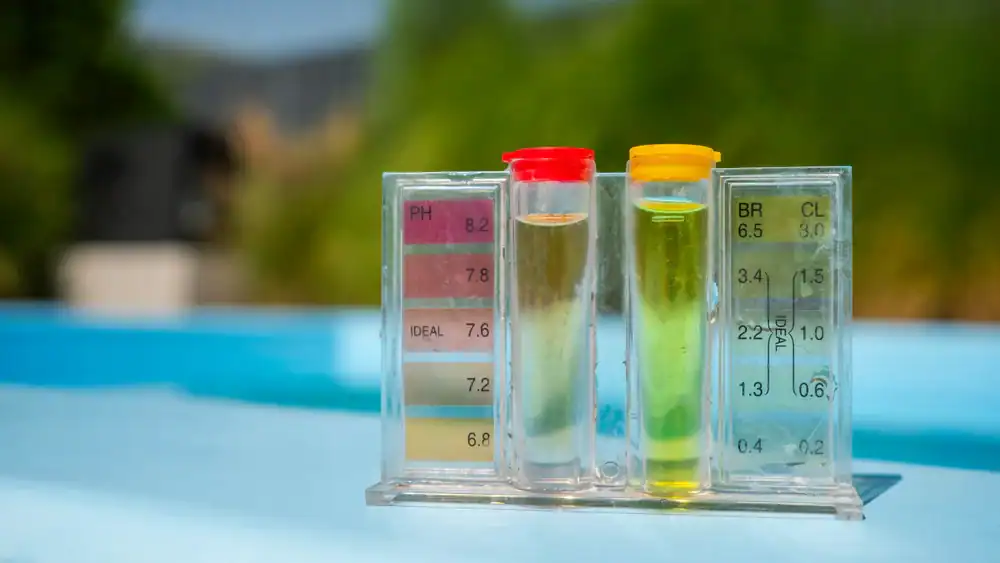
It starts with a full digital water analysis not a test strip, not a color-matching card. We use professional-grade equipment to test every key parameter to a precise reading: free chlorine, total chlorine, pH, total alkalinity, calcium hardness, cyanuric acid, and metals including iron and copper. For homes in the Lotts area that fill from a private well, that metals test is often where the most important information shows up.
Once the numbers are in, you get a clear explanation of what each one means and what needs to be corrected. Not a product recommendation sheet an actual diagnosis. If your pH is sitting above 7.8, your chlorine is working at roughly half its capacity regardless of what the chlorine reading says. If your calcium hardness is low, your water is quietly pulling minerals from your plaster surface. These aren’t things you can see until the damage is already done, which is exactly why the test comes first.
From there, corrections are made in the right order, in the right amounts, based on what your specific water actually needs. South Georgia’s long pool season running from roughly April through October means chemistry can shift significantly between visits. Scheduling regular testing, especially after heavy rain events or periods of high bather load, keeps you ahead of problems instead of reacting to them.
Ready to get started?
Pool chemistry isn’t a single number it’s a system. pH affects how well chlorine works. Total alkalinity affects how stable your pH stays. Calcium hardness affects whether your water is slowly corroding your pool’s surface or depositing scale on it. Cyanuric acid determines whether your chlorine survives South Georgia’s sun long enough to sanitize anything. When one of these is off, the others don’t work the way they should.
We test all of it. Our full analysis covers free and total chlorine levels, pH, total alkalinity, calcium hardness, cyanuric acid stabilizer, and metals including iron and copper, which are especially relevant for Lotts homeowners on private well systems. This is the kind of complete picture that tells you not just what’s wrong, but why it keeps happening.
For pools in unincorporated Coffee County, there’s no municipal pool inspector, no HOA maintenance schedule, and no shared service contract to fall back on. Your pool’s chemistry is entirely your responsibility. Regular professional testing particularly at the start of the season, after major storm events, and before closing is the most cost-effective way to protect a significant property investment. One test costs a fraction of what a single algae treatment, equipment repair, or plaster resurfacing job runs.
It affects it from the moment you start filling. Private wells in the Lotts area draw from South Georgia’s Floridan Aquifer system, which tends to carry elevated levels of iron, manganese, calcium, and other minerals. When that water goes into your pool, you’re starting with a chemistry baseline that’s already different from what municipal water users deal with and often already pushing toward the upper range of acceptable calcium hardness before any pool chemicals are added.
The iron and manganese piece is particularly important. These metals don’t cause problems immediately, but they accumulate. Over time, iron in the water leads to rust-colored staining on plaster and gunite surfaces the kind that’s difficult and expensive to remove once it’s set in. A professional water test that includes metals analysis tells you where those levels are before the staining starts, so correction is simple rather than a restoration project.
At minimum, you want a professional test at the beginning of the season and again mid-summer but honestly, the conditions in Coffee County push that number higher. August alone averages close to 17 rainy days in the Douglas area, and every significant rain event dilutes your chemistry, drops your pH, and spikes your chlorine demand. If you’re not testing after major storm events, you’re managing chemistry that’s already shifted from what you think it is.
The other factor is heat. When temperatures are consistently near 90 degrees and your pool is getting full afternoon sun, chlorine depletion happens fast. If your cyanuric acid stabilizer isn’t at the right level, you can lose most of your chlorine protection in a few hours. Testing every four to six weeks during peak season and after any major weather event keeps you in front of the problems that turn into green water or equipment damage.
Yes, and this is one of the most common situations we see. Clear water and balanced water are not the same thing. A pool can look perfectly fine while pH is sitting above 7.8 which cuts chlorine effectiveness nearly in half or while calcium hardness is low enough that the water is slowly pulling minerals out of your plaster surface. Neither of those problems is visible until real damage has already occurred.
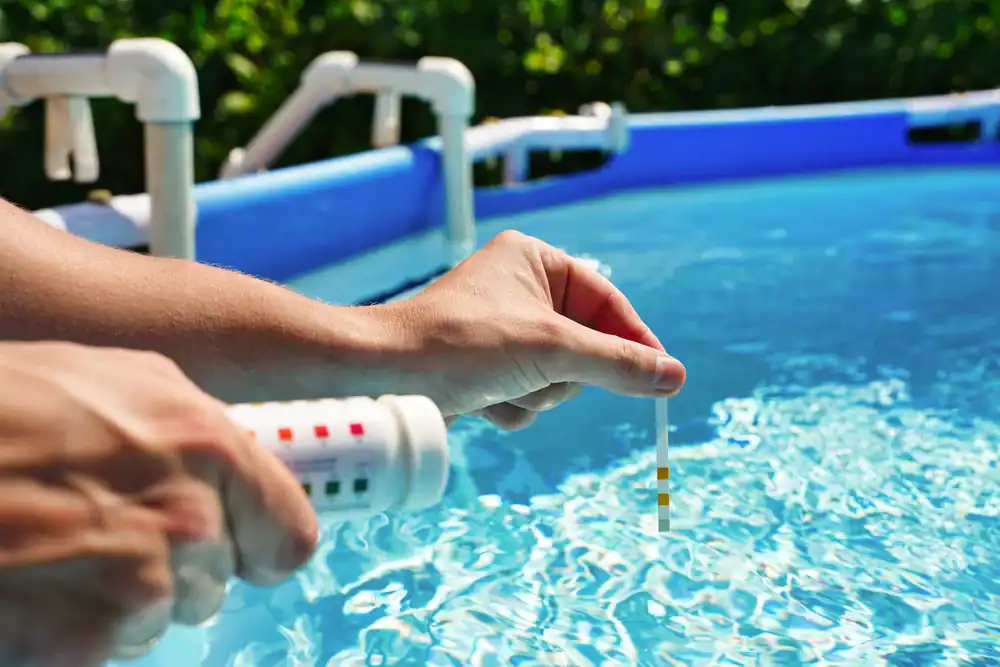
Test strips and even some pool store tests can give you a reading that looks normal while missing the full picture. A digital water analysis measures every parameter with precision, including combined chlorine levels that indicate whether your sanitizer is being consumed by organic load rather than actually sanitizing. If your pool feels off slightly irritating to eyes, a faint smell, water that doesn’t quite look right even when it’s clear there’s almost always a chemistry explanation that a complete test will surface.
Cyanuric acid, sometimes called CYA or pool stabilizer, is what protects chlorine from being destroyed by UV radiation. In a climate like Coffee County’s where pools are under intense direct sun for six or more months a year and summer UV levels are consistently high unprotected chlorine can be degraded by up to 90 percent within two hours of sunlight exposure. CYA shields the chlorine molecule so it stays active long enough to actually sanitize the water.
The tricky part is that CYA accumulates over time and doesn’t leave the water on its own. If levels get too high above about 80 to 100 ppm chlorine becomes significantly less effective even at normal readings. This is sometimes called chlorine lock, and it’s a real problem in pools that have been using stabilized chlorine tablets for multiple seasons without monitoring. A professional test measures your actual CYA level so you know whether your chlorine is working or just registering on a test strip.
You end up chasing problems instead of preventing them. The reactive approach wait until the water looks green or cloudy, then add chemicals almost always costs more in product, more in time, and more in wear on your pool’s surfaces and equipment than regular testing would have. By the time a pool looks bad, the chemistry has usually been off for a while.
The more expensive consequence is what happens to the pool itself. Corrosive water low pH, low calcium hardness quietly etches plaster and gunite surfaces over months and years. You won’t see it happening, but you’ll eventually see the result: rough surfaces, pitting, and a resurfacing bill that runs into the thousands. On the flip side, water that’s too high in calcium or alkalinity deposits scale on surfaces, inside pipes, and on equipment. Neither extreme announces itself early. Testing on a regular schedule is the only way to catch drift before it becomes damage.
Absolutely. You don’t need to have had your pool built by us to use our water testing service. If you’ve got a pool in Lotts or anywhere in Coffee County and you want an honest, complete chemistry analysis, that’s exactly what we’re here for regardless of who installed the pool or when.
This comes up often with homeowners who’ve moved into a property with an existing pool and have no history on how it’s been maintained, or with people who’ve been managing chemistry on their own and want a professional baseline to work from. A full digital water test gives you a clear starting point: here’s where every parameter actually stands, here’s what needs to be corrected, and here’s the order to do it. From there, you can decide how involved you want to be in ongoing maintenance or whether you’d rather hand it off entirely.