
Hear from Our Customers
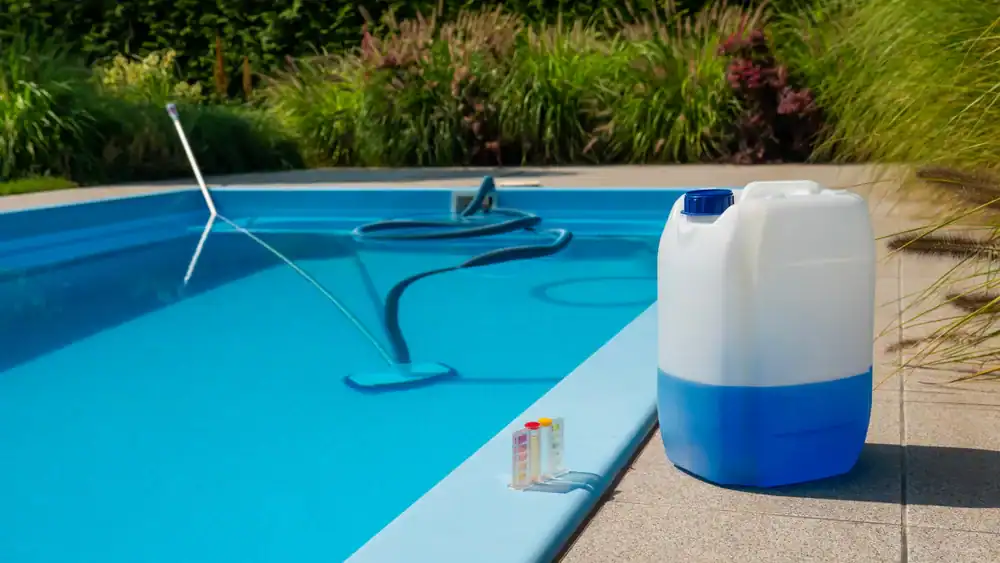
Clear water isn’t just about looks. It means your chlorine is actually working, your surface isn’t being eaten away, and your family isn’t swimming in something that’s going to irritate their eyes or make them sick. That’s what properly balanced water delivers and it’s more than most pool owners around Omega are getting right now.
Here’s the thing about South Georgia summers: Omega’s heat is relentless. Temperatures regularly hit 91°F, and that kind of sustained heat burns through chlorine faster than most people realize. If your pool looks fine but still smells off or feels rough on the eyes, the chemistry is off even if your test strip said otherwise. UV exposure alone can destroy unprotected chlorine within hours on a full-sun July day.
Tift County’s agricultural landscape adds another layer. Pollen from the surrounding farmland this is the “Plant Capital of the World,” after all spikes your pool’s organic load every spring and pushes chlorine demand through the roof. A pool that tested perfectly in March can be fighting algae by late April without any warning signs. Professional water testing catches those shifts before they become visible, and before they become expensive.
We’re based in Douglas, GA, and have been building and servicing pools across South Georgia for over three decades. That’s not a marketing number it’s the actual experience behind every service call. Our team has been working in this climate, with this water, on these pool surfaces, long enough to know what goes wrong and why.
Omega sits in a unique spot straddling both Tift and Colquitt counties, surrounded by agricultural operations, and serviced by a municipal water supply with documented hardness concerns. That’s not a combination you figure out from a textbook. We understand how local water chemistry, pollen load, and South Georgia heat interact with gunite and shotcrete pool surfaces the exact surfaces that are most sensitive to imbalance.
There’s no pool store in Omega. Residents who need water tested have historically had to drive up to Tifton and hand a sample across a counter. We come to your pool, test your actual water under your actual conditions, and give you a straight answer on what needs to happen.
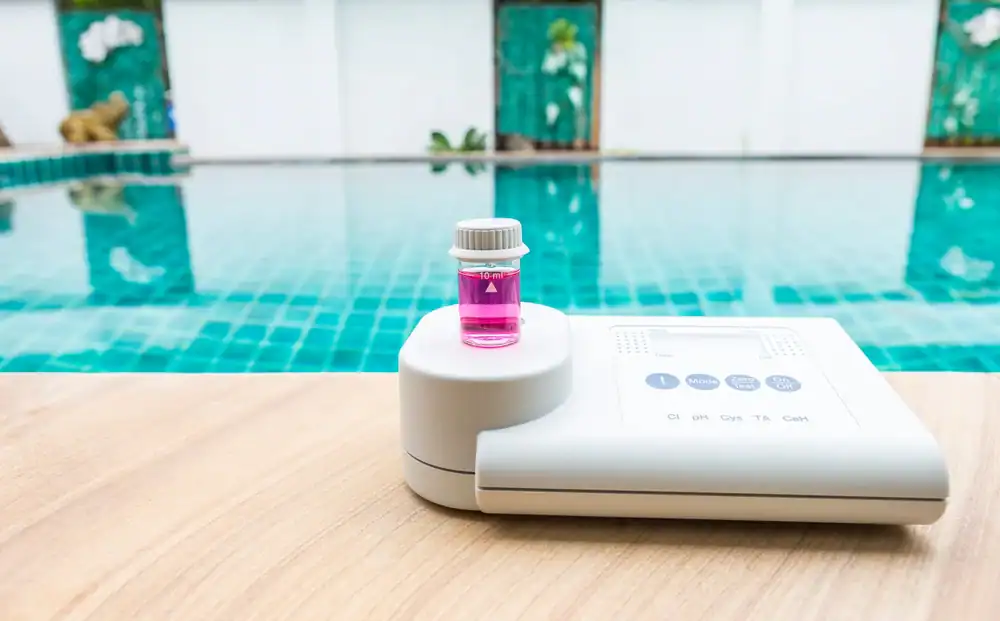
It starts with a visit to your property. Not a sample cup. Not a drop-off at a store. One of our technicians comes to your pool and pulls water directly from it because the temperature, the circulation, and the surface condition of your specific pool all matter when you’re reading chemistry accurately.
From there, digital water analysis covers every parameter that actually drives pool problems: free chlorine, total chlorine, combined chlorine (the stuff that causes eye irritation and that “pool smell”), pH, total alkalinity, calcium hardness, cyanuric acid, and metals. This is where the gap between test strips and professional analysis becomes obvious. Strips give you a rough read on two or three numbers. Digital testing gives you the full picture including things like cyanuric acid saturation, which can make chlorine completely ineffective even when the ppm looks fine.
Once the results are in, you get a clear explanation of what’s off and what it takes to correct it. In Omega, that often means accounting for the Tifton-Tift County water system’s hardness levels, the post-storm dilution that follows South Georgia’s summer thunderstorms, or elevated metals from well water on properties outside the city’s service boundary. The correction is targeted not a generic shock treatment and a bag of chemicals. After that, you’ll know exactly where your water stands and what to watch for going forward.
Ready to get started?
A complete water test from us covers the full range of chemistry that determines whether your pool is actually safe and sustainable. pH level balancing is always the starting point because when pH drifts above 7.8, chlorine loses roughly half its sanitizing power. Most pool owners who keep adding chlorine and still can’t clear their water are dealing with a pH problem, not a chlorine problem. Fixing the foundation first is what makes everything else work.
From there, total alkalinity keeps your pH from swinging wildly after rain events and Omega gets plenty of those in July and August. Calcium hardness testing matters especially here, because the Tifton-Tift County water supply trends hard, and high calcium levels lead to scaling on plaster and pebble finishes over time. Cyanuric acid levels are checked because South Georgia’s UV exposure will burn through unprotected chlorine in hours but too much CYA and the chlorine stops working entirely, which is a problem that strips almost never catch.
For properties in the rural areas around Omega that rely on well water to fill or top off their pools, we include metals testing as well. The Gulf Trough geological formation in Tift County is associated with elevated minerals in groundwater, and those minerals affect chemistry from the very first fill. Every test is followed by a plain-language summary of what was found, what it means, and exactly what needs to be done no upsell, no jargon, no guessing.
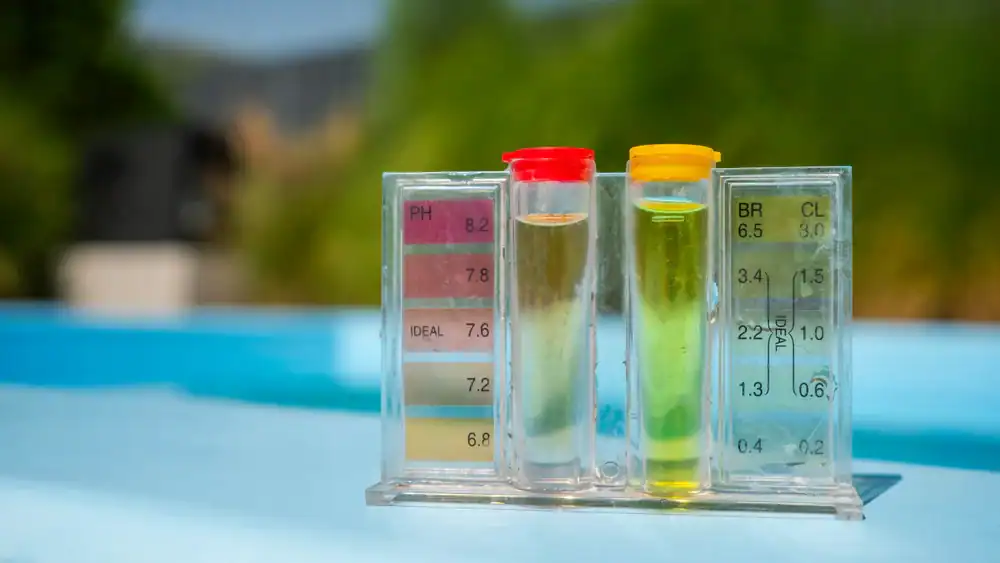
This is the most common frustration pool owners in Omega bring to us, and the answer almost always comes down to one of two things: pH is too high, or cyanuric acid has built up to the point where chlorine can’t do its job. When pH climbs above 7.8 which happens fast in South Georgia’s heat and after rain chlorine becomes chemically inactive. You can add all the chlorine you want and it won’t stop algae growth because the pH environment is neutralizing it before it can work.
Cyanuric acid (CYA) is the other culprit. CYA is a stabilizer that protects chlorine from UV burn-off, and it’s necessary in a climate like Omega’s. But it accumulates over time, and once it gets too high, it binds to chlorine and renders it ineffective a condition sometimes called “chlorine lock.” Test strips don’t reliably detect elevated CYA levels, so the pool looks chemically normal on paper while algae continues to grow. A full digital water test identifies both problems clearly, so you’re correcting the actual issue instead of throwing chemicals at a symptom.
At minimum, once a week during peak season but in Omega’s climate, that’s really a floor, not a target. When you’re dealing with sustained heat above 90°F, intense UV exposure, and the frequent afternoon thunderstorms that roll through Tift County in July and August, your chemistry can shift significantly within 48 hours. Every major rain event dilutes your chemicals, drops your pH, and introduces organic material. If you’re not testing after storms, you’re swimming in water that may have been balanced yesterday and isn’t today.
The practical reality for most Omega residents is that the average commute takes you away from home during the hottest, most chemistry-active part of the day. You’re not watching what the afternoon sun and a thunderstorm did to your pool while you were at work. That’s exactly why a professional testing schedule rather than a reactive “it looks green, let me add something” approach makes a real difference in keeping the water consistently safe and clear all season.
Yes, and it’s a meaningful difference that a lot of pool owners don’t think about until they have a problem. Properties outside Omega’s city water service boundary and there are plenty in the surrounding Tift County rural areas often rely on well water to fill or top off their pools. That well water pulls from groundwater that sits above the Gulf Trough geological formation, a region associated with naturally elevated minerals, metals, and in some cases arsenic. Those compounds don’t just disappear when the water goes into your pool.
What this means practically is that your pool’s starting chemistry baseline is different from a pool filled with municipal water. Calcium hardness is often higher, metals like iron and copper can be present, and pH can start in an unusual range. Standard test strips don’t measure metals at all, and they’re not accurate enough to catch the kind of mineral imbalance that well water introduces. If your pool was filled or topped off with well water and you haven’t had a full professional test done, you may be managing chemistry against a baseline you don’t actually understand which makes it nearly impossible to get consistent results.
Free chlorine is the active sanitizer in your pool the chlorine that’s actually available to kill bacteria and algae. Total chlorine includes both free chlorine and combined chlorine (also called chloramines), which are the byproducts of chlorine that’s already reacted with contaminants like sweat, sunscreen, and organic debris. Combined chlorine is what causes eye irritation, skin irritation, and that strong “pool smell” that most people associate with too much chlorine when in reality, it usually means there’s not enough free chlorine relative to the demand.
This distinction matters a lot in South Georgia’s swimming season. Heavy bather load, pollen from Tift County’s agricultural surroundings, and organic debris from summer storms all increase the demand on your free chlorine. When free chlorine gets depleted and combined chlorine builds up, the pool can look clear but still be chemically compromised. Test strips typically only measure total chlorine, so they can show a “normal” reading while the ratio of free to combined chlorine is actually a problem. Digital testing measures both separately, giving you an accurate picture of whether your sanitizer is actually doing its job.
It can, and it does slowly and quietly, which is why a lot of pool owners don’t connect the damage to the chemistry until the repair bill arrives. The Tifton-Tift County Water System has documented hardness concerns, and when calcium hardness in pool water climbs too high, it leads to scaling white, rough deposits that form on plaster surfaces, tile lines, and inside filtration equipment. On a gunite or shotcrete pool, which we build and specialize in, that scaling is both a cosmetic problem and a structural one. Once plaster is scaled, it becomes abrasive, harder to clean, and more vulnerable to further deterioration.
The flip side is equally damaging. If calcium hardness drops too low, the water becomes corrosive and starts pulling calcium out of the plaster itself to rebalance a process called etching. Etched plaster is rough, porous, and much more hospitable to algae. Keeping calcium hardness in the right range typically 200 to 400 ppm is one of the most important long-term maintenance factors for any pool in this area, and it’s one of the parameters that test strips handle least reliably. A professional calcium hardness test is the only way to know where you actually stand.
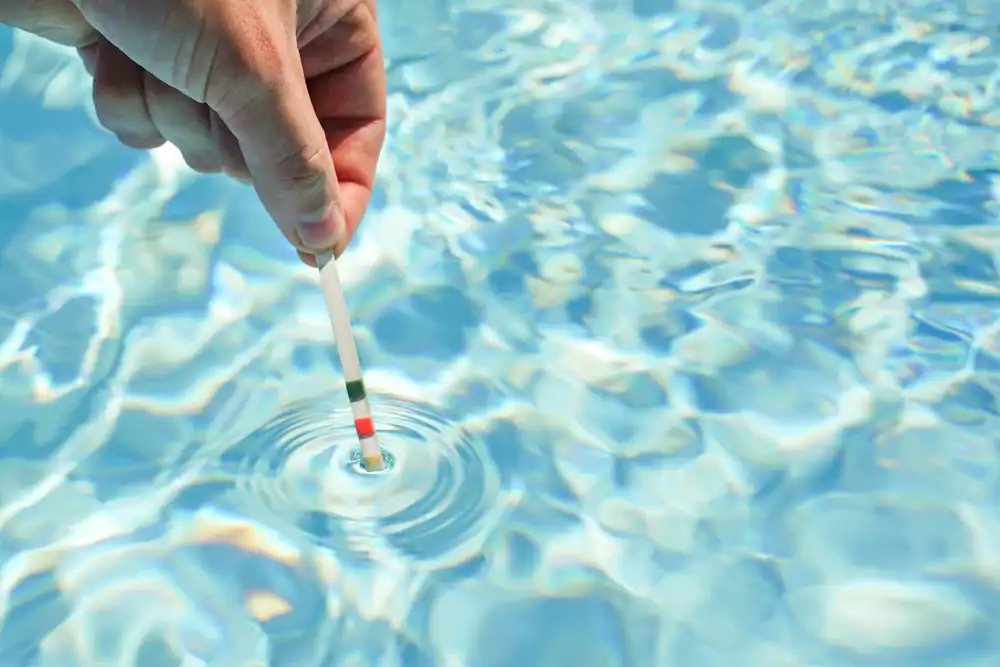
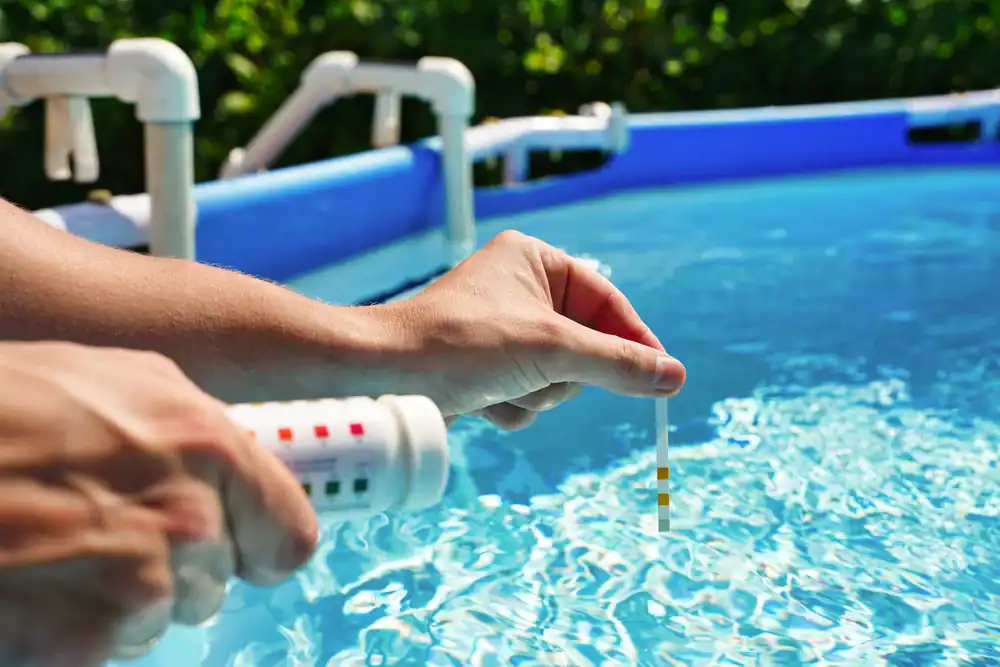
If your pool has been consistently clear, balanced, and problem-free with test strips, then strips are doing their job for you. But if you’ve had recurring algae, cloudy water, chemistry that won’t stabilize, or eye irritation despite normal-looking readings that’s the strip’s limitation showing up in your pool. Test strips measure two or three parameters with limited accuracy. They don’t measure combined chlorine, they can’t reliably read cyanuric acid at elevated levels, they don’t detect metals, and they’re subject to user error in bright sunlight. In Omega’s climate, where UV is intense, storms are frequent, and the local water supply has known hardness characteristics, those gaps add up.
The economics are straightforward. One professional test and targeted chemistry correction costs less than a single algae treatment. It costs a fraction of what it takes to acid-wash a stained surface, replace a scaled filter, or resurface a plaster pool that’s been slowly etched by corrosive water. Omega homeowners who have been buying bags of shock at the hardware store and guessing at dosing are, in most cases, spending more per season than they would with a regular professional testing schedule and still dealing with the same recurring problems. The test isn’t the expense. The problems the test prevents are.