Planning a pool with young kids? These 10 family-friendly designs combine safety features like shallow zones and non-slip surfaces with elements that make your backyard the go-to spot all summer long.
You’ve been thinking about a pool for months. Maybe years. You picture summer afternoons, kids laughing, the whole family actually spending time together instead of staring at screens. But every time you get close to pulling the trigger, the safety concerns creep in.
What if someone falls in when you’re not looking? What if the shallow end isn’t shallow enough? What if you design something beautiful but impractical for a family with young kids?
These aren’t small questions. They’re the difference between a backyard you love and one that keeps you up at night. Working with professionals experienced in pool design can help you create a layout that balances safety features, proper depth levels, and functional spaces for kids and adults alike.
The good news is that family-friendly pool design has come a long way, and safety doesn’t mean boring. Let’s walk through what actually works.
A family-friendly pool isn’t just smaller or shallower. It’s designed with intention around how your family actually uses the space. That means thinking about your youngest kid who’s still learning to swim and your teenager who wants to dive. It means considering what happens when you’re grilling and not watching every second.
The best family pool designs in Coffee County, GA share a few things in common. They include multiple depth zones so everyone has a place that feels comfortable. They incorporate safety barriers that work automatically, not just when you remember to use them. And they balance the fun features kids want with the practical elements that let parents actually relax.
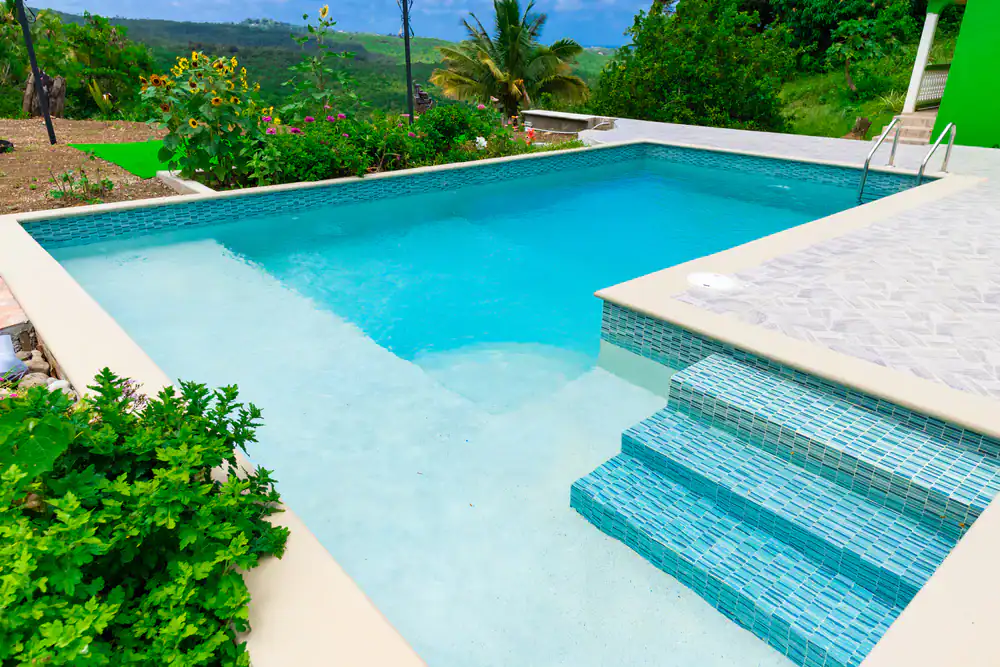
Beach entry pools, sometimes called zero-entry pools, slope gradually from deck level into deeper water. There’s no sudden drop-off. No step your toddler might miss. Just a gentle grade that mimics walking into the ocean.
This design gives young kids a place to splash in ankle-deep water while you’re right there with them. It also makes the pool accessible for anyone with mobility concerns, from grandparents to family members who use mobility aids. You’re not forcing anyone to navigate stairs or ladders.
From a safety standpoint, beach entries eliminate one of the biggest hazards in traditional pool construction: that first step where kids lose their footing. The gradual slope means there’s always a point where they can stand. Parents can wade in with infants without the awkward step-down while holding a squirming baby.
The other advantage is that beach entries create a natural gathering spot. Kids play in the shallows. Adults set up chairs in six inches of water. It becomes the hub of your backyard without anyone venturing into water over their head. For families with children under five, when drowning risk is highest, this design feature isn’t just convenient. It’s a layer of protection built into the pool itself.
One thing to consider: beach entries take up more pool real estate than traditional steps. If your yard is tight, you’ll need to balance that shallow area against overall swimming space. But for most families in Coffee County, GA, that trade-off is worth it.
Tanning ledges, also called sun shelves or Baja shelves, are flat, shallow areas built into the pool. Water depth typically ranges from six to twelve inches. They’re designed for lounge chairs, but they serve a bigger purpose for families with young children.
These ledges give toddlers a dedicated zone where they can play without going under. You can set them down in eight inches of water with pool toys, and they’re not at risk of drifting into deeper areas. It’s contained. Controlled. And it keeps the youngest kids entertained while older siblings swim in the main pool.
Tanning ledges also work as a transition zone for kids learning to swim. They can practice kicking, floating, and getting comfortable in water without the anxiety of being out of their depth. Parents can sit right there on the ledge, within arm’s reach, without treading water or standing in the deep end.
From a design perspective, tanning ledges add visual interest. They break up the pool’s profile and create definition between zones. You can add umbrellas, built-in seating, or even bubbler jets for extra sensory play. Some families in Coffee County, GA use them as a secondary hangout spot during pool parties, keeping adults and kids separated by depth but still in the same space.
The key is positioning. You want the tanning ledge away from the deep end so there’s a clear boundary. Mark it visually with different colored tile or a textured surface so everyone knows where the ledge ends and the pool deepens. That subtle cue helps kids understand spatial boundaries and prevents accidental drift into water over their heads.
If you’re designing a custom inground pool, tanning ledges are one of the most versatile features you can include. They grow with your family. Today it’s a play zone for your three-year-old. In five years, it’s where your teenager floats on a raft. In ten years, it’s where you relax with a book. It adapts without requiring renovation.
Want live answers?
Connect with a Deep Waters Pools expert for fast, friendly support.
Safety features only matter if they’re used consistently. That’s the problem with most pool safety advice. It assumes you’ll remember to lock the gate, put on the cover, and watch every second. Real life doesn’t work that way.
The best pool safety features are the ones that function automatically or require zero maintenance. Self-closing gates that latch on their own. Pool alarms that sound if someone enters the water unexpectedly. Non-slip surfaces that prevent falls whether you hose them down or not. These aren’t nice-to-haves. In Coffee County, GA, where pool season runs most of the year, they’re the baseline.
Georgia law requires pool fencing, and for good reason. Four-sided isolation fencing separates the pool from the house and yard, creating a barrier that a child can’t bypass without an adult. The fence needs to be at least four feet high, and gates must be self-closing and self-latching.
That self-closing mechanism is critical. You don’t have to remember to shut the gate. It closes automatically every time. The latch sits high enough that young children can’t reach it, but adults can open it without hassle. It’s a simple system, but it works.
Fencing also creates a psychological boundary. Kids learn that the pool area is a separate space, not an extension of the backyard. That mental distinction helps them understand that entering the pool area requires permission and supervision. It’s not about restricting access. It’s about teaching respect for water.
When choosing fencing for your pool construction project in Coffee County, GA, consider materials that don’t obstruct sightlines. Mesh, aluminum, or glass fencing lets you see the pool from the house. If someone does get past the gate, you’ll know immediately. Solid wood or vinyl fencing looks nice, but it creates blind spots that defeat the purpose of having a barrier in the first place.
Some families add pool alarms as a secondary layer. These devices detect water disturbance and sound an alert if someone enters the pool. They’re not foolproof, but combined with fencing, they give you another line of defense. The goal is redundancy. No single safety feature is perfect, but layered systems reduce risk significantly.
One last note on fencing: make sure the gate opens outward, away from the pool. If a child does manage to unlatch it, they have to pull the gate toward themselves, which is harder than pushing it open. Small details like this add up to real protection.
Slips and falls around the pool deck cause more injuries than most people realize. Wet surfaces get slick, kids run, and someone goes down hard on concrete. Non-slip surfaces aren’t optional if you have young children. They’re a requirement.
Textured concrete, rubberized coatings, and certain types of pavers all provide traction even when wet. The surface should feel slightly rough underfoot, not smooth. That texture gives bare feet something to grip, reducing the chance of a fall. It’s a small change that makes a massive difference, especially when kids are running back and forth between the pool and the house.
Shallow zones serve a different purpose but are just as important. These are areas of the pool where the water depth stays consistent at three to four feet. Kids can stand, play, and move around without the risk of going under. It’s not as shallow as a tanning ledge, but it’s not deep enough to be dangerous for a child who’s still building confidence in the water.
Designing a pool with a large shallow zone gives you flexibility. Younger kids can play games, practice swimming, and interact with older siblings without venturing into water over their heads. Parents can stand comfortably without treading water, keeping hands free to assist if needed. It’s the most-used part of the pool for families with children under ten.
The transition from shallow to deep should be gradual and clearly marked. Use a color change in the pool floor, a textured tile line, or even a subtle slope that signals the depth change. Kids need to know when they’re moving from safe standing depth to water where they’ll need to swim. That visual cue helps them make better decisions about where to play.
When planning your swimming pool installation in Coffee County, GA, think about how much of the pool will actually get used. If you have three kids under eight, a massive deep end with a diving board isn’t practical yet. You’ll get more value from a larger shallow zone where everyone can play together. You can always add features later as your kids grow and their needs change.
Non-slip surfaces and shallow zones aren’t flashy. They don’t show up in photos the way a waterfall or LED lights do. But they’re the features that let you relax and enjoy your pool instead of hovering nervously at the edge. That peace of mind is worth more than any aesthetic upgrade.
A family-friendly pool design isn’t about eliminating risk entirely. That’s impossible. It’s about reducing risk to a level where you can actually enjoy your investment without constant anxiety. Beach entries, tanning ledges, proper fencing, and non-slip surfaces all work together to create a safer environment. None of them are perfect on their own, but layered together, they give you real protection.
The families who get the most value from their pools are the ones who design with intention from the start. They think about how their kids will use the space now and in five years. They prioritize features that serve multiple purposes. And they don’t skip safety elements because they seem boring or expensive. Those features are the foundation everything else builds on.
If you’re planning a pool in Coffee County, GA, start with safety and design outward from there. We can walk you through options that fit your family’s specific needs, your yard’s layout, and your budget. The goal is a backyard where everyone can relax, not just the kids.
Summary:
Share: