The pool debate every Coffee County, GA family faces: spend more upfront for permanence, or save now and replace later? Here's what actually matters for your backyard.
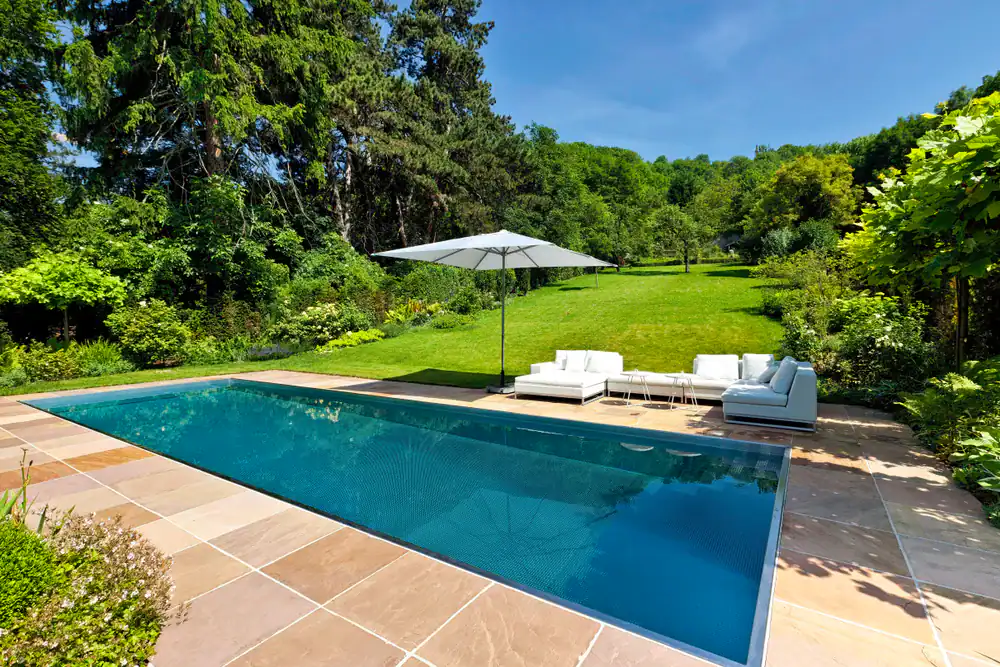
You’ve been thinking about a pool for months. Maybe years. The kids are begging for it. You’re picturing summer weekends without the drive to the community pool. But then you start looking at prices, and suddenly you’re stuck between two very different paths: drop $40,000+ on an in-ground pool that’s permanent, or spend $8,000 on an above-ground setup that’ll be up and running in days.
It’s not just about the money. It’s about if you’re ready to commit to something that changes your property forever, or if you’d rather test the waters first. Both options get families swimming. But they don’t deliver the same experience, the same lifespan, or the same return when it’s time to sell.
If you’re exploring the faster and more budget-friendly option, installing above ground pools can provide a practical way to enjoy swimming at home without the long construction timeline or permanent changes to your property.
Let’s talk about what separates these two choices—and what matters most for Coffee County, GA homeowners.
The difference isn’t just where the pool sits. It’s how it’s built, how long it lasts, and what happens to your yard when you’re done with it.
An in-ground pool is excavated into the ground. It’s permanent. You’re not moving it, and you’re not taking it with you when you sell. It becomes part of your property, and it’s built to last decades with concrete, fiberglass, or vinyl construction.
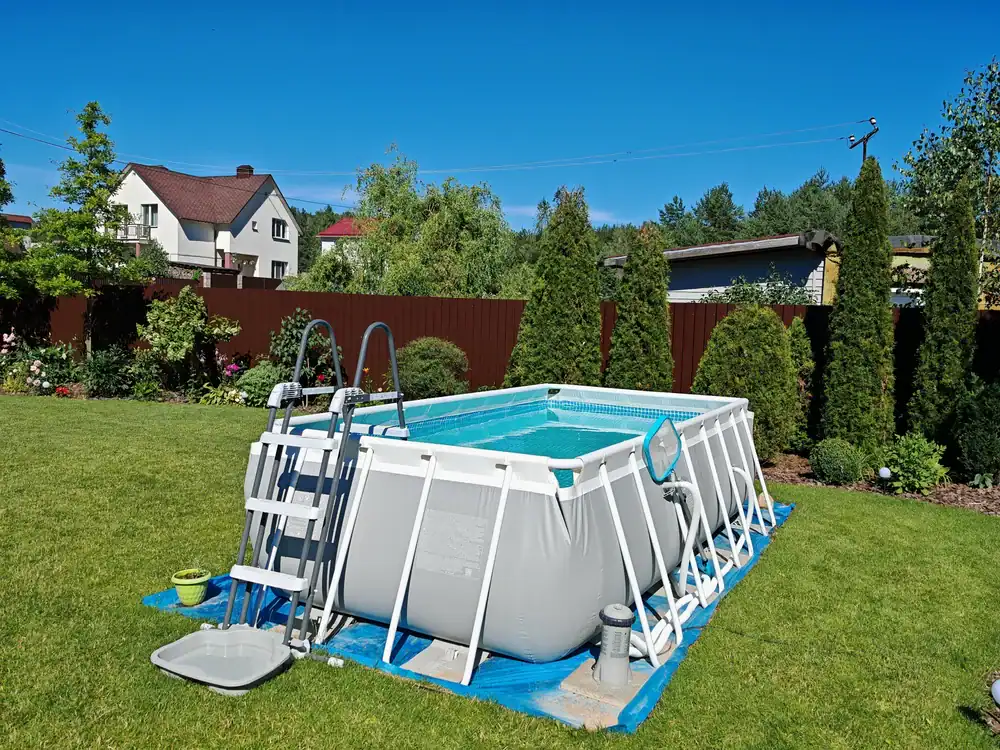
An above-ground pool sits on top of your yard. It’s a kit—steel, resin, or aluminum walls with a vinyl liner. You can take it down if you need to. You can move it if your next house has a better spot for it. But you’re also replacing it in 7 to 15 years, not 40.
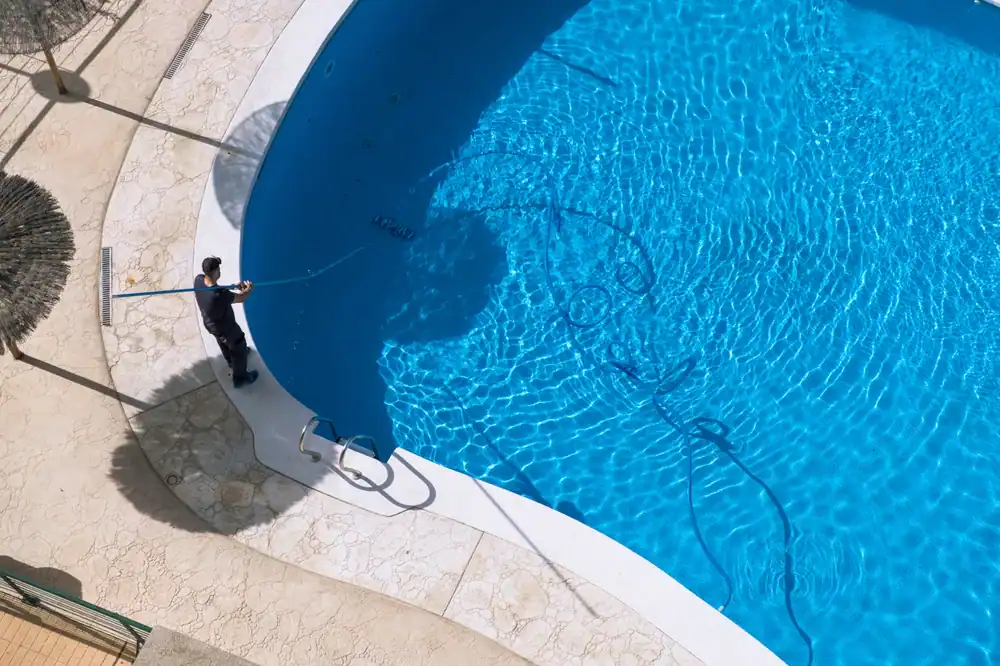
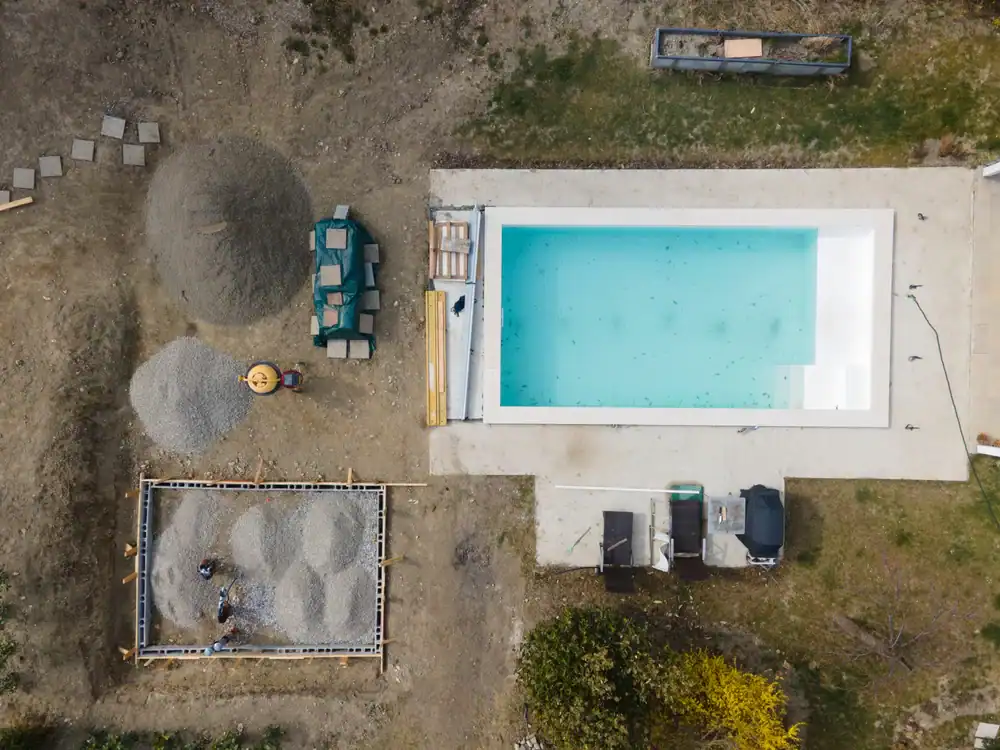
If you’re going in-ground, you’re committing to a process. Not a weekend project. A process.
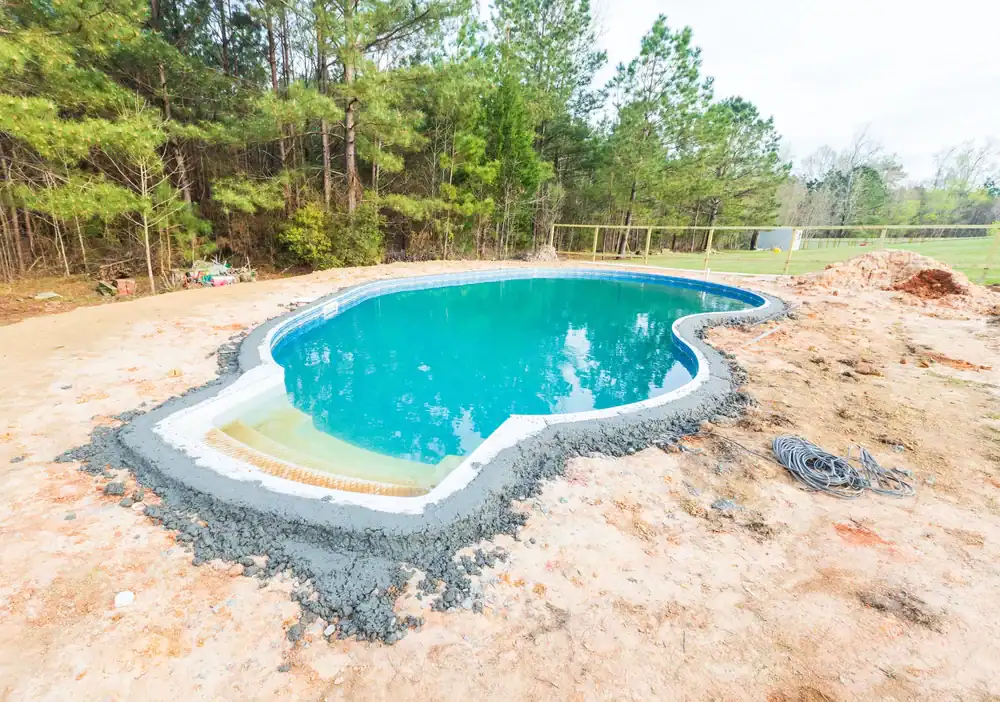
First, someone has to dig. That means excavation equipment in your backyard, which means your yard needs access for machinery. If you’ve got tight spaces, steep grades, or a lot of landscaping in the way, that’s something to work out early. Then there’s the soil itself. Coffee County sits on Georgia clay and mixed soils, which is exactly why concrete pools make sense here—they’re engineered to handle soil movement and settling that would crack lesser materials.
Once the hole’s dug, the pool shell goes in. Concrete (also called gunite) is poured and shaped on-site, which gives you total control over size, shape, and depth. Fiberglass pools come pre-molded and dropped into place. Vinyl pools get a steel or polymer frame with a custom liner. Each type has trade-offs in cost, customization, and longevity.
Then comes plumbing, electrical, filtration systems, and safety barriers. Georgia requires all residential pools to have barriers at least 48 inches high, with self-closing, self-latching gates. That’s not optional. It’s code. And it’s there for a reason.
Most in-ground pool projects in Coffee County, GA take 8 to 12 weeks from permit approval to the first swim. Weather delays are common, especially during summer storm season. Permits take time. Inspections take time. But when it’s done, you’ve got a pool that’s built into your property and designed to last 30 to 50 years or more with proper care.
You’re not just buying a pool. You’re altering your property. And if you do it right with experienced pool builders, you’re adding something your family will use for decades.
Above-ground pools skip most of the heavy lifting. Literally.
You’re not excavating. You’re not pouring concrete. You’re not waiting on inspectors to sign off on structural work. You’re leveling a patch of ground, assembling a kit, and filling it with water. If you hire pros, it’s done in one to three days. If you’re handy and have help, you can do it yourself over a weekend.
The pool itself is a prefabricated structure. Steel, resin, or aluminum walls form a circle or oval. A vinyl liner goes inside. A pump and filter keep the water clean. A ladder gets you in and out. That’s the baseline. You can add decking around it to make it look more finished, but the pool itself is pretty straightforward.
Because it’s above ground, you’re working with what the kit gives you. Most above-ground pools max out around 52 inches deep—about four and a half feet. That’s fine for cooling off and playing, but you’re not diving. You’re not swimming laps. And if you’ve got teenagers who want depth, this might feel limiting after a year or two.
The appeal is speed and cost. You can have a pool up and running this month without tearing up your yard or waiting on permits. Some areas require permits for above-ground pools, but it’s less common and usually faster to process. The trade-off is durability. These pools aren’t built to last forever. The liner will need replacing every 5 to 9 years. The structure itself will give out in 7 to 15 years, depending on how much use it gets and how well you maintain it.
If you’re testing the idea of pool ownership, or you’re not sure you’ll be in this house long-term, an above-ground pool gives you a way in without the permanent commitment. But if you’re planning to stay in Coffee County, GA and you want something that grows with your family, the math starts to shift.
Want live answers?
Connect with a Deep Waters Pools expert for fast, friendly support.
Let’s talk numbers. Not the ones you see in ads. The real ones.
An above-ground pool kit costs anywhere from $2,000 to $12,000 depending on size and quality. Add installation if you’re hiring it out—another $800 to $3,000. Add decking if you want it to look finished—$4 to $24 per square foot depending on materials. You’re looking at $8,000 to $15,000 for a solid setup that doesn’t feel like a kiddie pool.
In-ground pools start higher. A lot higher. In Coffee County, GA, you’re looking at $35,000 to $65,000 for most custom projects. That includes excavation, the pool shell, plumbing, electrical, filtration, safety barriers, and finishing work. If you want add-ons like a spa, waterfall, or high-end tile, you’re pushing toward the upper end of that range or beyond.
But here’s what doesn’t show up in the sticker price: lifespan and maintenance.
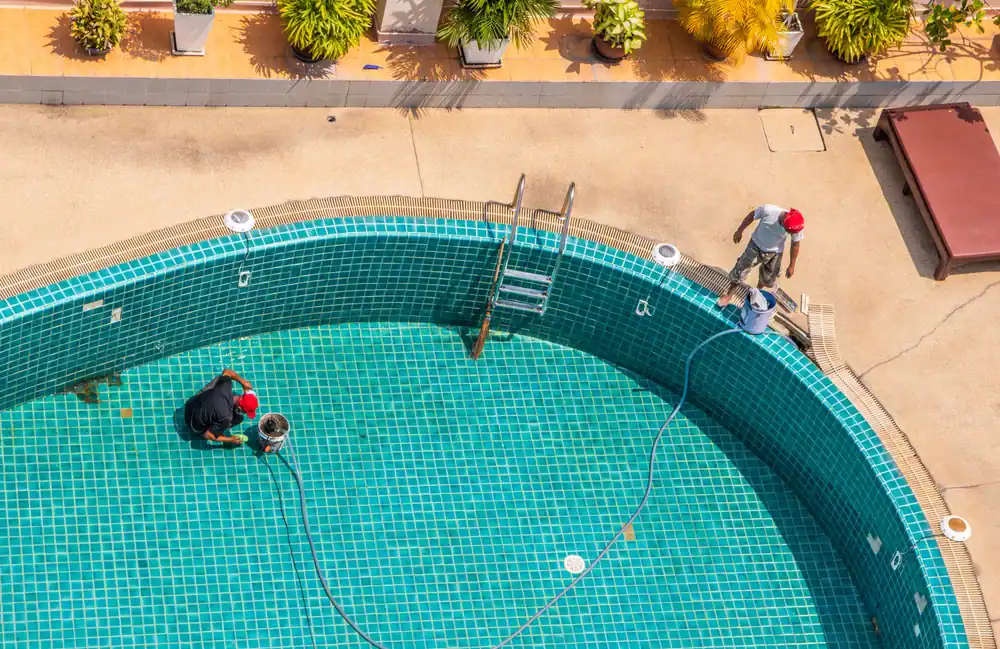
Every pool costs money to maintain. Chemicals, cleaning, equipment repairs. That’s not negotiable. But the type of pool you choose affects how much you’ll spend over the years and what kind of repairs you’re facing.
Above-ground pools are cheaper to maintain in the short term. Smaller water volume means fewer chemicals. Simpler filtration systems mean less to go wrong. But the vinyl liner is a ticking clock. You’ll replace it every 5 to 9 years, and that costs $500 to $1,500 depending on size. The pump and filter will eventually need replacing. And when the pool structure itself starts to fail—rust, warping, frame damage—you’re not repairing it. You’re replacing the whole thing.
In-ground pools cost more to maintain annually because they’re bigger and more complex. You’re looking at $1,200 to $6,000 per year depending on if you handle it yourself or hire a pool service. Concrete pools need resurfacing every 10 to 15 years, which can run several thousand dollars. Vinyl liner pools need new liners every 5 to 9 years, similar to above-ground. Fiberglass pools are the lowest maintenance of the bunch—no liner to replace, no resurfacing needed, just occasional repairs if something cracks.
But here’s the thing: in-ground pools are built to be repaired, not replaced. When something breaks, you fix it. The structure itself lasts 30 to 50 years or more. That means you’re spreading your investment across decades, not replacing the entire pool every 10 years.
If you’re planning to be in your Coffee County, GA home for the long haul, the higher upfront cost of an in-ground pool starts to make sense. You’re paying more now, but you’re not buying another pool in 2035.
This is where the conversation gets interesting. Because not every pool adds value to your home. Some do. Some don’t. And some actually make it harder to sell.
Above-ground pools add almost no resale value. Appraisers don’t count them as permanent improvements. Buyers see them as temporary structures—something they’ll probably remove. In some cases, buyers see an above-ground pool as a negative because it limits yard space or looks dated. If you’re installing one, do it for your family’s enjoyment, not for resale value.
In-ground pools can add value, but it depends on where you live and what buyers in your area expect. In warm climates like Georgia, pools are more desirable because you can use them most of the year. In Coffee County, GA, where summers are hot and families want outdoor entertainment space, a well-maintained in-ground pool can increase your home’s value by 5 to 10 percent. That’s not a guarantee, but it’s possible.
Here’s the catch: you’re not getting back what you paid. If you spend $50,000 on a pool and your home’s worth $300,000, you might see a $15,000 to $30,000 increase in value. That’s a 30 to 60 percent return, not 100 percent. The real value is in the years your family uses it, not what you recoup at closing.
Buyers in Georgia expect certain things. They want pools that are well-maintained, safe, and integrated into the landscape. They don’t want pools that dominate the entire yard or pools that look like they need $10,000 in repairs. If you’re thinking about resale, invest in quality pool construction now. Work with pool contractors who understand Georgia soil, climate, and code requirements. Make sure the pool fits your property and doesn’t overwhelm it.
And if you’re not planning to sell anytime soon? Then build the pool you want. Because the value you get from hosting summer barbecues, teaching your kids to swim, and having a place to cool off after work—that’s not something an appraiser can measure.
So which one wins the debate? That depends on what you’re optimizing for.
If you want something fast, affordable, and flexible, an above-ground pool gets your family swimming this summer without the long-term commitment. If you’re planning to stay in Coffee County, GA for years, want a pool that lasts decades, and care about how it looks and functions long-term, an in-ground pool is the better investment.
The right choice isn’t about which pool is “better.” It’s about which one fits your timeline, your budget, and how you plan to use your backyard. Both get the job done. But only one is still going to be there when your kids bring their kids over for a swim.
If you’re ready to talk through your options with someone who’s been building pools in Coffee County, GA for over 30 years, we can walk you through what makes sense for your property, your soil, and your family’s needs. No pressure. Just honest advice from people who’ve seen what works and what doesn’t.
Summary:
Share: