
Hear from Our Customers
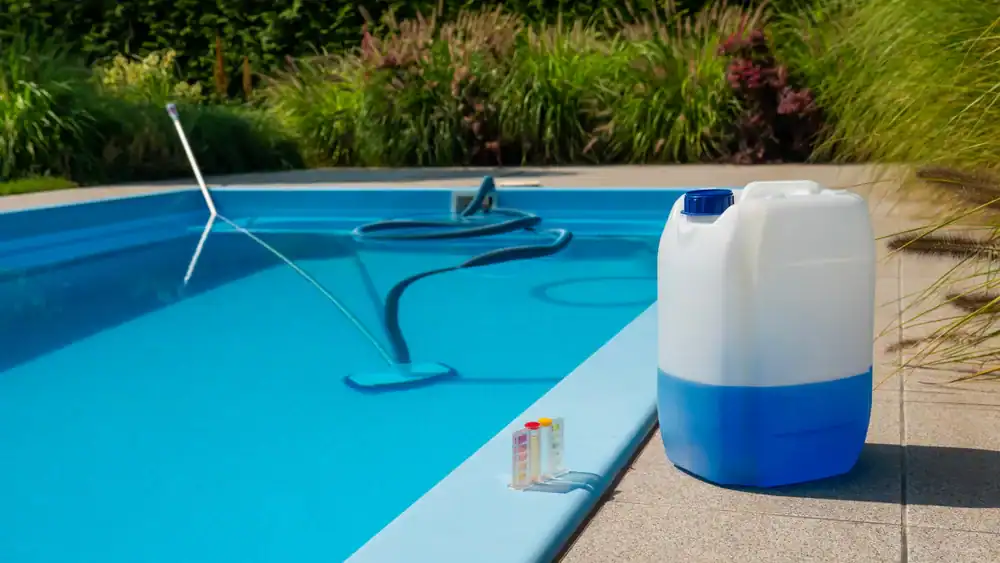
Here’s what most Upton pool owners don’t realize: a test strip can tell you roughly where your chlorine is, but it can’t tell you why your pool keeps clouding up after every spring storm or why the water burns your eyes even when the reading looks fine. That gap between “looks okay” and “actually balanced” is where pool problems live and where money gets wasted on chemicals that don’t fix anything.
Spalding County’s landscape is part of what makes it worth living in. The rolling hills, the mature trees, the dense canopy that covers most neighborhoods around Griffin it’s genuinely beautiful. But that same tree cover dumps an aggressive pollen load into your pool every March through May, spiking chlorine demand and destabilizing pH faster than most people expect. A pool that tested clean in February can be green by Easter if it goes unchecked through pollen season. Professional chemistry analysis catches that shift early, before it becomes a visible and expensive problem.
Summer in west-central Georgia doesn’t give you a lot of margin either. When heat indices are pushing past 100°F and afternoon thunderstorms are rolling through every few days, your water chemistry can shift from balanced to problematic within 48 hours. Rain dilutes your chemicals, lowers your pH, and introduces organic load all at once. When you know exactly where every parameter stands not just chlorine and pH, but calcium hardness, total alkalinity, cyanuric acid, and more you can respond with precision instead of dumping chemicals in and hoping for the best.
We’ve been building, renovating, and maintaining pools for over 30 years. That’s not a marketing number it’s the difference between a technician who learned chemistry from a manual and a team that has watched firsthand what happens to gunite and plaster when calcium hardness runs low for a season, or what chlorine does to a pebble finish when the pH drifts above 7.8 for weeks. That kind of experience doesn’t come from a certification course.
Upton and Spalding County homeowners whether you’re in a historic home near Griffin or a newer build in one of the county’s growing residential areas are dealing with a range of pool types and ages. Older concrete pools need tighter chemistry management to protect aging plaster. Newer pebble and quartz finishes require precise calcium hardness control to avoid mineral scaling. We understand both, and we bring licensed, insured service to every job without shortcuts.
Our core promise is straightforward: no shortcuts, no surprises, no excuses. You get a complete digital readout of your pool’s chemistry, a plain-language explanation of what every number means, and a specific plan to correct what’s off. Not a verbal “looks good.” Not a sales pitch for chemicals you may not need. Just honest, accurate information.
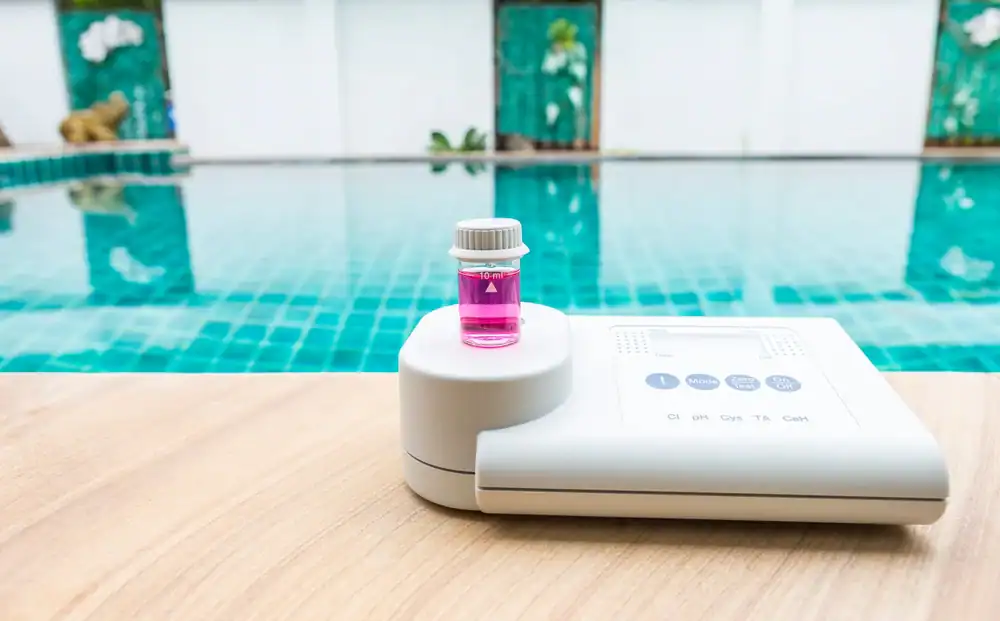
The process starts with a comprehensive digital water analysis not test strips, not color-matching reagents, but precise digital equipment that measures every parameter that matters. Free chlorine, total chlorine, combined chlorine, pH, total alkalinity, calcium hardness, cyanuric acid, total dissolved solids, and metals are all tested and recorded. Every number is captured to a level of precision that test strips simply cannot match, which matters when the difference between a safe pool and a corroding one can come down to a calcium hardness reading that’s off by 50 parts per million.
Once the analysis is complete, you get a written breakdown of every result alongside a specific correction plan. This isn’t a generic “add more shock” recommendation it’s a parameter-by-parameter roadmap that tells you what needs to go up, what needs to come down, and in what order. Chemistry corrections have a sequence, and getting that sequence wrong can make problems worse instead of better. That’s something a lot of DIY approaches miss entirely.
For Upton and Spalding County pools, timing matters too. The best windows for a full chemistry baseline are early spring before pollen season peaks, and again after the first heavy summer rain events that dilute and destabilize everything you’ve built up. If you’re opening a pool that’s been sitting through a Spalding County winter mild as it is a professional test before you start adding chemicals saves you from correcting a correction. We’ll walk you through what your pool needs at every stage of the season, not just the one time you call.
Ready to get started?
A lot of pool owners have had the experience of getting a “free water test” at a pool supply store you bring in a small sample, someone dips a strip or runs a quick panel, and you walk out with a bag of products. That process isn’t wrong, but it’s limited. It typically covers three or four parameters, and it’s conducted by someone who is also trying to sell you chemicals. We test nine parameters using professional digital equipment, and the only agenda is accuracy.
The full panel covers free chlorine and total chlorine (so you can see if chloramines the combined chlorine that causes eye irritation and that chlorine smell are building up), pH, total alkalinity, calcium hardness, cyanuric acid stabilizer levels, total dissolved solids, and metals including copper and iron. For Spalding County pools specifically, calcium hardness and cyanuric acid testing are especially critical. The county’s municipal water has its own mineral profile, and without adequate CYA stabilization, Georgia’s intense UV exposure burns through unprotected chlorine in under two hours on a clear summer day.
If your pool has a pebble or quartz finish common in newer Spalding County builds calcium hardness management is non-negotiable. Too low and the water becomes corrosive, slowly etching the finish from the inside out. Too high and you get mineral scaling that dulls the surface and is expensive to remove. We’ve been managing chemistry for concrete and specialty-finish pools for over three decades, and that surface-level expertise is built into every test result and recommendation you receive.
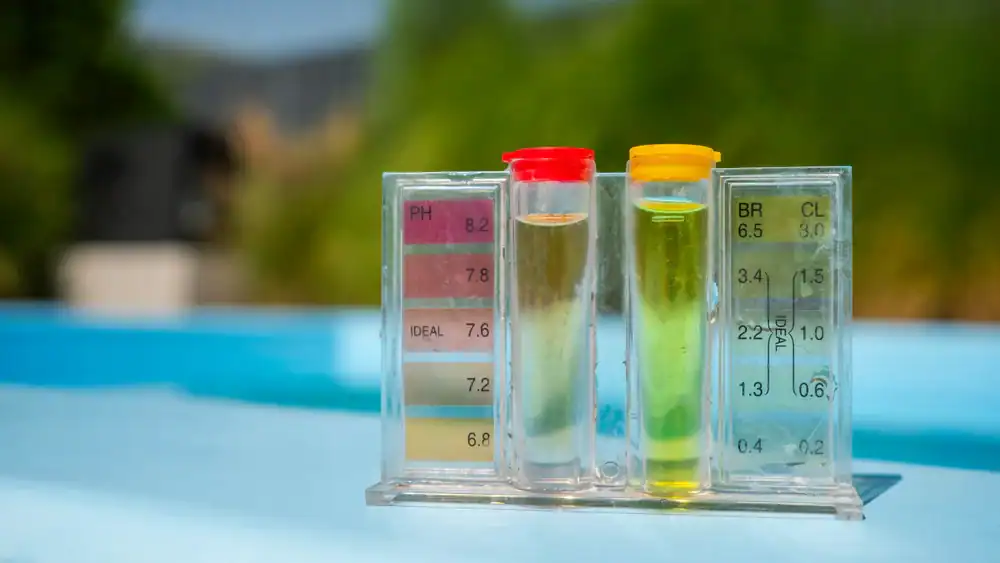
For most Upton homeowners, the honest answer is more often than you’re probably doing it right now and at specific times that match what’s actually happening with your pool’s environment. A professional comprehensive test at the start of swim season is essential, but Spalding County’s conditions add a few more critical windows. The spring pollen season which runs roughly March through May in this part of west-central Georgia dramatically increases organic load and chlorine demand. A pool that balanced out fine in late February can shift significantly by mid-April without a single swimmer in it.
You should also test after any significant rain event. Central Georgia’s summer storm pattern means you can get two or three inches of rain in a single afternoon, which dilutes chemicals, lowers pH, and resets a lot of what you’ve built up. A professional test after a major storm tells you exactly what needs correcting rather than requiring you to guess. At minimum, a full professional panel three to four times per season with DIY monitoring in between gives you a real picture of what’s happening in your water.
Free chlorine is the active sanitizer in your pool the chlorine that’s actually available to kill bacteria, destroy algae, and break down organic contaminants. Total chlorine is the combined measurement of free chlorine plus combined chlorine, which is what forms when free chlorine reacts with ammonia, nitrogen, and organic material from swimmers, pollen, and debris. Combined chlorine also called chloramines is the part that causes eye irritation, skin irritation, and that sharp “chlorine smell” that most people associate with over-chlorinated pools. Ironically, that smell usually means the pool needs more chlorine, not less.
This distinction matters a lot for Spalding County pools during peak season. High bather load plus heavy pollen load plus summer heat creates the perfect conditions for chloramine buildup. If your total chlorine reading is significantly higher than your free chlorine reading, combined chlorine is accumulating and your pool needs a breakpoint chlorination treatment a specific shock dose calculated to push through the chloramine threshold. Test strips typically don’t differentiate between the two with enough precision to catch this early. Digital testing does, which is why a professional panel catches problems that a strip misses entirely.
Rainwater is naturally slightly acidic typically around a pH of 5.6 to 6.0 which means every significant rainfall event introduces acidic water directly into your pool. In Upton and Spalding County, where summer afternoon thunderstorms are a regular occurrence from June through August, this isn’t a one-time event. It’s a recurring chemistry challenge throughout the entire swim season. When enough rainwater enters your pool, it pulls the pH down, which in turn makes your total alkalinity work harder to buffer it back up. If alkalinity is already on the lower end, pH becomes unstable and swings more dramatically with each storm.
The fix isn’t complicated, but it requires knowing your actual numbers first. If you’re adding pH increaser after every rain without knowing where your total alkalinity stands, you may be correcting the symptom while the underlying buffer problem gets worse. A professional water test after a significant rain event gives you a complete picture pH, alkalinity, and everything else so your corrections are targeted and sequenced correctly. Chasing pH without addressing alkalinity first is one of the most common and expensive chemistry mistakes pool owners make.
Yes and it’s one of the more deceptive chemistry problems because it happens slowly and invisibly until the damage is already done. Water has a natural tendency to seek mineral equilibrium. If your pool water is low in calcium hardness, it will pull calcium from the nearest available source which, in a concrete or plaster pool, is the pool surface itself. This is called aggressive or corrosive water, and it’s measured by something called the Langelier Saturation Index. A pool running consistently low on calcium hardness will develop pitting, etching, and rough texture on the plaster surface over time, and that kind of surface damage is expensive to repair.
For Spalding County pools especially the older concrete and plaster pools found throughout the county’s established neighborhoods this is a real risk. Calcium hardness should typically be maintained between 200 and 400 parts per million for plaster pools, and within a tighter range for pebble and quartz finishes. The challenge is that calcium hardness isn’t something you can eyeball or test reliably with strips. It requires a proper digital reading. We test calcium hardness as a standard part of every full panel, and the correction plan accounts for your specific surface type not just a generic target number.
Cyanuric acid often called CYA or pool stabilizer is a chemical that bonds with chlorine molecules and protects them from being broken down by UV radiation from sunlight. Without adequate CYA in your pool, the sun destroys your chlorine rapidly. In Georgia’s climate, with intense summer sun and heat indices regularly exceeding 100°F in west-central Georgia, unprotected chlorine can lose up to 90% of its effectiveness within two hours of direct sun exposure. That means you can add chlorine in the morning and have almost none left by afternoon which explains why some pool owners feel like they’re constantly adding chemicals with nothing to show for it.
The flip side is that CYA can accumulate over time, especially if you’re using stabilized chlorine tablets as your primary sanitizer. When CYA levels get too high above 80 to 100 parts per million they start to suppress chlorine’s effectiveness even when chlorine levels look normal. This is called chlorine lock, and it’s a common and frustrating problem. The only reliable fix is a partial drain and refill to dilute the CYA concentration. A professional water test that includes cyanuric acid measurement tells you exactly where you stand, so you’re not adding stabilizer you don’t need or wondering why your chlorine isn’t working despite a normal reading.
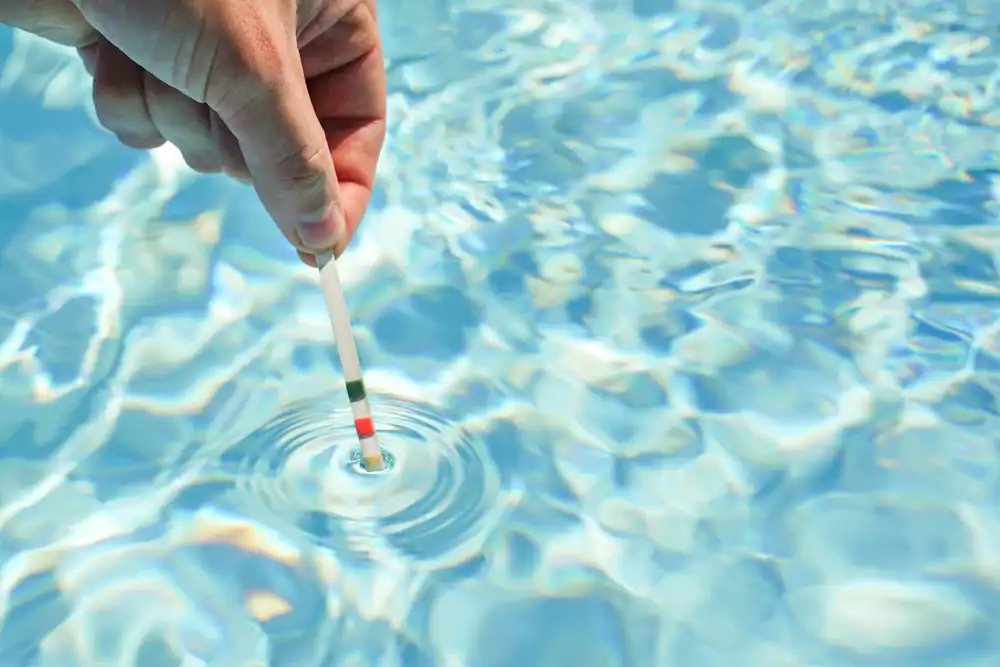
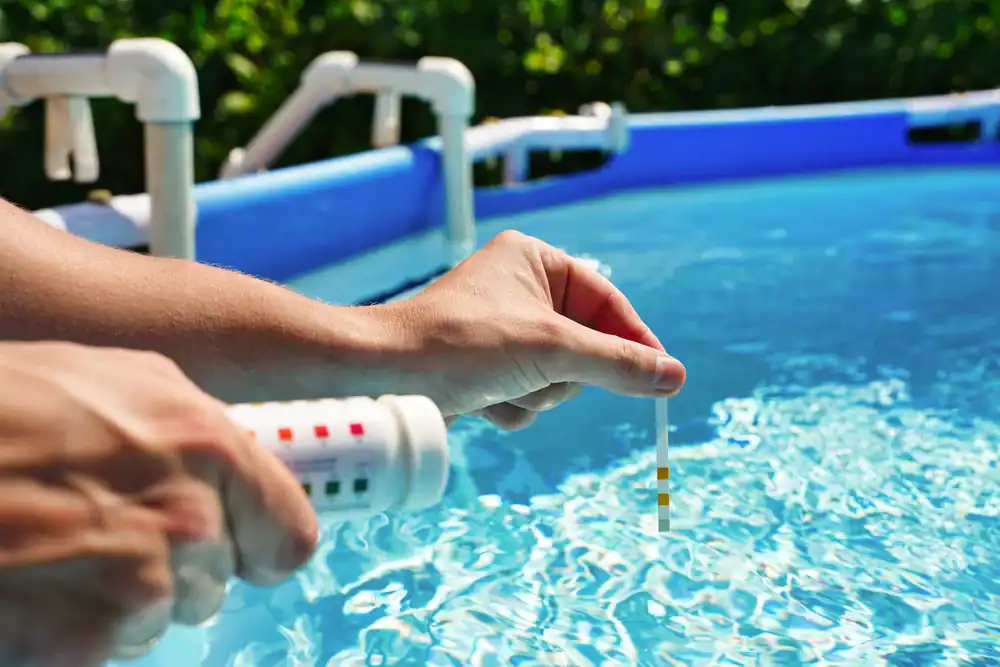
Test strips are a reasonable tool for quick, in-between checks but they have real limitations that matter when something is actually wrong with your pool. They measure only a few parameters, they’re sensitive to user error from wet hands and sun exposure, and they can’t accurately read cyanuric acid at elevated levels or detect combined chlorine separately from free chlorine. When your pool is cloudy, green, or irritating swimmers despite “normal” strip readings, the problem is almost always in the parameters the strip isn’t measuring precisely enough to catch.
For Upton and Spalding County pool owners, the value of professional testing is also about time. A significant portion of households in this area include people commuting to the Atlanta metro or managing busy professional schedules. Spending a Saturday troubleshooting chemistry with strips and adding chemicals that may or may not be addressing the right problem is a real cost in time, in chemicals, and in frustration. One professional test gives you a complete, accurate picture of all nine parameters, a written correction plan, and the confidence that what you’re adding is actually what your pool needs. That’s not a luxury it’s just a more efficient way to keep your pool right.