Building a luxury pool doesn't mean emptying your savings. Explore practical budgeting strategies that bring premium features within reach for Coffee County, GA homeowners.
Pool construction cost isn’t just one number. It’s a combination of factors that change based on your property, your choices, and what you’re actually building.
In Coffee County, GA, you’re looking at a realistic range of $35,000 to $65,000 for most custom inground cement pools. That’s not a guess—that’s what quality construction actually costs when you factor in Georgia’s soil conditions, local permits, and the materials that hold up in our climate.
The gap between $35,000 and $65,000 isn’t random. Size matters, obviously. But so does your yard’s current condition, whether you need significant excavation, the type of finish you choose, and what features you include. A straightforward rectangular pool with standard finishes sits at one end. A custom shape with premium aggregate finishes, integrated lighting, and a spa sits at the other.
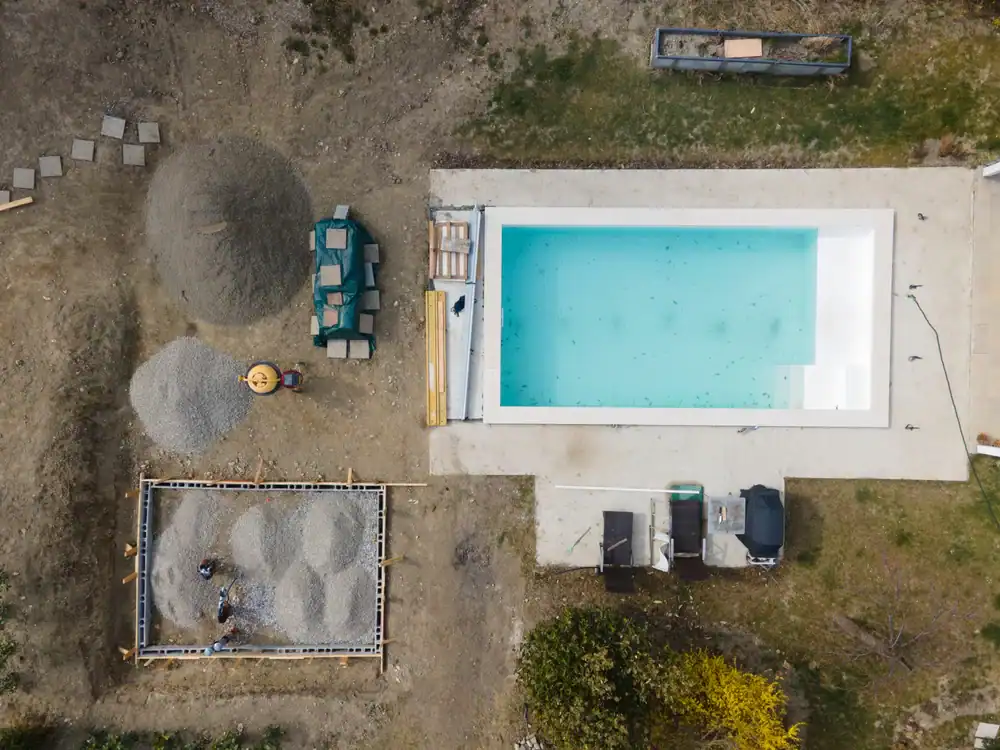
When someone quotes you a pool construction cost, you need to know what that covers. Because “included” means different things to different contractors, and that’s where budget surprises happen.
A complete pool construction project should include your site evaluation, custom design work, all necessary permits, professional excavation, and the actual pool construction. It should cover your electrical work, plumbing, filtration system installation, and the equipment that keeps your pool running. You should get proper safety barriers that meet Georgia code, thorough cleanup, and training on how to maintain your new pool.
What often gets left out? Decking beyond the immediate pool area. Landscaping to make your backyard look finished instead of like a construction zone. Fencing if your property doesn’t already have it. Upgraded lighting packages. Premium water features. These aren’t necessarily hidden costs—they’re just separate decisions that add to your total investment.
Understanding this breakdown helps you budget realistically. You might start with a $45,000 pool construction cost and decide you want $8,000 in upgraded finishes and $12,000 in decking and landscaping. That’s a $65,000 project. But you knew that going in, made the choice deliberately, and planned your budget accordingly.
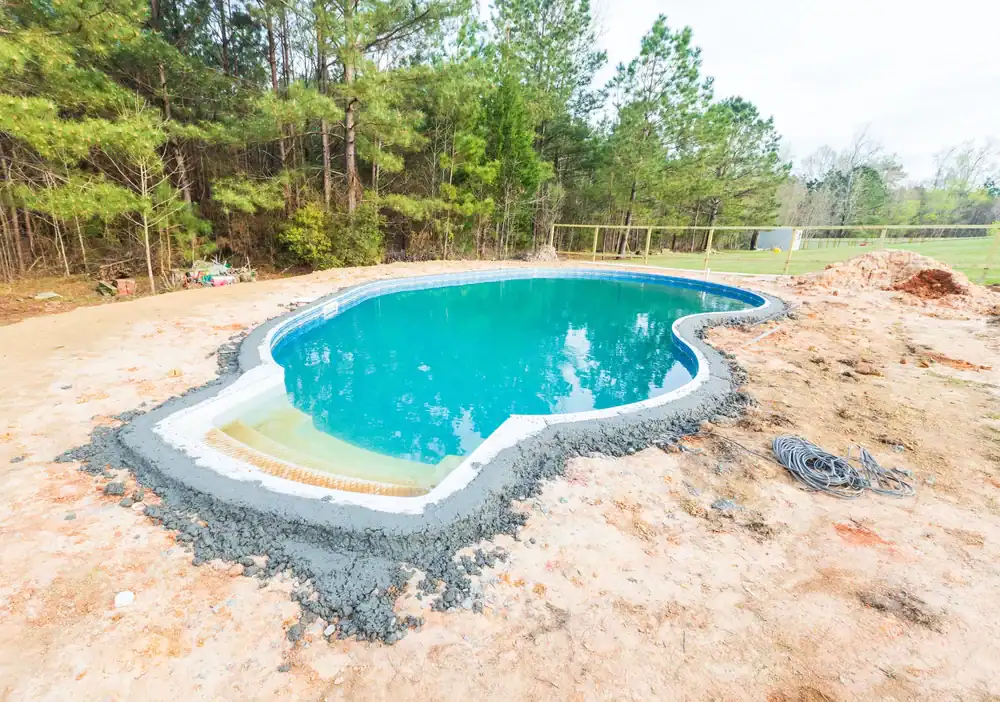
The soil in Coffee County, GA presents its own considerations. We’re sitting on expansive clay that swells when wet and shrinks when dry. That’s not a minor detail—it’s a structural concern that affects your pool’s foundation. Quality builders account for this in their construction methods and pricing. Cheaper quotes might skip the engineering that prevents cracks and shifting years down the line.
Site conditions matter more than most people realize. If your yard slopes significantly, you’re looking at additional excavation and possibly retaining walls. If you’ve got mature trees near your pool site, root systems need careful handling. If access to your backyard is limited, equipment costs go up. These aren’t ways contractors pad estimates—they’re real factors that affect labor and materials.
Once you understand the baseline, you can make informed decisions about where to spend and where to save. Not all upgrades cost the same, and not all of them deliver the same value to your family.
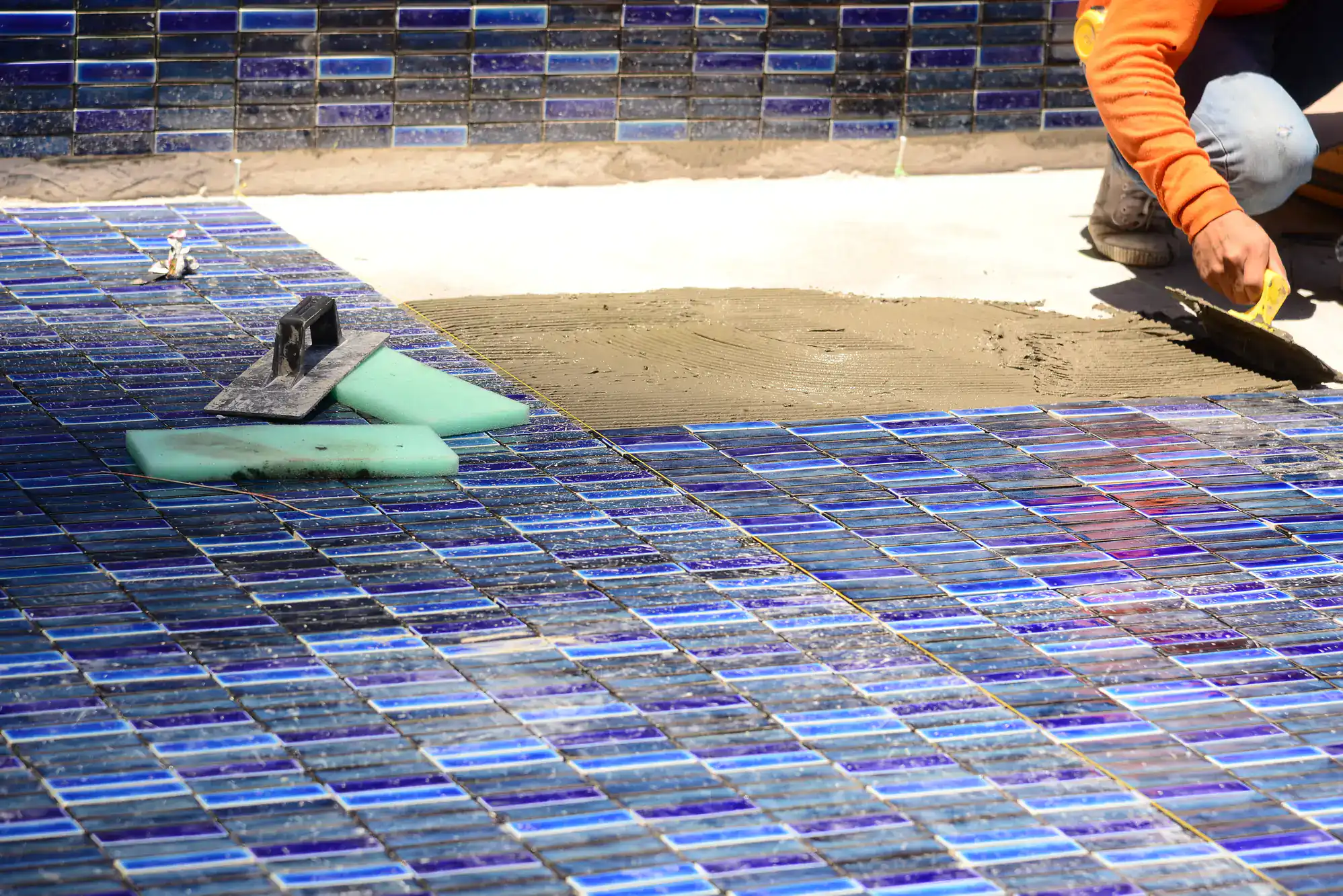
High-end pool materials make a visible difference, but they also come with a price difference. Standard plaster finishes are the most affordable option, typically lasting 10-15 years before needing resurfacing. Aggregate finishes—those beautiful pebble or quartz surfaces—cost more upfront but last longer and give you better color options. Glass tile at the waterline is stunning and durable, but it’s also one of the more expensive material choices you’ll make.
Shapes affect cost more than you might think. A simple rectangle is the most economical to build. Curves, kidney shapes, and custom designs require more labor and more precise engineering. That doesn’t mean you shouldn’t have them—just know that a freeform pool might add $5,000 to $10,000 compared to a rectangle of similar size.
Depth is another variable. A pool with a consistent shallow depth is simpler and less expensive than one with a deep end suitable for diving. If your family doesn’t need eight feet of depth, you’ll save money and ongoing maintenance costs by keeping it shallower.
Features add up quickly, but they also add enjoyment. An attached spa might run $8,000 to $15,000 depending on size and jets. A tanning ledge—that shallow area perfect for lounging—adds $3,000 to $6,000. Water features like deck jets or a sheer descent waterfall range from $1,500 to $10,000 depending on complexity. LED lighting systems start around $1,500 and can reach $5,000 for color-changing options throughout the pool.
The smart approach isn’t to skip everything. It’s to prioritize what your family will actually use. If you’ve got young kids, that tanning ledge gets used daily. If you’re building this pool for exercise and relaxation, maybe the spa is non-negotiable. If nighttime swimming isn’t your thing, basic lighting might be fine. Match your spending to your lifestyle, not to what looks impressive in photos.
Automation and controls represent another decision point. Basic systems that run your pump and heater on timers are included in most builds. Upgraded automation that lets you control everything from your phone, adjust temperatures remotely, and program complex schedules adds $2,000 to $5,000. Is it worth it? Depends on how much you value convenience and how often you’ll use those features.
Want live answers?
Connect with a Deep Waters Pools expert for fast, friendly support.
Most families don’t have $50,000 sitting in savings waiting to become a pool. That’s normal. What separates a smart pool investment from a financial mistake is how you fund it.
Luxury pool financing isn’t one-size-fits-all. You’ve got several paths, each with different costs, requirements, and implications. The right choice depends on your equity, your credit, your timeline, and how you think about debt.
Home equity loans give you a lump sum at a fixed interest rate, typically lower than other loan types because your house serves as collateral. You’re looking at rates in the 6-8% range for qualified borrowers. The upside: predictable payments, potentially tax-deductible interest, and rates that beat most alternatives. The downside: you’re leveraging your home, and if something goes wrong financially, that’s a risk.
HELOCs work differently—they’re more like a credit card secured by your home equity. You get approved for a credit limit, draw what you need, and pay interest only on what you use. The flexibility is real: if your pool comes in under budget or you want to phase your project, you’re not paying interest on money you haven’t spent. Rates are usually variable, though, which means your payment can change.
Financing a pool isn’t inherently good or bad—it’s a tool that works in some situations and doesn’t in others. The question isn’t whether you should finance, it’s whether financing fits your broader financial picture.
If you’ve got substantial equity in your home, low existing debt, and stable income, financing can make sense. You’re spreading a large expense over time while keeping your savings intact for emergencies. You’re also potentially taking advantage of tax benefits if you qualify for interest deductions on home equity debt used for home improvements.
The math matters here. Let’s say you’re looking at a $55,000 pool. If you finance $45,000 at 7% over 10 years, you’re paying about $522 monthly. Over the life of the loan, you’ll pay roughly $17,600 in interest. That’s real money. But if the alternative is depleting your emergency fund or selling investments at a bad time, that interest might be worth the financial flexibility.
Some families choose to finance even when they could pay cash, and that’s not necessarily wrong. If your money is earning more in investments than your loan costs in interest, or if you value liquidity more than being debt-free, financing can be the smarter play. This isn’t about emotion—it’s about math and priorities.
Personal loans are another route, though typically more expensive. Without collateral, you’re looking at higher interest rates, usually 8-12% depending on your credit. The approval process is faster, and you’re not putting your home at risk, but you’ll pay more over time. These work better for smaller projects or shorter terms.
Some pool builders offer in-house financing or partnerships with specialized lenders. These can be convenient—one application, coordinated timing with construction, sometimes promotional rates. But read the terms carefully. Zero-percent financing for 12 months sounds great until you realize the rate jumps to 18% if you don’t pay it off in time. Deferred interest promotions can be traps if you’re not disciplined.
Premium doesn’t always mean expensive. Some high-end pool materials and features give you luxury appeal without the luxury price tag, while others cost a fortune and don’t add much to your daily experience.
LED lighting is one of the best value upgrades you can make. For $1,500 to $3,000, you get dramatic nighttime ambiance, safety, and the ability to change colors for different moods. The energy efficiency means low operating costs, and the visual impact is immediate. Compare that to some water features that cost $8,000 and might impress visitors once but don’t change how you use the pool.
Aggregate finishes sit in a sweet spot between cost and value. Yes, they’re more expensive than basic plaster—usually $3,000 to $6,000 more depending on your pool size. But they last longer, look better, feel smoother, and give you that high-end appearance that makes your pool feel premium. This is where spending extra often makes sense.
Tanning ledges are another high-value feature. They’re not cheap—$3,000 to $6,000 typically—but they fundamentally change how you use your pool. Kids play there safely. Adults lounge there with a drink. It becomes the most-used part of many pools. That’s value that justifies the cost.
Automation falls into a gray area. Basic automation that controls your pump and heater is often worth it—maybe $1,000 to $2,000. Full smart-home integration with app control, voice commands, and complex programming is impressive but might be overkill unless you’re tech-focused and will actually use those features regularly.
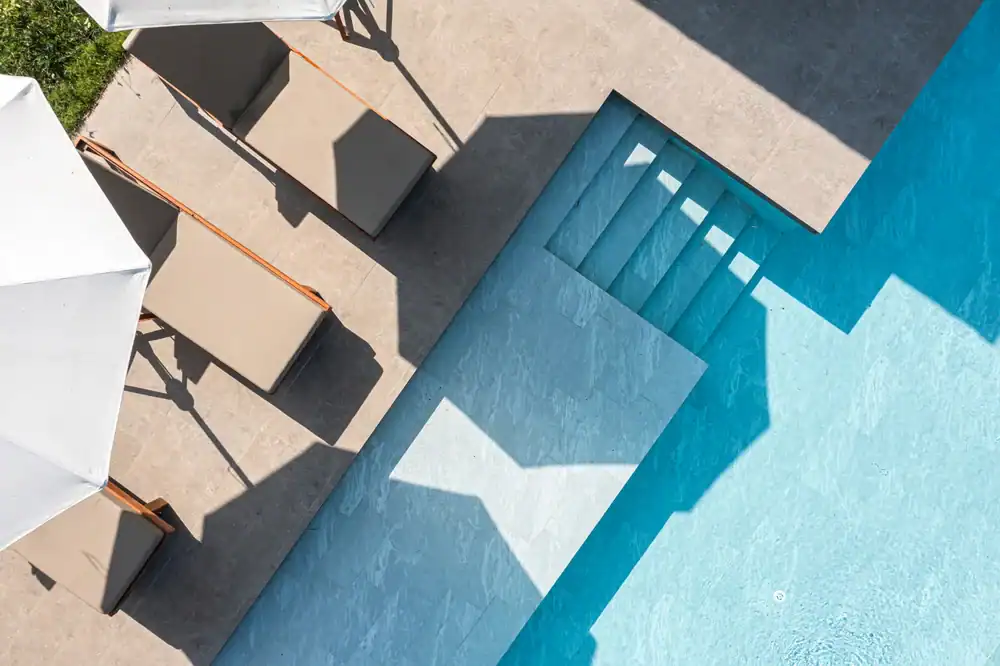
Spas are expensive additions—$8,000 to $15,000 or more—but they extend your pool’s usability. In Georgia, you can use a heated spa year-round, even when the pool itself is too cold. If that matters to your family, it’s money well spent. If you’re building this purely for summer swimming, maybe not.
The strategy is to invest in features that match your lifestyle and skip the ones that don’t, regardless of how impressive they sound. A family with young kids might prioritize a beach entry and shallow areas over a deep end. Empty nesters might want that spa and sophisticated lighting over play features. There’s no universal “right” answer—just the right answer for how you’ll actually live with this pool.
Material quality is where you don’t want to cut corners. Cheap equipment fails sooner, costs more to run, and creates headaches. Inferior finishes need replacement faster. Weak structural work leads to cracks and leaks. This is where working with experienced builders who know Coffee County, GA soil conditions and climate pays off. The upfront cost might be higher, but the long-term value is undeniable.
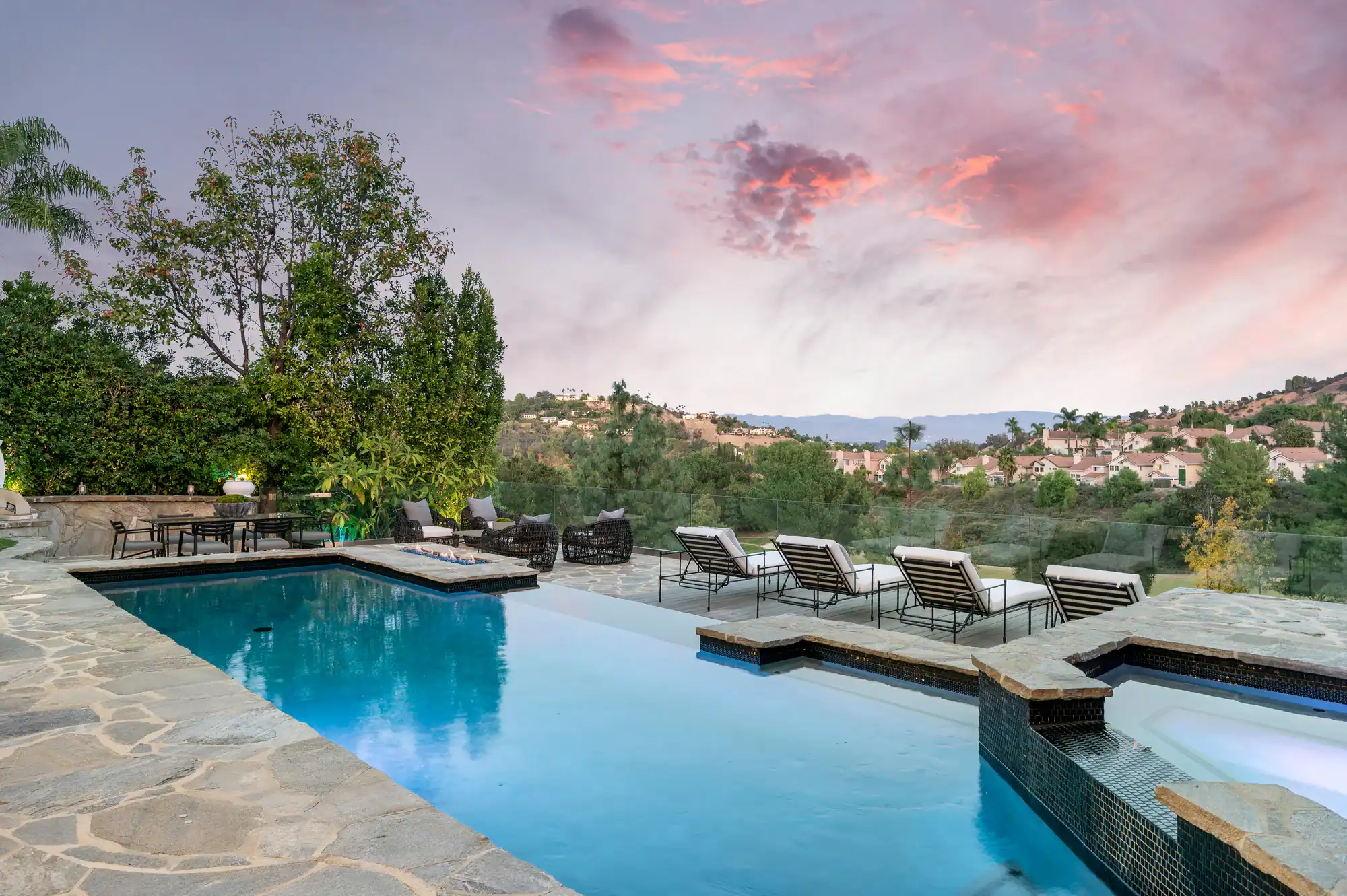
Building a premium pool in Coffee County, GA doesn’t require unlimited resources. It requires understanding pool construction cost, making informed choices about high-end pool materials, exploring luxury pool financing options that fit your situation, and focusing on features that deliver real value to your family.
The homeowners who are happiest with their pools five years later aren’t necessarily the ones who spent the most. They’re the ones who budgeted realistically, chose quality over flash, and built something that fits how they actually live.
Custom pool ROI matters, but it’s not just about resale value. It’s about the memories you create, the vacations you don’t have to take, the time your family spends together instead of scattered across screens. That’s harder to quantify but just as real as the 7-8% property value increase most pools deliver.
If you’re ready to explore what’s possible for your backyard and your budget, we bring 30 years of experience building quality pools for South Georgia families. We understand Coffee County, GA’s unique conditions, we believe in transparent pricing, and we build pools that last.
Summary:
Share: