Learn when and how to properly open and close your pool in Georgia's unique climate, plus discover whether year-round operation or seasonal service makes more sense for you.

Here’s the truth most pool companies won’t lead with: you might not need to close your pool at all. Georgia’s relatively warm climate means many pool owners keep their systems running year-round with just freeze protection in place.
That said, there are good reasons to do a seasonal closing. If you travel during winter months, if you want to reduce chemical and energy costs during a season you won’t swim, or if you’d rather not deal with weekly maintenance when it’s 40 degrees outside, closing makes sense. The decision depends on your situation, not some universal rule.
If you do choose to close, timing is everything. You want to wait until water temperature consistently stays below 65°F. Close too early and you’re fighting algae all winter. Wait too long and you risk freeze damage before you finish the process. For most of Coffee County, GA, that window opens mid-to-late November, but you need to watch the forecast, not the calendar.
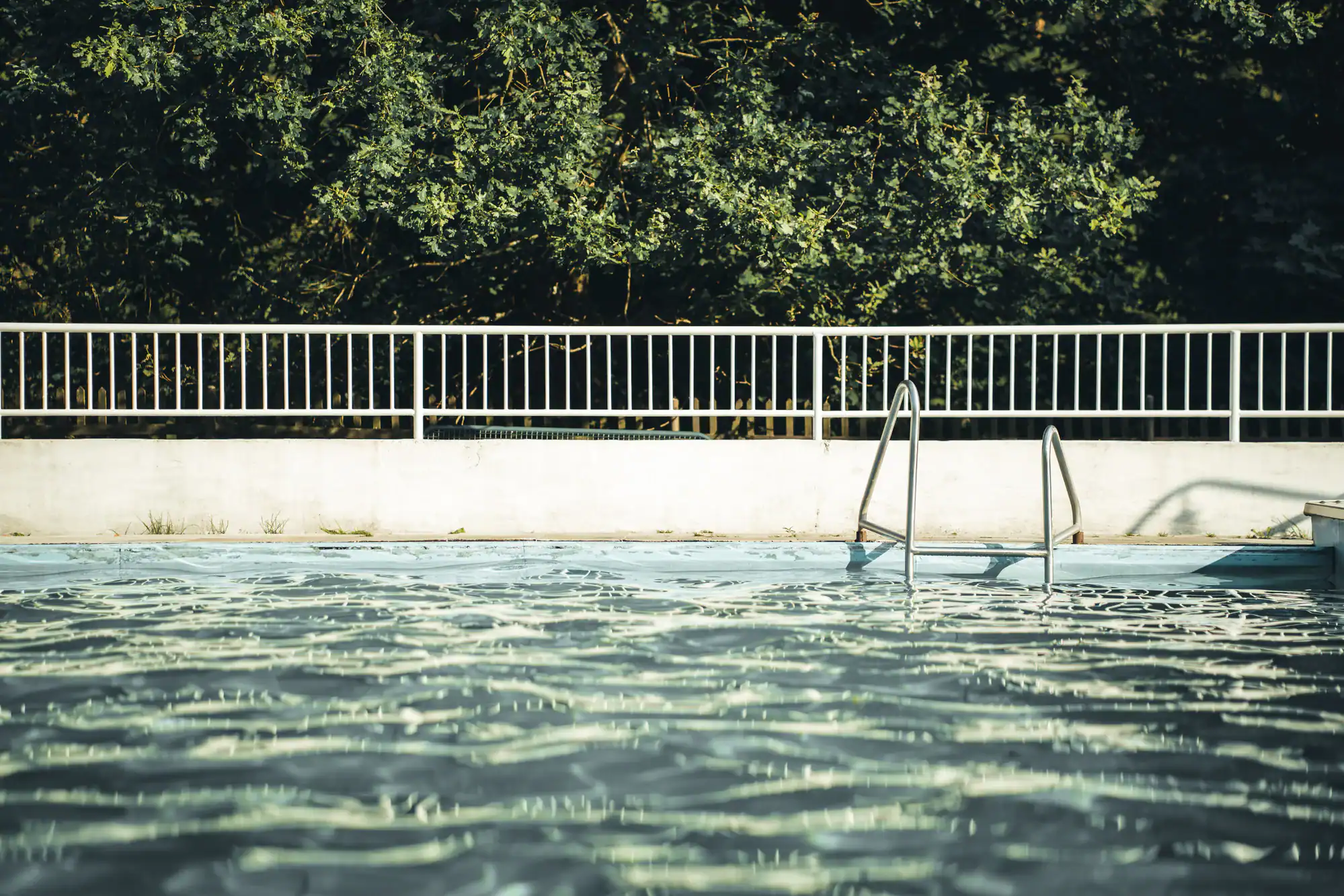
Winterizing a pool in Georgia looks different than it does up north. You’re not draining everything and battening down for months of snow. You’re protecting against occasional freezes while keeping the system ready for an earlier spring return.
Start with a deep clean. Brush walls, vacuum the floor, empty skimmer baskets, and get every bit of debris out. Anything left in the pool has months to break down, stain surfaces, or feed algae growth. This isn’t the time to rush.
Next comes water chemistry. Balance your pH to around 7.4, alkalinity to 100 ppm, and calcium hardness to 225 ppm. Then shock the pool and add winterizing chemicals according to manufacturer instructions. The goal is creating an environment where algae can’t establish itself even if temperatures warm up for a week or two.
Lower your water level to just below the skimmer. You don’t want water sitting in lines where it can freeze and expand. Blow out all plumbing lines with a shop vac or air compressor, then plug them. Remove drain plugs from your pump, filter, and heater so any residual water can escape.
If you have an automatic pool cover, now’s the time to use it. If not, install a quality winter cover that can handle debris and occasional snow without sagging into the water. Water bags or cover clips keep it secure through winter storms.
The whole process takes most DIYers three to four hours. We handle it in about two, and we bring the right equipment for thorough line blow-outs and proper chemical dosing. Either way, the investment now prevents the kind of spring surprises that cost real money to fix.
Keeping your pool open through Georgia winters is simpler than most people think. The key is freeze protection—a system that automatically kicks your pump on when temperatures drop to a point where standing water could freeze in your lines.
A basic freeze protection setup uses a thermostat that overrides your normal timer. When the temperature hits your set point (usually 35°F), the pump starts running regardless of your schedule. Moving water doesn’t freeze, and the pump itself generates enough heat to stay protected. Once temps rise again, your normal programming takes back over.
This approach means you skip the whole closing and opening process. No chemicals to add in fall, no equipment to drain and blow out, no cover to wrestle with, and no spring startup routine. You just keep running your normal maintenance schedule through winter, though you can dial back frequency since you’re not swimming and algae growth is minimal in cold water.
The trade-off is ongoing costs. You’ll use more electricity running the pump during cold snaps. You’ll go through more chemicals than a closed pool, though far less than summer. And you need to stay on top of weekly maintenance even when it’s not fun to be outside.
For many Coffee County, GA pool owners, this makes more sense than closing. You avoid the labor and cost of closing and opening services. You can take a dip on those random 75-degree January afternoons. And you eliminate the risk of something going wrong during a closure—covers that fail, algae that blooms despite treatment, or equipment that doesn’t restart cleanly in spring.
The decision comes down to how you use your pool and how much winter maintenance you’re willing to handle. There’s no wrong answer, just the one that fits your situation. We can maintain year-round operation for you if you want the benefits without the winter work.
Want live answers?
Connect with a Deep Waters Pools expert for fast, friendly support.
Spring pool opening is where most DIY attempts go sideways. The timing window is narrow, the steps have to happen in order, and skipping anything usually means you’re staring at green water a week later.
The ideal opening time for Coffee County, GA is mid-March through early April. You want daytime temperatures consistently above 70°F, but you don’t want to wait until pollen season ends. That pollen is coming regardless, and it’s actually easier to treat a pool that’s already running and balanced than to open into a layer of yellow dust.
Opening too early means you’re running equipment and adding chemicals while water is still cold enough that nothing works efficiently. Opening too late means that first warm spell creates perfect conditions for algae, and you’re fighting blooms instead of preventing them. We recommend watching the 10-day forecast and opening when you see sustained warmth ahead.
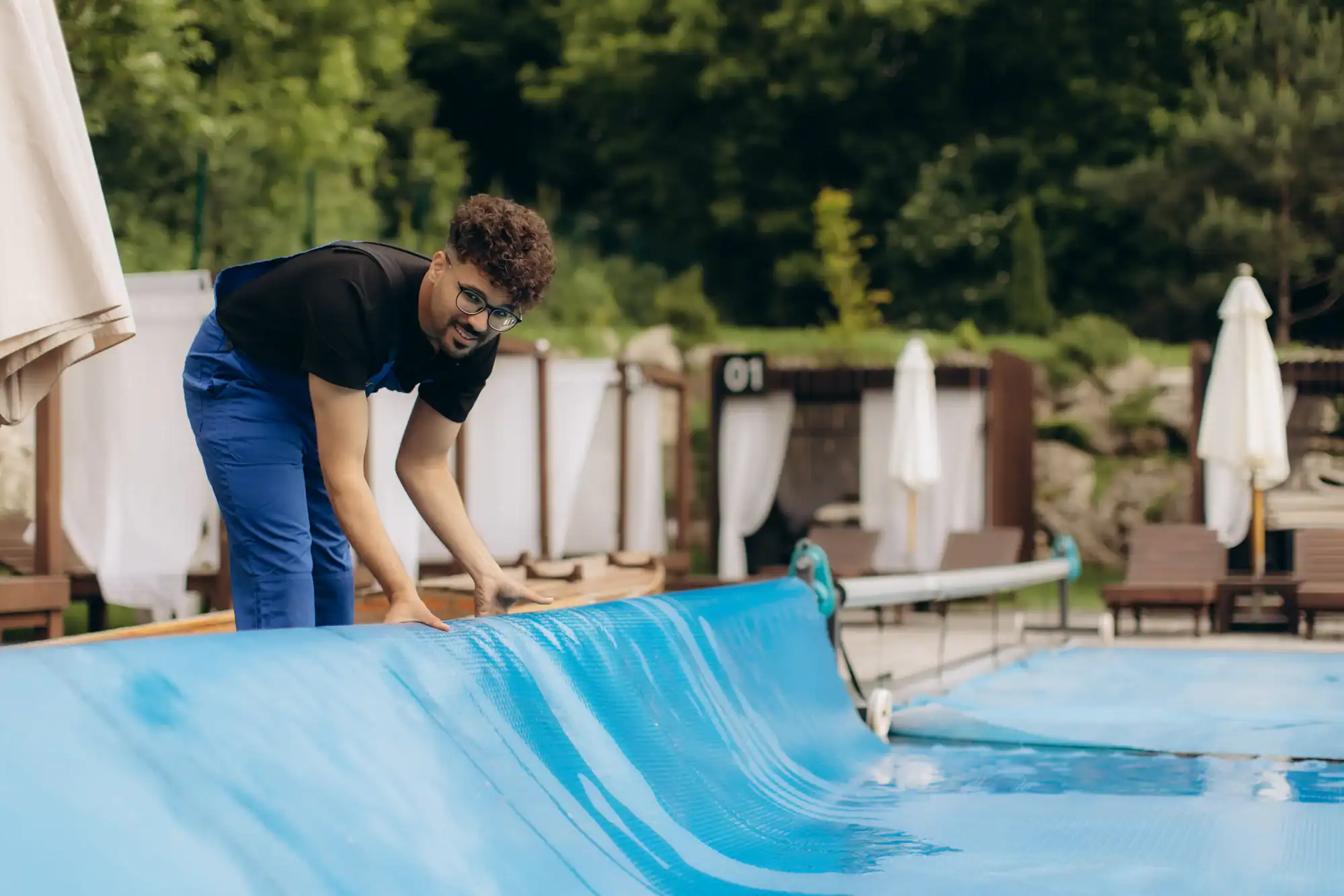
A proper spring opening follows a specific sequence. Remove and clean your winter cover before you take it off completely—you don’t want months of accumulated debris dumping into the pool. Once the cover is off and stored, remove all winterizing plugs from returns, skimmers, and equipment.
Reinstall drain plugs in your pump, filter, and heater. Check all equipment for cracks, leaks, or damage that happened over winter. This is your chance to catch problems before you restart the system and potentially make them worse.
Fill the pool to proper operating level—middle of the skimmer opening. Start up your pump and check for leaks or unusual sounds. Let it run for several hours to get water circulating before you do anything with chemistry.
Now comes the critical part: water testing and balancing. Test pH, alkalinity, calcium hardness, and chlorine levels. Adjust pH first, then alkalinity, then add shock treatment to kill anything that’s been growing while the pool sat dormant. Run your pump continuously for at least 24 hours after shocking.
Add algaecide after the shock treatment has had time to work. Check and clean your filter—it’s going to collect a lot of debris during this startup period. Test water daily for the first week, adjusting chemistry as needed until everything stabilizes.
This is where we earn our fee. We know exactly how much of each chemical to add for your specific pool volume and current conditions. We catch equipment issues before they become failures. And we get your water to swim-ready condition in days instead of weeks of trial and error.
The cost difference between professional opening and DIY is usually $200 to $350. For that, you get expertise, proper equipment, and the confidence that it’s done right. Many pool owners handle their own weekly maintenance but hire out the opening and closing because those transitions are where mistakes cost the most.
Automated pool covers change the seasonal maintenance equation significantly. They provide safety, keep debris out, retain heat, and reduce chemical usage—but they also require specific care during opening and closing.
If you’re closing a pool with an automatic cover, you still need to winterize the plumbing and equipment. The cover protects the water surface but doesn’t prevent freeze damage to pipes and pumps. You’ll follow the same winterization steps, then close the cover for the season. Most manufacturers recommend removing snow and standing water from the cover through winter to prevent damage to the motor and fabric.
During spring opening, automatic covers make the process cleaner. You open the cover to find water that’s been protected from debris all winter, which means less shocking and faster chemical balance. The cover mechanism itself needs inspection—check the motor, tracks, and fabric for any winter damage before you start regular operation.
The investment in an automatic cover runs $10,000 to $22,000 depending on pool size and track system. That’s substantial, but the covers typically save 50% to 70% on heating costs and significantly reduce chemical usage. They also cut maintenance time since you’re not constantly removing leaves and debris.
For seasonal pool services , automatic covers reduce the labor involved in both closing and opening, though they don’t eliminate the need for proper winterization. They’re particularly valuable for Georgia pool owners who keep pools open year-round, since you can cover the pool between uses to retain heat and keep out the debris that’s a constant issue with our trees and pollen.
The decision to add an automatic cover usually comes down to how much you value convenience and safety versus the upfront cost. For families with young children, the safety aspect alone often justifies the expense. For others, the time savings and reduced chemical costs build a return on investment over three to five years.
Seasonal pool maintenance in Georgia requires understanding your specific situation. You’re not following northern state rules, and you’re not dealing with year-round swimming conditions like Florida. You’re in a climate where flexibility matters and timing determines whether you spend your spring enjoying the pool or fighting algae blooms.
Whether you close your pool or keep it running through winter, whether you handle maintenance yourself or hire professionals, the key is making informed decisions based on your pool, your schedule, and your priorities. There’s no single right answer, but there are definitely wrong approaches—and those usually involve ignoring Georgia’s climate realities or skipping steps to save time.
If you’re in Coffee County, GA and want to talk through your specific situation, we bring over 30 years of experience with Georgia pools and the seasonal challenges they present. Sometimes a conversation with someone who knows your local climate is worth more than a dozen generic checklists.
Summary:
Share: