Georgia's humid summers demand a smarter approach to pool water testing. This checklist shows you exactly what to test, when, and why it matters.
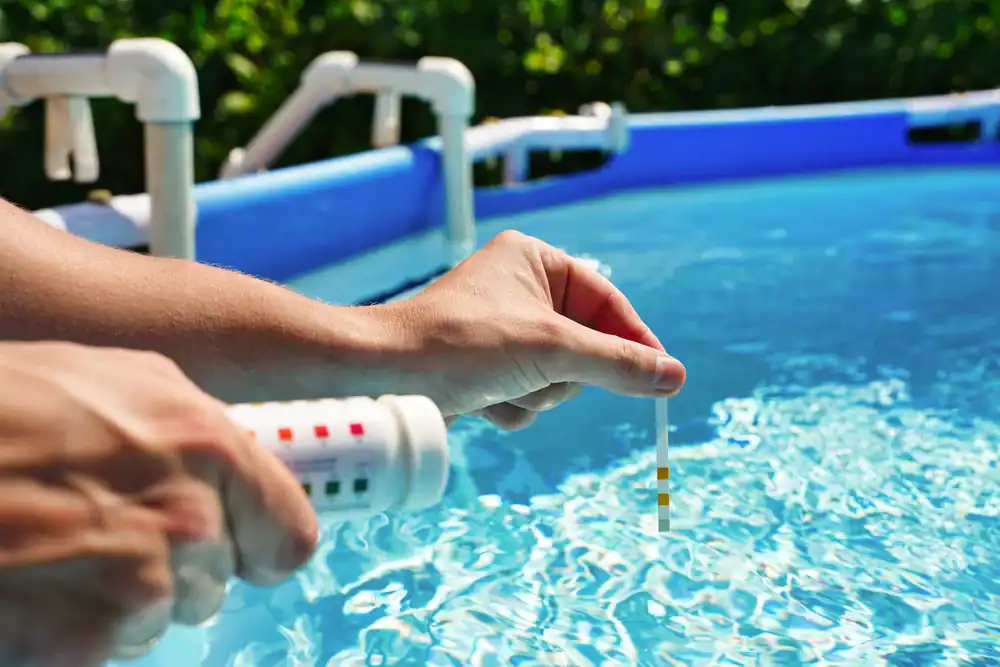
Water testing isn’t about memorizing a chemistry textbook. It’s about checking five core things that determine whether your pool is safe, clean, and protecting your equipment. Free chlorine tells you if your water can kill bacteria and algae right now. pH measures how acidic or basic your water is, which affects everything from chlorine effectiveness to swimmer comfort. Total alkalinity acts like a buffer that keeps pH stable instead of bouncing all over the place.
Calcium hardness shows how much dissolved calcium is in your water—too little corrodes your pool surfaces, too much leaves crusty white scale everywhere. Cyanuric acid protects chlorine from Georgia’s intense sun, which can cut chlorine levels in half within hours on a bright summer day. These five parameters work together. Change one, and you’ll likely affect another.
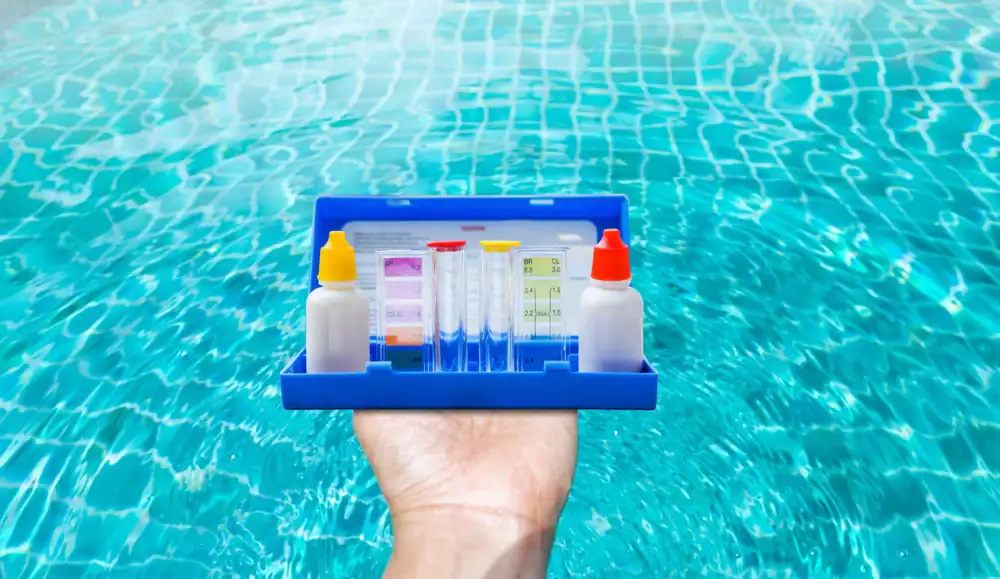
Here’s where most Coffee County, GA pool owners get it wrong. They test once a week and wonder why their water turns green between tests. Georgia’s climate accelerates chemical changes faster than cooler, drier regions. Every degree above 85°F speeds up how quickly your pool consumes chlorine. Every rainstorm dumps acidic water into your pool, lowering pH and alkalinity. Every sunny afternoon breaks down chlorine through UV exposure.
During peak summer months—June through September—you should test chlorine and pH at least two to three times per week. After a heavy rainstorm, test the same day or the next morning. After a pool party with lots of swimmers, test within 24 hours. On extremely hot weeks when temperatures stay above 90°F consistently, daily testing isn’t overkill—it’s smart maintenance.
Total alkalinity, calcium hardness, and cyanuric acid change more slowly. Test these weekly during summer, and monthly during cooler months. If you’re battling pH that won’t stay stable, check your alkalinity immediately. That’s usually the culprit. If you notice white scaling on your tile or rough patches on your pool surfaces, test calcium hardness before it gets worse.
The goal isn’t to become a full-time pool chemist. It’s to catch small changes before they become expensive problems. Five minutes of testing today prevents five hours of work next week. In Georgia’s humid climate, that quick test is the difference between clear water and a green swamp.
Numbers matter, but they’re not arbitrary. These ranges exist because they work with how pool chemistry actually functions in real-world conditions. Your free chlorine should stay between 1.0 and 3.0 parts per million (PPM). Below 1.0, you’re not killing bacteria effectively. Above 3.0, you’re wasting money and potentially irritating swimmers’ skin and eyes. During hot Georgia summers with heavy pool use, aim for the higher end of that range—around 2.5 to 3.0 PPM.
pH should sit between 7.2 and 7.8, with 7.4 being the sweet spot. This isn’t random. At 7.4, chlorine works efficiently, water feels comfortable to swimmers, and your pool equipment stays protected. When pH climbs to 8.0, your chlorine effectiveness drops to about 21% even if you have plenty of chlorine in the water. You’re paying for sanitizer that isn’t sanitizing. When pH drops below 7.0, your water becomes acidic enough to corrode metal fittings, etch plaster, and irritate eyes.
Total alkalinity should range between 80 and 120 PPM, ideally closer to 100 PPM. Think of alkalinity as pH’s bodyguard. When alkalinity is too low, pH bounces around with every chemical addition or rainstorm. When it’s too high, pH becomes stubborn and resists adjustment. Getting alkalinity right first makes everything else easier to balance.
Calcium hardness depends on your pool type. For plaster pools, aim for 200 to 400 PPM. For vinyl or fiberglass pools, 175 to 225 PPM works better. Georgia’s water varies by location, so your starting calcium level depends on your source water. Too low, and your pool water tries to pull calcium from your surfaces, causing etching and deterioration. Too high, and you get that white crusty buildup on tile and equipment that’s nearly impossible to remove.
Cyanuric acid should stay between 30 and 50 PPM for outdoor pools. This stabilizer protects chlorine from UV breakdown, which is critical in Georgia’s sunny climate. But here’s the catch—cyanuric acid only goes up, never down. Every time you add stabilized chlorine tablets, you’re adding more. Test it monthly and watch that number. Once it climbs above 80 PPM, your chlorine stops working effectively even at high levels. The only fix is partially draining and refilling your pool.
Want live answers?
Connect with a Deep Waters Pools expert for fast, friendly support.
Georgia doesn’t just have weather—it has weather that actively fights against balanced pool chemistry. Understanding what’s happening helps you stay ahead of problems instead of constantly reacting to them. The three biggest factors are rain, heat, and humidity, and they each mess with your water in different ways.
Rainwater in Georgia is naturally acidic, with a pH typically around 5.5 to 6.0. Your pool needs to be around 7.4. When you get one of those classic summer downpours that dumps an inch or two of rain in an hour, you’re adding a significant volume of acidic water that immediately lowers your pH and alkalinity. The rain also washes pollen, dust, dirt, and organic debris into your pool, giving algae the nutrients it loves.
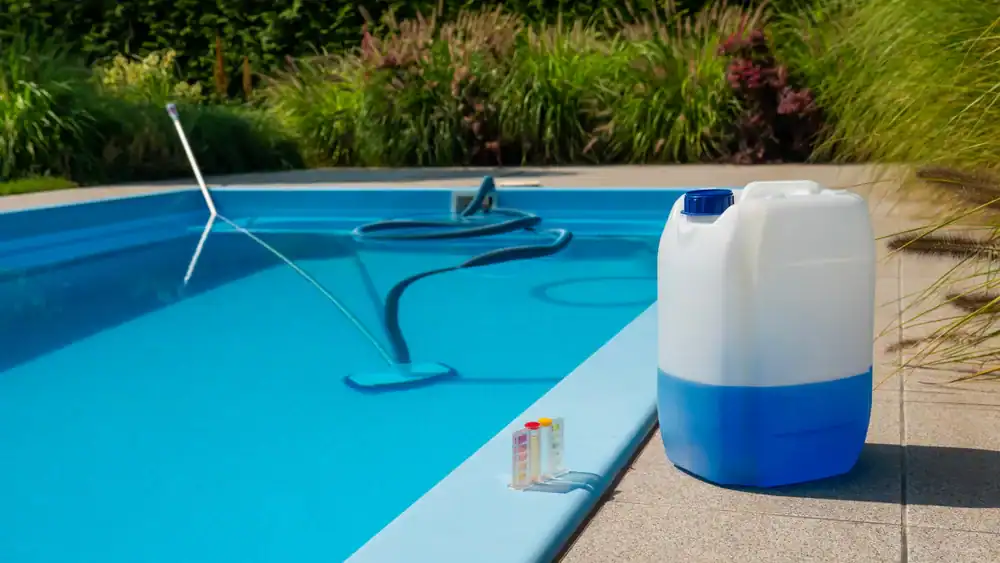
After any storm that drops more than a half-inch of rain, you need a specific recovery routine. Don’t just shock the pool and call it done. Start by removing visible debris—leaves, twigs, dirt—as quickly as possible. Organic material sitting on your pool floor consumes chlorine and can stain surfaces if left too long. Skim the surface, then vacuum or run your robotic cleaner to get everything off the bottom.
Next, test your water. Focus on pH, alkalinity, and chlorine first. You’ll almost always find that pH and alkalinity dropped. Adjust alkalinity first if it’s below 80 PPM, then recheck and adjust pH. Once those are back in range, check your chlorine level. If it’s low (which it probably is after fighting all that organic debris), add chlorine to bring it back to 2.0 to 3.0 PPM.
Run your filter continuously for 24 hours after a major storm. Your filter is working overtime to clear out all the fine particles and contaminants the storm introduced. Check your filter pressure gauge. If pressure is 8 to 10 PSI higher than your clean baseline, backwash or clean your filter. A clogged filter can’t do its job, and you’ll end up with cloudy water that won’t clear no matter how many chemicals you add.
Wait at least four to six hours after making chemical adjustments before retesting. Your pool needs time to circulate and mix everything thoroughly. Adding more chemicals too quickly often makes things worse, not better. Patience saves you money and prevents overcorrection.
When Coffee County, GA temperatures hit 95°F and the humidity makes it feel like 105°F, your pool chemistry accelerates. Heat speeds up every chemical reaction happening in your water. Chlorine breaks down faster. Algae reproduces more quickly. Evaporation concentrates minerals, raising calcium hardness and total dissolved solids. Swimmers use the pool more, introducing more sunscreen, sweat, and oils that consume sanitizer.
During heat waves, increase your testing frequency. Check chlorine and pH daily if temperatures stay above 92°F for several consecutive days. You’ll likely need to add chlorine more often. Consider shocking your pool weekly instead of monthly during extreme heat. The shock treatment oxidizes the organic waste that regular chlorine doesn’t eliminate, keeping your water clear and your sanitizer working efficiently.
Georgia’s intense sun is particularly brutal on chlorine. UV rays break down unstabilized chlorine rapidly—sometimes cutting levels in half within just a few hours. This is why cyanuric acid matters so much in Georgia pools. That stabilizer acts like sunscreen for your chlorine, protecting it from UV breakdown. But remember, you need the right amount. Too little (below 30 PPM) and your chlorine burns off too fast. Too much (above 80 PPM) and your chlorine stops sanitizing effectively even when levels look good on your test.
Humidity adds another twist. Even with high moisture in the air, heat still drives evaporation. As water evaporates, it leaves minerals behind. Over time, this concentrates calcium and other dissolved solids in your pool. You’ll notice this as cloudy water that won’t clear, white residue along the waterline, or rough patches on your pool surfaces. Test calcium hardness monthly during summer. If it’s climbing above 400 PPM, you may need to partially drain and refill your pool to dilute those minerals.
The combination of heat, humidity, and UV exposure creates the perfect environment for algae. Even small lapses in chlorine levels can trigger an algae bloom that turns your pool green overnight. Maintaining consistent chlorine levels between 2.0 and 3.0 PPM is your best defense. Don’t let it drop below 1.5 PPM during hot weather, even for a day.
Water testing isn’t complicated once you understand what you’re checking and why it matters. Test chlorine and pH two to three times per week during Georgia summers. Test alkalinity, calcium hardness, and cyanuric acid weekly to monthly depending on your pool’s behavior. After storms, after parties, and during heat waves, test more often.
Keep your numbers in the right ranges: chlorine between 1.0 and 3.0 PPM, pH around 7.4, alkalinity between 80 and 120 PPM, calcium hardness appropriate for your pool type, and cyanuric acid between 30 and 50 PPM. These aren’t just numbers—they’re the difference between a pool that works and one that costs you time and money.
Georgia’s climate demands more attention than drier regions, but the routine becomes second nature quickly. Five minutes of testing today prevents hours of correction work later. If you’re building a new pool or need guidance on maintaining the one you have, we understand Coffee County, GA’s specific challenges and can help you develop a maintenance routine that actually works for your situation.
Summary:
Share: