
Hear from Our Customers
A pool built in Huffer isn’t the same job as a pool built in a subdivision outside Atlanta. Out here, you’re dealing with sandy loam soil the same Tifton and Cowarts series that researchers have studied right here in Coffee County. That soil drains differently, shifts differently, and requires a builder who’s actually worked in it. A cement pool engineered for these conditions won’t settle, won’t shift, and won’t give you problems five years from now that a less experienced crew never saw coming.
South Georgia also gets around 52 inches of rain per year. That’s not a small number, and in flat Coastal Plain terrain like this, it matters. Fiberglass pools are documented to float or pop out of the ground when groundwater rises and in this part of Georgia, that’s a real scenario, not a hypothetical. Cement doesn’t have that problem. It’s heavier, it bonds with the earth around it, and it gets structurally stronger over time as it cures.
The other thing worth saying plainly: you’re going to use this pool. Coffee County’s outdoor swimming season runs roughly March through November seven to nine months of the year. That’s not a short window. A well-built pool on your Huffer property isn’t a luxury that sits covered for eight months. It’s something your family will be in almost every week for the better part of the year, which makes the investment make a lot more sense than it might somewhere up north.
Deep Waters Pools was formally established in 2014, but we’ve been building pools in Huffer and northern Coffee County for over 30 years. That’s not a number thrown out to sound impressive it means we’ve dug into the same sandy loam soil that runs through Huffer, pulled permits through the Coffee County building department, and built pools that are still standing strong on properties just like yours.
We’re a family-owned business operating out of Douglas, right down the road from Huffer. When you call, you’re talking to someone who drives the same roads you do, knows the same county, and has a local reputation that matters to us personally. That accountability doesn’t exist when you hire a company sending crews from three counties away.
Every pool we build is cement no fiberglass catalog options, no vinyl liner shortcuts. That’s a deliberate choice, made because cement is the right material for this region and these soil conditions. It’s also the only material that makes sense for someone who’s building something meant to last.
It starts with a conversation about your property and what you’re looking for. We don’t show up with a catalog of six pre-molded shapes and ask you to pick one. Your yard in Huffer is yours the layout, the lot size, the existing structures and your pool design starts from scratch based on all of that. Once the design is dialed in and pricing is agreed upon, that number doesn’t change. No mid-project additions, no revised invoices after you’ve already committed.
From there, we handle the permitting. In unincorporated Coffee County, that means submitting to the county-level building department, meeting Georgia’s barrier and fencing requirements under the state’s current pool and spa code, and coordinating inspections at each stage of construction. You don’t have to figure out any of that. It’s handled.
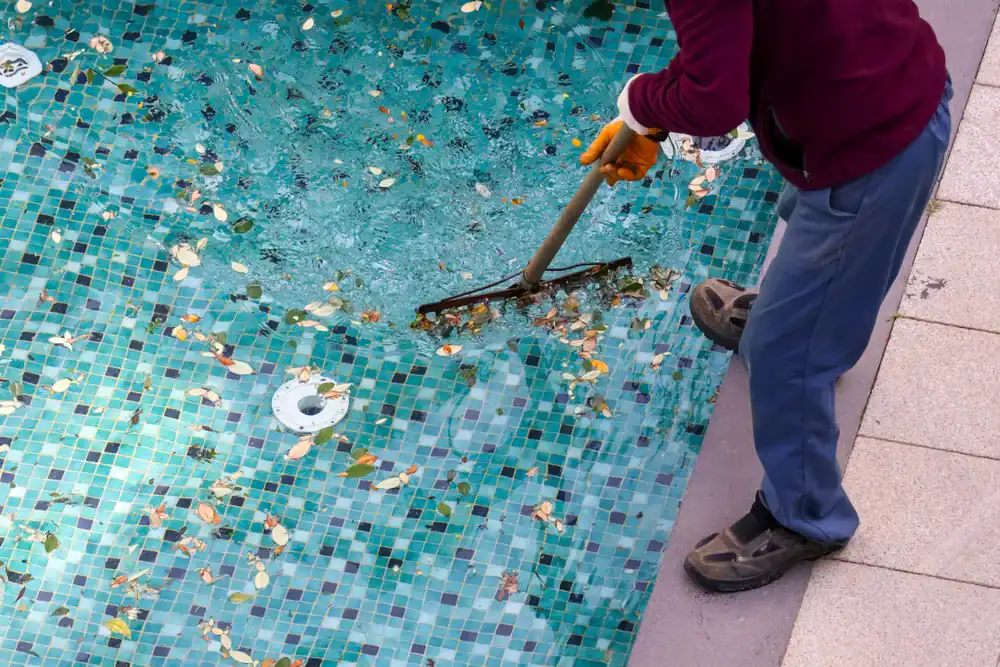
Construction moves through excavation, foundation work, plumbing, electrical, and finish with regular updates along the way so you always know where things stand. The timeline you’re given at the start is the timeline we work to hit. When it’s done, you get a walkthrough of everything: how the equipment works, what maintenance looks like, and what to expect in the first season. And if you’d rather hand off the ongoing maintenance entirely, we offer weekly service and free water testing so the pool stays in the same shape it was the day it was finished.
Ready to get started?
Every pool we build is custom cement designed from the ground up for the specific property it’s going on. For Huffer-area homeowners with acreage, that matters. You’re not working with a 50-foot subdivision lot. Your property has room, and your pool should reflect that whether that means a larger footprint, a specific shape, a tanning ledge, water features, or a pool deck that ties into the land around it.
The cement construction itself is worth understanding. Unlike fiberglass pools which arrive as a pre-molded shell and are simply dropped into the ground a cement pool is built in place, shaped to your design, and engineered specifically for your soil conditions. In Coffee County’s sandy loam terrain with its high annual rainfall, that engineering matters. A properly built cement pool won’t shift, won’t float, and won’t require the kind of structural repairs that cheaper alternatives eventually do.
Every build also includes a custom-fitted safety cover designed for that specific pool. In a rural area like northern Coffee County where kids have more outdoor space and more freedom, that’s not an optional add-on it’s a standard part of how we build. Post-construction, we offer ongoing weekly maintenance and free water testing, so you’re never left figuring out pool chemistry on your own. One company builds it, one company keeps it running.
Yes any inground pool construction in Coffee County requires a building permit through the county-level building department. Because Huffer is in unincorporated Coffee County, you’re not dealing with a city building office. You’re working through the county directly, which has its own submission process, site plan requirements, and inspection schedule.
Georgia also requires all residential pools to comply with the state’s current International Swimming Pool and Spa Code, which includes specific rules around barriers and fencing gate mechanisms, minimum heights, setback distances from the pool edge. These aren’t optional, and a missed requirement can result in a stop-work order or a forced correction after the fact.
We handle the entire permit process for every build. That means the site plan, the submission, the compliance documentation, and the inspection coordination all of it. You don’t have to learn the county permit office’s process or figure out what the code requires. It’s taken care of before a single shovel goes in the ground.
Custom inground pool pricing varies based on size, shape, features, and site conditions but as a general benchmark, custom cement pools typically range from $50,000 to $100,000 or more depending on the scope of the project. Simpler builds with clean lines and standard finishes will land on the lower end. Larger pools with water features, custom decking, or more complex designs will move higher.
What matters most for a Huffer property is getting a quote that’s specific to your land and your design not a number pulled from a national average. Soil conditions, lot access, and site prep requirements all affect cost, and a contractor who hasn’t looked at your actual property can’t give you a number you should trust.
We provide transparent, property-specific pricing before anything is signed. The number you agree to is the number you pay. There are no revised invoices halfway through the job, no surprise line items after the excavation starts. If you want to know what a pool on your Huffer property would actually cost, the conversation starts with a site visit not a ballpark figure over the phone.
The short answer is that fiberglass carries a real risk in South Georgia’s environment that most buyers don’t hear about until it’s too late. Fiberglass pools are pre-molded shells they’re placed into the ground as a single unit. When groundwater levels rise, which happens regularly in flat, low-lying Coastal Plain terrain like Coffee County’s after heavy rainfall, that shell can lift. It’s called pool floating, and it’s a documented failure mode that causes serious structural damage.
Coffee County receives around 52 inches of rain per year. The terrain is flat. The water table in parts of South Georgia can be relatively shallow. That’s exactly the environment where fiberglass pool floating is a legitimate concern not a rare worst-case scenario.
Cement pools are built in place and engineered for the specific soil they’re sitting in. They’re significantly heavier, they bond with the surrounding earth as they cure, and they don’t carry the floating risk that fiberglass does. They also get stronger over time the curing process actually increases structural integrity for years after installation. For a homeowner in Huffer who’s building something meant to last 30 or 40 years, cement is simply the right call for this climate and this ground.
From signed contract to finished pool, most custom cement pool builds take somewhere between 8 and 16 weeks, depending on the complexity of the design, the scope of site prep required, and where the project falls in our construction schedule. Permitting timelines through the Coffee County building department also factor in getting the permit approved before construction can begin is a fixed step that can’t be skipped or rushed, and it typically adds a few weeks to the front end of the process.
Weather is also a real factor in South Georgia. With consistent rainfall throughout the year, there will be days where ground conditions delay excavation or concrete work. We account for this in the schedule rather than ignoring it and then scrambling to explain delays later.
The best time to start the conversation is earlier than you think you need to. If you want to be swimming by Memorial Day, you don’t want to be calling in April. We’ll give you a realistic timeline at the start not an optimistic number designed to close the sale and we build to that schedule. Regular updates throughout the project mean you’re never left wondering where things stand.
In warm-climate markets like South Georgia, a professionally installed inground pool typically adds around 7% to a home’s resale value. With the median home price in the Douglas area sitting around $243,900, that translates to roughly $17,000 in added value a meaningful return that partially offsets the cost of construction.
Beyond the numbers, a custom cement pool is a permanent, property-enhancing addition in a market where buyers increasingly want move-in-ready homes with lifestyle amenities. In a rural area like Huffer where properties already have the land to support a pool, adding one distinguishes your home from comparable listings that don’t have one.
It’s also worth considering the cost of living advantage in Coffee County. With a local cost of living index well below the national average, your dollar goes further here than in most of the state which means a $60,000 to $80,000 pool investment is proportionally more accessible for an established Coffee County homeowner than the same investment would be for someone in a higher-cost market. The value equation in this area is genuinely strong.
The most important thing is verifiable local experience not just years in the pool business generally, but actual experience building in Coffee County’s specific soil and climate conditions. Sandy loam soils in the Coastal Plain behave differently than the red clay you find north of the fall line. A contractor who’s only built in other parts of Georgia is working with assumptions, not knowledge, when they dig into your yard.
Beyond that, you want to see that they handle permitting themselves not hand it off to you or leave it vague. In unincorporated Coffee County, the permit process runs through the county building department and involves multiple inspection stages. A contractor who’s done this before knows the process and moves through it without delays. One who hasn’t will slow your project down.
Pricing transparency is the other non-negotiable. Get the full scope of work and the final number in writing before anything starts. The pool industry has a documented problem with contractors who change prices after the contract is signed, add costs after excavation begins, or use subcontractors the homeowner never agreed to. Ask directly: who is doing the work, what is the final price, and what happens if something changes? A contractor who can answer those questions clearly and specifically without hedging is one worth trusting.