
Hear from Our Customers
When you’re on a larger rural lot north of Douglas, you’re not fighting for inches. You have the room to build a pool that’s actually designed around your life the right shape, the right size, the right orientation for how your yard sits and drains. That kind of flexibility doesn’t exist with a pre-manufactured fiberglass shell. It only happens when a pool is built from scratch, on-site, specifically for your property.
What most people don’t think about until it’s too late is the soil. Coffee County’s red clay expands when it rains and contracts when it dries out and that cycle puts real pressure on buried structures. A pool built without accounting for that is going to show problems in a few years. Cracks. Shifting. Deck separation. We engineer around Coffee County clay from the start, not after the fact.
South Georgia’s climate gives you close to nine months of swimming weather. That’s not a selling point it’s just math. A pool in Huffer isn’t a summer toy. It’s something your family is actually going to use most of the year, which makes the decision to build it and build it right a straightforward one.
We’re based in Douglas the Coffee County seat, just south of Huffer. That’s not a detail we mention for marketing purposes. It means the crew building your pool lives and works in the same county you do, knows the roads, knows the soil, and has a local reputation that depends on every job going right.
The company was founded in 2014, but our owner has been building pools for over 30 years. He started Deep Waters specifically because he watched families in Huffer and across Coffee County get taken advantage of by contractors who made big promises and disappeared when things got complicated. That’s the reason we exist and it shapes how every project runs.
One team handles your project from excavation to the day you fill it with water. No rotating subcontractors, no handoffs, no one pointing fingers at someone else when a question comes up. You have one number to call and one company accountable for the finished product.
Before anything gets designed, someone from our team comes to your property and looks at it. Soil conditions, drainage patterns, equipment access, utility locations all of it gets assessed in person before a single line goes on paper. On a rural Huffer lot, this step matters more than it does in a standard subdivision. Site variability is higher, and the decisions made at the start of a project determine what happens five years down the road.
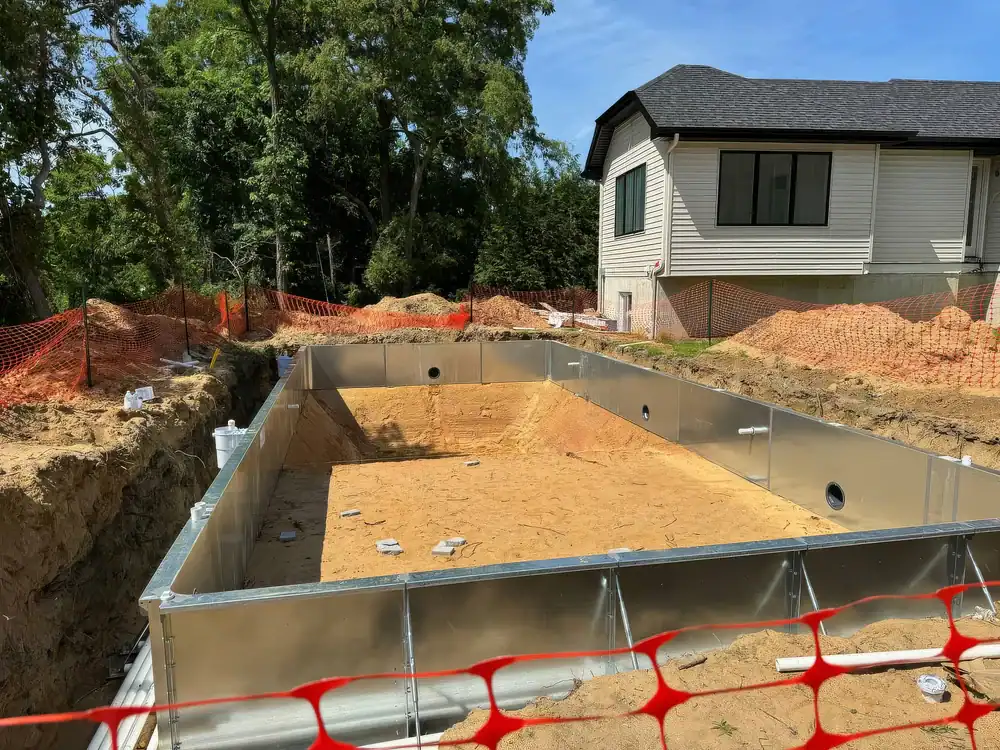
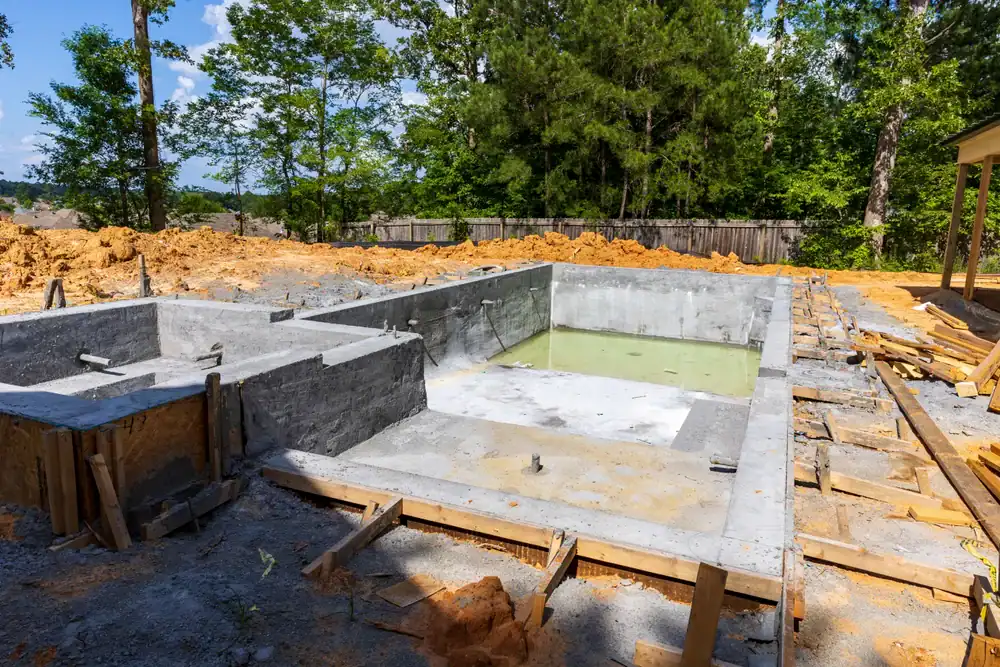
Once the site evaluation is done and the design is set, the build follows a clear sequence. Excavation comes first and in South Georgia clay, the dig is done with the soil’s behavior in mind, not just the shape of the pool. After excavation, plumbing lines go in with proper bedding material to prevent shifting over time. Then the rebar cage is set and gunite is applied, creating a shell that’s engineered for this region’s expand-and-contract soil cycle. Curing follows, then tile and interior finish work, then deck installation with drainage slopes built in.
We pull every permit required by Coffee County Code Enforcement the building permit, the electrical permit, and every inspection in between. You don’t navigate that process yourself. From the first site visit to the day the water goes in, the timeline typically runs six to eight weeks. That’s a specific number, not a vague estimate, and it’s the result of one team running the whole build rather than waiting on multiple subcontractors to coordinate.
Ready to get started?
A complete pool build through Deep Waters covers every phase of construction under one roof. Excavation, gunite shell, plumbing, electrical, interior finish, and deck installation are all handled by our team. Nothing gets handed off to a subcontractor you’ve never met and can’t hold accountable.
The deck work is worth mentioning specifically because it’s where a lot of builders cut corners. In Coffee County, where clay soil drains poorly less than 0.2 inches per hour in many areas a deck without proper drainage slopes and channel management is going to create problems. Water pools against the shell, against the equipment pad, and against the house if the grade isn’t handled correctly. We design the deck with drainage as a structural consideration, not an afterthought.
Swimming pool plumbing in this region also gets installed with soil movement in mind. Flexible bedding material, correct depth, and proper routing all factor into how the plumbing holds up over a 25-to-30-year pool lifespan. All electrical work meets NEC Article 680 requirements for bonding and grounding, and every pool we build includes Virginia Graeme Baker Act-compliant anti-entrapment drain covers. Coffee County Code Enforcement requires barrier fencing around residential pools that requirement gets addressed during the planning phase, not after the build is done. Everything is permitted, inspected, and documented before you ever get in the water.
Yes and this is not optional. Because Huffer is an unincorporated community, all construction permitting runs through Coffee County Code Enforcement, not a city building department. That office handles swimming pool permits specifically, along with the electrical permit that’s required separately for pool wiring and equipment. Both permits require inspections at different phases of construction before the project can legally move forward.
Building a pool without permits creates real problems. It can surface during a home sale, require expensive remediation to bring the structure into compliance, or in some cases require removal. We pull every permit required for your Coffee County build the building permit, the electrical permit, and every inspection from excavation through final approval. You don’t have to figure out how Coffee County Code Enforcement works. That’s handled before the first shovel goes in the ground.
It affects almost every phase of the build. The red clay that makes up much of Coffee County’s soil profile expands significantly when it gets wet sometimes 10 to 15 percent in volume and contracts when it dries out. That cycle creates lateral pressure on buried structures and makes drainage planning a structural issue, not just a cosmetic one. A pool built without accounting for that soil behavior will show it eventually in cracking, in deck separation, in plumbing shifts.
During excavation, the dig has to account for how the soil will behave during and after construction, not just what shape needs to come out of the ground. The rebar cage and gunite shell are engineered with lateral pressure in mind. Plumbing gets bedded in material that allows for minor movement without stressing the joints. And the deck is graded and drained to move water away from the shell and equipment pad rather than letting it sit against the structure. These aren’t upgrades they’re what correct pool construction looks like in Huffer and across Coffee County.
A standard residential gunite pool built by Deep Waters typically takes six to eight weeks from excavation to water. That timeline assumes permits are in place, site access is clear, and no significant weather delays occur South Georgia’s summer thunderstorm season can create brief interruptions in excavation and concrete work, but rarely derails a project in a meaningful way.
The six-to-eight-week window is achievable because one team runs the entire build. There’s no waiting on a subcontractor to finish another job before the next phase can start. Excavation, plumbing, gunite application, interior finish, and deck installation are all sequenced by our crew on a coordinated schedule. If you’re thinking about building and want to be swimming before summer, the fall and winter months in Coffee County are actually ideal contractor availability is higher, scheduling is faster, and South Georgia’s mild winters don’t interfere with gunite curing the way a northern climate would.
The core difference is customization and longevity. A fiberglass pool is a pre-manufactured shell that gets dropped into an excavated hole. The shape, size, and depth are fixed before it ever arrives at your property. If your Huffer lot has a specific grade, a drainage consideration, or a layout that doesn’t match a standard shell shape, you’re either compromising on the design or forcing a fit that doesn’t work well.
Gunite is built on-site, which means the pool is designed around your specific property not the other way around. On a larger rural lot north of Douglas, that matters. You’re not constrained by what fits on a suburban lot. You can build a pool that actually fits how your yard sits, how it drains, and how your family uses the space. From a durability standpoint, a properly built gunite pool lasts 25 to 30-plus years. Fiberglass typically runs 15 to 25 years before major repairs become necessary. For a permanent improvement on a property you intend to hold for decades, gunite is the construction method that matches that investment horizon.
A standard residential inground gunite pool in this region typically falls in the $55,000 to $100,000 range, depending on size, shape, depth, and the deck and finish selections you make. Larger custom builds pools with more complex shapes, higher-end interior finishes, or expanded deck areas can exceed that range. The honest answer is that the price depends on what you’re building and what your site requires.
What’s worth understanding is what’s included. A complete build through Deep Waters covers excavation, the gunite shell, plumbing, electrical, interior finish, and deck installation all permitted through Coffee County Code Enforcement and all handled by our team. There are no subcontractor markups passed through to you, and no phase of the project gets handed off to someone you’ve never met. The quote you get reflects the actual scope of your build. If your Huffer lot has specific drainage requirements or site access challenges that affect the build, those get identified during the site evaluation before design begins not discovered mid-project.
For most Coffee County homeowners on larger rural lots, the answer is yes and the math is pretty clear. South Georgia’s climate gives you somewhere around eight to nine months of usable swimming weather. That’s not a short season where a pool sits covered more than it’s used. It’s most of the year. Combined with the fact that rural lots in this area typically have the space to build a pool that’s actually sized for how your family lives not squeezed into whatever’s left after setbacks the conditions here are genuinely well-suited for this kind of investment.
From a property value standpoint, an inground pool adds an estimated five to eight percent to residential home value in warm-climate markets. On a $275,000 Coffee County property, that’s real equity but only if the pool is permitted correctly and built by a licensed contractor. An unpermitted pool is a liability at resale, not an asset. The lot sizes, the climate, the swim season, and the property value upside all point in the same direction for Huffer homeowners who’ve been thinking about this for a while.