
Hear from Our Customers
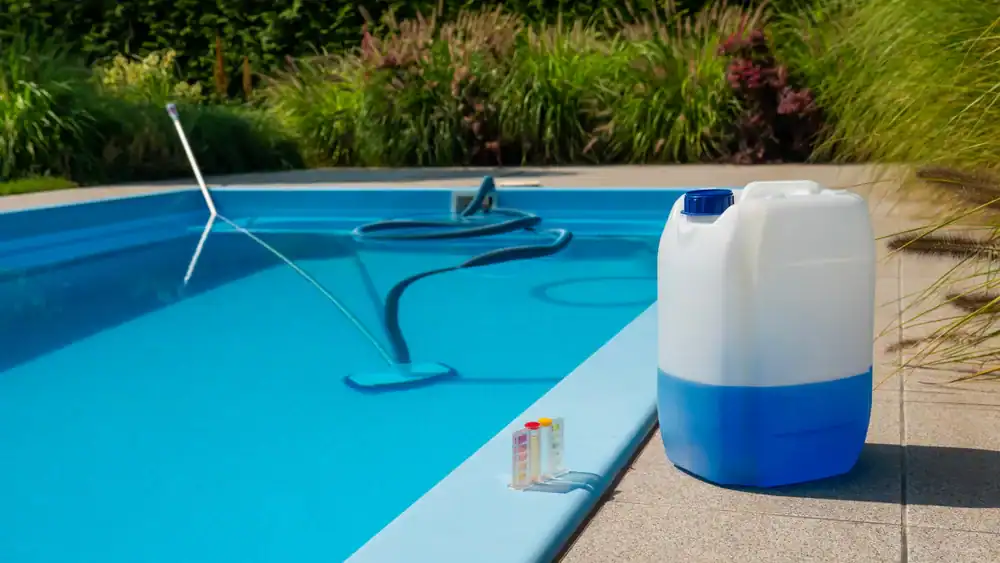
Most pool problems in Denton don’t start with a green pool. They start weeks earlier with a slow chemistry drift that nobody caught. pH creeps up, chlorine loses its effectiveness, and by the time the water looks off, you’re already dealing with a real problem. A proper water test catches that drift before it becomes a weekend-ruining situation.
If your pool is filled from a private well which is common throughout rural Jeff Davis County iron and manganese are a real concern. These minerals don’t show up on a basic test strip, but they will show up on your pool walls as brown and black staining that gets harder to remove the longer it sits. Digital water analysis tests for metals, not just the standard two or three parameters, so you’re working with the full picture.
South Georgia’s spring pollen season hits Denton hard. The pine plantations surrounding the area push heavy pollen loads into the air for weeks, and all of it ends up in your pool. That organic load spikes chlorine demand and throws off your balance faster than most people expect. Knowing exactly where your chemistry stands especially after a heavy pollen week or a significant rain is what keeps a pool swimmable instead of a project.
We’re based out of Douglas, GA the closest regional hub to Denton and Jeff Davis County and have been serving South Georgia pool owners since 2014, backed by more than 30 years of hands-on experience in concrete pool construction, plumbing, and water chemistry. That construction background matters. When a technician has built pools from the ground up, we understand how plaster surfaces, soil conditions, and local water chemistry interact in ways that a service-only company simply doesn’t.
For Denton residents, that means the person assessing your pool water understands older plaster finishes, well water chemistry, and the specific demands of this part of Georgia not just what a training manual says about chlorine levels. We’re licensed and insured, and every water test comes with a plain-language explanation of what the numbers mean and what actually needs to happen next.
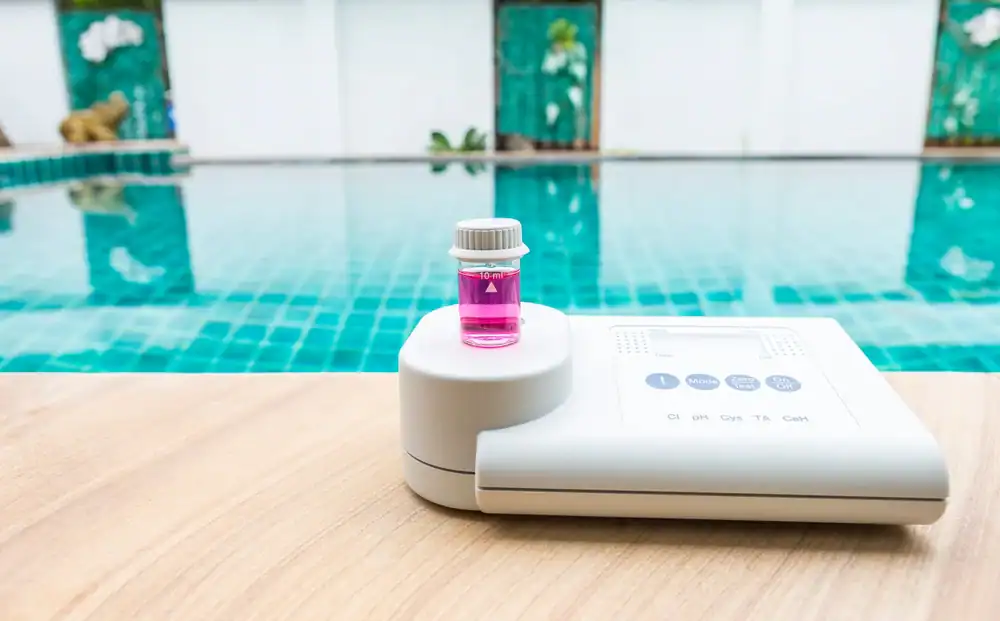
When we come out to test your pool water, the process starts with a full digital analysis not a color-matching strip you hold up to a chart. The equipment reads free chlorine, combined chlorine, pH, total alkalinity, calcium hardness, cyanuric acid, total dissolved solids, and metals including iron and copper. That’s nine parameters, not two. Each one tells a different part of the story, and missing any of them means you’re making decisions with incomplete information.
Once the results are in, everything gets explained clearly. You’ll know exactly where each number stands, what the acceptable range is, and why it matters for your specific pool. If your calcium hardness is low and your plaster finish is older which is a real consideration for many pools in rural communities like Denton that’s a different conversation than a newer pebble surface with scaling issues. The recommendations fit your actual situation.
From there, any necessary corrections are handled in the right sequence. Chemistry adjustments aren’t random order matters. Alkalinity gets balanced before pH, pH before chlorine, and so on. Doing it out of order wastes product and time. In South Georgia’s summer heat, where chemistry shifts can happen fast and UV destroys unprotected chlorine quickly, getting the sequence right the first time is what keeps you from repeating the process a week later.
Ready to get started?
A complete water test from us covers everything your pool chemistry actually depends on. Free chlorine tells you how much active sanitizer is working right now. Total alkalinity acts as the buffer that keeps your pH from swinging wildly and in Jeff Davis County’s climate, where afternoon thunderstorms are common and every rain event dilutes and shifts your chemistry, a stable alkalinity level is what keeps the rest of your balance from falling apart after every storm.
Calcium hardness is one of the most overlooked parameters in residential pool care, and it matters especially for older plaster pools. Water that’s too soft pulls calcium out of the plaster surface itself, causing pitting and etching that shortens the life of the finish significantly. Water that’s too hard deposits calcium scale on surfaces, inside filters, and on equipment. Cyanuric acid your chlorine stabilizer determines how long your chlorine actually survives in direct sunlight. Without enough of it, South Georgia’s summer sun can burn through your chlorine in a matter of hours.
For pools filled from private wells in the Denton area, the metals test is often the most important reading of all. Iron and manganese don’t affect the look of the water right away, but they cause staining that’s difficult and expensive to remove once it sets. Catching elevated metal levels before they become a visible problem is one of the clearest examples of why professional testing pays for itself.
For most residential pools in the Denton area, a professional water test at the start of swim season and at least once mid-season is a reasonable baseline. But the honest answer is that South Georgia’s conditions push that number higher than most people expect. Heavy spring pollen from the pine timber operations surrounding Jeff Davis County, frequent summer thunderstorms, and the intense UV exposure of a South Georgia summer all create chemistry shifts that happen faster here than in more temperate climates.
If your pool gets heavy use on weekends, if you’ve had a significant rain event, or if you’ve noticed any change in water clarity or smell, those are all good reasons to test sooner rather than later. Waiting until something looks wrong means the problem has already been developing for a while. Testing proactively especially after weather events is what keeps small imbalances from turning into expensive corrections.
A strong chlorine smell is actually a sign that something is off with your chemistry, not that your pool has too much chlorine. That sharp smell typically comes from chloramines combined chlorine which forms when free chlorine reacts with ammonia, sweat, and other organic material in the water. Chloramines are a byproduct of chlorine doing its job, but when they build up, they irritate eyes and skin and indicate that your free chlorine is being consumed faster than it’s being replenished.
The fix isn’t to add less chlorine it’s usually the opposite. A process called shocking the pool breaks up the chloramine compounds and restores your free chlorine to effective levels. But before you shock, it helps to know exactly where your total alkalinity and pH stand, because shocking into unbalanced water is less effective and wastes product. A full digital water test will show you the combined chlorine reading directly, so you’re not guessing at the cause of the smell.
Yes and it’s one of the most common chemistry problems we see in rural areas like Denton. Private well water in Jeff Davis County frequently contains elevated levels of iron and manganese. These minerals are naturally occurring in the groundwater of this region, and they don’t cause immediate visible problems when you first fill the pool. The issue develops over time as the minerals oxidize and deposit on pool surfaces, producing brown or rust-colored staining from iron and dark brown or black staining from manganese.
Standard test strips don’t measure metals at all. Even basic pool store tests often skip this parameter. By the time the staining is visible, it’s already set into the surface and requires a sequestrant treatment or, in more advanced cases, an acid wash to remove. The better approach is to test for metals before you fill or top off from a well source, and to treat proactively with a metal sequestrant if levels are elevated. That one step prevents a staining problem that can take significant time and money to reverse.
Cyanuric acid often called CYA or pool stabilizer is what protects your chlorine from being destroyed by UV radiation. In direct sunlight, unprotected chlorine can break down and become ineffective within a couple of hours. In South Georgia, where summer days are long, skies are open, and pools sit in full sun for most of the day, this is a real and significant problem. Without adequate CYA levels, you can add chlorine in the morning and have almost none left by early afternoon.
The right CYA level for most outdoor pools is between 30 and 50 parts per million. Too little and your chlorine burns off before it can do its job. Too much which can happen when stabilized chlorine products are used exclusively over multiple seasons and the CYA actually starts to suppress chlorine’s effectiveness, a condition sometimes called chlorine lock. A full water test measures your current CYA level so you know exactly where you stand and whether you need to add stabilizer, dilute with fresh water, or leave it alone.
This is one of the most frustrating situations a pool owner can deal with, and it almost always comes down to a chemistry imbalance that’s undermining the chlorine before it can work. The most common culprit is pH that’s drifted too high. When pH climbs above 7.8, chlorine loses a significant portion of its sanitizing effectiveness even if the chlorine reading looks fine on a test strip. You can add the right amount of chlorine and still have an algae problem if the pH isn’t in range first.
Other contributors include low cyanuric acid levels allowing UV to destroy chlorine before it works, phosphates from organic debris feeding algae growth, or a filter that isn’t running long enough to turn the water over adequately. In Denton, where spring pollen from surrounding pine plantations and post-storm debris loads are both significant, the organic load hitting your pool during certain times of year is genuinely higher than what a basic maintenance routine accounts for. A nine-parameter digital test identifies which specific factor is breaking down, so you’re not just adding more chemicals and hoping for a different result.
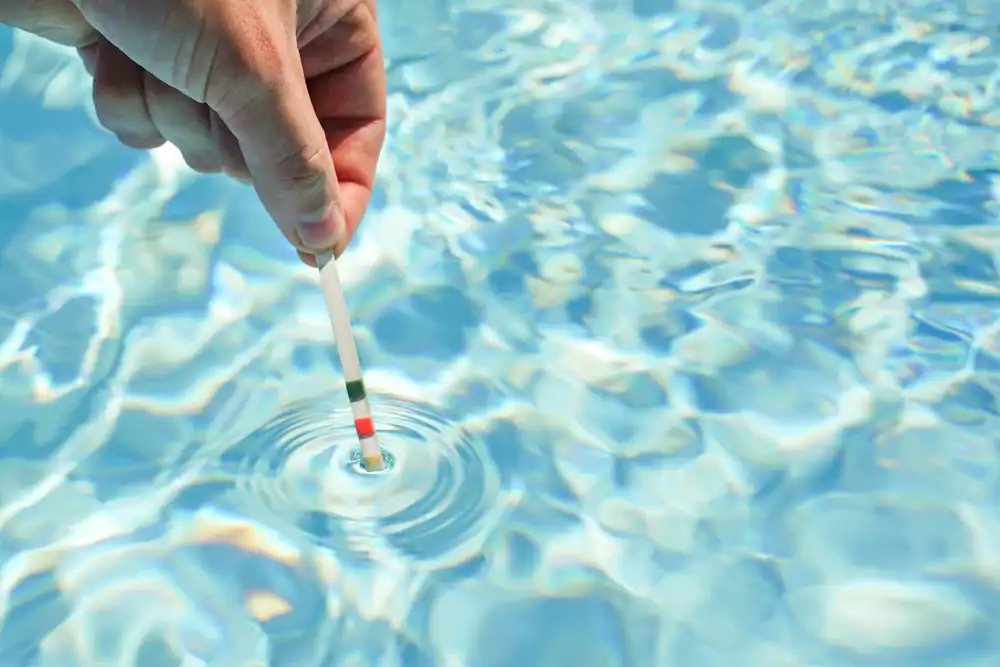
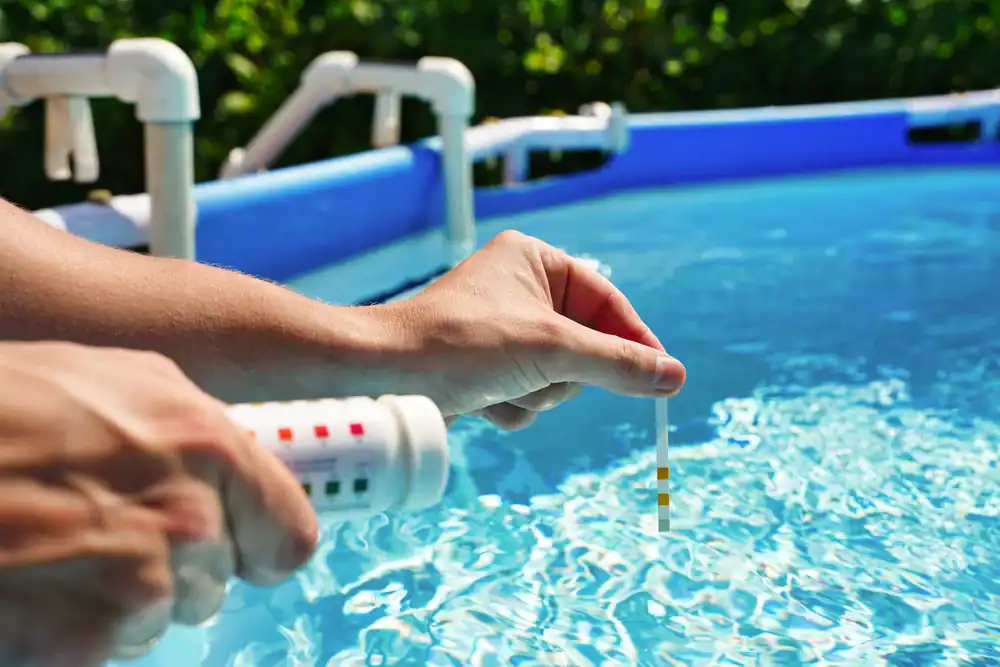
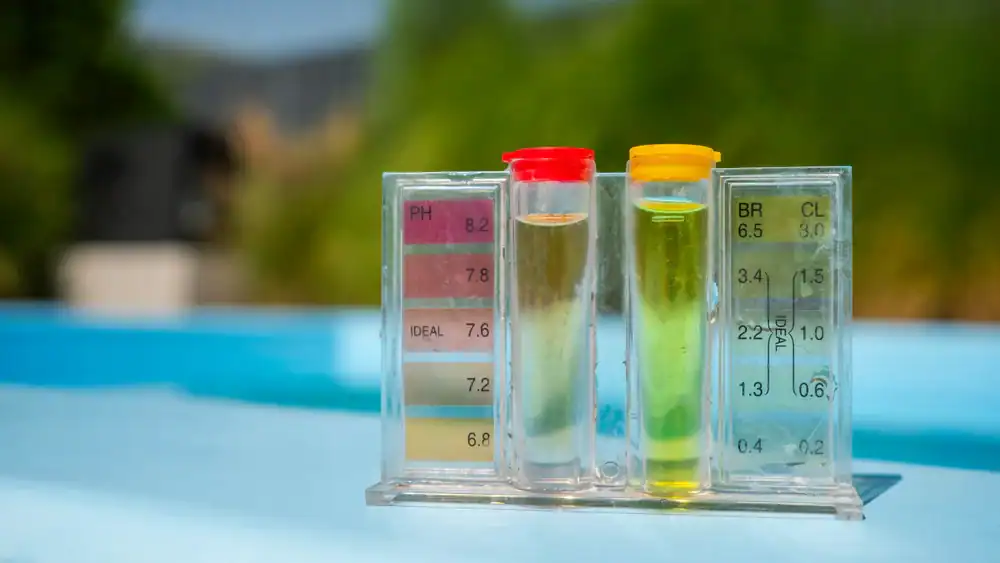
Home test strips have their place they’re useful for quick checks between professional visits. But they typically measure two to four parameters, they’re sensitive to how they’re stored and used, and they give you a range rather than a precise reading. The difference between a pH of 7.6 and 7.9 matters for chlorine effectiveness, and a test strip won’t reliably show you that distinction. For routine monitoring, they’re fine. For diagnosing a problem or setting your chemistry up correctly at the start of the season, they leave too much out.
Digital water analysis measures all nine key parameters with precision, including metals that home strips don’t test for at all. For pools in rural Jeff Davis County that draw from private wells, that metals reading alone can save you from a staining problem that costs far more to fix than a professional test costs to run. If your pool has been giving you trouble recurring algae, persistent cloudiness, chemical smell, or surface staining a full professional test is usually the fastest way to find out what’s actually driving the problem instead of working through it by trial and error.