Hear from Our Customers
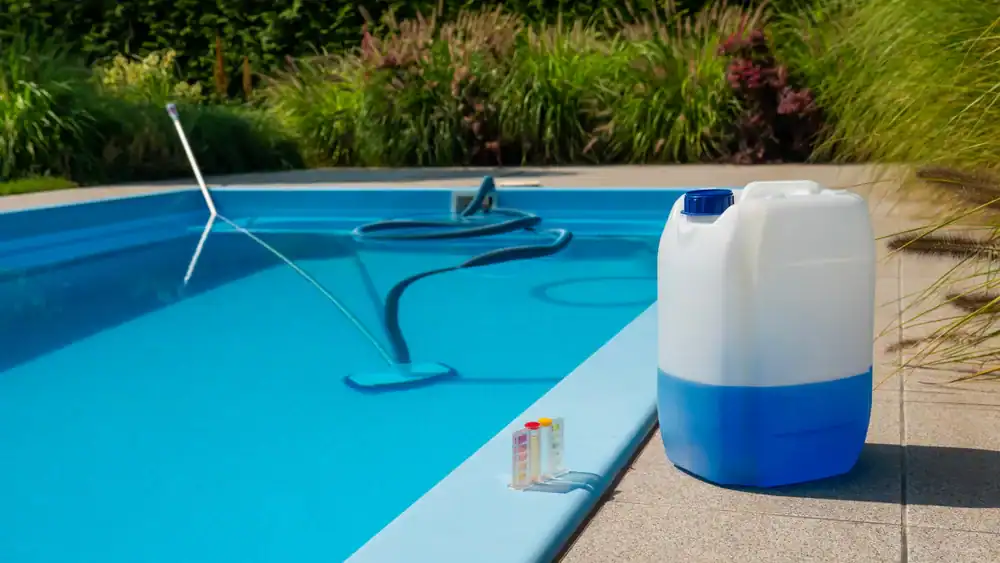
When your pool chemistry is dialed in, you stop spending weekends adding chemicals and wondering why nothing sticks. The water is clear, it feels right, and you’re not dreading what you’ll find the next morning after a storm rolls through. That’s what balanced water actually looks like and it’s more achievable than most Bridgetown pool owners realize once the right testing is in place.
Out here in Coffee County, you’re dealing with conditions that generic pool advice doesn’t account for. If your home in or around Bridgetown is on a private well, the water filling your pool carries dissolved calcium, iron, and minerals straight from the area’s limestone and clay geology. Those minerals throw off your calcium hardness and total alkalinity in ways that a basic test strip will completely miss and over time, they stain plaster and scale tile. Add in the summer heat pushing past 95°F, afternoon thunderstorms that dilute your chemicals overnight, and the pine pollen that blankets everything from March through May, and your pool chemistry is under constant pressure.
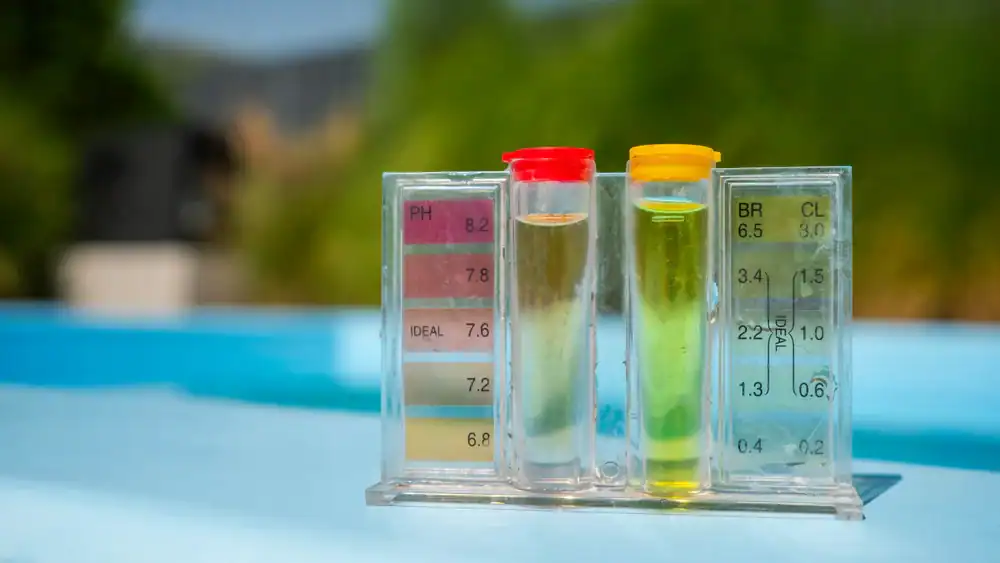
Precise water testing the kind that reads every parameter to multiple decimal points gives you a real picture of what’s happening in your water. Not a color-match approximation. An actual number, an actual cause, and an actual fix.
We’re based in Douglas the Coffee County seat, about 10 to 15 miles from Bridgetown and have been building and servicing pools in this part of South Georgia since 2014, backed by more than 30 years of hands-on experience in concrete, plumbing, and pool construction. That history matters because the team testing your water is the same team that builds pools in Bridgetown’s soil, in this climate, and under this sun. We’re not working from a manual we’re working from decades of watching what South Georgia weather actually does to pool chemistry.
When we look at your water, we’re also thinking about your surface. The calcium hardness requirements for a pebble finish are different from standard plaster, and getting it wrong doesn’t just cloud your water it shortens the life of the finish you paid for. That’s the kind of detail you get from a company that builds pools, not just services them. We’re licensed, insured, and genuinely local to Coffee County and the Bridgetown area.
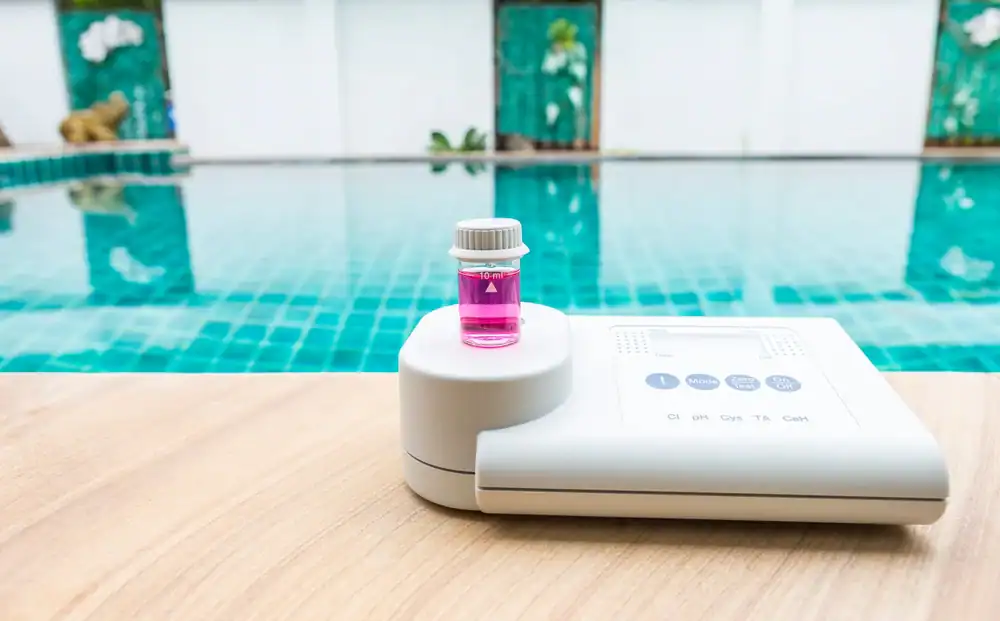
It starts with a visit to your property. No dropping off a water sample, no driving to Douglas, no waiting in line at a pool store. One of our technicians comes to you, pulls a water sample directly from your pool, and runs it through advanced digital analysis equipment on-site. Every key parameter gets measured free chlorine, total chlorine, pH, total alkalinity, calcium hardness, cyanuric acid, metals, and total dissolved solids. These aren’t estimates. They’re precise readings that show exactly where your water stands across every variable that affects safety, clarity, and surface health.
From there, you get a clear explanation of what the numbers mean. If your pH is sitting above 7.8, your chlorine is losing half its effectiveness even when the reading looks normal. If your well water has introduced iron into the pool, that’s what’s causing the staining, and that’s what needs to be addressed first. The correction plan is built around your specific water, your pool’s surface type, and the conditions on your property not a generic checklist.
In a rural area like Bridgetown, where the nearest pool supply option is a trip to town, getting the diagnosis right the first time matters. You shouldn’t have to make two trips and buy the wrong product to figure out what your pool actually needs.
Ready to get started?
A complete water testing service from us covers everything that affects how your pool looks, feels, and holds up over time. That means free and total chlorine, pH, total alkalinity, calcium hardness, cyanuric acid (the stabilizer that keeps chlorine from burning off in direct sun), metals, and total dissolved solids. Each one affects the others, and missing even one throws the whole balance off.
For Bridgetown homeowners on private wells, the metals and calcium hardness readings are especially critical. Iron from well water doesn’t just affect chemistry it stains gunite and plaster surfaces in ways that are expensive to reverse. Catching elevated iron levels early, before they set into the finish, is the kind of thing that saves you a costly resurfacing down the road. Coffee County’s geology makes this a real and common issue, not a hypothetical one.
Because Bridgetown falls under Coffee County jurisdiction rather than a city code, there’s no municipal permit office overseeing residential pool chemistry which means the standard you hold yourself to is the only standard that applies. We bring the same testing rigor that Georgia DPH requires for public pools to every private residential service call in the Bridgetown area. That’s the benchmark. That’s what your water deserves.
Yes and it affects it in ways that most homeowners don’t catch until there’s already a visible problem. Private well water in Coffee County’s limestone and clay geology carries dissolved calcium, magnesium, and iron that municipal water customers simply don’t deal with at the same levels. Every time you top off your pool or refill after a drain, those minerals enter the water and directly shift your calcium hardness, total alkalinity, and metal content.
The most common outcomes are surface staining from iron and calcium scaling along the tile line and on the pool finish itself. Both are gradual they build up over weeks and months which is why test strips that don’t measure metals or give you a precise calcium hardness reading tend to miss them entirely. By the time the problem is visible in Bridgetown pools, it’s already done damage. Professional digital water analysis that accounts for your source water is the only way to stay ahead of it.
The most likely culprit is pH. When your pool’s pH drifts above 7.8 which happens quickly in South Georgia’s summer heat chlorine loses roughly half its sanitizing effectiveness. The chlorine reading on your test strip looks fine, but the chemistry isn’t working. Algae grows because your sanitizer isn’t actually doing its job, not because you didn’t add enough of it.
The second common cause is low cyanuric acid (CYA). CYA is the stabilizer that protects chlorine from UV degradation, and in Bridgetown’s open, sun-exposed rural landscape, unprotected chlorine can break down in under two hours on a bright summer day. If your CYA is too low, you’re essentially adding chlorine and watching the sun destroy it before it can sanitize anything. A complete water test identifies both issues at once, so you’re correcting the actual problem instead of adding more chemicals to a cycle that isn’t working.
During peak summer months June through August your pool chemistry can shift significantly within 24 to 48 hours. South Georgia’s combination of intense UV exposure, temperatures regularly above 90°F, and frequent afternoon thunderstorms creates conditions where chlorine depletes fast, pH drifts, and a single heavy rain event can dilute your chemicals enough to open the door for algae growth overnight.
For most homeowners in the Bridgetown area, a professional water analysis at least once a month during summer is a reasonable baseline, with additional testing after any major storm or heavy rain. If you’re managing chemistry yourself between professional visits, testing two to three times per week with a reliable kit not just test strips gives you a better read on what’s happening day to day. The goal isn’t to test more; it’s to catch a shift early enough that a small correction handles it instead of a full treatment.
Pool store water testing is free because it’s a sales tool. The recommendations that come out of it are shaped by what’s on the shelf not necessarily by what your specific pool in Bridgetown actually needs. That’s not a knock on every pool store employee, but it is the structural reality of how that model works. You walk in with a sample, they run it, and the output is typically a list of products to buy.
Our professional water analysis is independent. There’s no product inventory to push, no upsell built into the process. You get precise digital readings across every parameter not a color-match approximation along with a clear explanation of what each number means and a correction plan based on your actual water. For a Bridgetown homeowner on well water dealing with iron, minerals, and South Georgia heat all at once, that level of specificity isn’t a luxury. It’s the only way to actually solve the problem instead of treating symptoms.
It can, and it does more often than most homeowners realize until the damage is already done. Low pH and low calcium hardness create aggressive water that slowly etches and erodes plaster and gunite surfaces. High calcium hardness combined with high pH does the opposite it causes scaling, leaving rough white deposits on the finish and tile line that are difficult to remove and can permanently alter the surface texture.
For pools in Bridgetown and the surrounding Coffee County area, well water makes calcium hardness management especially important. If your pool is being filled or topped off with well water that’s already high in dissolved calcium, you’re starting from a different baseline than someone on municipal water and the correction thresholds are different too. We build pools in this area, which means we understand exactly what calcium hardness, pH, and alkalinity levels a gunite or pebble-finish surface needs to hold up for 20 to 30 years in this climate. That surface knowledge is part of every water test we run.
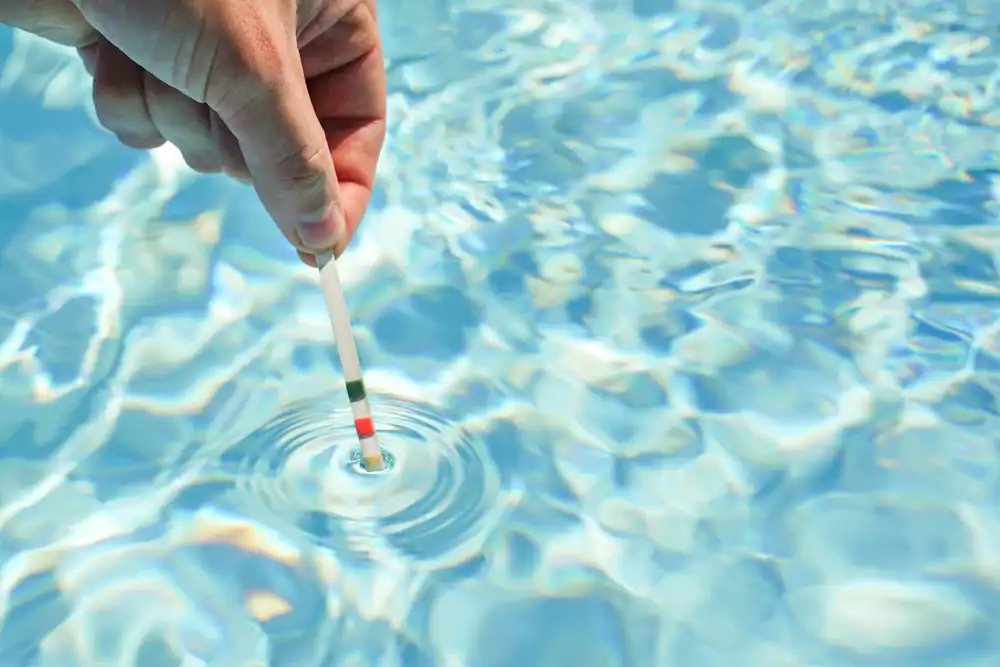
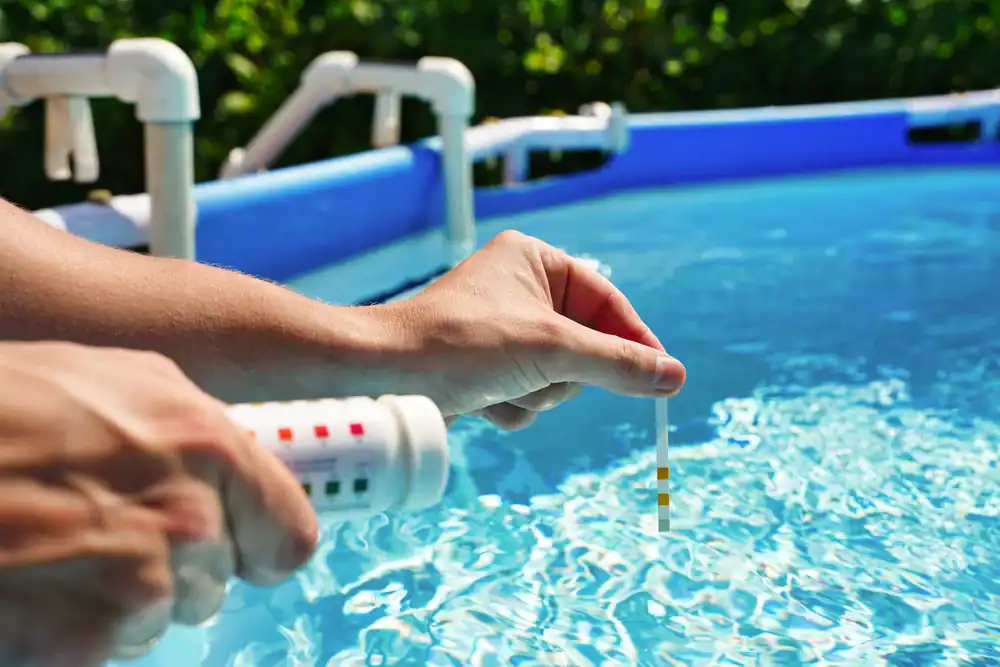
Test strips give you a rough directional read enough to know if something is dramatically off. But they’re not precise enough to catch the smaller imbalances that compound over time, and they’re not designed to measure everything that matters. Most consumer test strips don’t test for metals, don’t give you a reliable total dissolved solids reading, and their color-matching system introduces enough margin of error that two people reading the same strip can get different results.
In a rural setting like Bridgetown, where well water introduces iron and mineral variables that municipal water customers don’t face, that margin of error becomes a real liability. You can be adding chemicals based on a strip reading that’s off by enough to make the correction wrong and then wondering why the problem keeps coming back. Professional digital analysis closes that gap. It’s not about replacing what you’re doing at home; it’s about having a precise baseline a few times a season so that what you do between visits is actually working toward the right target.
Other Services we provide in Bridgetown