Deep Waters Pools brings carbon-neutral pool construction to Douglas County, GA, combining sustainable building materials with expert craftsmanship designed for Georgia's unique soil conditions.
Eco-friendly pool construction means building pools with materials and methods that reduce environmental impact from day one. Not someday. Not eventually. From the moment excavation starts.
Traditional pool construction generates massive carbon emissions. Cement production alone accounts for 5-8% of global CO2 emissions. When you’re pouring thousands of pounds of concrete into Georgia red clay, that environmental cost adds up faster than you’d think.
Sustainable building materials change that equation completely. Low-carbon concrete cuts emissions by 30-70% compared to standard mixes. Recycled pool components—reclaimed stone, recycled glass tiles, repurposed steel—eliminate the need for virgin materials. Energy-efficient equipment drops your monthly utility bills by hundreds of dollars annually while consuming a fraction of the power. These technologies aren’t experimental. They’re proven, available now, and they work in Douglas County, GA’s challenging soil conditions.
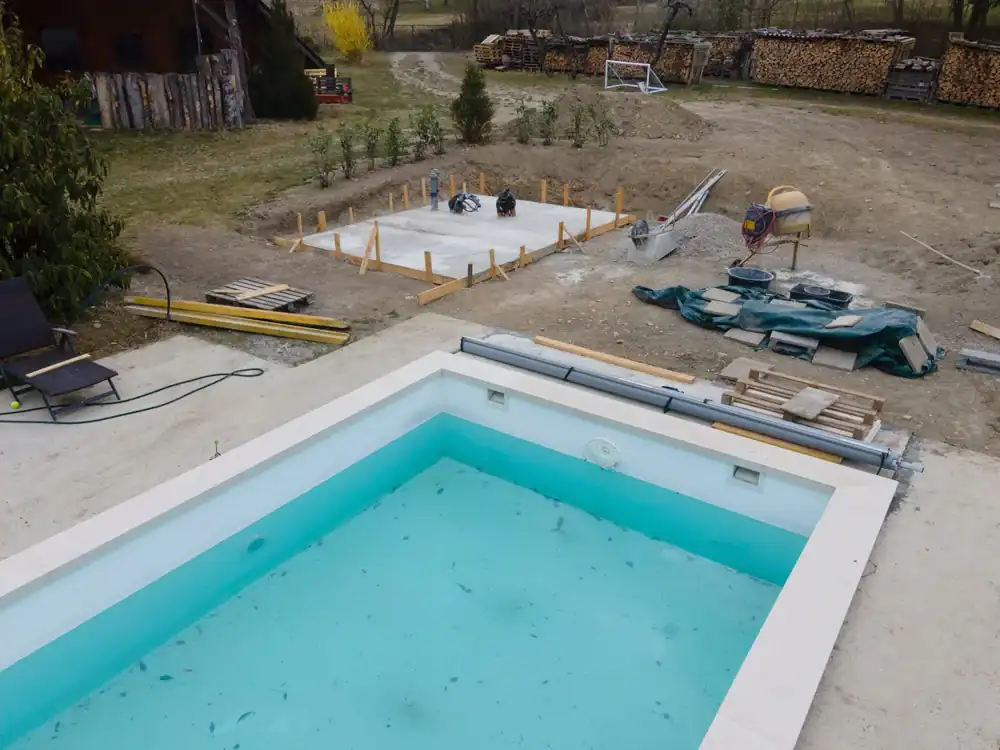
Low-carbon concrete sounds like industry jargon. It’s not. It’s a straightforward swap that makes a measurable difference.
Instead of using 100% traditional Portland cement—which requires extreme heat to produce and releases massive amounts of CO2—we substitute portions of that cement with supplementary materials. Fly ash from coal power plants. Blast-furnace slag from steel production. Calcined clays. These are industrial byproducts that would otherwise go to landfills. When mixed properly, they create concrete that’s just as strong as traditional concrete. Sometimes stronger.
The carbon savings are real and documented. Replacing even 30% of cement content with these supplementary materials can cut your pool’s carbon footprint by nearly a third. Some advanced mixes achieve 70% reductions. That’s not marketing speak—it’s happening on job sites across Georgia right now.
For Douglas County, GA specifically, this matters beyond environmental impact. The expansive clay soils here generate uplift pressures exceeding 10,000 pounds per square foot. Your pool needs concrete engineered to handle that stress without cracking. Low-carbon concrete can be formulated to meet those exact specifications while still delivering environmental benefits. You’re not choosing between durability and sustainability. You get both.
The installation process doesn’t change. The timeline doesn’t extend. The finished pool looks identical to one built with traditional concrete. The difference shows up in your project’s carbon footprint and, over decades, in the reduced environmental cost of your backyard investment.
Cost is usually the first question. In many cases, low-carbon concrete costs the same or slightly less than traditional mixes because you’re using materials that would otherwise be discarded. The savings on raw material extraction and processing get passed along. You’re not paying a premium to be environmentally responsible—you’re making a practical choice that happens to be better for the planet.
Beyond the concrete itself, every component of your pool offers an opportunity to reduce environmental impact through smarter material selection. Not every option makes sense for every project, but understanding what’s available helps you make informed decisions.
Recycled glass tiles have become increasingly popular for pool finishes. They’re made from post-consumer glass—bottles, jars, windows—that’s been crushed, melted, and reformed into durable tiles. The manufacturing process uses less energy than creating new glass from raw materials, and the finished product is just as water-resistant and long-lasting as conventional tiles. The color options are extensive. Many homeowners prefer the unique aesthetic quality that recycled glass brings—each tile has slight variations that create visual depth you don’t get with uniform manufactured tiles.
Reclaimed stone and natural materials create beautiful pool decking and coping without the environmental cost of quarrying new stone. Salvaged materials from demolished buildings, old bridges, or other structures get a second life as part of your pool’s hardscape. Each piece carries its own character and history. The durability is proven—these materials already survived decades of use elsewhere.
Recycled steel reinforcement bars (rebar) strengthen your pool’s structure. Steel is one of the most recycled materials on earth. Recycled steel performs identically to newly manufactured steel in terms of strength and longevity. Using recycled rebar in your pool’s concrete framework reduces the carbon footprint associated with mining and processing iron ore while providing the same structural integrity.
Sustainable decking materials include composite decking made from recycled plastic and wood fibers. These materials resist rot, don’t require chemical treatments, and last longer than traditional wood decking. They’re also cooler underfoot in Georgia’s summer heat, which makes them more comfortable around your pool. That’s not a minor detail when you’re walking barefoot from your house to the pool in July.
Even your pool’s filtration media can incorporate sustainable materials. Some advanced filtration systems use recycled glass instead of sand. The glass filters more effectively, lasts longer, and reduces the amount of backwashing needed, which conserves water. Over the life of your pool, that adds up to thousands of gallons saved.
The key is understanding that sustainable doesn’t mean sacrificing quality or aesthetics. In many cases, recycled and reclaimed materials offer superior performance characteristics compared to their conventional alternatives. They’ve already proven their durability in real-world conditions, and they bring unique visual qualities that newly manufactured materials can’t replicate.
When you’re planning your pool in Douglas County, GA, ask us about the source of every major material. Where does the stone come from? What’s in the concrete mix? Can the decking incorporate recycled content? Can we use reclaimed materials for coping? These questions don’t slow down your project—they help you make decisions that align with your values while still getting the pool you want.
Want live answers?
Connect with a Deep Waters Pools expert for fast, friendly support.
Carbon-neutral pool design goes beyond materials to encompass the entire system—how your pool operates, maintains water quality, and integrates with your property’s energy use. A pool built with low-carbon concrete but equipped with an inefficient pump and heater isn’t genuinely eco-friendly. The operational carbon footprint over the pool’s lifetime could exceed the initial construction savings.
Green building standards like LEED (Leadership in Energy and Environmental Design) provide frameworks for measuring environmental performance. While LEED certification is more commonly associated with buildings, the principles apply directly to pool construction. Energy efficiency, water conservation, materials selection, and site development all factor into whether a project qualifies as truly sustainable.
For pools in Douglas County, GA, this means looking at the complete picture. How much energy will your pool consume over 20 years? How much water will it lose to evaporation? What’s the embodied carbon in all the materials combined? Carbon-neutral pool design addresses both upfront emissions and ongoing operational impact. That’s where the real environmental difference happens.
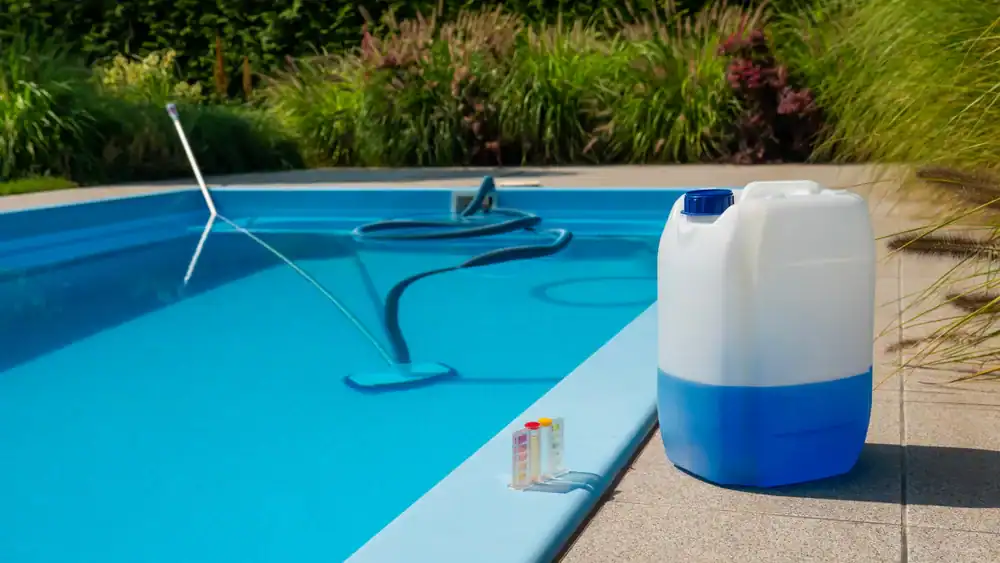
Your pool’s equipment determines its long-term environmental impact more than any other single factor. Get this right, and you’ll save thousands of dollars over the years. Get it wrong, and you’ll watch your utility bills climb every summer while your carbon footprint expands.
A traditional single-speed pump runs at full power whenever it’s on. Full blast for filtration. Full blast for routine circulation. It’s like driving your car at highway speed through a school zone—you’re using way more power than the task requires. That excess energy consumption costs you money every month and generates unnecessary carbon emissions.
Variable-speed pumps change that equation completely. They adjust their speed based on what your pool actually needs at any given moment. During routine filtration, they run at lower speeds, using up to 80% less energy than single-speed models. When you need higher flow for cleaning or running water features, they ramp up. The energy savings translate directly to lower utility bills—often $300-500 annually for typical residential pools. Over a 10-year period, that’s $3,000-5,000 back in your pocket.
LED pool lighting is another straightforward upgrade with immediate benefits. LEDs use 75% less electricity than traditional incandescent pool lights and last significantly longer, which means fewer replacements and less waste. Modern LED systems offer full color control and programmable features. You can set your pool to glow blue on Monday, purple on Friday, and cycle through colors for Saturday night’s party. You’re not sacrificing ambiance for efficiency—you’re getting more features while using less power.
Solar pool heating harnesses Georgia’s abundant sunshine to warm your water without burning fossil fuels. Solar panels on your roof or nearby structure collect heat and transfer it to your pool water through a circulation system. The upfront cost is higher than gas heaters—typically $3,000-5,000 more for a residential installation. But the operational cost is essentially zero. Sunshine is free. In Georgia’s climate, solar heating can extend your swimming season by months while eliminating the carbon emissions associated with gas or electric heaters. Most systems pay for themselves within 3-5 years through eliminated heating costs.
Saltwater chlorination systems generate chlorine from salt through electrolysis, eliminating the need to buy, transport, and store harsh chemicals. The process is gentler on skin and eyes. Reduces chemical odors. Cuts down on the environmental impact of chlorine manufacturing and transportation. The salt cells do require periodic replacement—typically every 3-5 years—but the overall chemical load is dramatically lower than traditional chlorine pools. Your kids will notice the difference immediately. No more red eyes. No more chlorine smell clinging to their skin and hair.
Pool covers might seem low-tech compared to smart pumps and solar heaters. They’re also one of the most effective tools for reducing energy use and water waste. A quality pool cover reduces evaporation by up to 95%. That means less water replacement, which means less energy spent heating that replacement water. It also keeps debris out, which reduces the workload on your filtration system and cuts down on cleaning chemical use. In Douglas County, GA’s climate, evaporation can cost you thousands of gallons annually without a cover. That’s water you’re paying for that literally disappears into the air.
Automated control systems tie everything together into a cohesive, efficient operation. Modern pool automation lets you schedule equipment to run during off-peak hours when electricity rates are lower. Monitor energy consumption in real-time. Optimize system performance without manual intervention. You can control your pool from your phone, which means you’re not running equipment longer than necessary because you forgot to turn it off before leaving for vacation.
The combined effect of efficient equipment is substantial and measurable. A pool equipped with variable-speed pumps, LED lighting, solar heating, and automation can operate at a fraction of the energy cost of a traditionally equipped pool. Over a 10-15 year period, the energy savings often exceed the initial cost premium for efficient equipment. You’re not just reducing environmental impact—you’re making a financially smart decision that pays dividends every single month.
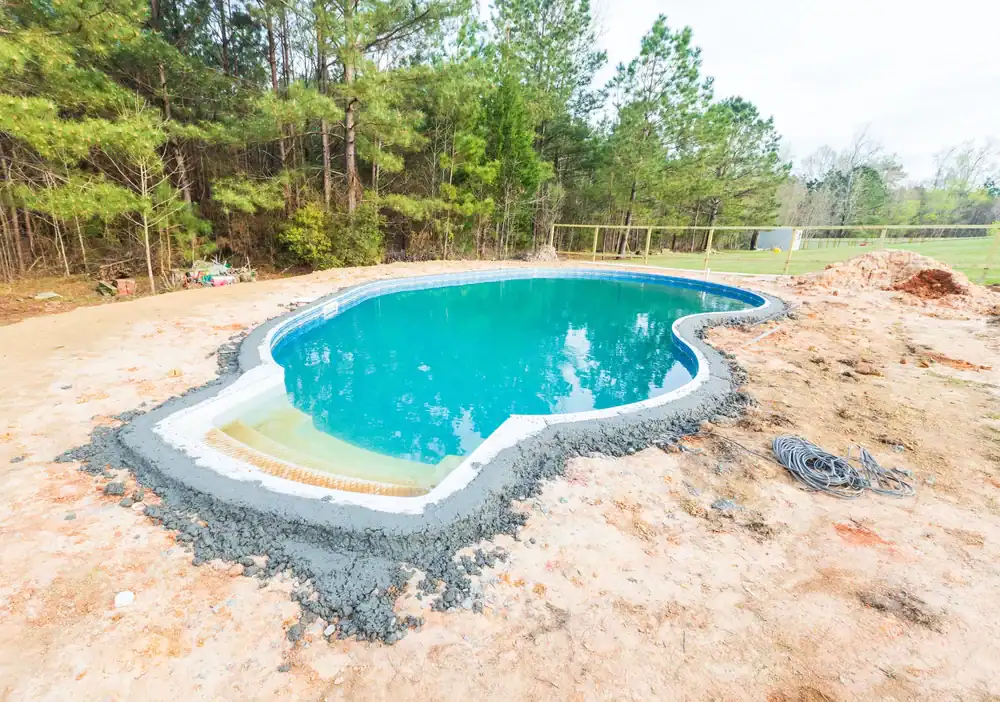
Douglas County, GA’s red clay soil presents challenges that require specialized construction approaches. This isn’t optional knowledge—it’s essential for building any pool that lasts here, sustainable or otherwise.
The soil is expansive. It swells when wet and shrinks when dry. Those volume changes create powerful forces that can crack poorly constructed pools within a few years. Some pools in Georgia have experienced structural failures within 18 months of construction because builders didn’t properly account for soil conditions. That’s not just an environmental disaster from wasted materials—it’s a financial nightmare for homeowners.
Sustainable pool construction in this environment means engineering solutions that work with local conditions rather than fighting them. Proper soil analysis comes first. You need to understand your specific site’s soil composition, moisture levels, drainage patterns, and expansion potential. Generic construction approaches don’t work. Your neighbor’s pool might be built differently than yours should be, even if you’re on the same street, because soil conditions can vary significantly over short distances.
Concrete pools are ideal for Georgia’s soil conditions because they can be engineered with reinforcement tailored to site-specific requirements. The concrete itself needs to be formulated for the local environment. This is where low-carbon concrete formulations prove their worth beyond environmental benefits. By incorporating supplementary cementitious materials and optimizing the mix design, we can create concrete that’s both environmentally friendly and structurally superior for challenging soil conditions. You’re not choosing between sustainability and durability. Properly formulated low-carbon concrete often performs better than traditional mixes in expansive soils.
Proper drainage is absolutely critical. Water management around your pool prevents the soil moisture fluctuations that cause expansion and contraction. French drains, proper grading, and strategic landscaping all contribute to stable soil conditions. These aren’t extras you can skip to save money—they’re essential components of sustainable pool construction in Georgia. Skipping them means you’ll likely face expensive repairs within a few years, which completely negates any environmental or financial benefits from using sustainable materials.
The construction timeline matters more than you might think. Georgia’s weather patterns, particularly summer storms, affect construction schedules. We account for this, building buffer time into schedules to ensure quality work isn’t rushed due to weather delays. A pool built correctly the first time, even if it takes 10-12 weeks instead of 8, is more sustainable than a rushed job that requires repairs and modifications within two years. The most sustainable pool is the one that doesn’t need to be rebuilt.
Permits and building codes exist for good reasons beyond bureaucracy. Georgia requires building permits for all residential pools, and Douglas County, GA has specific local requirements. These regulations ensure pools are built safely and properly. Understanding and following these requirements isn’t just about legal compliance—it’s about ensuring your pool is built to last decades, not just years.
The intersection of sustainability and local expertise is where truly successful pool projects happen. You need builders who understand both eco-friendly construction methods and the specific challenges of building in South Georgia. Generic sustainable building practices don’t always translate directly to Douglas County, GA’s conditions. Some sustainable materials that work beautifully in other climates fail in Georgia’s heat and humidity. Some techniques that reduce carbon emissions in theory create problems in expansive clay soils in practice.
This is why choosing a builder with deep experience in your specific area matters so much. We’ve seen how pools perform in local soil over years and decades. We know which sustainable materials and methods work well in Georgia’s climate and which ones sound good on paper but cause problems in reality. That experience prevents costly mistakes and ensures your eco-friendly pool is also a durable, long-lasting investment that your family enjoys for decades.
Eco-friendly pool construction isn’t about compromising what you want for your backyard. It’s about building smarter—using materials and methods that reduce environmental impact while delivering the durability and performance you need in Douglas County, GA’s challenging conditions.
Low-carbon concrete, recycled pool components, energy-efficient equipment, and thoughtful design create pools that cost less to operate, last longer, and align with your environmental values. These aren’t experimental approaches or unproven technologies. They’re proven methods that work in Georgia’s soil and climate, backed by decades of construction experience and real-world performance data.
The best time to incorporate sustainable practices is during initial construction, not as an afterthought. Retrofitting efficiency later costs more and delivers less benefit than building it right from the start. When you’re ready to move forward with your pool project, working with builders who understand both eco-friendly construction and local soil conditions ensures you get the results you want without expensive surprises down the road.
We’ve been building quality pools in South Georgia for over a decade, with expertise rooted in more than 30 years of hands-on construction experience. If you’re considering a pool that combines environmental responsibility with the durability Georgia soil demands, reach out to discuss your project and explore what’s possible for your specific property.
Summary:
Share: