Not every pool contractor is built the same. Here's what Coffee County homeowners should know before signing anything or handing over a deposit.
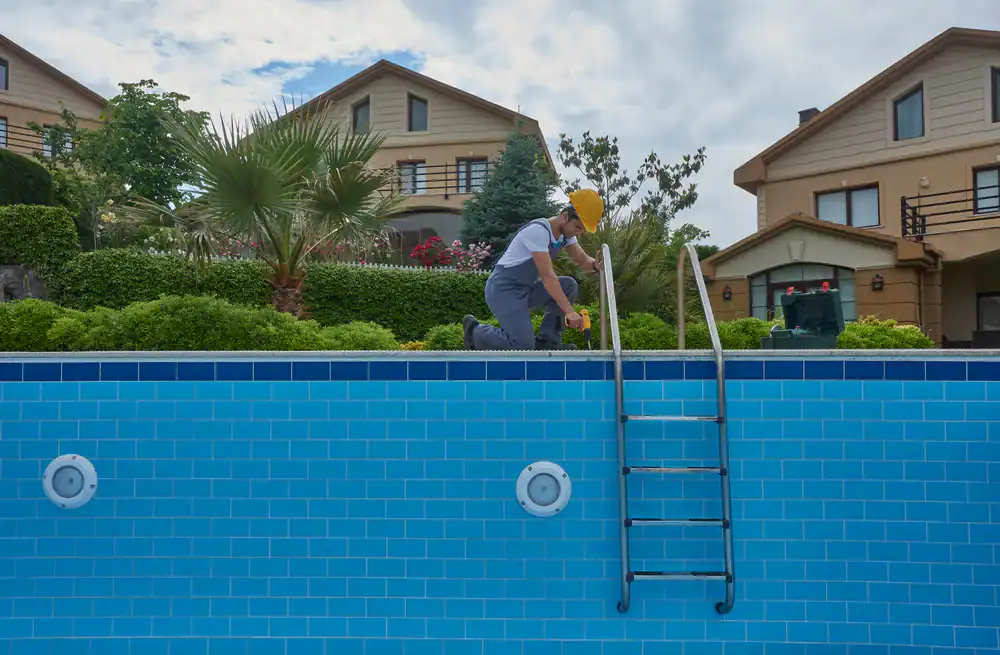
A $70,000 pool project can go one of two ways. It can be the best thing you ever did for your family and your property. Or it can turn into months of delays, surprise invoices, and a half-finished hole in your backyard while you try to track down a contractor who stopped returning calls.
That gap — between a great outcome and a nightmare — almost always comes down to who you hired. Not the design. Not the material. The contractor. If you’re a homeowner in Coffee County looking to build an inground pool, here’s what actually matters when you’re comparing your options.
The pool industry doesn’t have a shortage of contractors willing to take your deposit. What it has a shortage of is contractors who show up every day, communicate honestly, and deliver exactly what they quoted. In a smaller community like Coffee County, the stakes feel even higher — because when something goes wrong, everyone hears about it.
Start with the basics. Is the contractor licensed in Georgia? Do they carry liability insurance and workers’ comp? Can they pull permits through the Coffee County Building Department themselves, or will that fall on you? These aren’t formalities. They’re the difference between a pool that passes final inspection and one that creates problems when you go to sell your home.
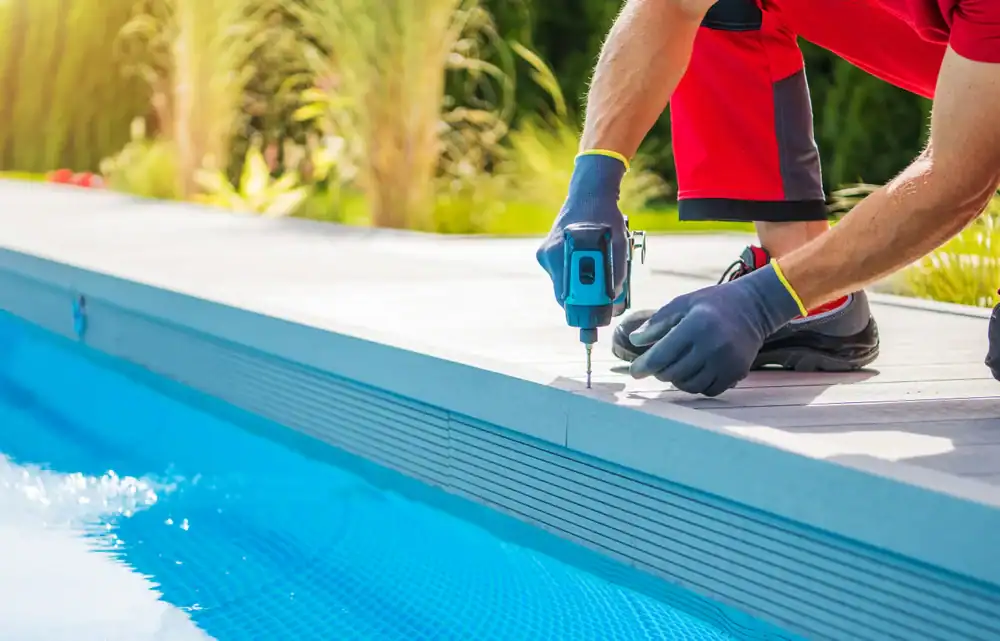
There’s a version of “experience” that means a contractor has been in business somewhere for a long time. And then there’s the kind of experience that means we’ve built pools specifically in South Georgia’s soil, under South Georgia’s sun, and through Coffee County’s permitting process — more times than we can count.
Those are not the same thing. Coffee County sits in Georgia’s Coastal Plain, where the soil is a mix of sandy loam and clay that shifts with the seasons. When the ground gets saturated after heavy summer rains and then dries out in the fall, it moves. A pool that wasn’t built with that movement in mind — reinforced steel framework, engineered drainage, proper excavation depth — will show it within a few years. You’ll see it in the surface first. Then in the structure.
We’ve been building in this region for over 30 years. Not 30 years as a company — 30 years of hands-on work in concrete, plumbing, and pool construction before Deep Waters Pools was founded in 2014. That history means we’ve already made every mistake worth making, and we’ve seen what happens when other contractors haven’t. We build every pool in Coffee County with that knowledge baked into the foundation — literally.
Out-of-area contractors don’t always account for local soil conditions. They quote based on what they know from other markets, and then they hit your property and start adjusting. Those adjustments usually come with change orders. A contractor who knows Coffee County soil before they ever set foot on your property is a contractor who can give you an accurate number from the start.
The most dangerous point in any pool project is before construction starts. That’s when buyers are most optimistic, most eager, and most likely to overlook warning signs they’d otherwise catch. A few things worth watching for.
A quote that’s significantly lower than everyone else’s should stop you in your tracks. In Coffee County’s market, a properly built concrete inground pool typically runs between $50,000 and $85,000. If someone is quoting you $30,000, the gap has to come from somewhere — cheaper materials, unlicensed labor, skipped permits, or a contractor who plans to walk away once they’ve cashed your deposit. The BBB has documented over $100 million in consumer losses from pool contractor failures nationally in just the past five years. Most of those losses started with a low bid.
Watch how a contractor communicates before you sign. If they’re slow to return calls, vague about timelines, or resistant to putting a completion date in writing, that’s a preview of what the project will feel like. A contractor who can’t give you a straight answer about when your pool will be finished — before construction even starts — won’t get more transparent once they have your money.
Ask specifically who will be doing the work. Some contractors win the sale and then hand off the entire project to subcontractors they’ve never worked with before. When something needs to change mid-build — and on a project this size, something always does — you want one accountable team, not a chain of subs pointing fingers at each other. We manage every build with our own crew, start to finish. If there’s a problem, there’s one phone call and one team that owns it.
Also ask about permits. In Georgia, all residential pools require a permit before construction begins, and the homeowner ultimately bears responsibility for making sure the pool is code-compliant. A contractor who tells you to handle the permits yourself, or who brushes past the question entirely, is a contractor who may not be licensed to pull them.
Want live answers?
Connect with a Deep Waters Pools expert for fast, friendly support.
Most people buying a pool for the first time have the same handful of questions. They just don’t always know who to ask — or whether the answer they’re getting is straight. Here are the ones we hear most often, answered honestly.
The most common one is simple: how much is this going to cost? The real answer depends on size, features, and site conditions, but a concrete inground pool in Coffee County typically falls between $50,000 and $85,000. We break down every line item — excavation, permits, construction, equipment, and finishing — during the initial consultation. No surprises after you sign.
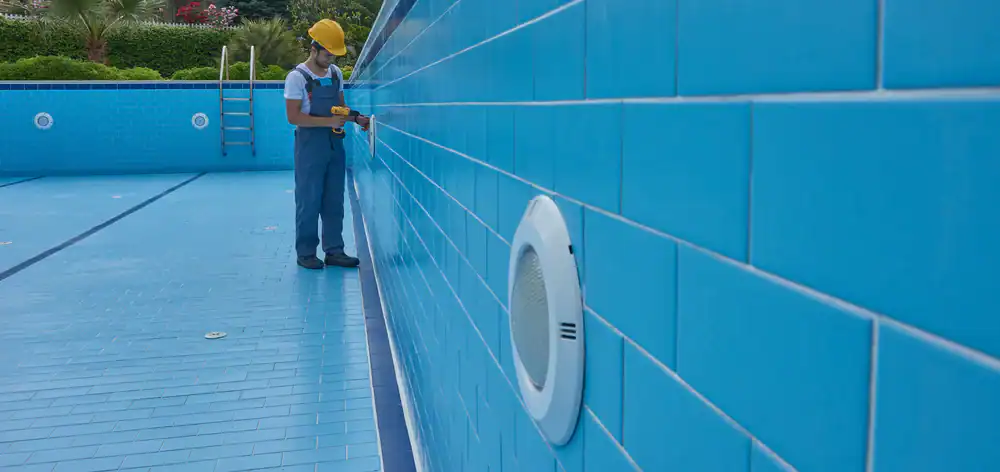
Yes — every residential inground pool in Georgia requires a permit before a single shovel hits the ground. In Coffee County, that means coordinating with the Coffee County Building Department, satisfying Georgia Environmental Health Division requirements, and building to the standards set by the International Swimming Pool and Spa Code (ISPSC). There’s also a boundary survey component and electrical bonding compliance that has to be documented before final inspection.
That process isn’t complicated if you’ve done it dozens of times. It’s genuinely overwhelming if you haven’t. We handle all of it — every piece of the permitting process — so you never have to worry about a failed inspection or a compliance issue stopping your project halfway through construction. Our clients don’t deal with the county. We do.
This matters more than most buyers realize. An unpermitted pool doesn’t just create legal exposure while you own the home. It becomes a serious problem when you go to sell. A buyer’s agent will ask for permit documentation, and if it doesn’t exist, you’re either fixing it at your expense or losing the sale. A properly permitted, code-compliant pool built by a licensed Georgia contractor adds real, documentable equity to your home — typically in the range of 5 to 8 percent of property value. That number only holds when the paperwork is clean.
The permit process in Coffee County is also one of the reasons we’d caution against hiring any contractor who isn’t based here or hasn’t worked here before. Local permitting offices have their own processes, timelines, and inspectors. A contractor who knows the Coffee County Building Department — who has pulled permits there before and knows what the inspectors look for — moves faster and hits fewer walls than someone learning the process on your project.
This is a question worth asking, and the honest answer is yes — with the caveat that it depends heavily on who builds it and how.
Concrete, or gunite, is the only pool material that actually gets stronger over time. It doesn’t fade the way fiberglass does. It doesn’t tear the way vinyl liner does. And unlike a fiberglass shell, which is manufactured off-site and dropped into an excavated hole, a concrete pool is engineered in place — which means it can be built to the exact contours of your property and calibrated to the specific soil conditions underneath it.
In Coffee County, that last part matters. Fiberglass pools are vulnerable to what’s called “pool pop” — when high water table conditions or soil movement push the shell upward out of the ground. It’s more common in areas with clay-heavy or moisture-retaining soils than most contractors will tell you upfront. A properly reinforced concrete pool, built with engineered drainage and a steel framework designed for South Georgia ground conditions, doesn’t have that problem.
There’s also the usability argument. Coffee County’s summers are genuinely brutal — heat indices above 100°F from June through August, with a swim season that runs from roughly March through October. That’s seven to eight months of real use every year, which is longer than almost anywhere else in Georgia outside the coast. A pool that holds up for 30-plus years under that kind of use is a different investment than one that starts showing wear in year eight. Concrete, built right, is the long-term answer for this climate.
We specialize exclusively in cement pool construction. It’s not a material we offer alongside other options — it’s the only material we build with, because it’s the only one we’d put in our own backyard. If a contractor is offering you fiberglass or liner pools for Coffee County’s soil and weather, it’s worth asking why, and what happens if the ground moves.
You’re not just buying a pool. You’re choosing who you’re going to trust with a major construction project on your property, in your community, for the next 30 years. That decision deserves more than a quick Google search and the lowest quote.
The right contractor is licensed, locally experienced, and willing to put everything in writing — the price, the timeline, the scope. We handle permits so you don’t have to. We communicate clearly before, during, and after the build. And we’re still reachable three years later if you have a question.
We’re based in Douglas, GA. We’ve been building in Coffee County and the surrounding Wiregrass region for over a decade as a company, and for much longer than that in terms of real hands-on experience. If you’re ready to start the conversation — or just want to know what a project on your property would actually involve — reach out to Deep Waters Pools. We’ll give you straight answers and a clear picture of what to expect.
Summary:
Share: