

Hear from Our Customers
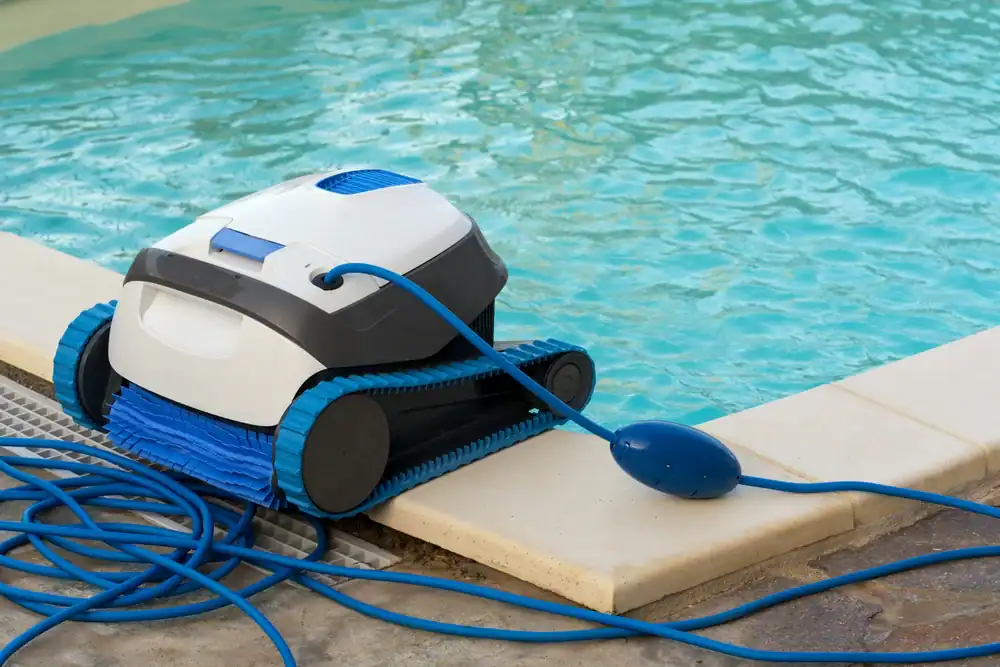
Out here in Bridgetown, your pool isn’t dealing with light suburban dust. It’s dealing with pine pollen that coats the water surface every spring, pine needles that drop year-round and quietly lower your pH as they break down, and a South Georgia summer that burns through chlorine faster than most homeowners realize. When temperatures push past 100°F and the humidity doesn’t let up at night, a pool that tested fine on Friday can be growing algae by Monday.
Weekly professional maintenance is what keeps that cycle from getting ahead of you. Every visit covers the full picture: water chemistry tested and corrected, skimmer and pump baskets cleared, debris removed, and equipment checked for anything that looks like it’s heading toward a problem. You don’t have to track it. You don’t have to wonder if the levels are right after that two-inch thunderstorm rolls through in July. It’s handled.
The result is simple. Your pool stays swimmable, your equipment lasts longer, and you stop spending weekends troubleshooting chemistry you didn’t sign up to learn. For a rural Coffee County property surrounded by pines and wiregrass, that kind of consistent, knowledgeable service isn’t a luxury it’s what actually keeps a pool working.
We’re based in Douglas the Coffee County seat, roughly 15 to 20 miles from Bridgetown. That matters because when you call us, you’re not waiting on a company from Tifton or Atlanta to work you into a route. You’re calling a team that already knows this county, already drives these roads, and already understands what a pool in Bridgetown is up against.
Deep Waters Pools was founded in 2014, but the experience behind it goes back more than 30 years hands-on work in concrete, plumbing, and pool construction right here in the wiregrass region. We know Coffee County’s soil, its water chemistry quirks, and what the summers actually do to a pool that isn’t being maintained properly. That’s not something you pick up from a manual.
We started Deep Waters because too many families in this area were getting burned by contractors who made promises and disappeared. That’s still why we operate the way we do show up when we say, do what we quoted, and tell you exactly what we found.
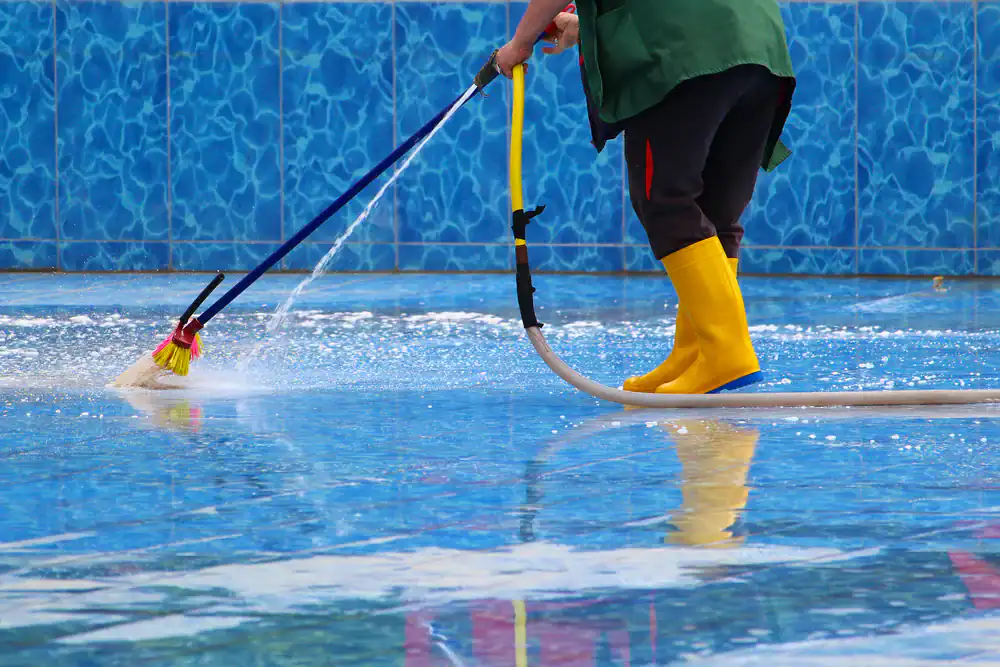
Every visit starts with a full water chemistry test. We’re checking chlorine, pH, alkalinity, and stabilizer levels and in Coffee County’s summer heat, those numbers can shift significantly between visits, especially after a heavy rain. If something’s off, we correct it on the spot. You’re not getting a report that says “needs attention” with no follow-through.
From there, we clear every skimmer basket and pump basket. On a rural, wooded property like most in the Bridgetown area, those baskets fill up faster than they do in a manicured subdivision. A clogged basket restricts water flow to your pump and puts real mechanical stress on equipment that costs serious money to replace. We don’t treat that step as an afterthought. We also brush the walls and steps, skim the surface, and vacuum as needed to clear whatever the week brought pollen, pine needles, leaves, or whatever a summer storm dropped in.
At the end of every visit, you’ll know what we found and what we did. If something looks like it’s heading toward a repair a worn seal, a struggling pump, chemistry that keeps drifting in one direction we’ll tell you directly. No guessing, no surprises on your next bill. If you’re heading out of town for a week or two, that doesn’t change anything on our end. Your pool gets the same visit whether you’re home or not.
Ready to get started?
Routine maintenance for a pool in Bridgetown isn’t the same as routine maintenance for a pool in a suburban neighborhood with manicured landscaping and mild summers. The wiregrass landscape means heavy debris loads from pine trees all year. The climate means chlorine depletion happens fast, algae risk is real from May through September, and the occasional winter cold snap even a short one can damage exposed plumbing if a pool hasn’t been properly prepared going into the cooler months.
Our pool cleaning service covers chemical balancing at every visit, full debris removal including skimmer basket cleaning and surface skimming, brushing of walls and steps, and equipment checks to catch problems before they become expensive. During spring, we pay extra attention to pine pollen buildup, which can overwhelm a filtration system quickly if it’s not cleared consistently. In summer, we account for the chemistry shifts that come after Coffee County’s regular afternoon thunderstorms. And heading into fall and winter, we walk through what your pool needs to stay protected through the cooler season without being over-winterized for a climate that doesn’t need it.
For private residential pools in unincorporated Coffee County, there’s no municipal permit required for routine maintenance but we carry liability insurance and operate as a licensed contractor, which protects your property and your family every time we’re on site.
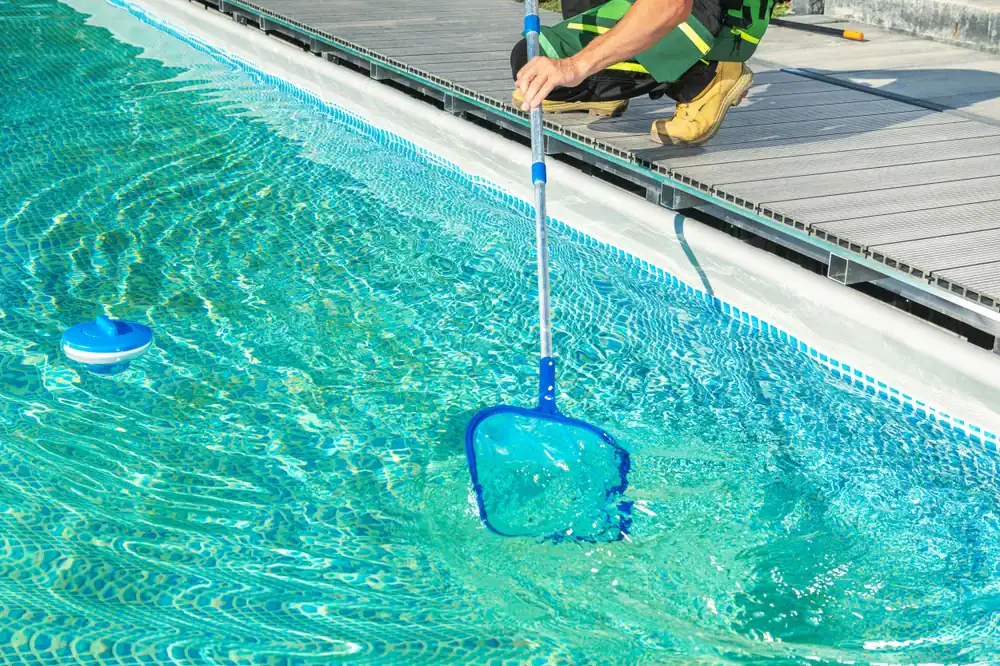
For most of the year, weekly service is the right call in this area. Coffee County’s summers are intense sustained heat above 95°F, high overnight humidity, and regular afternoon thunderstorms that dilute your chemistry and introduce organic material that accelerates algae growth. Chlorine can drop below the safe threshold in a single day during peak summer heat, which means a pool that was balanced at the start of the week can be noticeably off by the end of it.
In the cooler months roughly November through February you can often pull back to biweekly visits, depending on how much debris your pool collects and whether you’re still using it. But during the May through September swim season, weekly service isn’t a luxury in south-central Georgia. It’s what keeps you from coming home to a green pool after a long work week. For rural properties surrounded by pine trees like most in the Bridgetown area, debris alone can justify that frequency year-round.
Chemical balancing means testing and adjusting the levels of chlorine, pH, total alkalinity, and stabilizer in your pool water and making sure they’re all within the right range at the same time. Each one affects the others. If your pH is too high, chlorine becomes less effective even when the chlorine reading looks fine. If alkalinity is off, pH swings all over the place and becomes nearly impossible to stabilize. If your stabilizer is too low, UV from the South Georgia sun burns through chlorine fast faster than most people expect.
In practical terms, an unbalanced pool isn’t just cloudy or uninviting. It can cause eye and skin irritation, accelerate corrosion on metal equipment and fittings, and create conditions where bacteria and algae establish quickly. Getting the chemistry right every week especially after rain events that dilute the water is what keeps the pool safe, clear, and easy on your equipment. It’s the core of what professional maintenance actually does.
Pine trees are the dominant vegetation across Coffee County’s wiregrass landscape, and they create a few distinct pool problems that homeowners in Bridgetown deal with constantly. In spring, pine pollen drops in volume and creates a yellow-green film on the water surface and pool walls. It’s fine enough to pass through some filtration systems without being captured, which means it accumulates and can overwhelm the filter if it’s not physically removed from the surface and skimmer baskets consistently.
Pine needles are a year-round issue. They’re acidic, and when they collect in your pool in significant quantities, they pull the pH downward as they break down. A pH that keeps drifting low despite chemical corrections is often a sign that organic debris needles, leaves, or other plant material is accumulating faster than it’s being removed. On a rural property in Bridgetown surrounded by pines, debris management isn’t a seasonal concern. It’s part of every single service visit, and it directly affects your water chemistry results.
A heavy rain event dilutes everything in your pool water chlorine, pH buffers, alkalinity, and stabilizer all drop when a significant volume of fresh water enters the pool. In Coffee County, July and August thunderstorms can drop two inches or more in a single event, which is enough to shift your chemistry meaningfully. The result is a pool that looks fine on the surface but is running with reduced sanitizer effectiveness and a pH that’s drifted out of the safe range.
The other issue is what rain carries in organic material, airborne contaminants, and runoff that introduces nutrients algae can feed on. A pool that was perfectly balanced before a storm can be showing early signs of algae within 48 to 72 hours if the chemistry isn’t corrected. This is one of the main reasons weekly service during South Georgia’s summer storm season is so important. A professional visit that tests and rebalances after a significant rain event is often the difference between a clear pool and a remediation job.
South Georgia doesn’t need the full winterization process that pools in northern climates require, but it’s not accurate to say Coffee County winters are harmless to a pool. The region does experience cold snaps nights where temperatures drop below freezing for one or more consecutive evenings and an improperly prepared pool can suffer real damage during those events. Cracked plumbing lines, damaged pump seals, and equipment failures from freeze exposure are all documented issues in this climate, and they’re expensive to repair.
What makes sense for a Bridgetown pool is a calibrated seasonal approach: keeping chemical levels maintained through the cooler months so algae doesn’t establish over winter, protecting exposed equipment and plumbing from freeze events, and reducing service frequency during the months when the pool isn’t being used heavily. You’re not draining the pool or blowing out every line like a Minnesota homeowner would but you’re also not just walking away from it in November and hoping for the best. The right seasonal care here is somewhere in between, and it’s specific to what south-central Georgia actually does in winter.
Yes and this is actually one of the more common questions we hear from homeowners in unincorporated parts of Coffee County. Bridgetown is roughly 15 to 20 miles from Douglas, which puts it squarely within our regular service area. We’re not routing out to Bridgetown as a one-off favor. It’s part of how we operate in Coffee County, and we know the roads.
The concern behind this question is a fair one. Rural homeowners in this area have dealt with service companies that list Coffee County as a coverage area but don’t reliably show up once you’re outside the Douglas city limits. We’re based in Douglas specifically, which means Bridgetown isn’t a stretch for us it’s our backyard. If you’re on Bridgetown Road or anywhere in that stretch of southern Coffee County, you’re not too far out. You’re just in the area we already serve.
Other Services we provide in Bridgetown