From fire pits to LED lighting, the right pool features turn a backyard into a space your family actually lives in — not just swims in.
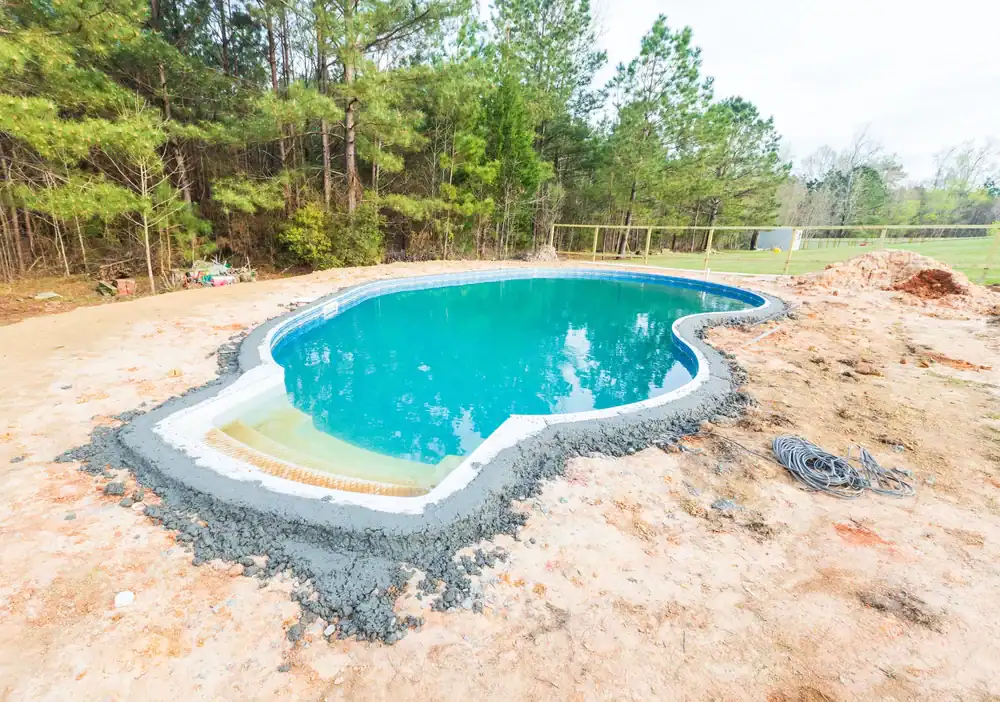
Most people spend months thinking about the pool itself — the shape, the depth, the finish. Then the project wraps up, the water goes in, and they realize the area around it is just bare concrete and a couple of plastic chairs. It gets used for a few weeks, then less and less.
The outdoor living space is what makes a pool worth having every day, not just in July. In Coffee County, where evenings cool off enough by October to make a fire pit genuinely appealing, and where summer nights beg for something more than a floodlight, the features you build around your pool matter just as much as the pool itself. Here’s what to know before you decide.
Not every feature you see on a showroom board belongs in your backyard. Some of them look incredible in a brochure and barely get touched once the novelty wears off. What actually gets used comes down to how your family lives — and what your specific property and climate make practical.
In South Georgia, the conditions are genuinely different from Atlanta or the coast. The summers are long and hot, the winters are mild enough to be outside most evenings, and the spring rains are heavy. That combination shapes which features deliver real daily value and which ones are just nice to look at. The goal is a space that works for your life, not just photographs well.
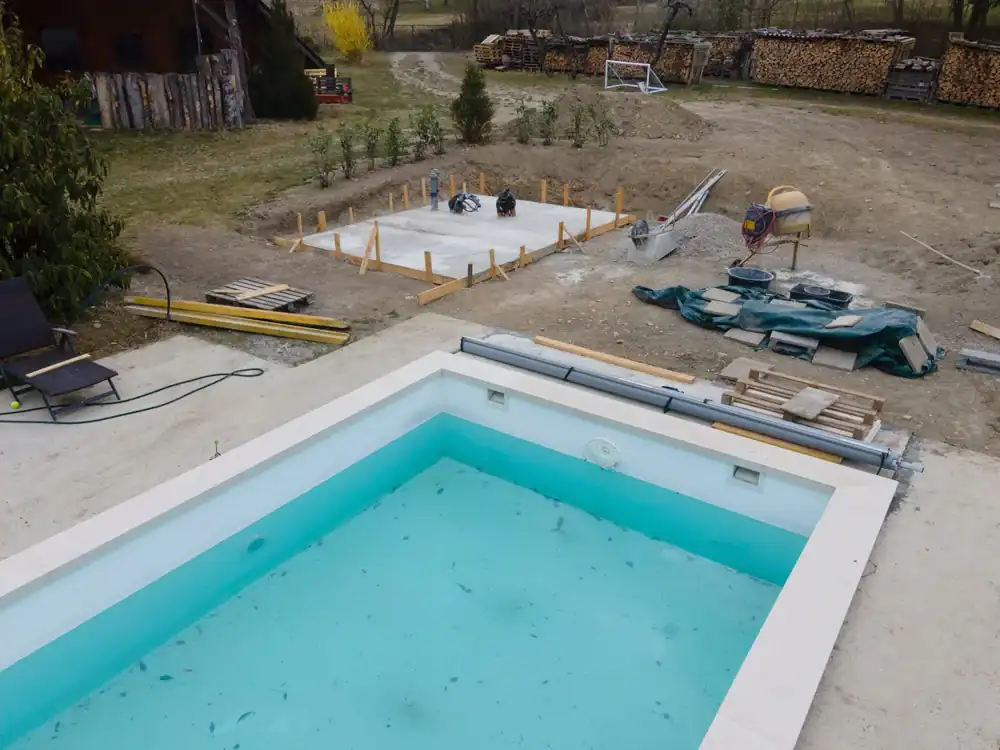
This is where a lot of pool projects quietly go wrong. Poured concrete decking looks clean when it’s new, but South Georgia’s red clay soil expands and contracts with every rain cycle. Within a few years, that concrete starts cracking — sometimes significantly. Once it cracked, your options are patching it (which rarely looks right) or tearing it out and starting over.
Pavers handle that soil movement differently. Because each paver is an individual unit set in a sand bed, the system can flex slightly as the ground shifts without fracturing. If a section does settle unevenly, individual pavers can be reset without touching the rest of the deck. That repairability alone makes pavers the smarter long-term choice for Coffee County properties.
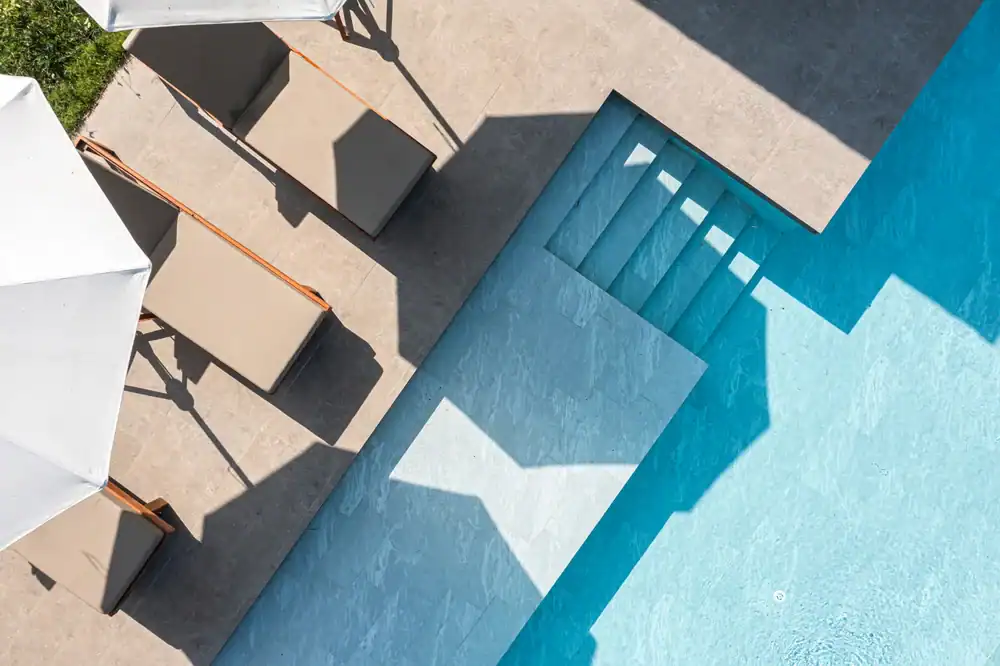
Material selection matters too. Travertine and natural stone stay noticeably cooler underfoot than concrete in direct summer sun — a real quality-of-life difference when you’re walking barefoot from the pool in August. Textured concrete pavers offer a more budget-friendly option that still handles ground movement and provides the slip resistance you need around water.
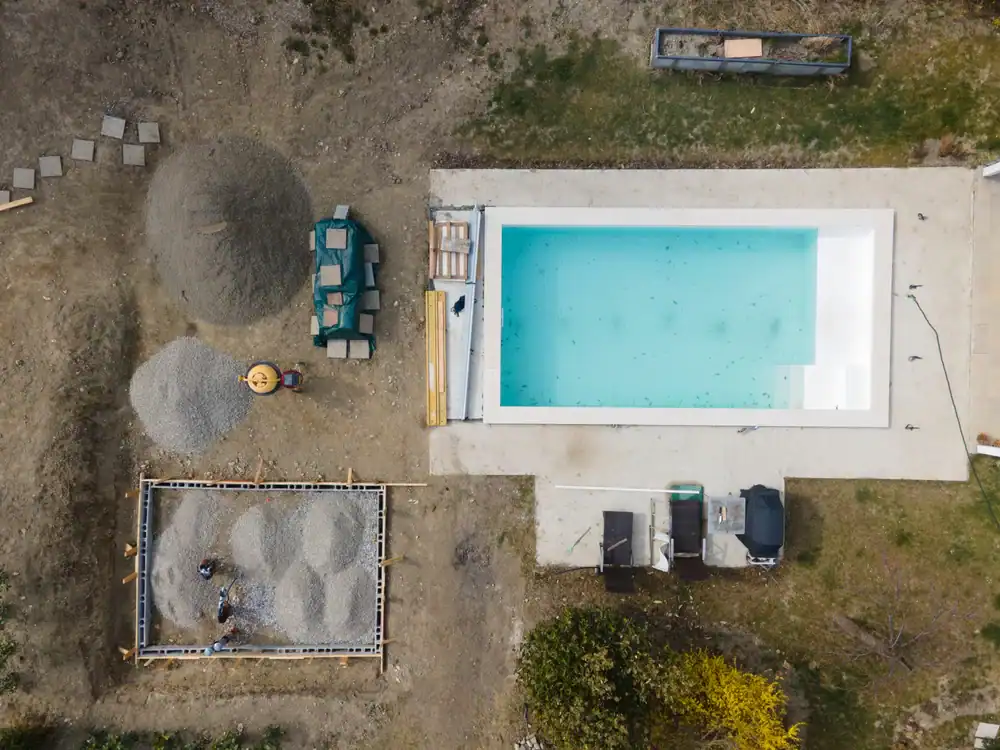
What often gets overlooked is the base preparation underneath. The pavers are only as stable as what’s beneath them. Proper excavation, a compacted gravel base, and the right bedding sand are what separate a deck that holds up for decades from one that starts heaving after a wet spring. This is not the place to cut corners, and it’s exactly the kind of detail that gets missed when a pool builder and a separate hardscape contractor aren’t communicating well.
One more thing worth knowing: the most common regret among pool owners is not having enough decking. It sounds simple, but a pool surrounded by a narrow strip of pavers leaves nowhere comfortable to set up chairs, nowhere for guests to spread out, and nowhere for kids to dry off without stepping onto grass. Plan for more than you think you need.
Coffee County’s swim season runs roughly from late March through October — about seven or eight months. That’s already longer than most of the country gets. But October through March in Douglas doesn’t mean you have to go inside. Evening temperatures in that range hover between 40 and 60 degrees — cool enough to appreciate a fire, warm enough to sit outside comfortably.
A gas fire pit or fire bowl positioned near the pool turns the space into a twelve-month outdoor destination. Guests who aren’t swimming still have somewhere to gather. Kids roast marshmallows while the adults sit around the fire. The pool area stops being a seasonal asset and starts being the place your family actually spends time together.
Gas fire features are worth the investment over wood-burning alternatives for a few practical reasons. There’s no wood to store, no ash to clean out, no smoke shifting into everyone’s faces depending on the wind. You turn it on, you turn it off. Modern gas fire pits with safety shutoffs are code-compliant and straightforward to operate. The ambiance is the same — the maintenance is significantly less.
Positioning matters. A fire feature placed too close to the pool edge creates unnecessary heat near the water and raises safety concerns. The right placement — typically set back from the pool with a defined gathering area between them — gives the fire its own zone while keeping it visually connected to the pool. This is the kind of design decision that’s obvious in hindsight but easy to get wrong when it’s not thought through from the start.
One thing worth planning early: if you want a gas fire feature, the gas line needs to be roughed in during construction. Running a gas line through finished concrete decking after the fact is expensive and disruptive. Deciding on a fire pit before the project breaks ground costs you almost nothing extra. Deciding after the concrete is poured costs considerably more.
Want live answers?
Connect with a Deep Waters Pools expert for fast, friendly support.
There’s a difference between a pool that looks like a pool and one that feels like somewhere you actually want to be. Water features and lighting are what create that feeling — not in a superficial way, but in a way you notice every time you’re out there.
Moving water changes the atmosphere of a space. Good lighting makes the pool usable after dinner instead of just during daylight hours. These aren’t luxury add-ons for people with unlimited budgets — they’re features that deliver genuine daily-use value, and most of them are far more practical and affordable than people assume.
Water features — waterfalls, scuppers, deck jets, bubblers — do something that’s hard to explain until you’ve experienced it. They add sound. The ambient noise of moving water masks neighborhood sounds, creates a sense of privacy, and makes the pool area feel less like a backyard and more like somewhere you deliberately went to relax.
Deck jets are arching streams of water that shoot from the deck surface into the pool. They’re visually striking during the day and genuinely beautiful at night when combined with LED lighting. Scuppers are wall-mounted outlets that pour water in a sheet into the pool — a clean, modern look that works well on raised bond beams or raised spa walls. Bubblers sit on the pool floor in shallow areas and push water up through the surface, which makes them a favorite in tanning ledges and wading areas where kids spend most of their time.
Waterfalls are the most requested water feature, and for good reason. A well-designed waterfall built into a rock formation or a raised wall becomes the visual centerpiece of the entire outdoor space. It’s the thing guests notice first and comment on most.
What’s important to understand is that all of these features run off the pool’s existing circulation system. They’re not separate mechanical systems requiring separate maintenance. When the pump runs, the water features run. That simplicity is often a surprise to buyers who assumed these features would add significant upkeep to their routine.
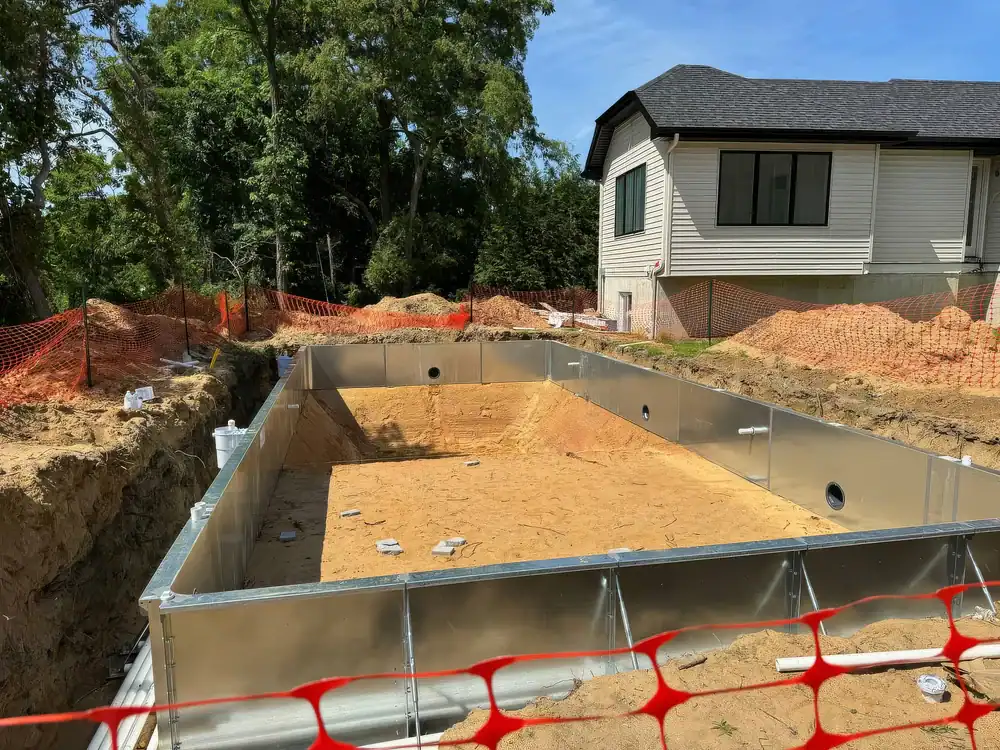
The one thing that can’t be added easily after the fact is the plumbing. Water feature lines need to be roughed in during the original construction. Planning for a waterfall or deck jets before the pool is built is a minor design consideration. Adding them after the decking is finished means cutting through concrete — a much more significant undertaking. If there’s any chance you’ll want water features, the time to say so is before the first shovel hits the ground.
Without lighting, a pool is a daytime feature. That’s it. Once the sun goes down, the water goes dark, and the space loses most of its appeal. For Coffee County families who want to use their pool after dinner or entertain on a summer evening, lighting isn’t optional — it’s what makes the investment pay off past 7 p.m.
LED pool lights consume 50 to 75 percent less energy than older halogen systems and last significantly longer. That’s not a minor difference — it’s the kind of gap that pays for itself within a few years in energy savings alone, before you factor in the reduced replacement cost. Halogen bulbs in a pool are a maintenance item. LED lights are essentially not.
Color-changing LED systems are worth considering if you entertain regularly. The ability to shift the pool from a soft white glow to vibrant color with a smartphone takes about three seconds and completely changes the atmosphere of the space. For a Friday night gathering, you might want something energetic. For a quiet evening, something calm. The flexibility is genuinely useful, not just a novelty.
Beyond the pool itself, LED lighting around the deck — in the steps, along the coping, in any surrounding landscape features — adds both safety and visual depth to the space. A well-lit outdoor living area feels intentional and finished. An unlit one, regardless of how well the pool is built, feels incomplete after dark.
Like water feature plumbing, lighting conduit needs to be placed during construction. Retrofitting electrical runs through finished concrete is possible but significantly more expensive and disruptive than planning for it from the start. If you know you want a full lighting package — and most people do once they see what it looks like — that decision should happen before the project begins, not after.
The features that make the most sense for your backyard depend on how your family actually uses outdoor space — not on what looks impressive in a photo. A fire pit matters more to a family that hosts year-round than to one that only uses the backyard in summer. Deck jets matter more to someone with young kids than to a couple looking for a quiet retreat. The starting point is always how you live, not a feature checklist.
What matters most in Coffee County specifically is working with someone who understands the local conditions — the clay soil that dictates how decking gets built, the climate that makes a fire feature genuinely practical for half the year, and the permit process that needs to be handled correctly from day one. Getting those details right is the difference between a pool space that holds up and one that starts showing problems within a few years.
If you’re planning a pool build or thinking about upgrading the space around an existing one, we’re based right here in Douglas, GA and have been building in this area long enough to know what works and what doesn’t. Reach out and we’ll start with a real conversation about your yard, your family, and what’s actually worth building.
Summary:
Share: