
Hear from Our Customers
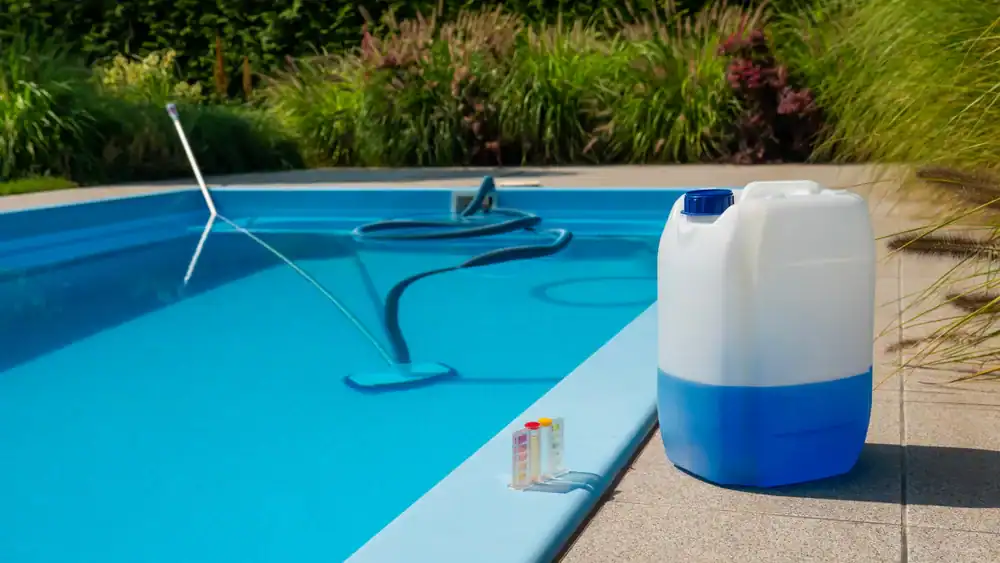
Test strips give you a color. They don’t give you an answer. If your pool has looked off cloudy, dull, or just not quite right but the strip reads “fine,” that’s not a coincidence. That’s the limitation of the tool. Professional water testing measures free chlorine, total chlorine, pH, total alkalinity, calcium hardness, cyanuric acid, and total dissolved solids with digital precision. You get real numbers, not color comparisons.
Here’s what that means for you living out here in Berrien County. The farmland surrounding Alapaha tobacco, peanuts, corn, soybeans puts airborne organic material into your pool at a rate suburban pool guides never account for. That organic load burns through chlorine faster than standard dosing handles. So even when your strip says your chlorine looks good, your pool may be working with a fraction of the sanitizing power it needs. Digital testing catches that gap before it turns into a green pool on the hottest week of July.
The mineral content in the local water supply matters too. Alapaha’s water runs through a watershed that carries elevated calcium and magnesium. That mineral load follows the water straight into your pool. Without knowing your actual calcium hardness level, you’re either letting corrosive water eat at your plaster finish or letting mineral-heavy water scale up your equipment. Either one is an expensive fix that a professional test catches early.
We’re based out of Douglas about 30 miles east of Alapaha on US 82 and have been building and servicing pools across South Georgia since 2014, with the hands-on experience of our principals going back over 30 years. That’s three decades of working with gunite and shotcrete pools in this exact climate, on this exact soil, with this exact water.
That construction background isn’t a side note. It’s the reason our water testing means something. When you’ve built the pool from the ground up mixed the shotcrete, set the plumbing, finished the plaster you understand exactly how the surface interacts with the water sitting against it. A company that has never built a pool is reading numbers. We’re reading your pool.
We serve Alapaha and the broader Berrien County area, bringing the same professional-grade approach to a water test that we bring to a full pool build no shortcuts, no guesswork, no generic advice that doesn’t fit your situation.
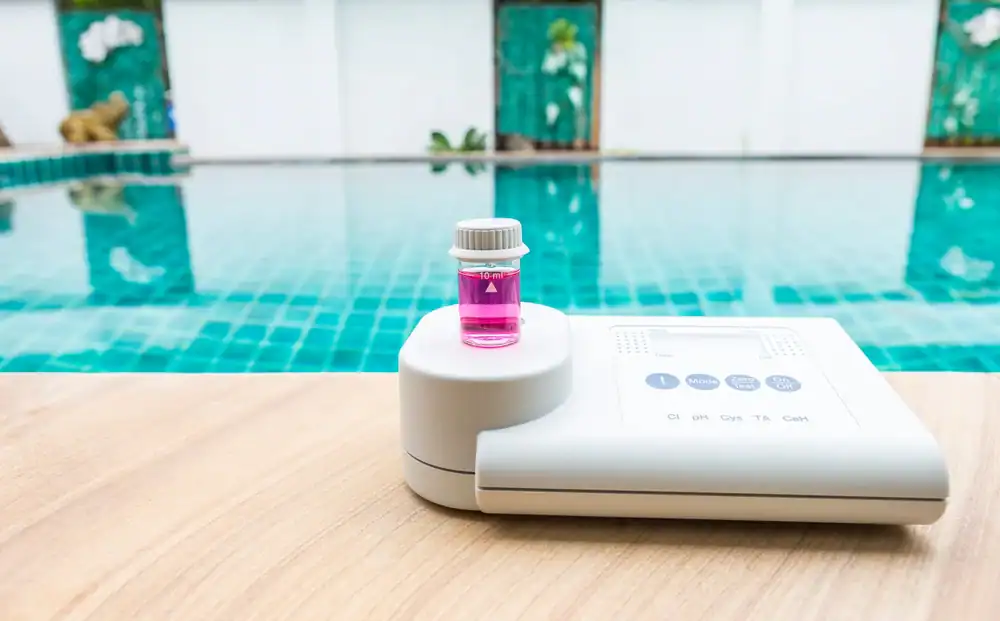
It starts with a water sample pulled directly from your pool not from the surface, where readings can be skewed, but from elbow depth where the water is representative of what’s actually circulating. That sample goes into our digital testing equipment that measures every key parameter: free chlorine, total chlorine, pH, total alkalinity, calcium hardness, cyanuric acid, and total dissolved solids. You get a full picture, not a partial one.
From there, every number gets reviewed in context. A pH of 7.9 might look close to acceptable on paper, but when you factor in that chlorine loses roughly half its effectiveness above 7.8, that single reading changes the whole conversation. If your cyanuric acid level is too low which is common in South Georgia pools that see intense direct sun from May through September your chlorine is burning off faster than you realize, no matter how much you add. Each reading informs the next.
After the analysis, you get a clear breakdown of what’s off, what it means, and exactly what needs to happen to correct it. No bag of chemicals handed to you with vague instructions. No upsell on products you don’t need. If your pool is in good shape, you’ll hear that too. The goal is an honest read on your water and a straight answer on what to do about it especially heading into Berrien County’s peak swim season when chemistry failures happen fast.
Ready to get started?
A complete water test from us covers the full range of chemistry parameters not just the two or three a basic strip catches. Free chlorine and total chlorine are both measured separately, because the gap between those two numbers tells you whether your sanitizer is actually working or just present. pH and total alkalinity are checked together, because they move in relationship with each other and need to be corrected in the right order. Calcium hardness testing is especially critical for the gunite and shotcrete pools common across rural South Georgia properties too low and your water becomes aggressive toward the plaster finish, too high and you’re looking at mineral scaling on your surfaces and in your equipment.
Cyanuric acid the stabilizer that protects chlorine from UV breakdown is tested and evaluated against your actual sun exposure. Out here near Alapaha where pools sit in full South Georgia sun with no shade buffer, CYA levels matter more than most pool guides acknowledge. Total dissolved solids round out the picture, flagging when your water has accumulated enough buildup that partial draining and refilling is the smarter path forward.
After every heavy rain event and the Alapaha River corridor gets its share pool chemistry needs to be rechecked. Rainwater is naturally acidic, it dilutes your chemicals, and it drops total alkalinity quickly. That’s not a worst-case scenario out here; it’s a regular part of pool ownership in Berrien County. Professional testing after significant rain isn’t extra caution it’s just good maintenance.
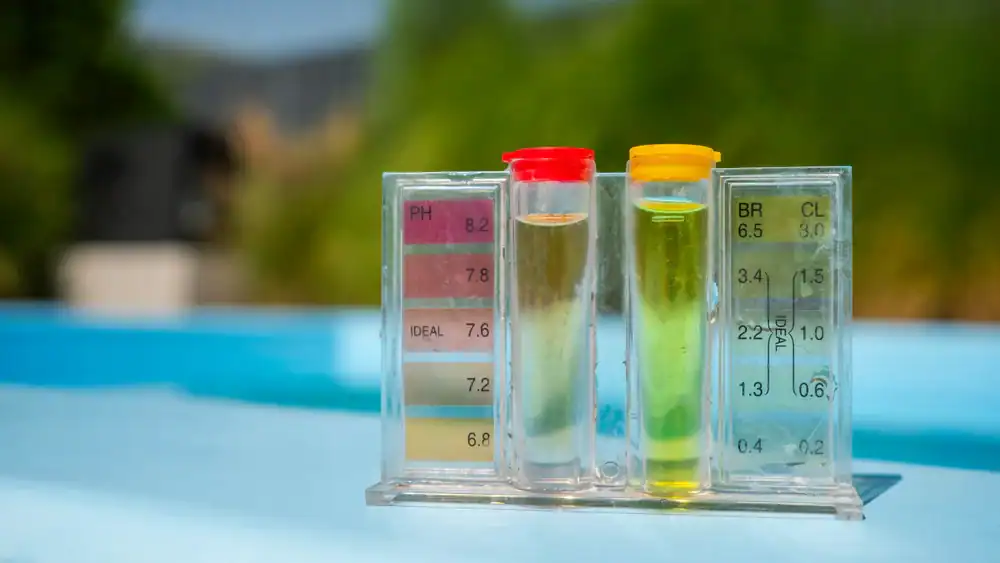
This is one of the most common frustrations for pool owners in Alapaha and the surrounding area, and the answer almost always comes down to pH. When your pool’s pH climbs above 7.8 which happens regularly in South Georgia’s heat, especially after rain chlorine loses a significant portion of its sanitizing power. You can have a technically adequate chlorine reading and still have a pool that can’t fight algae, because the pH is making the chlorine ineffective. Adding more chlorine to a high-pH pool is like pouring water into a bucket with a hole in it.
The other factor specific to Alapaha and the surrounding farmland is organic load. Pollen, agricultural dust, and organic material from the fields around Berrien County settle into open pools continuously during growing season. That organic matter consumes chlorine at a faster rate than standard dosing accounts for. A digital water test identifies both problems pH and actual chlorine demand so you’re correcting the right thing instead of just adding chemicals and hoping.
During peak summer roughly May through September in this part of Georgia weekly professional testing is the standard that makes sense. The combination of intense UV exposure, high bather load, and frequent afternoon storms creates chemistry shifts that can move fast. A pool that tests balanced on a Monday can be visibly off by Friday if conditions are right.
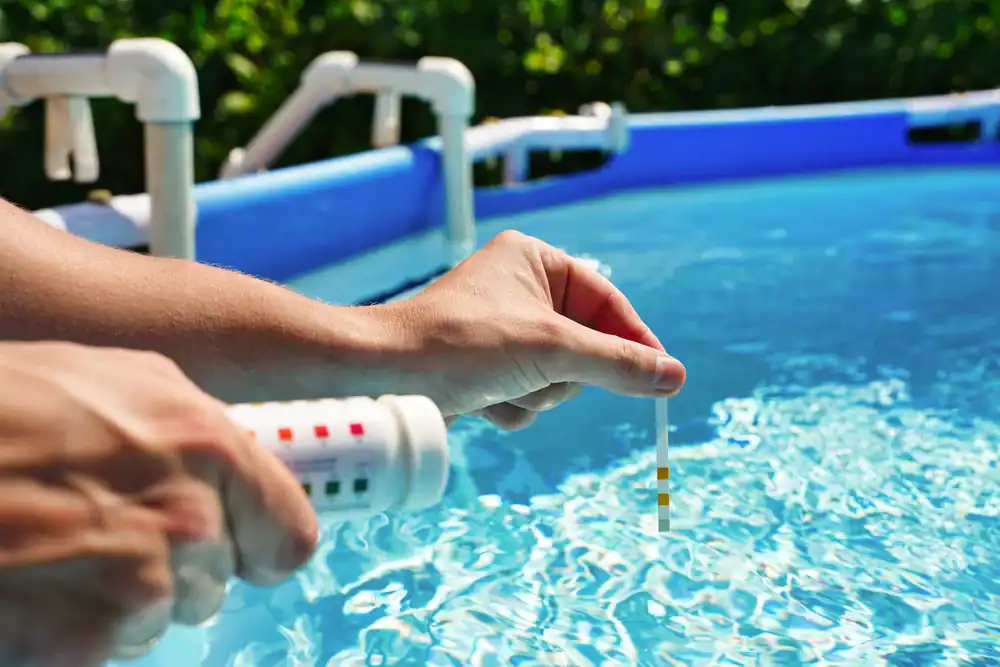
Test strips at home can help you keep an eye on things between our professional visits, but they’re not a substitute for a full digital analysis. They don’t measure calcium hardness, cyanuric acid, or total dissolved solids three parameters that matter a lot for long-term pool health. Think of home strips as a warning system and professional testing as the actual diagnosis. After any significant rain event, which is a regular occurrence along the Alapaha River corridor, it’s worth getting a full test done regardless of where you are in your weekly schedule.
Calcium hardness measures the concentration of dissolved calcium in your pool water. It matters because water that’s too low in calcium becomes chemically aggressive it will actively pull calcium out of whatever surface it’s touching, which for a gunite or shotcrete pool means it’s slowly eating the plaster finish. You won’t see it happening, but over time you’ll see the results: rough surfaces, pitting, and a finish that needs early resurfacing.
On the other side, water with too much calcium which is a real concern given the mineral content in the Alapaha area’s water supply deposits white scale on pool surfaces, inside pipes, and on equipment. Both problems are preventable with regular calcium hardness testing and correction. The target range is generally 200–400 ppm for a plaster-finish pool, but the right number for your specific pool depends on your other chemistry parameters too. That’s why it gets evaluated as part of the full picture, not in isolation.
Yes we do. There are no other pool service companies with a local presence in Alapaha or Berrien County, so if you’ve been driving to Nashville or Tifton to drop off a water sample at a pool supply store, you already know how inconvenient that is. And those free store tests, while better than nothing, are designed around selling you products not giving you an unbiased read on your water.
We travel out to Alapaha from Douglas along US 82 to provide professional on-site water testing. You don’t have to make the drive, and you don’t have to take advice from someone whose job is to move product off the shelf. The test comes to you, the results are explained clearly, and the recommendations are based on what your specific pool actually needs not what’s in stock.
Cyanuric acid, often called stabilizer or conditioner, is what protects chlorine from being destroyed by UV radiation. Without it at the right level, direct sunlight can break down the majority of your pool’s free chlorine in a matter of hours. In South Georgia, where pools sit under intense sun for long stretches from late spring through early fall, that’s not a theoretical concern it’s what’s actually happening in pools that can’t seem to hold their chlorine levels.
The tricky part is that CYA needs to stay in a specific range. Too little and your chlorine burns off too fast. Too much and it actually starts to suppress chlorine’s effectiveness, a condition sometimes called chlorine lock. The right level depends on your pool’s sun exposure, your chlorine source, and your overall chemistry balance. For pools around Alapaha that get full, unshaded South Georgia sun, CYA management is one of the most impactful things you can do to keep your water consistently safe and clear through the summer.
It can, and it does often quietly over a long period before anything visible shows up. Corrosive water, which typically means low pH combined with low calcium hardness and low alkalinity, attacks metal fittings, corrodes pump components, and etches plaster surfaces. By the time you notice the damage, it’s already happened. Repairing or resurfacing a gunite pool is a significant investment one that proper water chemistry management can extend by years.
Scaling water causes a different kind of damage. Mineral deposits build up inside pipes and on equipment, reducing flow efficiency and putting strain on your pump and filter. In an area like Alapaha where the local water supply already carries elevated mineral content, pools are starting from a higher baseline calcium load than pools in softer-water areas. That makes regular calcium hardness testing and total alkalinity checks more important here than in a lot of other parts of the state not as a precaution, but as basic maintenance that protects what you’ve invested in.