
Hear from Our Customers
A pool in Alapaha isn’t a luxury add-on. When temperatures push past 90°F for months at a stretch and your yard already has the space to work with, it’s one of the more practical investments you can make on your property. The question isn’t whether a pool makes sense here it’s whether the contractor you hire will still be easy to reach after the check clears.
Properties in and around Alapaha tend to sit on larger lots than you’d find in a suburban market, which means the design can actually fit how your family uses the outdoors. No cramming something in. No compromising on size or shape because the yard won’t allow it. You get a pool built around your property, not a catalog option dropped into it.
The soil in this part of Berrien County is another factor most contractors won’t bring up until there’s already a problem. The sandy-to-clay soil profile common to the South Georgia Coastal Plain the same profile the USDA formally named the Alapaha Series means drainage, water table variation, and shell engineering matter more here than they do in other parts of the state. A pool built by someone who knows this ground holds up. One built by someone who doesn’t can cost you significantly more in year three than it should have in year one.
We were founded in 2014 by someone who had already spent more than three decades building pools with his own hands across South Georgia. Our company is based out of Douglas about 40 miles from Alapaha and was started specifically because our founder watched too many families in this part of the state get burned by contractors who took deposits and didn’t deliver. That’s not a tagline. It’s the actual reason we exist.
In Berrien County, word travels fast. People in Nashville, Enigma, Ray City, and Alapaha itself talk about what works, what doesn’t, and who showed up when it counted. We’ve built pools throughout this region, in this soil, under this sun, and through the same Berrien County permit process your project will go through. That’s not something you can fake or import from somewhere else.
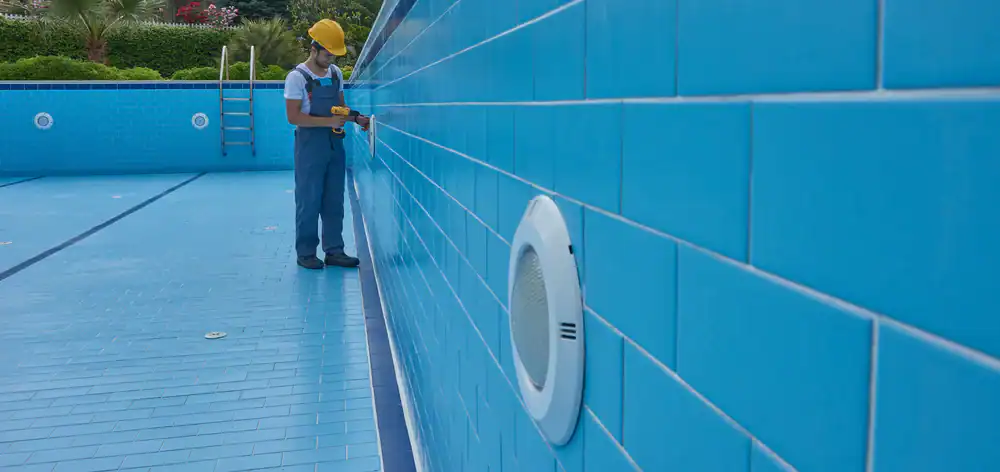
Before anything gets designed, we evaluate your property. In a rural area like Alapaha, that matters more than people expect. Septic systems, agricultural wells, mature trees, drainage features these are real site conditions that affect where the pool goes and how the excavation is planned. The Town of Alapaha actually highlights calling 811 before any digging project, and that’s standard practice on every Deep Waters build. Utilities get marked, the site gets assessed, and the design gets built around what’s actually there.
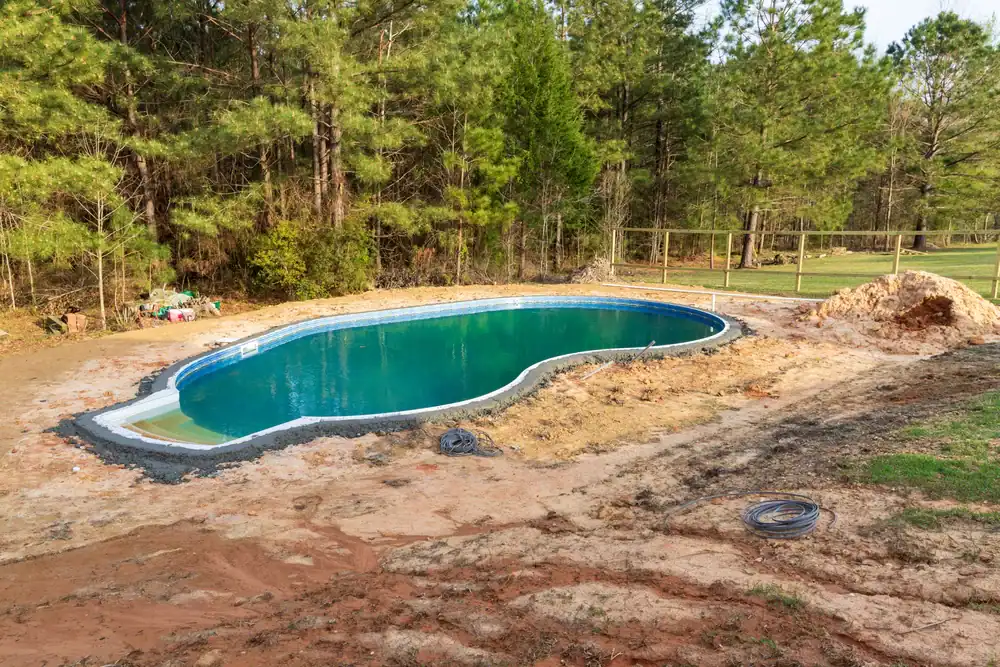
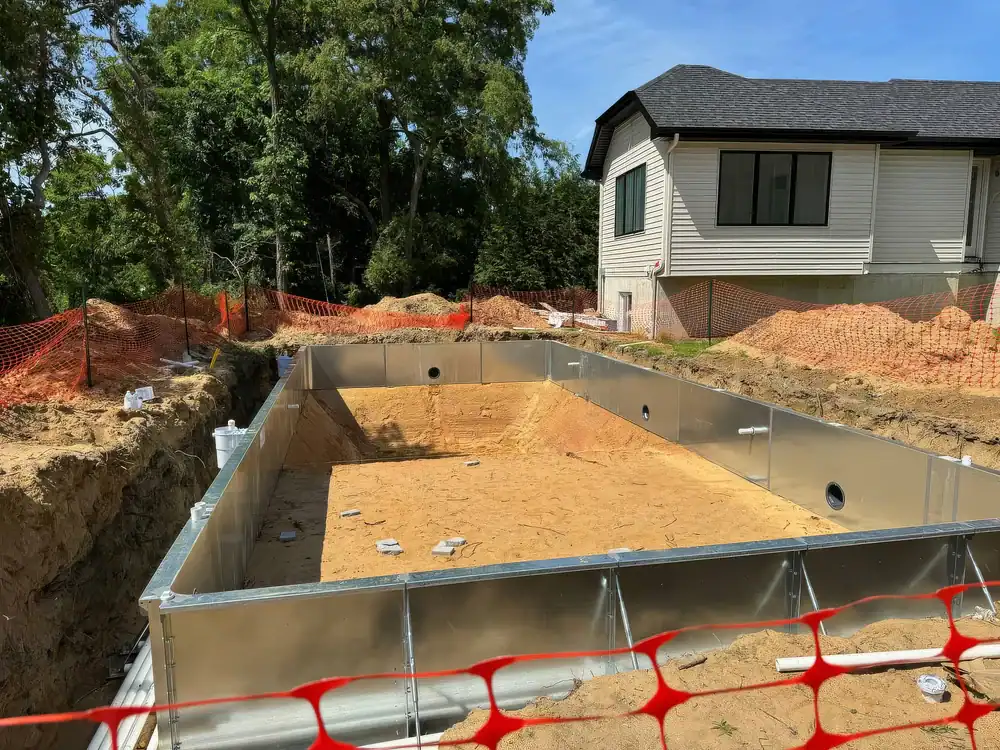
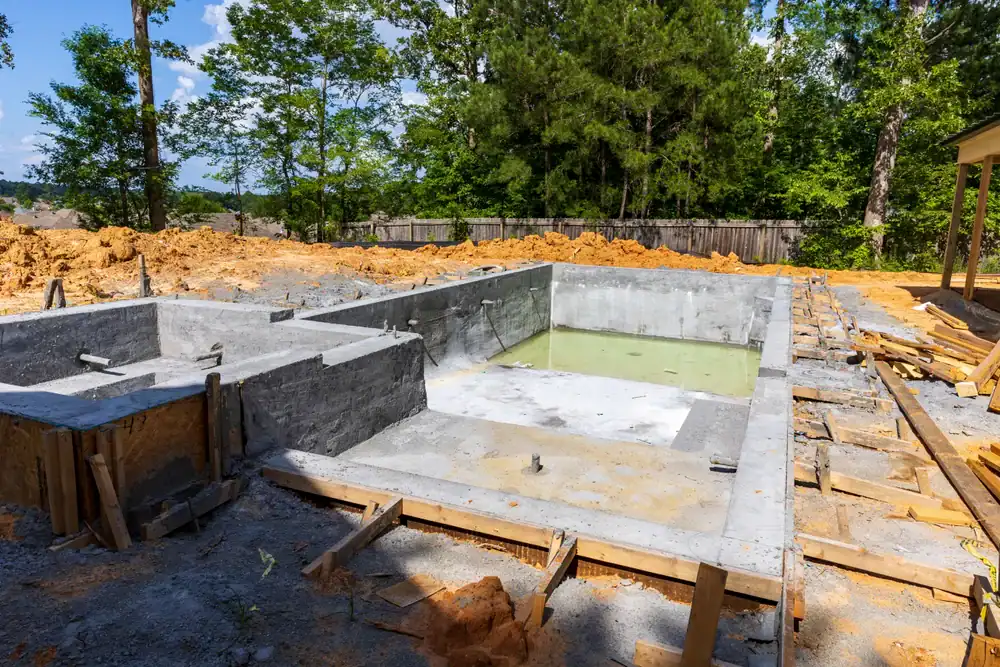
Once the site is cleared and the design is finalized, excavation begins. After the dig, the steel reinforcement cage is set, and gunite a high-strength concrete mix is applied by pneumatic pressure directly against the steel frame. This is what gives a gunite pool its structural integrity and its ability to hold a custom shape. From there, plumbing lines are run, electrical bonding is completed, and the shell cures before finishing work begins.
Decking is the final major phase before the pool is filled. In South Georgia’s climate where a pool deck sits in direct sun for eight or nine months of the year and deals with afternoon thunderstorms regularly the slope and drainage of the deck matter as much as the material. We handle all of it: the deck installation, the finish work, and every required inspection through the Berrien County Code Enforcement Office. A standard residential gunite build runs approximately six to eight weeks from excavation to water. That timeline holds because one team runs the whole job.
Ready to get started?
Pool construction with us covers the full scope: site evaluation, design, excavation, gunite shell, swimming pool plumbing, pool deck installation, electrical bonding, and permit management. Every permit required through the Berrien County Code Enforcement Office building permit, electrical permit, mechanical and plumbing permits is handled in-house. You don’t fill out a form or chase an inspection. We do that for you.
The plumbing in a Deep Waters pool is built for long-term reliability, not the lowest material cost. Schedule 40 PVC at minimum, properly routed for serviceability, not convenience during the build. On properties in and around Alapaha where homeowners manage their own land long-term and expect things to hold up, that distinction matters. A pool that needs replumbing in five years because corners were cut during construction is not a deal it’s a problem that compounds.
On the deck side, material selection gets discussed based on your specific property and how you plan to use the space. Concrete, pavers, and other surfacing options all perform differently under South Georgia’s extended sun exposure and seasonal rain patterns. What works on a covered lanai in a shaded yard behaves differently on a full-sun deck that takes the afternoon heat from June through September. We walk through those differences with you before anything gets poured, so the deck you end up with is the one that actually fits your property and your life not just the easiest option to install.
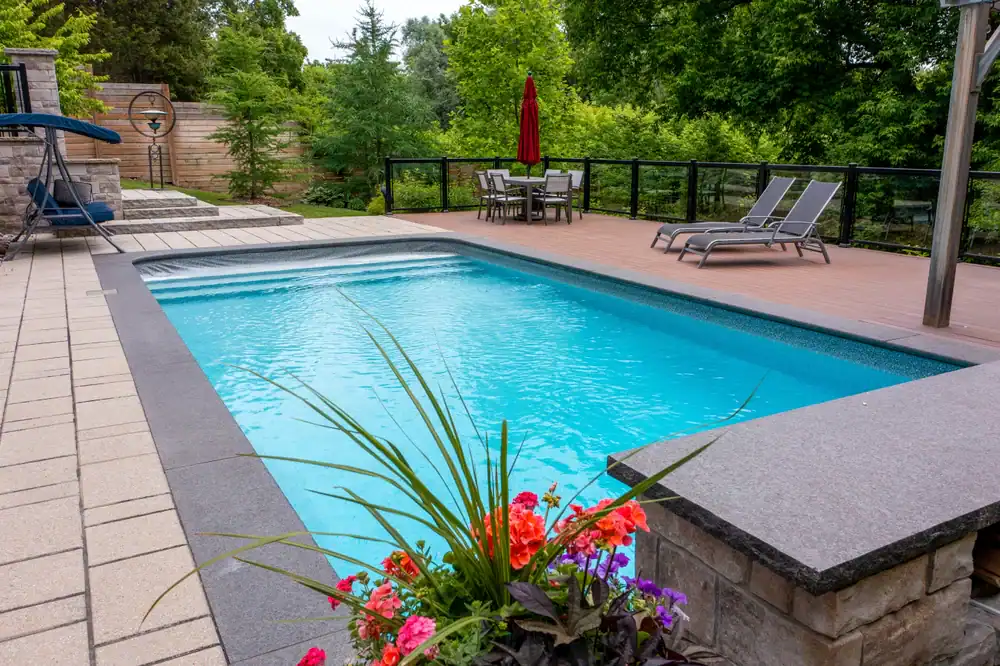
Yes, and it’s not optional. Pool construction in Alapaha requires permits through the Berrien County Code Enforcement Office, which explicitly serves the incorporated town of Alapaha. At minimum, you’ll need a building permit and a separate electrical permit. Depending on the scope of the project, a plumbing permit and soil and erosion plan may also be required.
Georgia state law also requires barrier fencing around all residential swimming pools, and federal law mandates anti-entrapment drain covers on all new pool construction. These aren’t suggestions they’re legal requirements that affect your liability, your homeowner’s insurance, and your ability to sell the property later. We manage every permit and inspection on your behalf, so nothing gets missed and nothing gets left open.
For a mid-range custom gunite pool in South Georgia, you’re generally looking at $55,000 to $100,000. Projects with more features larger footprints, premium decking, water features, or upgraded equipment can move above that range. The honest answer is that cost depends heavily on your specific property and what you want the finished pool to look like.
What’s worth knowing in a market like Alapaha is that the cost of building it wrong often exceeds the cost of building it right the first time. Vinyl liner pools need full liner replacement every 8 to 12 years at $3,000 to $5,000 per replacement. A properly built gunite pool lasts 25 to 30 years or more and can be resurfaced rather than replaced when wear occurs. On a property in Berrien County where you’re planning to stay long-term, that difference in lifespan changes the math significantly.
A standard residential gunite pool build runs approximately six to eight weeks from the start of excavation to the point where you’re putting water in the pool. That timeline assumes a single coordinated team handling the full scope which is how we operate rather than a contractor waiting on multiple subcontractors to show up in sequence.
Weather is the main variable in South Georgia. Summer afternoon thunderstorms can create brief delays during certain phases, but they don’t derail a well-managed project. The bigger delays people experience almost always come from coordination problems between separate crews, not from the weather itself. When one team runs the job from excavation through decking, the schedule stays tighter because there’s no handoff waiting to happen.
Gunite is the strongest fit for the South Georgia Coastal Plain, and the soil conditions in the Alapaha area are a big part of why. The USDA formally named the Alapaha Series soil a sandy clay loam profile with plinthite and seasonal water table variation because it has specific characteristics that matter for construction. A gunite shell, properly engineered and reinforced with a steel cage, handles soil movement and hydrostatic pressure from a fluctuating water table better than either vinyl liner or fiberglass construction.
Beyond the soil, South Georgia’s climate eight to nine months of viable swim season, extended UV exposure, and regular summer heat makes a durable, resurfaceable shell a better long-term choice than a liner that degrades or a fiberglass shell that can’t be easily repaired. Gunite also allows full shape customization, which matters on the larger lots common to properties in and around Alapaha. You’re not limited to what fits a pre-manufactured mold.
In warm-climate markets like South Georgia, an inground pool typically adds 5 to 8 percent to residential property value. On a home near Alapaha’s median value of around $105,000, that’s roughly $5,000 to $8,000 in added equity. On a newer or higher-value property in Berrien County, the number scales up accordingly.
The caveat is that the pool has to be permitted and built correctly for that value to hold at resale. An unpermitted pool or one with documented construction problems can actually complicate a sale rather than help it. Buyers and their inspectors look at permits, and a pool without a clean permit history is a negotiating problem. When we build your pool, every permit is pulled through the Berrien County Code Enforcement Office and every inspection is documented. That paper trail protects your investment when it matters most.
The most important question you can ask any pool contractor is who is actually doing the work. A lot of companies in South Georgia operate by managing subcontractors they quote the job, collect the deposit, and hand the physical work off to rotating crews. That model is where most of the horror stories come from. When something goes wrong mid-build, nobody owns the problem. When the project drags past the promised date, there’s always a subcontractor to blame.
Look for a contractor who carries a valid Georgia contractor’s license and can show proof of general liability insurance and workers’ compensation coverage. Verify the license through the Georgia Secretary of State’s licensing portal before signing anything. Ask specifically who will be on your property doing the work, and ask for references from completed projects in Berrien County or the surrounding area not just a portfolio of pools built somewhere else. In a community the size of Alapaha, a contractor who has actually built pools nearby should be able to point you to someone you can call or a yard you can drive by. If they can’t, that’s worth paying attention to.