
Hear from Our Customers
When a pool is built correctly in Douglas, it works for your family for decades not just your first few summers. The structure holds. The plumbing doesn’t leak. The finish doesn’t chalk out in three years. You’re not calling a contractor back six months later trying to figure out who’s responsible for what went wrong.
Douglas heat is real. July heat index values regularly push past 107°F, and the swim season here runs from late April through early October that’s eight months of actual use. A pool that’s engineered for South Georgia’s climate, built on Coffee County’s sandy loam soils with proper drainage planning, is going to perform completely differently than one that wasn’t designed with this region in mind.
The other thing worth saying plainly: a properly permitted pool adds real equity to your home. In warm-climate markets like Douglas, an inground pool can add 5–8% to your property’s value but only if it’s fully permitted, inspected, and documented. An unpermitted pool doesn’t add value at resale. It creates problems. Every pool we build in Douglas comes with a Certificate of Occupancy from the City of Douglas Building Inspections and Permits Division. That documentation matters now, and it matters when you sell.
We were founded in Douglas in 2014 but our owner had already been building pools in South Georgia for more than two decades before that. He started this company because he watched too many local families get burned by contractors who collected deposits, underdelivered on quality, and left projects in worse shape than they found them. That’s not a marketing angle. It’s the actual reason this business exists.
The team that designs your pool is the same team that builds it. No subcontractor shuffle. No three different crews pointing fingers at each other when something doesn’t line up. One team, one point of contact, one contractor who’s accountable from excavation to startup.
From newer subdivisions on the edges of Douglas to established properties near South Georgia State College, we’ve worked across Coffee County’s range of residential lots and soil conditions. We know the permit process with the City of Douglas, we know the inspection stages, and we know what it takes to build a pool that holds up in this specific part of Georgia not just Georgia in general.
Before anything gets dug, we evaluate your property. Soil conditions, drainage, equipment access, utility locations all of it gets assessed upfront so there are no surprises once the excavator arrives. Coffee County properties vary more than people expect, and a site evaluation before design is how you avoid costly mid-build adjustments.
Once design is finalized, we handle all permitting with the City of Douglas Building Inspections and Permits Division. That includes the building permit, the electrical permit, and scheduling every staged inspection including the under-slab plumbing inspection that’s required before any concrete is poured. You don’t manage any of that. We do.
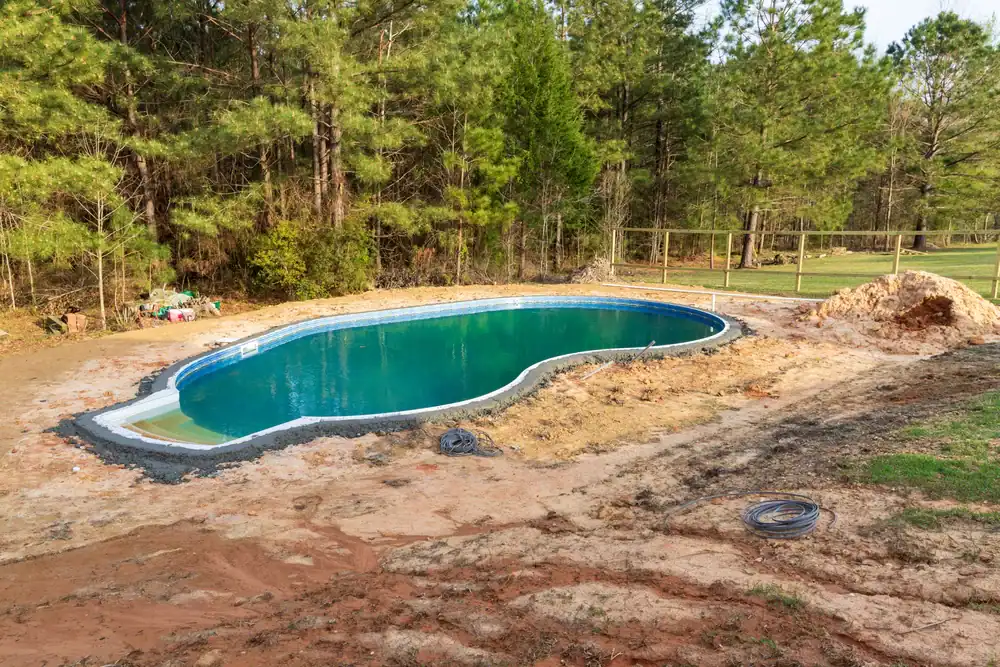
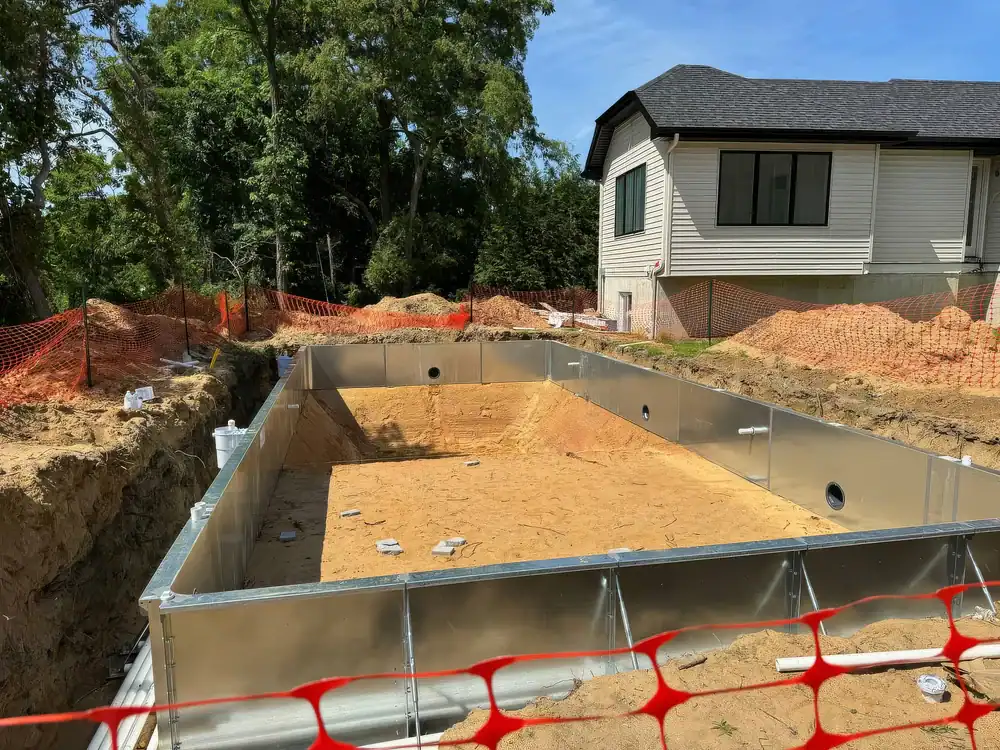
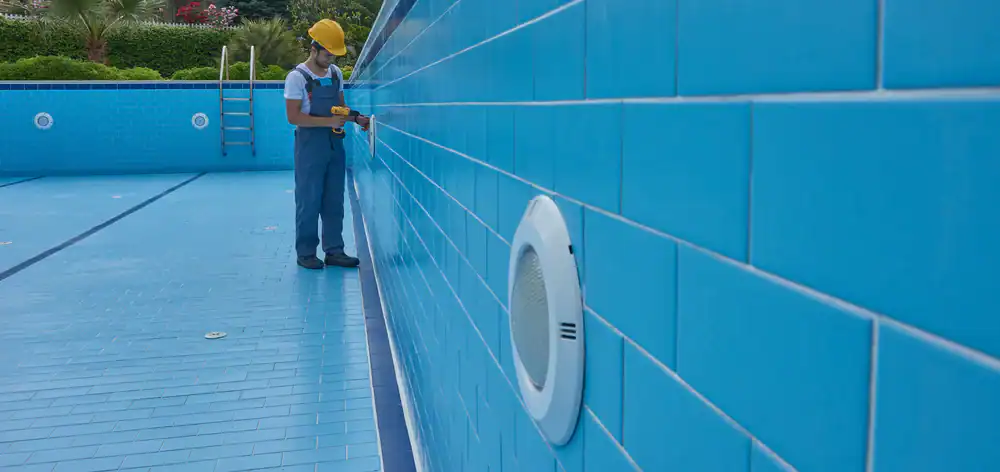
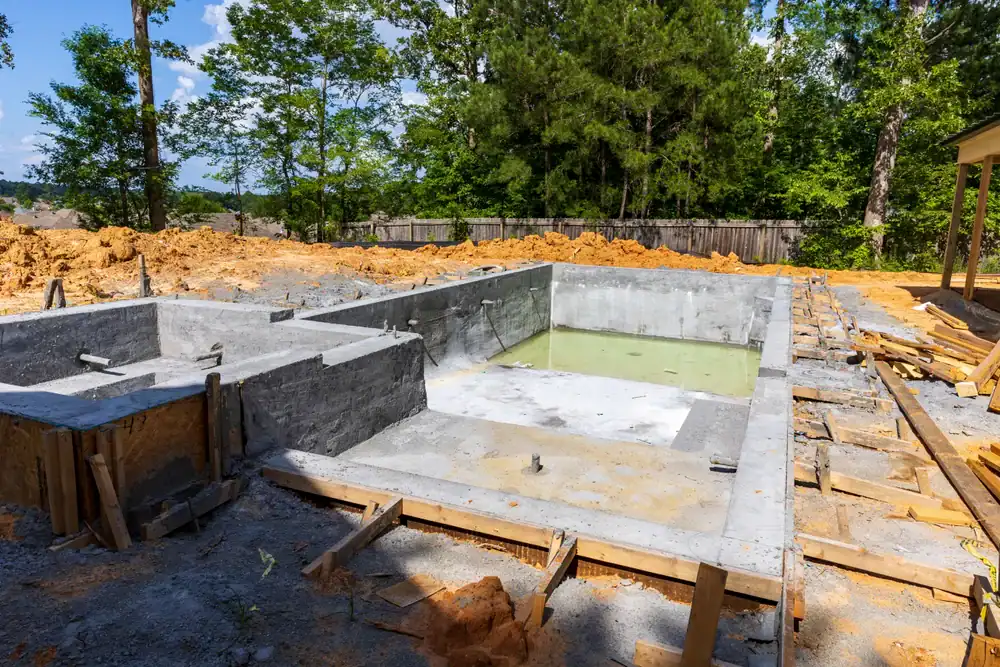
Excavation typically takes one to three days depending on the site. Gunite application follows, then plumbing and electrical run concurrently over the next one to two weeks. Pool deck installation comes next concrete, pavers, or travertine depending on what you’ve chosen and finish work and startup close it out. A standard residential build runs six to eight weeks from excavation to water. That timeline is the result of one coordinated team moving through each phase without waiting on outside subcontractors. When we give you a start date, the schedule is built around actually hitting it not around hoping everyone shows up.
Ready to get started?
We build gunite pools not vinyl liner, not fiberglass. That distinction matters more than most buyers realize when they’re first comparing quotes. A vinyl liner needs to be replaced every eight to twelve years, typically at a cost of $3,000–$5,000 per replacement. Fiberglass has a functional lifespan of fifteen to twenty-five years before major repairs become necessary. Gunite, built to proper specifications, lasts twenty-five to thirty years or more and can be resurfaced not replaced when the finish eventually shows wear. For a Douglas homeowner making a $55,000–$100,000 investment in their property, the long-term math is straightforward.
Every build includes site evaluation, full permit management with the City of Douglas, gunite shell construction, swimming pool plumbing using Schedule 40/80 PVC, electrical bonding and grounding per NEC Article 680, and pool deck installation in your choice of finish. Georgia law requires barrier fencing around all residential pools, and the Virginia Graeme Baker Pool and Spa Safety Act requires anti-entrapment drain covers on all new construction both are handled as part of every build we complete, not as add-ons.
If your property is in unincorporated Coffee County rather than inside Douglas city limits, permitting goes through the county rather than the city. We know the distinction and handle whichever jurisdiction applies to your specific lot. You get a finished pool that is fully compliant, fully inspected, and ready to use without having to figure out the regulatory side yourself.
Yes pool construction within Douglas city limits requires a building permit from the City of Douglas Building Inspections and Permits Division, reachable at (912) 389-3423. You’ll also need a separate electrical permit for the bonding and grounding work required under NEC Article 680. These aren’t optional, and they’re not just paperwork. The permit process includes multiple staged inspections including an under-slab plumbing inspection that has to happen before any concrete is poured, and a final inspection before the pool can legally be filled and used.
Residential building permits in Douglas are active for six months and have to be actively extended if the project runs longer they don’t renew on their own. If your property is outside the city limits in unincorporated Coffee County, permitting goes through the county rather than the city. We handle all of this in-house for every project. You don’t have to figure out which jurisdiction you’re in or what forms are required. That’s already part of the job.
A standard residential gunite pool in the Douglas area typically runs between $55,000 and $100,000, depending on size, shape, finish, and deck design. That range reflects real builds not a low-ball number designed to get you on the phone, and not a worst-case scenario meant to impress you. The actual cost for your project depends on your property, your design choices, and what’s involved in the site preparation.
What matters as much as the number is what you’re getting for it. Gunite is a permanent structure. You’re not replacing a liner in a decade or dealing with fiberglass repairs in fifteen years. For a Douglas homeowner making a long-term investment in their property, the cost per year of use over a twenty-five to thirty-year lifespan looks very different than the upfront sticker price. We provide clear, itemized quotes not vague estimates that leave room for change orders after you’ve already committed.
A standard residential gunite build with us runs six to eight weeks from excavation to water. That timeline assumes no major site complications and normal permit processing through the City of Douglas. Here’s what that actually looks like: excavation takes one to three days, gunite application takes one to two days, plumbing and electrical run concurrently over one to two weeks, deck installation takes three to five days, and finish work and startup close it out.
The reason that timeline is realistic not just optimistic is that we use one crew for the entire build. There’s no waiting on a subcontractor’s schedule to free up between phases. In Douglas, the summer thunderstorm pattern can cause brief afternoon delays from June through September, but experienced local builders plan around that. If you’re signing a contract in January or February with a spring construction start in mind, that’s a completely achievable target. The planning conversation can happen any time of year.
The short version: gunite is permanent, fiberglass is faster, and vinyl liner is cheaper upfront but more expensive over time. Gunite pools are built on-site by applying a concrete and sand mixture over a steel rebar framework. Because it’s built in place, it can be any shape, any depth, and any size there’s no prefabricated shell being dropped into your yard. The structure itself lasts twenty-five to thirty years or more, and when the interior finish eventually shows wear, it gets resurfaced rather than replaced.
Fiberglass pools come as a prefabricated shell, which limits your shape and size options. They install faster, but the surface can fade and the structure has a shorter functional lifespan. Vinyl liner pools have the lowest upfront cost, but the liner itself needs to be replaced every eight to twelve years at $3,000–$5,000 per replacement. For a Douglas homeowner planning to stay in their home long-term, gunite is the only pool type that functions as a true permanent investment rather than a recurring maintenance obligation.
Most Douglas homeowners who want a pool ready by Memorial Day start their planning conversations in January or February. That gives enough time for site evaluation, design finalization, permit processing with the City of Douglas, and a spring construction start. Gunite construction can proceed year-round in Coffee County hard freezes are rare in this part of South Georgia, so weather rarely shuts down a build entirely.
If you’re thinking about a pool for next summer, the fall and winter months are actually a smart time to get the conversation started. Fewer buyers are actively contracting during that window, which often means better scheduling availability and more focused attention during the design phase. The swim season in Douglas runs from late April through early October roughly eight months of real use. That’s a long season, and a pool that’s ready at the start of it is worth the planning that went into getting there on time.
In warm-climate markets like South Georgia, an inground pool typically adds five to eight percent to a home’s resale value. On a $200,000 home in Douglas, that’s $10,000–$16,000 in added equity. On a $300,000 home, it’s $15,000–$24,000. Douglas home values have been trending upward approximately five percent year-over-year through 2023 and 2024 which means a pool investment compounds alongside the base appreciation of the property.
That equity calculation only holds, though, for pools that are properly permitted and documented. An unpermitted pool or one where inspections were skipped becomes a liability at resale, not an asset. Buyers’ agents flag it, lenders flag it, and it can complicate or kill a sale. The City of Douglas requires a Certificate of Occupancy before a pool can be legally used, and every pool we build comes with that documentation in place. That’s not a bonus feature. It’s how every legitimate pool build in Douglas should be done.