
Hear from Our Customers
Most pool problems don’t start with a green pool. They start with numbers that look fine on a test strip but aren’t and by the time something’s visibly wrong, you’ve already lost time, money, and a few weekends you were supposed to spend actually using the pool.
Professional water testing gives you a complete, accurate read on every parameter that matters: free chlorine, combined chlorine, pH, total alkalinity, calcium hardness, cyanuric acid, salt levels, total dissolved solids, and metals. That’s not what a strip can tell you. That’s what a digital analysis tells you to the decimal point.
Here’s what makes this especially relevant in Douglas: the City of Douglas pulls water from six municipal wells, and well-sourced water carries naturally occurring minerals that directly affect your pool’s calcium hardness. Too low, and your water slowly eats away at your plaster or gunite surface. Too high, and you get white scaling on your walls and inside your filter. Then factor in Coffee County’s agricultural surroundings heavy pollen loads from surrounding fields, organic matter drifting in from nearby farms, and a wet July that averages over six inches of rain right in the middle of pool season. That combination puts real pressure on your pool chemistry, and it’s not something a generic national maintenance guide is built to handle. A professional test accounts for all of it.
We’ve been based on W Baker Highway in Douglas since 2014 but the experience behind our company goes back over 30 years. Our principals have spent three decades in concrete, plumbing, and custom pool construction across Coffee County and the surrounding Wiregrass region. That’s not a marketing number. That’s a long time learning exactly how South Georgia’s climate, soil, and water supply affect a pool over its lifetime.
Because we build pools gunite, shotcrete, pebble, and quartz finishes we understand what your pool’s surface actually needs from its water chemistry to stay protected. Corrosive water etches plaster. Scaling water clogs equipment. Most service companies read the numbers. We understand what those numbers mean for your specific pool, in Douglas, in this specific climate.
Douglas is 45 miles from the nearest interstate. When you need someone, you need someone local. We’re here not driving in from Tifton, not dispatching from Waycross. Right here on Baker Highway.
When you reach out to us, the first thing that happens is a straightforward conversation about what you’re dealing with whether that’s a recurring algae problem, chemistry that won’t hold, cloudiness that keeps coming back, or just a pool you want to keep in good shape through a long South Georgia summer.
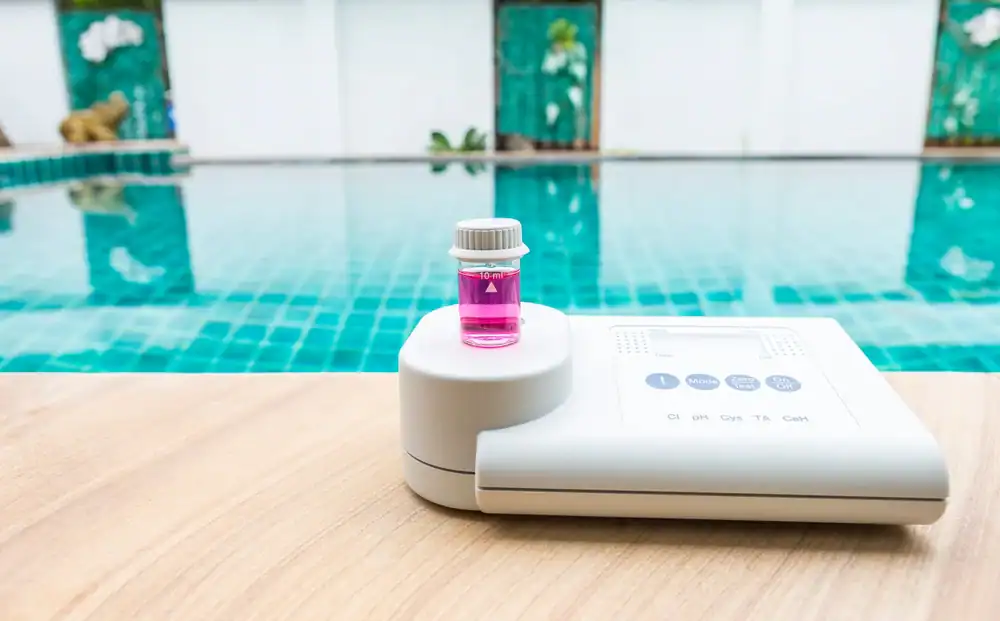
From there, one of our technicians comes to your pool and runs a full digital water analysis. This isn’t a dip-and-read strip test. It’s a multi-parameter digital reading that captures everything from your free and combined chlorine levels to your cyanuric acid concentration, calcium hardness, and total dissolved solids. Given that Douglas’s municipal water comes from wells with naturally occurring mineral content, calcium hardness is one of the parameters that consistently shows up as a problem for local pool owners and it’s one that strip testing almost always misses.
Once the analysis is complete, you get a clear explanation of what the numbers mean and exactly what needs to happen to bring your pool into balance. No bag of chemicals handed to you at a counter with a generic instruction sheet. A real conversation about your specific water, your specific pool surface, and the correction plan that actually fits your situation. After that, we can handle the chemical correction directly or walk you through it whichever works better for you.
Ready to get started?
A professional water test from us covers every parameter that affects how safe, clear, and chemically stable your pool is not just the two or three that show up on a basic strip. That includes free chlorine and total chlorine (so you can see if chloramines are building up and causing that eye irritation and chemical smell), pH and total alkalinity together (because alkalinity is the buffer that keeps pH from swinging), calcium hardness, cyanuric acid stabilizer levels, salt concentration for saltwater pools, total dissolved solids, and metals like copper and iron that can stain surfaces and corrode equipment.
In Coffee County, a few of these parameters deserve extra attention. The agricultural environment surrounding Douglas peanut fields, poultry operations, corn and tobacco farms contributes to elevated pollen and organic matter loads that spike chlorine demand faster than you’d see in an urban or coastal pool. And because Coffee County has seen 15 federal disaster declarations since 2005, including Hurricane Helene in 2024, post-storm water testing is something Douglas pool owners deal with regularly, not occasionally. After a significant storm rolls through, your chlorine can be wiped out and your pH can collapse within 24 to 48 hours.
We also bring specific expertise in gunite and shotcrete pool surfaces the custom concrete pools common throughout this area. These surfaces have tighter calcium hardness tolerances than vinyl liner or fiberglass pools, and getting that number wrong in either direction causes real, expensive damage over time. That’s the kind of detail that matters when the person testing your water also knows how to build the pool.
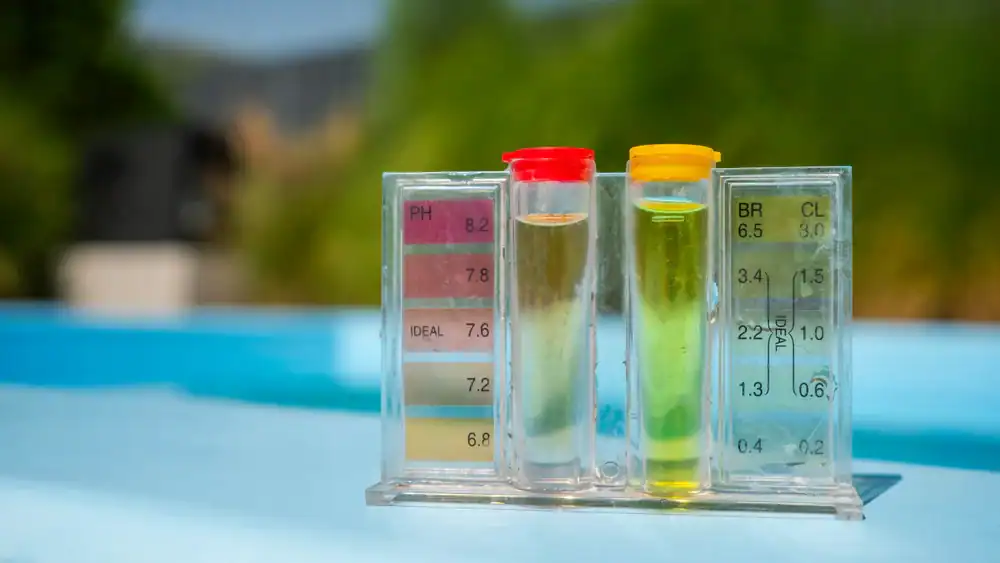
This is one of the most common frustrations pool owners in Douglas bring to us, and the answer almost always comes down to a chemistry problem that test strips can’t detect. The most frequent culprit is cyanuric acid the stabilizer that protects chlorine from UV breakdown. When CYA builds up too high over time (which happens gradually through repeated use of stabilized chlorine products), it essentially locks your chlorine and makes it unable to sanitize effectively, even when your strip reads “normal.” Your chlorine is there on paper, but it’s not doing its job.
The other common issue is combined chlorine chloramines which form when free chlorine reacts with organic contaminants like sweat, sunscreen, pollen, and the organic matter that blows in from Coffee County’s surrounding agricultural fields. Combined chlorine doesn’t sanitize. It just sits in the water and causes irritation. A digital water analysis separates free chlorine from total chlorine so you can see exactly how much of your chlorine is actually working. Once you know what’s really going on, the fix is straightforward but you can’t get there with a strip test.
For most Douglas-area pools, a professional test at the start of the season and at least once during peak summer is the baseline. But given the conditions here, more frequent testing makes a real difference. July is Douglas’s wettest month, averaging over six inches of rainfall, and every significant rain event dilutes your chlorine, shifts your pH, and introduces organic contaminants. A pool that’s balanced going into a stretch of summer storms can be noticeably off by the end of the week.
If your pool is in heavy use kids in and out every day, regular gatherings the chemistry demand increases significantly. Same goes for after any major weather event. Coffee County’s history with tropical systems and heavy rainfall means post-storm testing isn’t a luxury; it’s just responsible ownership. A good rule of thumb: test professionally any time you notice something is off, after major storms, and at the start and end of each season. The cost of a test is a fraction of what algae treatment or equipment repair runs.
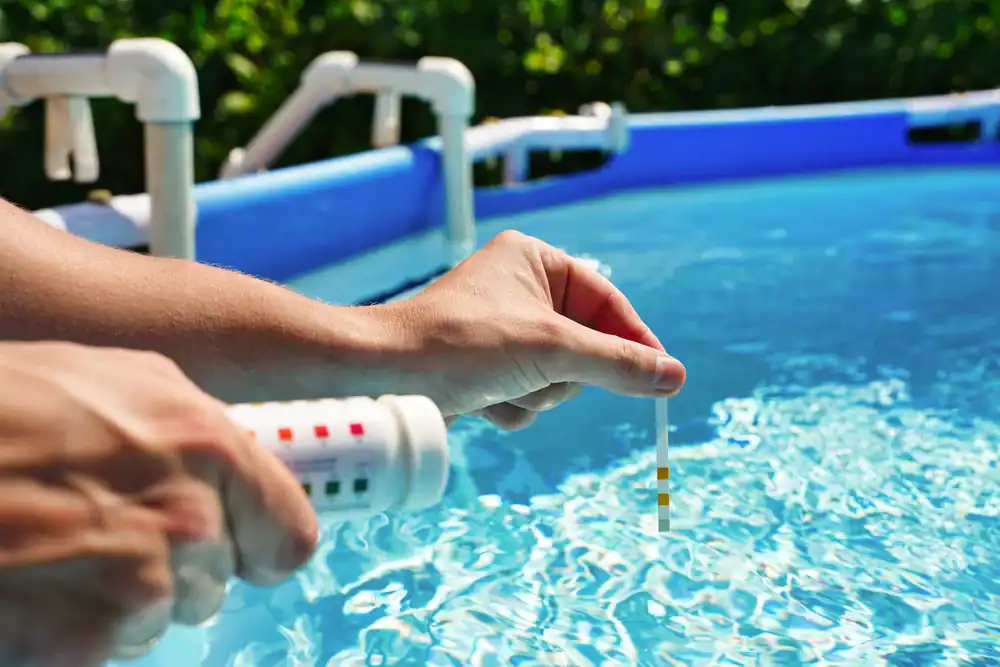
Test strips work by comparing a color change to a printed chart and they’re fine for a quick daily check on chlorine and pH. What they can’t do is give you precise readings on parameters like combined chlorine, cyanuric acid concentration, total dissolved solids, or trace metals like iron and copper. They also can’t tell you the difference between free chlorine (the kind that sanitizes) and total chlorine (which includes the spent chloramines that don’t). That distinction matters a lot, especially when your pool keeps having problems despite “normal” strip readings.
Digital water analysis uses electronic sensors and reagent-based testing to deliver readings to multiple decimal places across a full panel of parameters. It removes the human error of color-matching and gives you a complete picture of your water chemistry in a format you can actually act on. For pools in Douglas, where well-sourced municipal water brings its own mineral baseline and the agricultural environment adds to the organic load, that level of precision is what separates a real diagnosis from a guess.
Clear water and balanced water are not the same thing. Some of the most damaging chemistry problems are completely invisible. Chronically low calcium hardness, for example, produces water that looks crystal clear while it’s slowly etching the surface of your plaster or gunite pool a process called corrosion that leads to rough, pitted surfaces and eventually a full replaster job. High cyanuric acid levels look like nothing at all until your chlorine stops working and algae shows up. Elevated metals from Douglas’s well-sourced municipal water can accumulate in your pool without any visible sign until they start staining your walls or corroding your equipment.
A professional test catches these problems before they become expensive. For a pool owner in Coffee County dealing with agricultural pollen loads, summer storm runoff, and mineral-rich well water, the chemistry pressure is higher than in many other parts of Georgia and the invisible problems tend to compound faster. Clear water is a good sign. A professional analysis is the only way to confirm it.
Yes and in Douglas, this is not a hypothetical. July averages over six inches of rainfall, which means during the heart of pool season, you’re regularly dealing with significant water volume being added to your pool from above. Rainwater is slightly acidic, which pushes your pH down. It also dilutes your free chlorine and your cyanuric acid stabilizer, which means your pool becomes more vulnerable to UV chlorine loss right when the sun is at its most intense. On top of that, rain carries organic material pollen, dust, agricultural particulates directly into your water, which spikes chlorine demand immediately.
After a heavy storm in Coffee County, it’s not unusual for a pool’s free chlorine to drop to near zero within 24 to 48 hours, especially if the stabilizer level was already on the lower end. That’s the window where algae takes hold. Testing your water after significant rain events not just at the start of the season is one of the most practical things you can do to keep your pool from turning on you in the middle of summer.
The main thing that separates us from other options in Douglas is that our testing is independent and professional not tied to a product purchase. The primary local alternative offers water testing only when you buy something, which means the results are framed around what’s on the shelf, not what your pool actually needs. That’s a different conversation than what we have with you.
Beyond that, we bring 30-plus years of pool construction experience to every water test. When a technician who has built gunite and shotcrete pools across Coffee County looks at your calcium hardness reading, they understand what that number means for your specific surface type not just what the chart says it should be. That construction-level context changes the quality of the advice you get. We’re also physically based in Douglas, on W Baker Highway, which matters when you need someone who can actually show up not a regional company routing service calls from an hour away.